Foundation Repair in Chicago
Cracks, bowing walls and settlement, fixed by the method the wall actually needs: injection, carbon fiber, steel, anchors or piers. Diagnosed in writing, priced against published ranges.
- Warranty on structural repairs: 25-year transferable
- Published pricing: crack injection from $450, piers from $1,600
- Free structural inspection within 48 hours
 25-year transferable warranty
Every foundation repair method we install
The right fix depends on what the wall is doing and how far along it is. These are the six tools, cheapest first, and the inspection tells you which one your wall has earned.
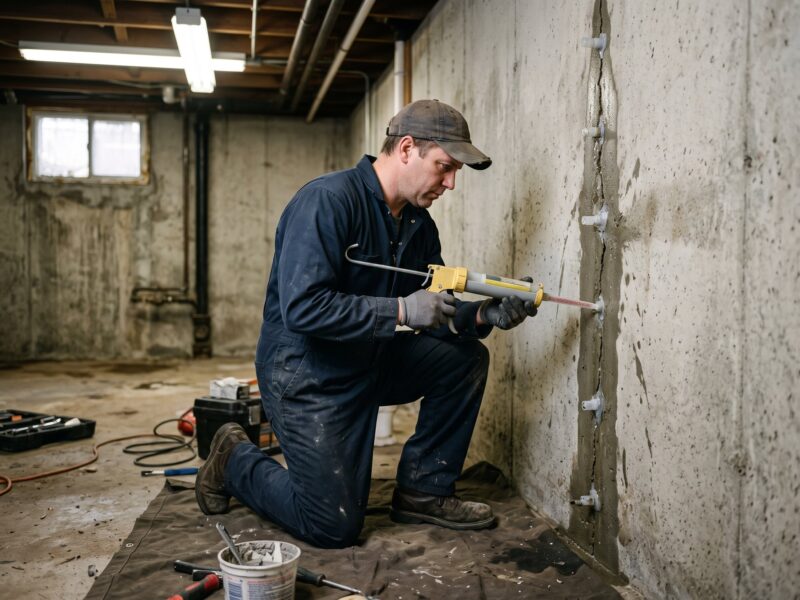
Urethane crack injection
Leaking, non-structural cracks in poured concrete get filled full depth with expanding urethane. From $450 per crack.
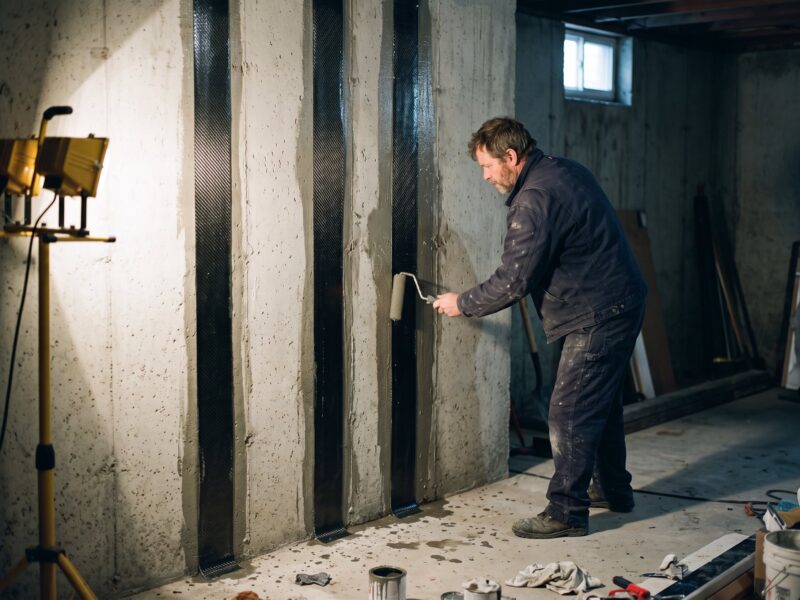
Carbon fiber straps
A wall bowed less than two inches gets carbon fiber bonded to its face, stopping movement without losing floor space.
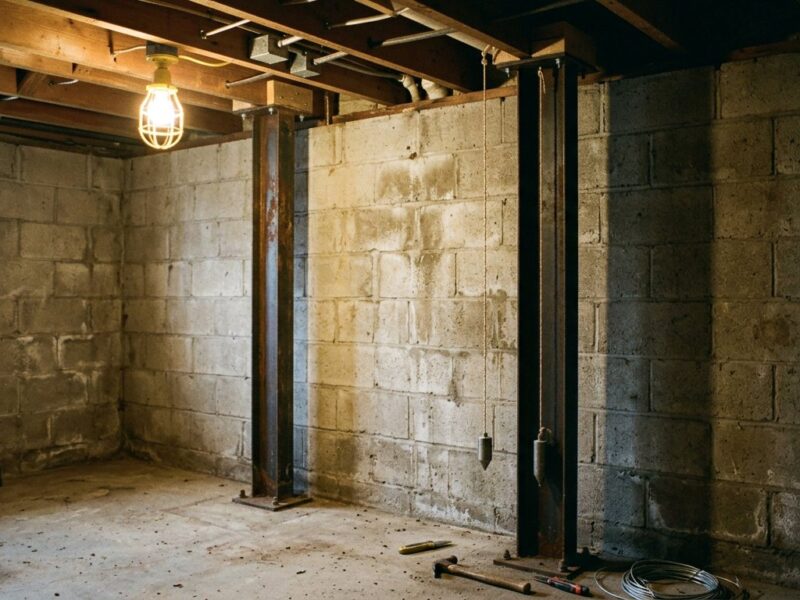
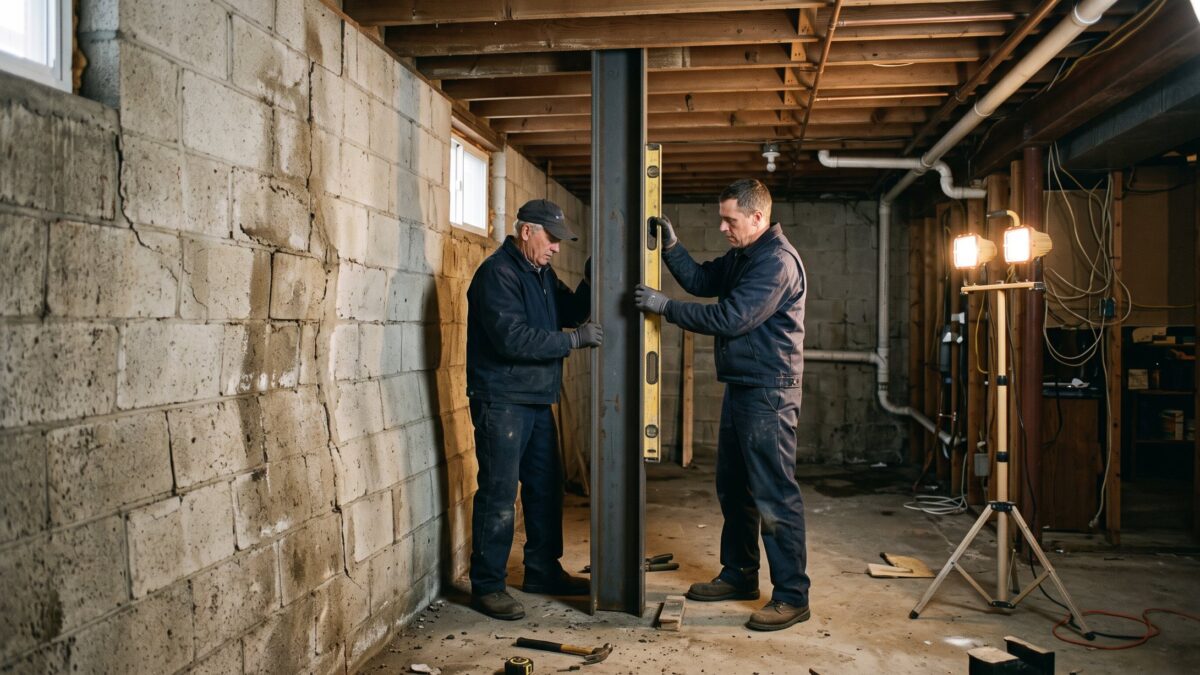
Steel I-beam bracing
Walls past the carbon fiber stage get steel beams anchored to the slab and joists, holding the wall exactly where it is.

Wall anchors
Severely bowed block walls get earth anchors: steel plates in the yard pulling the wall back through threaded rods.
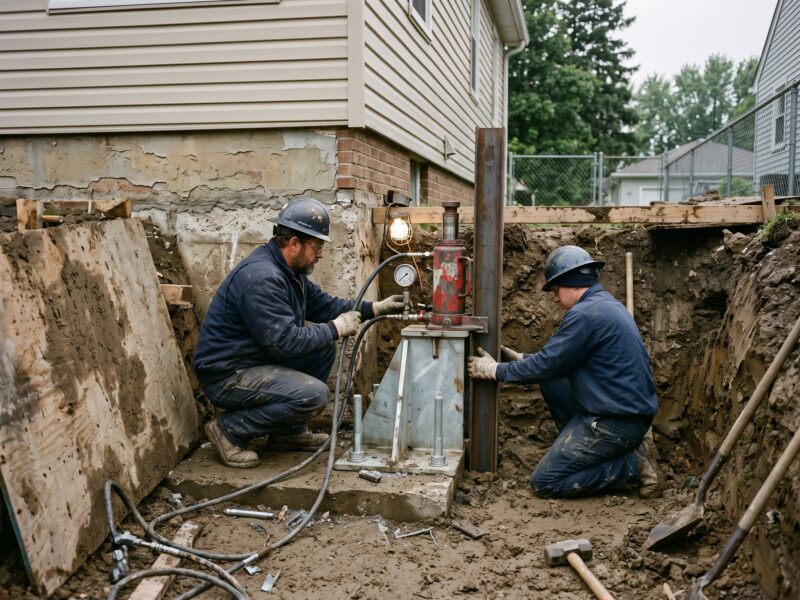
Push and helical piers
A settled footing gets steel piers driven to load-bearing strata, then the house is lifted back toward level.

Support columns and footings
Sagging main beams get new adjustable steel columns on poured footings, closing floor slopes from below.
Why do Chicago foundations crack and bow?
Chicago foundations move because the clay around them changes volume with the weather. Saturated spring clay swells and pushes a wall inward; a drought summer shrinks it and lets footings settle. The wall is caught in a cycle it was never designed to win, and the crack pattern is its way of telling you which force is working on it.
The crack itself is the diagnosis. Vertical hairlines in poured concrete are usually shrinkage and cost hundreds, not thousands. Stair-step cracks in block track differential settlement. A horizontal crack at mid-height is the serious one: clay pressure actively bowing the wall. Frost makes its own contribution here, gripping the top of the wall through a 42-inch freeze depth and letting go every spring.
 Stair-step cracking in block: the mortar joints map exactly how the foundation moved.
Reinforce the wall, or rebuild it?
Almost every bowing wall in Chicago can be reinforced in place for a fraction of replacement cost. Rebuilding is the last resort, and a company that leads with it is selling excavation you probably don't need.
| Reinforcement (carbon, steel, anchors) | Excavate and rebuild | |
|---|---|---|
| What it does | Stops movement permanently and holds the wall where it stands | Demolishes and re-lays the wall section from the footing up |
| Best for | Bowing or cracked walls still structurally intact, which is most of them | Walls sheared past repair or collapsing, a small minority |
| Cost | $600 to $1,800 per strap, beam or anchor | Tens of thousands per wall, plus excavation and landscaping |
| Disruption | One to three days inside the basement | Excavators in the yard, weeks of work, temporary shoring |
| Warranty | 25-year transferable, registered to the house | Varies by scope; put it in writing before signing anything |
If an estimator quotes a rebuild without measuring the deflection, get a second opinion. Ours is free.
Not sure if that crack is cosmetic or structural? The free inspection measures it and tells you in writing, either way.
How a foundation repair goes, measured to warranted
Most structural repairs finish in one to three days. Piering jobs run longer when the clay is deep.
Measure the movement
We map cracks, measure deflection with a level and laser, and photograph everything. You get the numbers, not adjectives. Free, within 48 hours.
Day 0Engineer the fix
The written plan matches the method to the measurements: injection for sealed cracks, carbon under two inches of bow, steel or anchors past that, piers for settlement.
Day 0, same visitInstall and verify
The crew installs the reinforcement, torques anchors to spec, and re-measures the wall against the day-zero numbers before packing up.
Days 1 to 3Register the warranty
The 25-year transferable warranty registers to the address and transfers at closing. Buyers' inspectors can call us to verify it.
On completionHow much does foundation repair cost in Chicago?
Foundation crack repair starts at $450. Reinforcing a bowing wall typically runs $2,000 to $6,000 depending on method and length, and settlement piering runs $1,600 to $3,000 per pier. Every written quote lands inside these ranges.
| Work | Range | What moves the number |
|---|---|---|
| Urethane crack injectionper crack | $450–$900 | Crack length and width, access to the full height |
| Carbon fiber strapsper strap | $600–$1,000 | Wall height, spacing the deflection requires |
| Steel I-beam wall bracingper beam | $900–$1,500 | Ceiling height, footing condition at the base |
| Wall anchorsper anchor | $1,000–$1,800 | Yard access for the exterior plate, soil conditions |
| Push or helical piersper pier | $1,600–$3,000 | Depth to load-bearing strata, access for equipment |
| Interior support column with footingper column | $1,500–$3,200 | Footing size, condition of the beam above |
Catching a bowing wall one season earlier is worth thousands: carbon fiber at $600 per strap beats anchors at $1,800 each. The full pricing guide shows every range on the site.
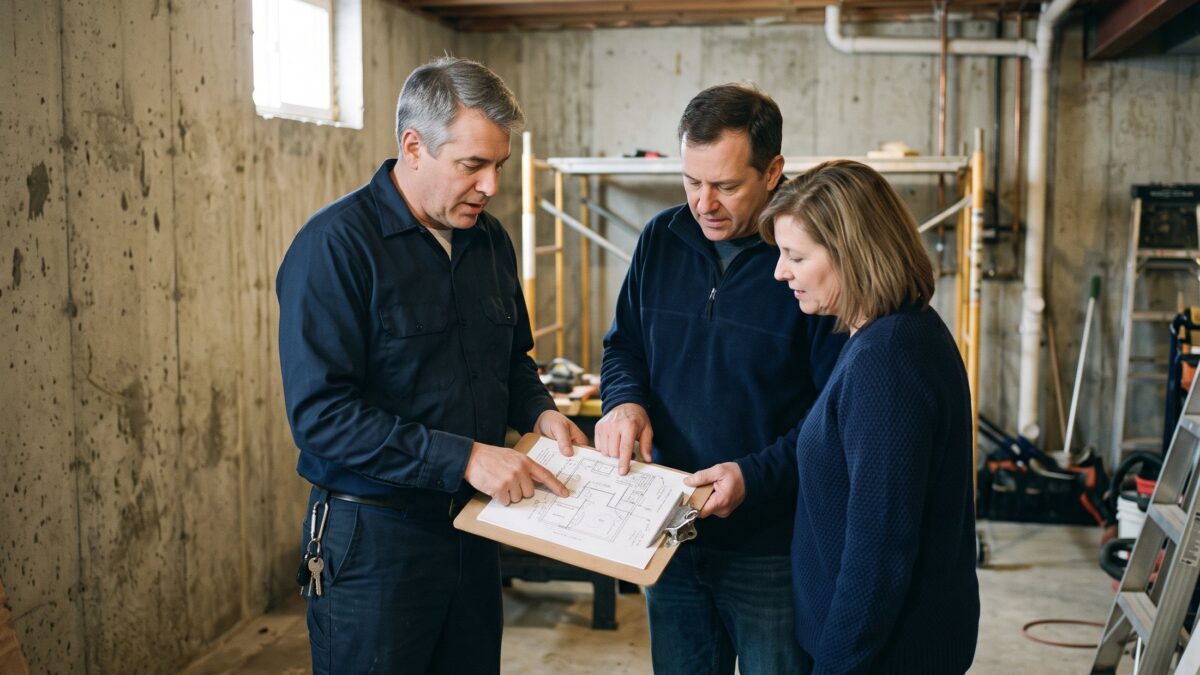
Measured by a diagnostician, not a closer
Foundation repair is where scare tactics live, so we removed the salesperson. The person measuring your wall is paid for accuracy, not volume: after 20+ years and 1,500+ Chicago-area basements and foundations, we know most walls need less than the industry wants to sell them.
- Deflection measured and documented, so the fix matches the movement
- Licensed, bonded and insured: $2,000,000 general liability
- Structural repairs carry a 25-year transferable warranty, registered to the address
- The honest answer when a crack is cosmetic: seal it for hundreds and go enjoy your weekend
Is the moving wall also wet?
Water pressure and wall movement are the same clay working two ways, and they usually arrive together. If the cracked wall also seeps in heavy rain, fixing the structure without the water invites the problem back. One inspection covers both trades, one crew fixes both, one warranty covers the work.
Basement Waterproofing in Chicago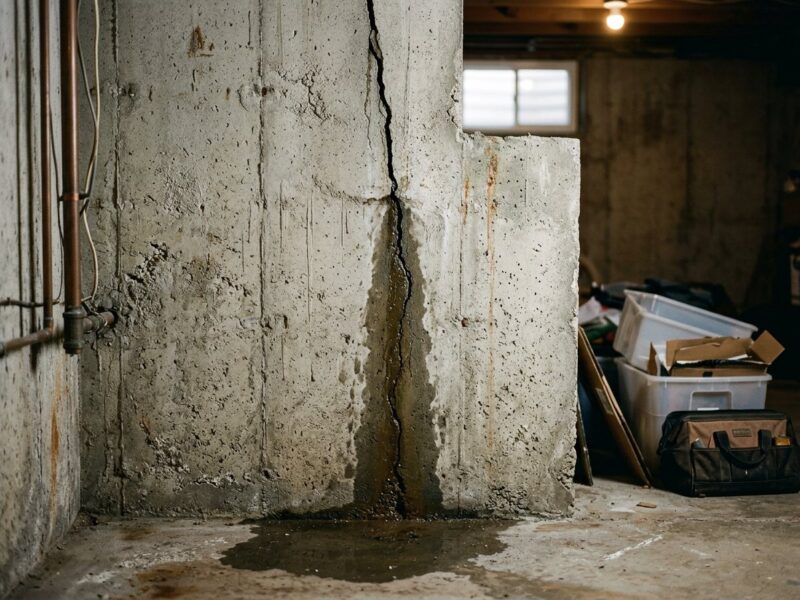
In this guide
The detail behind every part of this work, written out in full.
- A Leaking Foundation Crack: Seal It, or Fix the Wall?
- Block Foundation Repair: Mortar Joints, Stair-Steps and Rebuilds
- Bowing and Leaning Basement Walls
- Carbon Fiber Straps for Foundation Walls
- Epoxy vs. Urethane Injection: Which One Your Crack Needs
- Foundation Repair and Your Home Sale
- Foundation Repair by House Era: Bungalow, Ranch, Split-Level, Subdivision
- Foundation Settlement and Underpinning
- Garage Slab, Stoop and Porch Settlement
- How to Choose a Foundation Repair Contractor in Chicago
- Pier and Beam Repair in Illinois, and Why It’s Rare Here
- Poured Concrete Repair: Rod Holes, Cold Joints and Honeycombing
- Push Piers vs. Helical Piers
- Wall Anchors and Steel I-Beam Bracing
Foundation repair near you
Serving Chicago and the suburbs: Will, Cook, DuPage, Kane, Kendall, DeKalb and Lee counties.
Foundation repair questions, answered straight
How much does foundation repair cost in Chicago?
Crack injection runs $450 to $900 per crack. Carbon fiber straps are $600 to $1,000 each, steel I-beams $900 to $1,500, wall anchors $1,000 to $1,800, and piers for settlement $1,600 to $3,000 each. A typical bowing-wall reinforcement lands between $2,000 and $6,000.
Is a horizontal crack in my basement wall serious?
Yes. A horizontal crack at mid-height means clay pressure is actively bowing the wall inward, and it will not stop on its own. Caught early it is a carbon fiber job at $600 per strap; ignored for years it becomes anchors, steel, or excavation. Have it measured now.
Can a bowing basement wall be fixed without rebuilding it?
Almost always. A wall bowed under two inches and still intact is carbon fiber territory; further along, steel I-beams or wall anchors hold or pull it back. Full rebuilds are for sheared or collapsing walls, which are a small minority of what we inspect.
Does homeowners insurance cover foundation repair in Illinois?
Usually not. Standard Illinois policies exclude damage from soil movement and hydrostatic pressure, which covers most foundation problems. Some carriers offer sewer and drain riders for water damage, but structural repair almost always comes out of pocket, which is one more reason to catch it at the cheap stage.
Will foundation repair pass a home inspection when I sell?
A documented, warranted repair usually reads better than an unexplained crack. Our repairs come with the measurements, photos, scope and the 25-year transferable warranty registered to the address, a packet you hand the buyer's inspector instead of an awkward conversation.
How fast can you look at my foundation?
Within 48 hours for a standard structural inspection, and we prioritize walls with sudden new movement. The visit takes 60 to 90 minutes and you get the findings in writing before we leave the driveway.

Get the wall measured before it gets worse
A free structural inspection within 48 hours, numbers instead of scare tactics, and a 25-year transferable warranty on the fix. If the crack is cosmetic, the paper will say so.
Or talk to a human right now
(630) 335-1128
Request your free estimate
Tell us what you're seeing. We'll call back fast and be out within 48 hours.