
Sump Pump Installation in Chicago
New sump systems, replacements and battery backups, sized to the water your basement actually collects and plumbed to a discharge that keeps it gone. Installed in a day on most homes.
- Published pricing: $2,800 to $4,500 installed with battery backup
- Pump sized to measured water volume, not a one-model-fits-all box
- Free inspection within 48 hours, 24/7 if it's flooding now
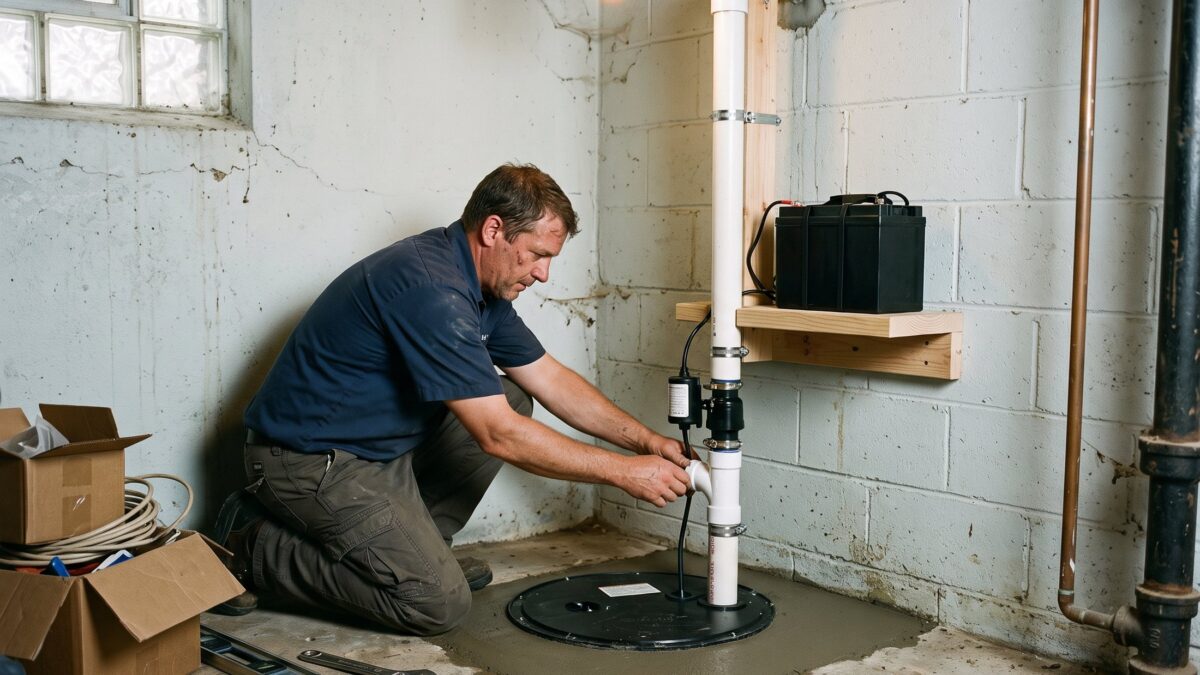 Battery backup included in the range
What a complete sump system includes
A pump in a bucket is not a system. These six pieces are what keeps a Chicago basement dry through the storm that matters, the one that arrives with the power outage.

The basin
A full-depth perforated basin set below slab level, so water enters from the soil and the drain tile instead of pooling under the floor.

Primary pump
A cast-iron primary sized to your measured inflow and head height. Oversized pumps short-cycle and die young; undersized ones lose the big storm.

Battery backup
A second pump on a deep-cycle battery that takes over during outages and primary failures, which is precisely when Chicago storms flood basements.

Discharge line
A dedicated line out of the house, protected from freezing, discharging where the water cannot circle back to the foundation.
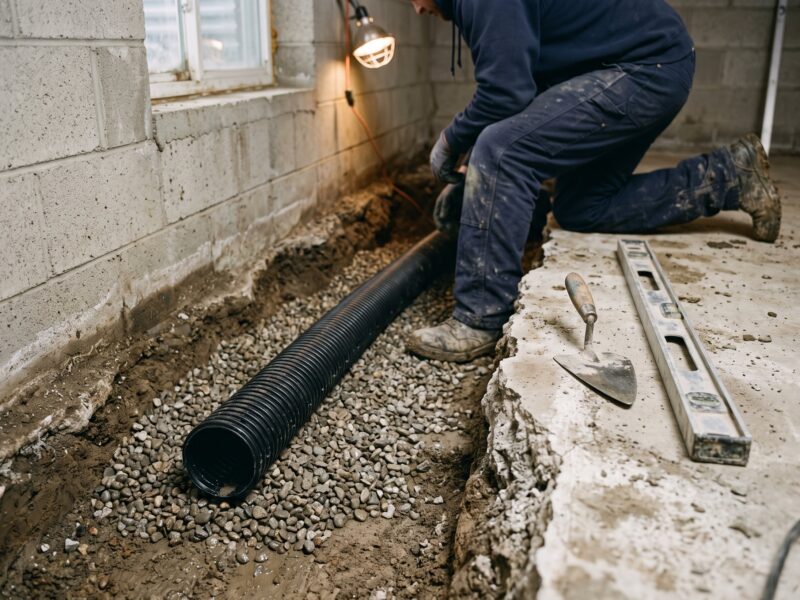
Drain tile connection
The basin ties into perimeter drain tile where it exists, so the pump drains the whole footprint instead of one wet corner.

Alarm and check valve
A high-water alarm that tells you about trouble while it is still small, and a check valve that keeps pumped water from running straight back.
Why do sump pumps matter so much in Chicago?
A sump pump matters in Chicago because the clay under these neighborhoods drains slowly enough that groundwater has nowhere else to go. After a hard rain the soil around a foundation stays loaded for days, feeding water toward the lowest point of the house. The sump basin is that point on purpose.
The failure math is unforgiving. The average pump lasts about a decade, and the storms that kill them are the ones that knock the power out first. That is why every system we install includes a battery backup in the published price rather than as an upsell after the flood: the night the grid fails is the night the basin fills fastest.
 An aging pump in an open pit: the setup that works until the night it doesn't.
Primary pump alone, or primary plus battery backup?
The $1,000 difference between these two setups is the difference between a dry basement and a claim the insurance company argues about. Here is the honest comparison.
| Primary + battery backup | Primary only | |
|---|---|---|
| Power outage | Backup pump runs for hours on the battery | Basin overflows quietly in the dark |
| Primary failure | Backup carries the load and the alarm tells you | You find out from the smell on Saturday |
| Cost installed | $2,800 to $4,500, both pumps and the battery | Roughly $1,000 less up front |
| Best for | Any finished basement, any home that floods when it storms | Spaces where a wet floor genuinely costs nothing |
| Insurance reality | Many carriers discount or require backups for finished basements | One flooded rec room outruns the savings |
Already have a working primary? We add backup systems to existing basins too, priced at inspection.
Pump running constantly, or ten years old? Both are the warning shot. Get it inspected before the next storm tests it.
How a sump installation goes, basin to backup
A new system installs in a day on most homes. Replacements into an existing basin go faster.
Measure the water
We check the basin or the wet corner, measure inflow and head height, and inspect where the discharge can legally go. Free, within 48 hours.
Day 0Set the basin
For new installs, the slab is opened, the perforated basin set below floor level and tied into any drain tile, and the concrete restored around a sealed lid.
Day 1, morningPlumb and wire
Primary and backup pumps go in with a check valve, the discharge line is run and freeze-protected, and the battery and alarm are mounted and wired.
Day 1, afternoonTest both pumps
We flood-test the basin, cut the power, and watch the backup take over while you watch us. Then the paperwork: scope, photos and warranty registration.
Day 1, before we leaveHow much does sump pump installation cost in Chicago?
A complete new system with battery backup runs $2,800 to $4,500 installed. Pit condition, backup capacity and how far the discharge has to travel are what move the number.
| Work | Range | What moves the number |
|---|---|---|
| Sump pump with battery backupinstalled | $2,800–$4,500 | Pit condition, backup capacity, discharge routing |
| Interior drain tileper linear foot | $95–$160 | Length of the run, slab thickness, what has to be moved off the walls |
| Downspout extensions and regradingtypical job | $600–$2,500 | Feet of grade to rebuild, soil hauling |
A pump swap into a healthy existing basin costs well under the full-system range and is quoted at inspection. Every range on the site lives in the pricing guide.

Installed by the crew that answers the flood calls
The crew installing your sump system is the same one that answers 24/7 flooding calls across Chicago and the suburbs, which is exactly why our installs look the way they do. After 20+ years and 1,500+ homes, we have seen every way a pump setup fails, and each one taught the install list something.
- Both pumps flood-tested and power-cut tested before we leave
- Licensed, bonded and insured: $2,000,000 general liability
- Discharge routed to code, away from the foundation and the neighbor
- 24/7 response if your basement is flooding right now
Is the pump fighting water it shouldn't see?
A pump that runs constantly is often draining the roof, not the water table. Short downspouts and back-pitched grading feed storm water straight to the basin, wearing out the pump on water that never needed to enter the ground beside your foundation. Fixing the yard costs less than replacing pumps every few years.
Yard Drainage Solutions
In this guide
The detail behind every part of this work, written out in full.
Sump pump installation near you
Serving Chicago and the suburbs: Will, Cook, DuPage, Kane, Kendall, DeKalb and Lee counties.
Sump pump questions, answered straight
How much does sump pump installation cost in Chicago?
A complete new system runs $2,800 to $4,500 installed, including the basin, a cast-iron primary, a battery backup and the discharge line. Replacing a pump in a healthy existing basin costs well under that range and gets quoted at the free inspection.
How long do sump pumps last?
About seven to twelve years for a quality primary, less if it short-cycles from an oversized motor or a pit fed by roof water. If yours is past ten, test it before storm season: pour a bucket of water in and watch it start, pump down and stop cleanly.
Do I really need a battery backup?
If your basement is finished, or your power blinks during storms, yes. The storms that flood Chicago basements are the same ones that cut power, which means the primary pump is off exactly when the basin fills fastest. The backup exists for that hour.
Why does my sump pump run constantly?
Either it is doing necessary work in wet clay, or it is drinking your roof water. Short downspouts, settled grading and a discharge that dumps water beside the foundation all recycle the same water through the pit. The inspection tells you which, and the yard fix is often cheaper than the electricity.
Where should a sump pump discharge to in Illinois?
Onto your own property, well away from the foundation, and never into the sanitary sewer, which is illegal in most Illinois municipalities. We route discharge lines with freeze protection to a point where the water flows away from the house instead of circling back to the pit.
Can you replace my sump pump the same week?
Usually faster than that. Standard inspections happen within 48 hours, replacements are typically same-visit or next-day, and active flooding gets the 24/7 response line rather than a slot in next week's calendar.

Be ready before the next storm tests it
A free inspection within 48 hours, a system sized to your actual water, and both pumps tested in front of you before the crew leaves. The night the power goes out, you'll sleep anyway.
Or talk to a human right now
(630) 335-1128
Request your free estimate
Tell us what you're seeing. We'll call back fast and be out within 48 hours.