Basement Waterproofing in Orland Park, Illinois
Orland Park was built as a sump pump town on some of the heaviest clay in Cook County, and every dry basement here is dry because a machine is winning. We keep that machine winning: pumps, backups, drain tile and yard water, warrantied for life.
- In Orland Park several times a week from the Joliet and New Lenox corridor
- Interior systems warrantied: lifetime, fully transferable
- Free written inspection within 48 hours
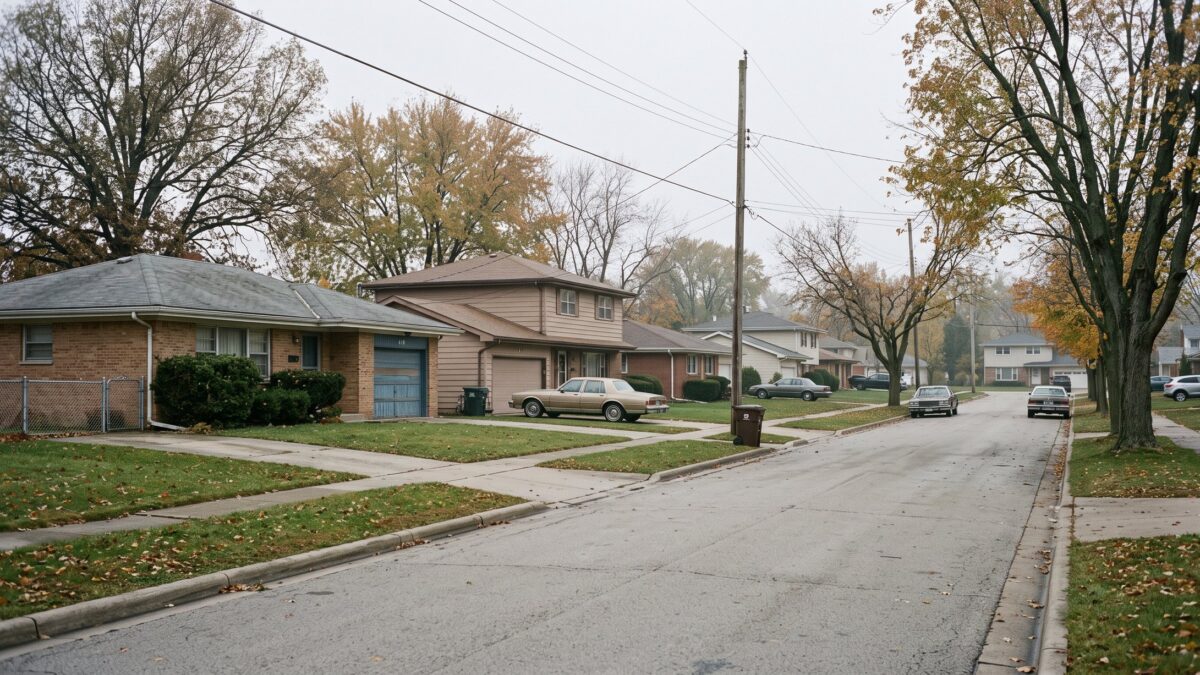 Ring one: in Orland Park several times a week
Who does basement waterproofing in Orland Park?
ProSeal Basement Waterproofing handles sump pump systems, interior drain tile and yard drainage across Orland Park, ZIPs 60462 and 60467, from a base twenty to thirty minutes away in the Joliet and New Lenox corridor. A sump pump with battery backup runs $2,800 to $4,500 installed, interior drain tile $95 to $160 per linear foot, and both numbers are published before anyone knocks on your door.
The expertise Orland Park needs is specific: whole streets here were designed around a pit and a pump from the day they were platted, so the diagnosis usually starts at the sump, not the wall. A company that leads every visit with a five-figure perimeter system will miss the twelve-year-old pump or failed check valve that actually caused your wet floor. Our inspectors are paid for the diagnosis, not the invoice.
 The heart of an Orland Park basement: the pit doing the work the clay refuses to.
What does basement waterproofing in Orland Park include?
An Orland Park waterproofing job draws from six systems, and on this clay the inspection usually starts with the pump before it prices anything bigger. Every system installs from the published ranges by our own crew.
 Sump pumps & battery backup
The first conversation in a village where the pump was always the plan.
Learn more
Sump pumps & battery backup
The first conversation in a village where the pump was always the plan.
Learn more
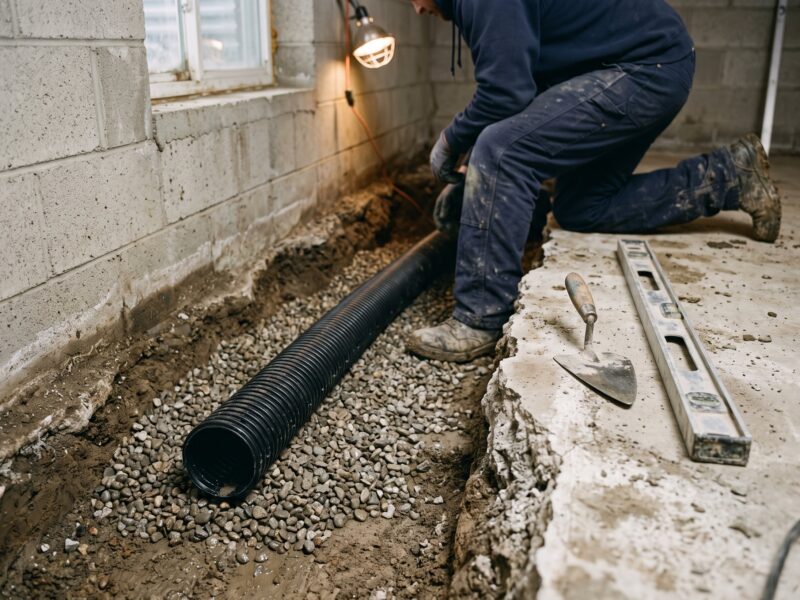 Interior drain tile
New perimeter tile where the original 1970s line has silted or collapsed.
Learn more
Interior drain tile
New perimeter tile where the original 1970s line has silted or collapsed.
Learn more
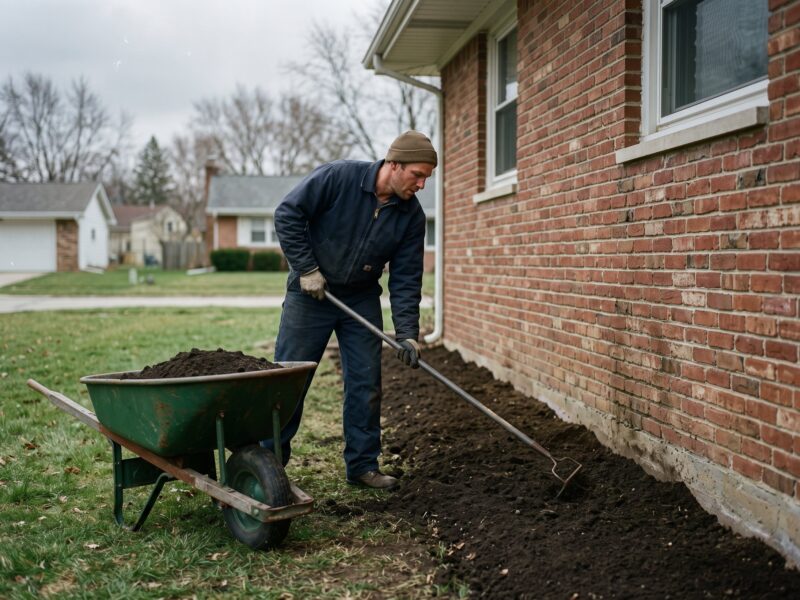 Yard drainage & regrading
For lots sitting low in the basin terrain west of 104th Avenue.
Learn more
Yard drainage & regrading
For lots sitting low in the basin terrain west of 104th Avenue.
Learn more
 French drains
Intercepts surface water the clay refuses to absorb.
Learn more
French drains
Intercepts surface water the clay refuses to absorb.
Learn more
 Crawl space encapsulation
For additions and split-level crawls breathing damp clay air.
Learn more
Crawl space encapsulation
For additions and split-level crawls breathing damp clay air.
Learn more
 Leaking crack injection
Poured-wall cracks sealed full depth from $450.
Learn more
Leaking crack injection
Poured-wall cracks sealed full depth from $450.
Learn more
Why do Orland Park basements leak?
Orland Park basements leak when the machinery they were built around stops keeping up, because on clay this tight the design always assumed a pump. Three versions of that story cover most of the village.

The 1970s core subdivisions
The oldest sump-dependent streets now run fifty-year-old drain tile into pits fitted with whatever pump the last owner bought. When the original line silts shut, the pump goes quiet while the floor gets wet, a combination that fools a lot of homeowners.

The 1980s and 1990s stock
Younger walls, same clay. These basements stay dry until a check valve fails, a discharge line freezes, or a July storm outruns a builder-grade pump. The fix is usually capacity and a battery backup, not a new perimeter system.

Old Orland and the older blocks
The historic district predates the sump-pump era, so its basements rely on masonry, grading and luck. Here the conversation is real drainage: tile, a properly built pit, and discharge routed where the village allows it.
What makes Orland Park ground hold water?
Orland Park sits on some of the heaviest, least permeable clay in Cook County, and the landscape says so out loud: the Orland Grasslands and the surrounding preserves exist because this ground ponds water instead of drinking it. Marley Creek drains part of the village, and the terrain west of 104th Avenue rolls through a series of shallow basins, which means two houses on the same street can have very different water lives depending on where each lot sits.
Because almost no rain soaks into this clay, the subdivision storm system carries nearly all of it, and your sump carries whatever reaches the footing. That is why the same storm that barely registers in a sandier suburb runs Orland Park pumps for days. The inspection reads your lot position, your discharge routing and your pit before recommending anything, because on this ground those three details decide everything.
 On clay this tight, the storm system does the absorbing the soil never will.
Signs your Orland Park basement needs waterproofing
Six symptoms drive most Orland Park water calls, and in a sump-dependent village the first question for each one is what the pump was doing at the time. The free inspection sorts symptom from cause.

A pump that suddenly went quiet
In 1970s stock, a sump that stopped cycling often means the original drain line feeding it has clogged or collapsed. The silence is the symptom; the wet floor follows.

Water at the floor-wall joint
Clay this heavy loads the footing with hydrostatic pressure after every wet spell. Cove seepage means water is arriving faster than the tile and pit can move it.

White mineral bloom on the walls
Efflorescence marks water migrating through the concrete itself. On basin-bottom lots it shows up on the uphill wall first, mapping exactly where the pressure sits.

Musty air on the first floor
A damp basement pushes its air upstairs all summer. If the smell tracks the rain, the source is ground moisture the current system is not fully clearing.

A discharge line dumping at the wall
A sump that empties beside the foundation feeds itself the same water forever. Rerouting the discharge is often the cheapest meaningful fix on the menu.
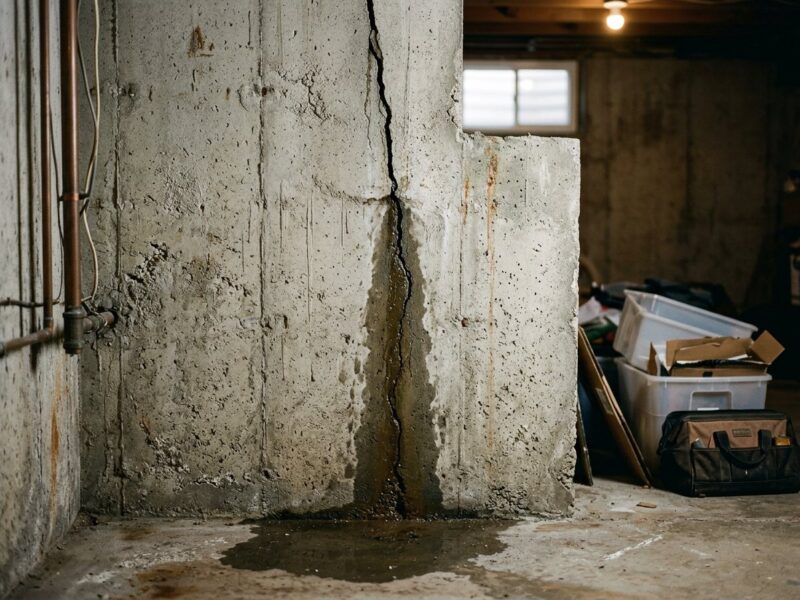
A wall crack that runs in the rain
Poured walls from the 1980s and 1990s crack as they cure and settle. When a crack becomes a leak, a $450 to $900 injection usually closes the case in a morning.
Pump racing all night after every storm? Tell us the street and the age of the pump; in Orland Park that is usually half the diagnosis.
How does basement waterproofing work in Orland Park?
An Orland Park waterproofing job runs four steps from phone call to warranty, and because the village is a short drive in our first ring, scheduling moves fast.
Inspect the pit first
We test the pump, the check valve and the discharge routing, then trace any water indoors and read the lot's position in the local terrain. Free, within 48 hours.
Day 0Scope the original tile
In 1970s and 1980s stock we establish whether the builder's drain line still flows before quoting anything, because a cleared or replaced line changes the whole plan. The written plan says what we found.
Day 0, same visitInstall and flood test
Pump and backup swaps finish in a day; full perimeter tile takes two to four with fresh concrete and a flood test you watch before we leave.
Days 1 to 4Register the warranty
Interior systems carry the lifetime, fully transferable warranty, registered to the address so it transfers to the next owner without conditions.
On completionInterior or exterior waterproofing: which fits Orland Park lots?
Interior drain tile wins on most Orland Park houses, and the village itself explains why: forty years of mature landscaping, decks and patios sit over the exterior footing line, while the interior route ties straight into the sump pit the house already runs on.
| Interior drain tile | Exterior excavation | |
|---|---|---|
| Best for | Cove seepage and silted original tile, the standard Orland Park pattern | Walls with failed exterior coatings deteriorating from outside |
| On sump-dependent houses | Connects directly to the existing pit and upgraded pump | Still ends at the same pit; the excavation adds cost, not capacity |
| Mature 1970s-90s lots | No digging; the landscaping, fence and patio never know | Machine access through established yards, at the owner's expense |
| On this clay | Moves water at the footing, where the pressure actually is | Backfilled clay trenches re-compact tight within a few seasons |
| Cost | $95 to $160 per linear foot | Several times interior cost; priced per wall after inspection |
| Season | Installs year-round; frozen ground is irrelevant indoors | Weather-dependent; saturated clay shuts digs down for weeks |
When a wall genuinely needs exterior work, we say so and price it. The method should fit the house, not the sales script.
When do Orland Park basements flood?
Orland Park water runs on a calendar set by clay that never truly drains, and each season has one job a homeowner can do ahead of it.
Spring: the long soak
Snowmelt and rain load the clay for weeks and the basins west of 104th Avenue fill first. Pumps cycle around the clock, and any weak link in the pit shows itself now. Our busiest inspection season.
March to MaySummer: the power test
The violent storms that dump two inches in an hour are the same ones that drop the power lines. A primary-only pump in a sump-dependent house is a gamble every July; the battery backup is the answer to this exact night.
June to AugustFall: the cheap-fix window
Dry ground makes fall the season for discharge rerouting, downspout burials and regrading, the $600 to $2,500 work that lightens the load on every pump in the village before the thaw.
September to NovemberWinter: the install season
Interior drain tile and pump work happen entirely indoors, so frozen clay changes nothing. Winter scheduling is the fastest of the year, and the system is proven before spring tests it.
December to FebruaryHow much does basement waterproofing cost in Orland Park?
Basement waterproofing in Orland Park costs $2,800 to $4,500 for a sump pump with battery backup, $95 to $160 per linear foot for interior drain tile, and $8,000 to $16,000 for a full perimeter system on most homes. Those are the same published ranges every town on our map pays, and your written quote lands inside them.
| Work | Range | What moves the number |
|---|---|---|
| Interior drain tileper linear foot | $95–$160 | Length of the run, slab thickness, what has to be moved off the walls |
| Sump pump with battery backupinstalled | $2,800–$4,500 | Pit condition, backup capacity, discharge routing |
| Exterior French drainper linear foot | $45–$90 | Trench depth, where the water can legally go |
| Downspout extensions and regradingtypical job | $600–$2,500 | Feet of grade to rebuild, soil hauling |
Every range lives on the pricing page, and your written Orland Park quote lands inside it.
Where we waterproof in Orland Park
We cover both Orland Park ZIPs, 60462 and 60467, and the calls follow the terrain. The 1970s streets near the 143rd Street corridor send silted original tile and pumps past their service life. The newer stock along LaGrange Road and out toward the village's western edge sends check-valve failures and storm-outrun pumps, and the basin ground west of 104th Avenue sends the lot-position calls where one neighbor floods and the other never has. Old Orland sends the pre-sump-era houses that need real drainage built from scratch.
Orland Park sits in our first ring: twenty to thirty minutes from the Joliet and New Lenox corridor, and we are in the village several times a week. Standard inspections happen within 48 hours, active flooding is answered 24/7, and there is no trip charge.
 The pit walkthrough: what the pump does, what the backup covers, what it costs.
Orland Park basement waterproofing questions, answered straight
My sump pump runs constantly in Orland Park. Is something wrong?
Not necessarily. On clay this heavy, a pump cycling every few minutes through a wet spell is the system doing its job. The real questions are whether it keeps up, how old it is, and what happens the night the power fails mid-storm. A nine-year-old pump running constantly is a failure rehearsing for the worst possible evening.
Do I need drain tile if my house already has a sump pump?
You almost certainly have tile already; the pump exists because a drain line feeds the pit. The question is whether that line still flows. Clogged or collapsed original tile is common in 1970s Orland Park stock, and it shows up as a pump that has gone mysteriously quiet while the basement gets wet. We scope the line before quoting a foot of new tile.
Where is my sump supposed to discharge in Orland Park?
Away from the house, and never into the sanitary sewer, which Illinois municipalities including Orland Park prohibit. Whether your street allows a storm connection or requires surface discharge varies more block to block than people expect, so check with the village. We route discharge to comply and, just as important, to stop the pit from recycling its own water.
Is a battery backup really worth it in Orland Park?
Here more than almost anywhere. A sump-dependent house has no passive drainage to fall back on: when the pump stops, the water does not. The storms that flood this clay are the same ones that cut the power, and a backup at $2,800 to $4,500 installed with the pump costs a fraction of one finished-basement loss.
My neighbor floods and I never have. Why would that change?
West of 104th Avenue the terrain rolls through shallow basins, so lot position decides who collects the water long before any pump does. Your immunity is partly elevation and partly a pump you may never have tested. Regrading, discharge routing and a proven backup keep a lucky lot lucky; the inspection tells you which of the three you are actually relying on.
Do you waterproof finished basements in Orland Park?
All the time, and without demolishing them. Perimeter work takes the bottom drywall course along the run and puts it back; pump and pit upgrades touch almost nothing. Given how many Orland Park basements are finished rec rooms, protecting what is down there is usually the entire point of the call.
How much does basement waterproofing cost in Orland Park?
The same published ranges as everywhere we work: $95 to $160 per linear foot for interior drain tile, $2,800 to $4,500 for a sump with battery backup, $8,000 to $16,000 for a full perimeter system, and $600 to $2,500 for downspout and grading work. Many Orland Park calls resolve at the pump line, not the system line.
How do I choose a basement waterproofing company in Orland Park?
Ask whether they test the existing pump and scope the original drain line before quoting, whether pricing is published before a salesperson sits at your table, and whether the warranty transfers without fees. In a village built sump-dependent, a company that skips the pit and goes straight to a perimeter quote has skipped the diagnosis.
Is the wet wall also cracked or bowing?
The clay that keeps Orland Park pumps busy also pushes sideways on Orland Park walls, and the two problems often show up together on the same block. If your damp basement comes with a horizontal crack, a stair-step line or a wall that has started to lean, one inspection covers both trades and one crew sequences both fixes.
Foundation Repair in Orland Park
Basement waterproofing near Orland Park

Keep the pump winning, keep the paper
A free inspection within 48 hours, a system built for a sump-dependent house on heavy clay, and a lifetime, fully transferable warranty registered to the address.
Or talk to a human right now
(630) 335-1128
Request your free estimate
Tell us what you're seeing. We'll call back fast and be out within 48 hours.