
Basement Waterproofing in New Lenox, Illinois
Flat former farmland, heavy clay, and subdivision drainage that depends on swales somebody fenced over ten years ago: that is how a New Lenox basement gets wet. We live down the road, we diagnose the yard before we quote the basement, and the systems we do install carry a lifetime, fully transferable warranty.
- The closest town to our base: inspections often the same day you call
- Interior systems warrantied: lifetime, fully transferable
- Free written inspection, guaranteed within 48 hours
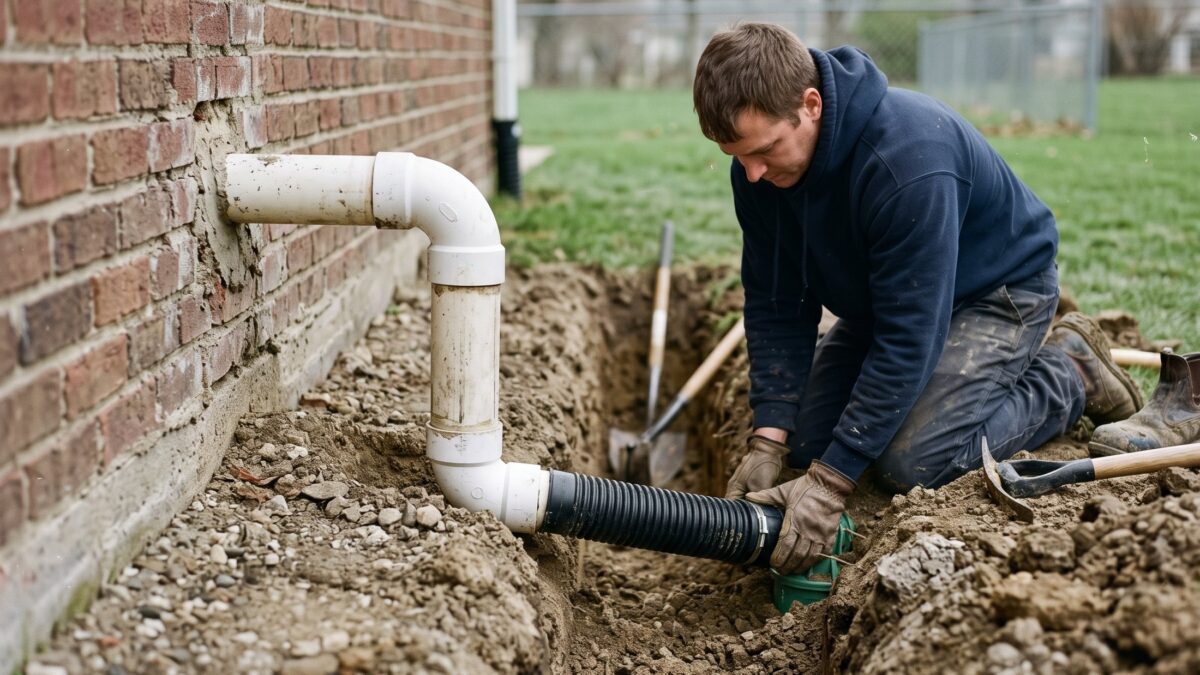 Home base: New Lenox is our shortest drive
Who does basement waterproofing in New Lenox?
ProSeal Basement Waterproofing is a basement waterproofing company whose crews are based in the Joliet and New Lenox corridor, which makes New Lenox the shortest drive on our map. Interior drain tile runs $95 to $160 per linear foot, a full perimeter system with a sump and battery backup lands between $8,000 and $16,000, and downspout and regrading work runs $600 to $2,500, every number published before we ring your bell.
New Lenox needs a diagnostician more than a salesman. Most of the village went up after 1990 on poured walls that are structurally fine; the water problems trace to flat clay lots, builder-minimum grading and swales that stopped working when a fence or a shed landed in them. A company that quotes a five-figure system before walking the yard has skipped the step that matters here.
See the full basement waterproofing system, wall to discharge
 A finished sump with battery backup: the last line, not the first fix.
What does basement waterproofing in New Lenox include?
Six systems cover everything a New Lenox lot can throw at a basement, and the free inspection prices only the ones your house needs. On this side of the village line, the honest quote frequently starts in the yard.
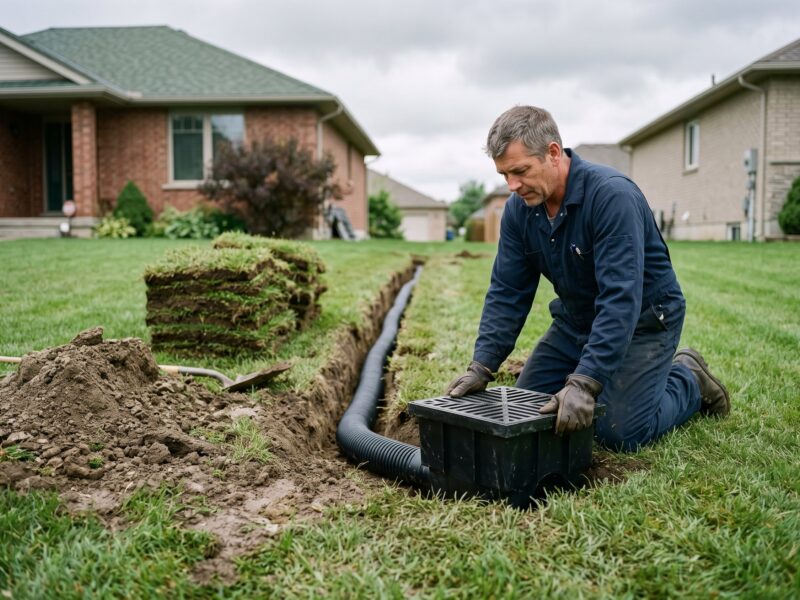 Yard drainage & regrading
Restoring the fall a builder-minimum grade lost as the backfill settled.
Learn more
Yard drainage & regrading
Restoring the fall a builder-minimum grade lost as the backfill settled.
Learn more
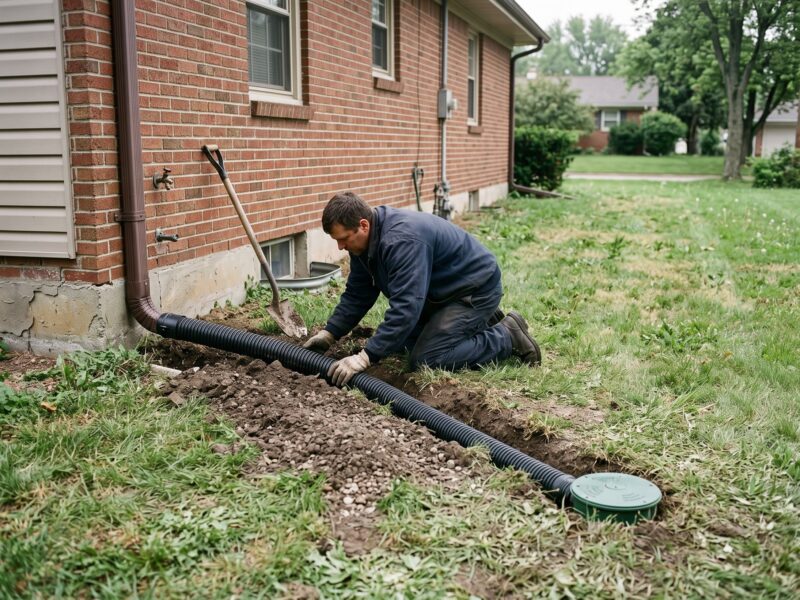 French drains
Moving water past a blocked swale line and off the flat clay.
Learn more
French drains
Moving water past a blocked swale line and off the flat clay.
Learn more
 Sump pumps & battery backup
Sized for summer downpours that knock out power on the same night.
Learn more
Sump pumps & battery backup
Sized for summer downpours that knock out power on the same night.
Learn more
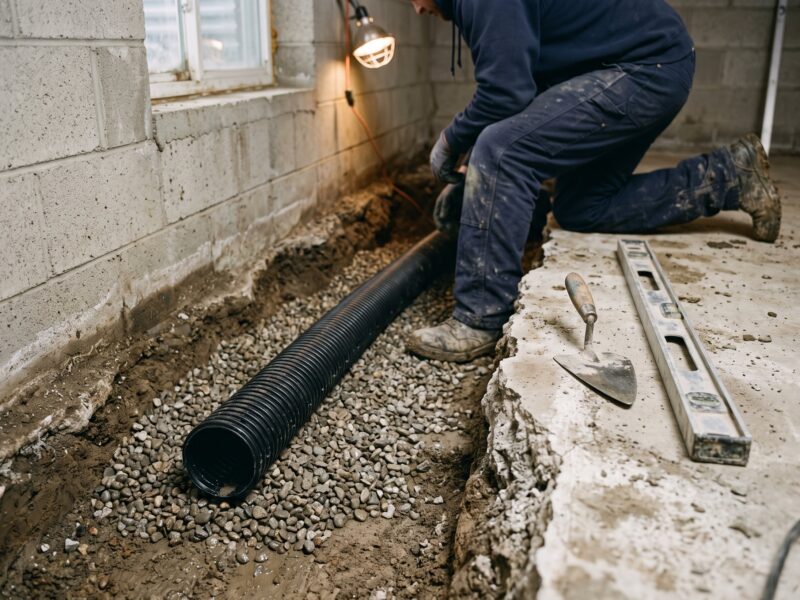 Interior drain tile
The permanent answer where the water table near Hickory Creek stays high.
Learn more
Interior drain tile
The permanent answer where the water table near Hickory Creek stays high.
Learn more
 Leaking crack injection
Curing cracks in 1990s and 2000s poured walls, sealed from $450.
Learn more
Leaking crack injection
Curing cracks in 1990s and 2000s poured walls, sealed from $450.
Learn more
 Crawl space encapsulation
Lookouts and additions along the older Route 30 blocks included.
Learn more
Crawl space encapsulation
Lookouts and additions along the older Route 30 blocks included.
Learn more
Why do New Lenox basements leak?
New Lenox basements leak for young-town reasons: settled builder grading, swales that got landscaped out of existence, and flat farm clay that holds every inch of rain. Wall deterioration, the classic old-suburb cause, is mostly confined to the village core.

The 1990s to 2015 subdivisions
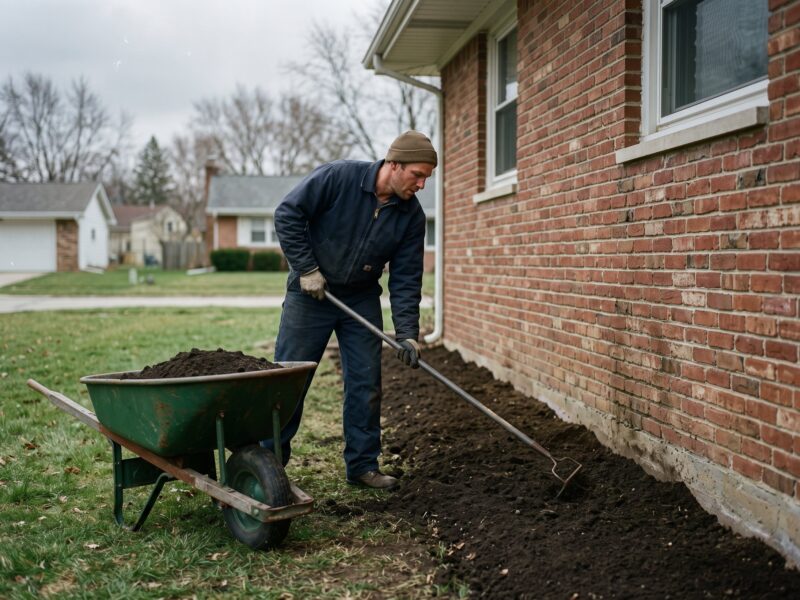
The great majority of the village: poured walls in good shape sitting behind backfill that is still consolidating. The lot was graded to a builder minimum at closing, it has flattened every year since, and the wall now catches roof water the yard used to carry away.
The swale-dependent blocks
On flat former farmland, drainage between lots is engineered: shallow swales carry several houses' worth of water to the storm system. Within a decade of closing, fences, sheds and planting beds interrupt them, and the water picks a basement instead.

The village core along Route 30
The exception to the young-town story. Block and early poured walls near the old core behave like the rest of Will County: cove-joint seepage in spring, original drain tile silting shut, walls that have simply been holding clay for a long time.
Why does New Lenox water sit in the yard?
Water sits in New Lenox yards because the ground barely tilts. Away from Hickory Creek, the village is flat former farm clay with very little natural fall, so every subdivision plat depends on engineered swales between lots to move storm water. When those channels carry water the way the engineer drew them, basements stay dry; when a shed, a fence line or a raised planting bed interrupts one, the water backs up and soaks into somebody's backfill.
Hickory Creek is the other half of the story. It runs west through town, and its preserve corridor sets the drainage and the water table for a large share of the village. Homes near the corridor can see genuinely high groundwater in a wet spring, and that is drain tile territory rather than a grading fix. The free inspection sorts one from the other, because the two problems cost very different money.
See how regrading and yard drainage move water off flat clay
 Hickory Creek: the corridor that sets the water table for much of New Lenox.
Signs your New Lenox basement needs waterproofing
Six symptoms fill our New Lenox call log, and on a young housing stock, several of them point to the yard rather than to a basement system. Each one gets named honestly at the inspection.
A poured-wall crack that drips in rain
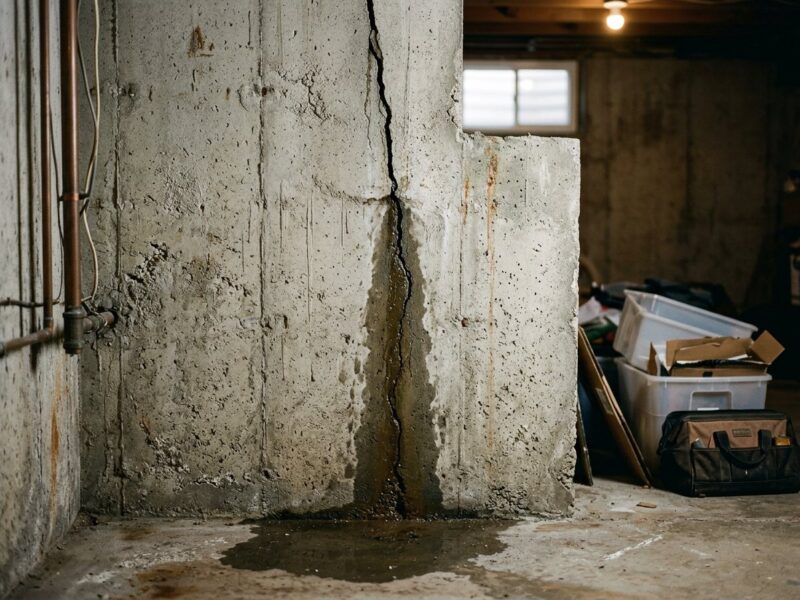
The most common New Lenox call: a curing or settlement crack in a 1990s or newer wall that turned into a water path. Usually a $450 to $900 injection, done in a morning.

A sump that cycles all storm long
A pit that refills every few minutes is often drinking the house's own roof water off a flattened grade. Check the yard before pricing capacity.

Water standing between the houses
A shallow lake along the lot line after rain means the swale is blocked downstream. That water is queued up next to two foundations until it finds one.

Damp smell in a finished basement
Most basements here are finished, so moisture hides behind drywall until the air announces it. A seasonal musty cycle means water, not laundry.

Seepage at the floor and wall seam
Classic cove-joint water, most often near the Route 30 core or the creek corridor where the water table does the pushing. This is the drain tile symptom.

White mineral bloom on block
On the village core's older block walls, efflorescence means water is moving through the wall itself and leaving its minerals behind. Drainage relieves the pressure driving it.
Water in the basement and a lake on the lot line? Those are usually the same problem. We can often look at both the day you call.
How does basement waterproofing work in New Lenox?
A New Lenox waterproofing job runs four steps, and the first one happens fast: this is the closest town to our base, so the inspection often lands the same day you call.
Walk the lot first
Before anyone opens the basement door we walk the grading, find the swale on the plat and check whether it still flows. On a young New Lenox lot, the diagnosis frequently ends in the yard. Free, within 48 hours and often same day.
Day 0Then read the basement
Crack, cove joint or pit tells us whether the water is roof runoff, a blocked swale or true groundwater off the creek corridor. The written plan prices only the fix that matches, from the published ranges.
Day 0, same visitInstall and flood test
Grading and drain work reshapes the yard in a day or two; an interior system means trench, tile, gravel, sump, battery backup, fresh concrete and a flood test you stand there and watch.
Days 1 to 4Register the warranty
Interior systems carry the lifetime, fully transferable warranty and drainage work carries its own 5-year coverage, registered to the address so it follows the house.
On completionInterior or exterior waterproofing: which fits New Lenox?
New Lenox is one of the few towns where the exterior route earns a real look, because the walls are young, the lots are open and the failure is often outside already. Interior drain tile still wins whenever the water table itself is the problem.
| Interior drain tile | Exterior drainage & excavation | |
|---|---|---|
| Best for | High water table near the creek corridor; chronic cove-joint seepage | Blocked swales, settled grading and surface water on flat lots |
| On 1990s+ poured walls | Rarely the first prescription; the wall is usually sound | Often the whole answer: regrading at $600 to $2,500, French drains at $45 to $90 per foot |
| Lot access | Needs none; installs entirely from inside | Subdivision side yards usually take a machine without drama |
| Finished basements | Loses one drywall course along the run, protected and replaced | Touches nothing indoors at all |
| Cost | $95 to $160 per linear foot; full systems $8,000 to $16,000 | Yard-side fixes usually land in four figures |
| Season | Installs all year, frozen ground irrelevant | Grading and trenching want thawed, workable ground |
On a young lot we bid the outside fix first when the outside is the problem. The 48 hours inspection is free either way, and nobody in your yard works on commission.
When do New Lenox basements flood?
New Lenox water keeps a schedule set by flat clay and engineered drainage. Each season has its own failure mode and its own cheapest moment to act.
Spring: swale season
Snowmelt and rain land on clay with nowhere to fall, and every blocked swale in the village shows itself at once. Sumps run hard, lot lines pond, and this is when the same-day inspection earns its keep.
March to MaySummer: the cloudburst test
An inch of rain in an hour overwhelms flat lots faster than sloped ones, and the same storm cell often takes the power. Primary-only sump setups fail here; battery backups at $2,800 to $4,500 installed are the answer.
June to AugustFall: fix the yard
Dry, workable ground makes fall the season for regrading, downspout burials and swale restoration, the $600 to $2,500 work that spares you a system entirely. Book it before frost.
September to NovemberWinter: inside work
Interior drain tile and crack injection happen indoors and do not care what the ground is doing. Winter calendars are the most open of the year, and the system is tested before the melt.
December to FebruaryHow much does basement waterproofing cost in New Lenox?
Basement waterproofing in New Lenox costs $95 to $160 per linear foot for interior drain tile, $8,000 to $16,000 for a full perimeter system with sump and battery backup, and $600 to $2,500 when the honest fix is downspouts and regrading, which in this village it often is. The ranges are published, and there is no trip charge to the closest town we serve.
| Work | Range | What moves the number |
|---|---|---|
| Interior drain tileper linear foot | $95–$160 | Length of the run, slab thickness, what has to be moved off the walls |
| Sump pump with battery backupinstalled | $2,800–$4,500 | Pit condition, backup capacity, discharge routing |
| Exterior French drainper linear foot | $45–$90 | Trench depth, where the water can legally go |
| Downspout extensions and regradingtypical job | $600–$2,500 | Feet of grade to rebuild, soil hauling |
Every range lives on the pricing page, and your written New Lenox quote lands inside it.
Where we waterproof in New Lenox
One ZIP, 60451, covers the village, and the calls sort by plat age rather than by distance. Cherry Hill and the subdivisions off Spencer Road, Haven Avenue and Nelson Road send sump questions, ponded lot lines and settled builder grading. The blocks along the Old Plank Road Trail corridor and near Hickory Creek Preserve send high-water-table calls that end in drain tile. The village core along Route 30 sends the county's familiar block-wall seepage.
This is home base in the most literal sense on our service map: crews start their mornings in the Joliet and New Lenox corridor, the drive is rarely more than fifteen minutes, inspections regularly happen the same day you call and never later than 48 hours, and standing water gets a 24/7 response.
 Morning roll-out from the corridor: New Lenox is the first stop, not the last.
New Lenox basement waterproofing questions, answered straight
Can I fill in the low channel between my house and my neighbor's?
Please do not. That channel is a drainage swale, and it is carrying storm water from several lots to the storm system. Filling it, running a fence across it or berming it with landscaping is among the most common causes of a wet New Lenox basement, and it tends to hand the water, and the argument, to a neighbor. If it holds water when it should flow, the fix is restoring its grade, not erasing it.
Do you charge extra to come out to New Lenox?
No, and it would be strange if we did: New Lenox is the closest town on our list. The inspection is free everywhere we work, there is no trip charge, and because the crews are based in the Joliet and New Lenox corridor, the visit often happens the same day you call.
My sump in Cherry Hill barely rests during rain. Is drain tile next?
Not necessarily. On a young lot with a flattened grade, the pit is often pumping the house's own roof water in a loop: out the discharge, across the settled yard, back to the footing. We walk the lot before pricing anything, because $600 to $2,500 of grading and downspout work regularly retires the problem for good.
Who is responsible when a blocked swale floods my basement?
It depends on whose lot blocked it, which is why we document what we find with photos and elevations. Practically, the water does not wait for the dispute: we can restore the swale grade on your side, add a French drain at $45 to $90 per foot to reroute around the blockage, and give you the paperwork if the conversation with a neighbor or the village needs it.
Can you waterproof a finished New Lenox basement without wrecking it?
Yes, and in this village we had better: most basements built since the 1990s are finished. The bottom drywall course along the wet run comes off and goes back on, the rest of the finish is protected, and the flood test runs before trim is reinstalled. The system hides under new concrete at the slab edge.
My house backs up to Hickory Creek Preserve. Should I be worried?
Worried, no; aware, yes. The creek corridor sets the water table for a good share of the village, so homes near it see higher groundwater in wet springs than the flat interior blocks do. That is the setting where interior drain tile at $95 to $160 per linear foot is the honest recommendation rather than yard work.
Do I need exterior membrane waterproofing on a wall built in 2004?
Almost never. A poured wall that age is normally sound; when it leaks, the cause is a specific crack or the water being delivered to it by grading. A $450 to $900 injection seals the crack, yard drainage stops the delivery, and full exterior excavation stays on the shelf where a 20-year-old wall usually belongs.
What happens to my sump when a summer storm cuts the power?
Without a backup, the pit fills at exactly the moment it matters, which is how dry basements flood exactly once. A battery backup system, $2,800 to $4,500 installed with the pump, carries the storm hours that take the grid down. In a village this dependent on pumped discharge, we consider it part of the system, not an accessory.
Is the wet crack also a moving crack?
On young poured walls the two trades meet at the same spot: a diagonal crack off a basement window corner can leak like a plumbing problem and lengthen like a structural one. If yours is doing both, one inspection measures it, seals it and tells you honestly whether the settlement behind it is finished.
Foundation Repair in New Lenox
Basement waterproofing near New Lenox

The closest crew you can call about a wet basement
A free inspection within 48 hours and often the same day, a diagnosis that starts in the yard where New Lenox water starts, and a lifetime, fully transferable warranty on every interior system.
Or talk to a human right now
(630) 335-1128
Request your free estimate
Tell us what you're seeing. We'll call back fast and be out within 48 hours.