
Basement Waterproofing in Tinley Park, Illinois
Tinley Park runs on split-levels, and a split-level puts its wettest wall behind the finished carpet. Add Tinley Creek, forest preserve groundwater and a sewer map that changes mid-village, and drying a lower level here takes diagnosis before it takes a trench. Both come with a lifetime, fully transferable warranty.
- Twenty to thirty minutes from our Will County base
- Split-level systems priced by the wall, not the footprint
- Free written inspection within 48 hours
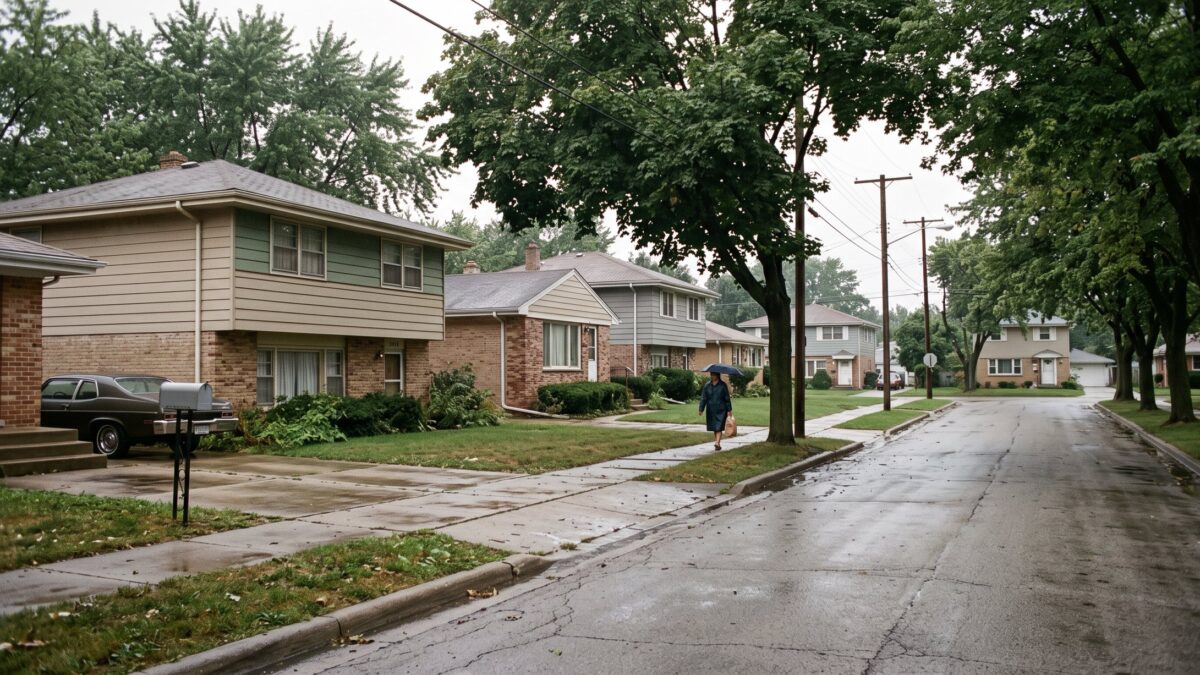 First ring: 20 to 30 minutes from our crews
Who does basement waterproofing in Tinley Park?
ProSeal Basement Waterproofing installs interior drain tile, sump systems and yard drainage throughout Tinley Park, with interior drain tile at $95 to $160 per linear foot and full perimeter systems including a sump and battery backup at $8,000 to $16,000. On the village's split-levels the honest quote is often smaller than that, because only part of the footprint sits deep enough to need tile at all.
The company you call in Tinley Park has to answer one question before selling anything: is this water seepage, surface runoff off the driveway, or a sewer backup? The village straddles a real boundary between older combined sewers and newer separated ones, and a system that fixes the wrong answer fixes nothing. Our inspection sorts the three before a price appears.
See the full basement waterproofing system, wall to discharge
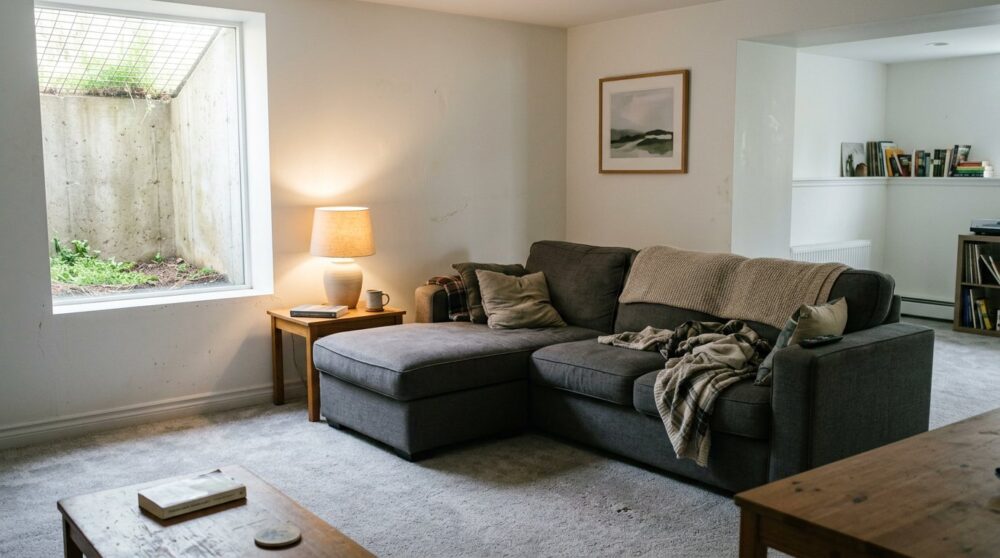 The stakes in a split-level: the wet wall is usually the finished one.
What does basement waterproofing in Tinley Park include?
Six systems cover everything Tinley Park lower levels need, and the inspection prices only the ones your house calls for. Split-level jobs frequently need two of them, not all six.
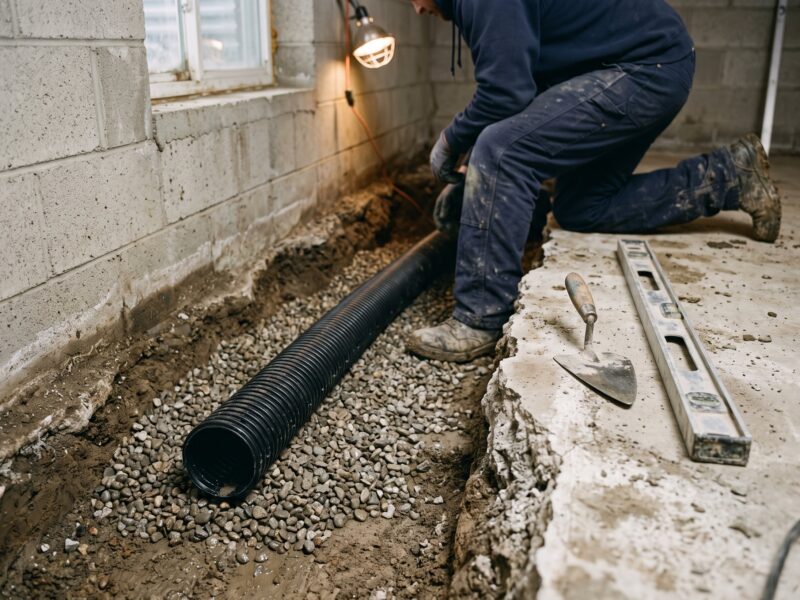 Interior drain tile
Often one or two walls on a split-level, because only the deep side needs it.
Learn more
Interior drain tile
Often one or two walls on a split-level, because only the deep side needs it.
Learn more
 Sump pumps & battery backup
Sized for the high water table the forest preserves keep loaded.
Learn more
Sump pumps & battery backup
Sized for the high water table the forest preserves keep loaded.
Learn more
 Yard drainage & regrading
The first fix when driveway runoff feeds the shallow front wall.
Learn more
Yard drainage & regrading
The first fix when driveway runoff feeds the shallow front wall.
Learn more
 French drains
For lots backing to preserve land that never quite drains.
Learn more
French drains
For lots backing to preserve land that never quite drains.
Learn more
 Crawl space encapsulation
Split-levels hide crawls under the mid floor; we seal them.
Learn more
Crawl space encapsulation
Split-levels hide crawls under the mid floor; we seal them.
Learn more
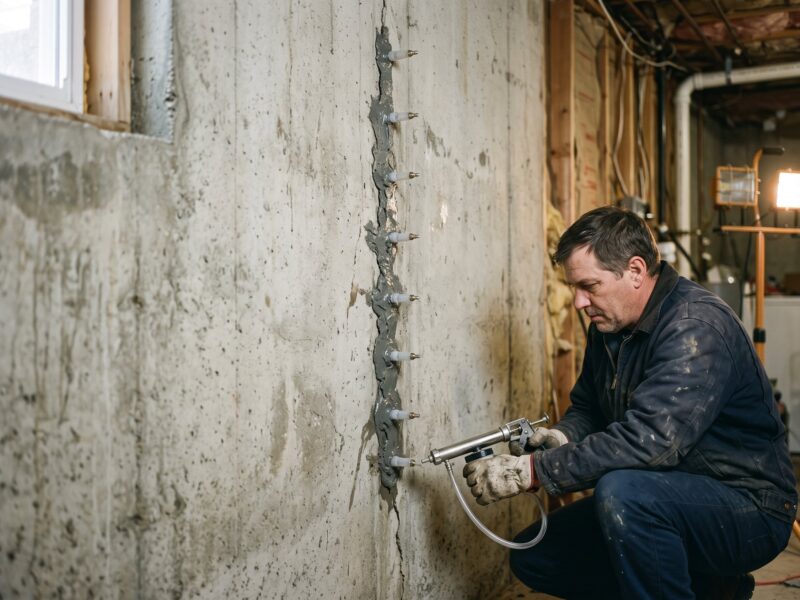 Leaking crack injection
For the poured walls east of 80th Avenue, from $450 per crack.
Learn more
Leaking crack injection
For the poured walls east of 80th Avenue, from $450 per crack.
Learn more
Why do Tinley Park basements leak?
Tinley Park lower levels get wet three ways: split-level front walls taking driveway runoff, deep walls sitting in the high water table the creek and preserves maintain, and floor drains backing up on the combined-sewer blocks. Each has a different fix at a very different price.

The split-level and ranch belt
The 1960s through 1980s streets that fill most of the village put a shallow, usually finished wall facing the driveway. Surface water reaches that wall first and ruins carpet and drywall long before true groundwater shows up anywhere.

The old center on block
Pre-war houses around Oak Park Avenue and the Metra station sit on block that has been drinking for a century. Cove-joint seepage and mineral bloom are the standing complaints, and original clay tile drains silted shut decades ago.

East of 80th Avenue
The 1990s and 2000s poured walls mostly stay dry until a shrinkage crack starts running or a sump loses power in a storm. Out here the answer is often an injection and a battery backup, not a perimeter system.
Where does Tinley Park basement water come from?
Tinley Park basement water starts with Tinley Creek, which drains the eastern side of the village toward the Cal-Sag system, and with the surrounding forest preserve land that holds a high water table across a good share of town. Ground that borders preserve stays wet because it is supposed to; the preserves store storm water by design, and the clay under the adjacent subdivisions stays loaded long after the sky clears.
The other half of the story is the sewer map. Tinley Park sits on the seam between older combined systems to the north and east and separated systems in the newer sections, so a wet floor here genuinely could be either seepage or a surcharge. Water rising at a floor drain in a storm is the sewer's problem; water arriving at the walls or the floor-wall joint is groundwater, and that one we end with tile, sump capacity and discharge.
 Creek and preserve country: storage that keeps the local water table up.
Signs your Tinley Park basement needs waterproofing
Six symptoms fill the Tinley Park call log, and the split-level layout puts its own twist on several of them. Naming the cause correctly is worth more than any product.

Water at the floor-wall joint
On the deep wall of a split-level or a full basement downtown, cove seepage means hydrostatic pressure under the footing. That is the drain tile call, priced by the affected wall.

A damp front wall after rain
The split-level signature. The shallow wall behind the driveway takes surface water, not groundwater, and the cure is often downspouts and grading in the hundreds, not thousands.

A sump that never shuts off
Near creek and preserve land a busy sump can be legitimate groundwater. Elsewhere it is usually roof water on a loop. The inspection tells which before capacity gets sold.

A musty finished lower level
Carpet on a slab over damp ground holds odor the whole house inherits. If the smell peaks in spring, the source is seasonal moisture under the floor, not the furniture.

White powder on block walls
Common on the pre-war block near Oak Park Avenue: minerals left where water moved through the wall itself. Drainage at the footing relieves the wall.
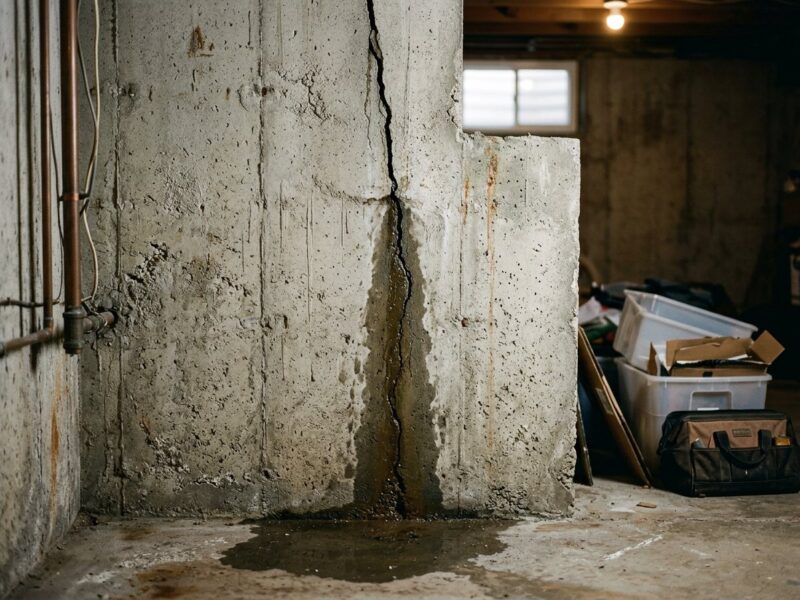
A poured-wall crack that spouts
East of 80th Avenue, a hairline that runs during storms is usually a one-morning urethane injection between $450 and $900, sealed full depth.
Carpet damp along the lower-level wall again? Tell us which wall. On a Tinley Park split-level, that one detail usually names the fix.
How does basement waterproofing work in Tinley Park?
Four steps take a Tinley Park job from first call to registered warranty, and most systems are in and tested within a few days of approval.
Sort seepage from surcharge
We trace the water, walk the grading, and confirm whether your block runs combined or separated sewers, because that answer decides whose problem the water is. Free, within 48 hours.
Day 0Price by the wall
A split-level rarely needs a full perimeter, so the written plan maps which walls sit deep enough for tile and which need surface fixes instead. Published ranges, no commission.
Day 0, same visitInstall and flood test
Trench, tile, gravel, sump with battery backup, fresh concrete, then a flood test you watch. In finished lower levels only the bottom drywall course along the run comes out.
Days 1 to 3Register the warranty
The lifetime, fully transferable warranty attaches to the address and transfers to the next owner, which reads well in a village where split-levels change hands fast.
On completionInterior or exterior waterproofing: which fits Tinley Park?
Interior drain tile wins most Tinley Park comparisons, and the split-level itself is a big reason: excavating the deep wall usually means tearing up the driveway or the landscaping the shallow wall hides behind, while the interior route touches neither.
| Interior drain tile | Exterior excavation | |
|---|---|---|
| Best for | Cove seepage and the high water table near creek and preserve land | Walls physically failing from the soil side |
| On a split-level | Runs only along the deep walls, often one or two of four | Digging beside the driveway wall means breaking the driveway |
| Finished lower levels | Bottom drywall course off and back on; carpet protected | No interior damage, but full landscape and hardscape repair outside |
| Water table | Relieves pressure from below year round, storm or not | Membrane sheds wall water but does not lower the table under the slab |
| Cost | $95 to $160 per linear foot | Several times interior cost; priced per wall after inspection |
| Season | Installs all winter; the work is entirely indoors | Waits on workable ground and dry preserve-side soil |
Exterior work earns its price when a wall is deteriorating from outside. When yours is, we will say so in writing and price it from the published range.
When do Tinley Park basements flood?
Water in Tinley Park keeps a schedule, and the sewer seam plus the split-level stock give each season its own failure mode.
Spring: the water table peaks
Snowmelt fills Tinley Creek and the preserves, the clay saturates, and deep walls near the eastern side of the village weep at the cove joint. Sumps run hard for weeks; this is when the battery backup earns its keep.
March to MaySummer: surcharge season
The short violent storms are what test the combined-sewer blocks north and east; floor drains rise while walls stay dry. The same cloudbursts sheet water off driveways into shallow split-level walls.
June to AugustFall: the prevention window
Dry ground makes fall the cheap season: downspout burials, regrading a driveway apron, and catch basins that starve the front wall of runoff before the melt returns. Most of that work is $600 to $2,500.
September to NovemberWinter: the install season
Frozen ground stops exterior digs but not us; interior tile, sump swaps and injections all happen indoors. Systems booked now are flood tested before the thaw arrives to try them.
December to FebruaryHow much does basement waterproofing cost in Tinley Park?
Basement waterproofing in Tinley Park costs $95 to $160 per linear foot for interior drain tile, with a full perimeter system including sump and battery backup at $8,000 to $16,000, and split-level partial systems frequently land below the full-perimeter figure because only the deep walls need tile. The ranges are published and identical in every town we serve.
| Work | Range | What moves the number |
|---|---|---|
| Interior drain tileper linear foot | $95–$160 | Length of the run, slab thickness, what has to be moved off the walls |
| Sump pump with battery backupinstalled | $2,800–$4,500 | Pit condition, backup capacity, discharge routing |
| Exterior French drainper linear foot | $45–$90 | Trench depth, where the water can legally go |
| Downspout extensions and regradingtypical job | $600–$2,500 | Feet of grade to rebuild, soil hauling |
Every range lives on the pricing page, and your written Tinley Park quote lands inside it.
Where we waterproof in Tinley Park
Both village ZIPs, 60477 and 60487, are regular territory, and the calls map cleanly. The historic downtown around Oak Park Avenue and the Metra station sends block-wall seepage and combined-sewer questions. The split-level streets through Bremen Township and along the 183rd Street corridor send damp front walls and finished-lower-level rescues. Brookside Glen, Odyssey and the newer sections east of 80th Avenue send running cracks and sump failures, and the Tinley Creek corridor sends the high-water-table calls that need real capacity.
Tinley Park sits in our first ring, twenty to thirty minutes from our Will County base, so inspections book inside 48 hours, standing water gets a 24/7 response, and follow-up visits are a short drive rather than a promise.
 First-ring territory: short drives, same-week scheduling.
Tinley Park basement waterproofing questions, answered straight
My split-level lower level is damp along the front wall. Is that groundwater?
Usually not. A split-level's front wall is typically the shallowest below-grade wall in the house, and it faces the driveway, so what reaches it is mostly surface water off the pavement and the downspouts rather than groundwater under pressure. That distinction separates a few hundred dollars of grading from several thousand of drain tile, and the inspection makes it before anything is priced.
How do I find out if my Tinley Park house is on combined or separated sewers?
One phone call to the village answers it, and the answer matters. Water climbing a floor drain on a combined system is a surcharge, and no waterproofing system stops a surcharge. We verify the sewer type as part of every Tinley Park inspection so nobody buys drainage for a plumbing problem.
Can you install drain tile under a finished lower level without wrecking it?
Yes, and on a split-level the job is often smaller than owners fear, because the deep wall covers only part of the footprint. One or two walls of tile, the bottom drywall course removed and replaced along that run, carpet protected, and the rest of the finished space untouched. We measure before we price.
Why does my basement stay damp even in dry weeks?
Blame the neighbors that never dry out. The forest preserve land around the village stores water by design, and Tinley Creek keeps the eastern side's water table high, so deep walls can wick moisture long after the last storm. Drain tile at the footing relieves that pressure continuously, which is why it works here when sealers and paint fail.
Do I need a battery backup sump in Tinley Park?
If your sump does real work, yes. The storms that load the clay are the same ones that drop the power, and a primary-only pit near creek or preserve land is a flood on a timer. A sump with battery backup runs $2,800 to $4,500 installed and is the single best insurance the newer sections east of 80th Avenue can buy.
Does homeowners insurance cover seepage in Tinley Park?
Standard policies almost never cover groundwater seepage, and sewer backup coverage is a separate rider many houses on the combined-sewer blocks should carry but do not. We document what we find either way, because the paperwork helps whether the answer is a claim, a rider or a drainage fix.
How do I pick a waterproofing company in Tinley Park?
Ask whether they price by the wall or by the footprint, whether their warranty transfers to a buyer without conditions, and what they would check before quoting a split-level. A contractor who quotes every Tinley Park house a full perimeter has not understood the housing stock, because half the village does not need one.
How fast can you get to a Tinley Park job?
Tinley Park sits in our first ring, twenty to thirty minutes from our Will County base, so standard inspections happen within 48 hours and active flooding gets a 24/7 response. After 20+ and 1,500+ homes, the routes through the village are muscle memory.
Is the wet wall also bowing or cracked?
Sixty-year-old block under a split-level takes clay pressure and water pressure from the same saturated ground, so a wall that seeps in spring is often a wall being pushed. If your damp lower level comes with a horizontal crack or a stair-step line in the block, one visit inspects for both trades.
Foundation Repair in Tinley Park
Basement waterproofing near Tinley Park

Dry the lower level for good
A free inspection within 48 hours, a system sized to the walls that actually need it, and a lifetime, fully transferable warranty registered to the address.
Or talk to a human right now
(630) 335-1128
Request your free estimate
Tell us what you're seeing. We'll call back fast and be out within 48 hours.