
The quick answer
A full interior waterproofing system for an average Chicago basement runs $8,000 to $16,000, built on interior drain tile priced at $95 to $160 per linear foot. Smaller problems cost far less: urethane crack injection is $450 to $900 per crack, and downspout extensions with regrading run $600 to $2,500. Those are published ranges, not quote-night numbers.
No basement is average, though, and the spread between $8,000 and $16,000 is where most of this industry’s sales tricks live. The price of a basement waterproofing job moves with wall footage, access, pump capacity and what the water is actually doing. Our current price list is published in full on our basement waterproofing cost page, and that page is the source of record: when a number changes, it changes there first. This post is the market explainer that goes with it: what the numbers mean, why Chicago prices are their own animal, and how to compare quotes without financing somebody’s commission.
What are the published prices for waterproofing a basement in Chicago?
Waterproofing has no single price because it is not a single product. It is a family of fixes, each one matched to a different way water gets into a house, and each carries its own range. Here is the whole menu at once, smallest fix to largest.
The full price menu
- Downspout extensions and regrading$600 to $2,500
- Urethane crack injection$450 to $900 per crack
- Exterior French drain$45 to $90 per linear foot
- Interior drain tile$95 to $160 per linear foot
- Sump pump with battery backup$2,800 to $4,500
- Full perimeter interior system$8,000 to $16,000
These match the figures on our basement waterproofing cost page, which stays current. Check any quote you receive, ours included, against it.
The perimeter math is easy to check yourself. Measure the walls that take on water and multiply. Forty feet of affected wall at $95 to $160 per linear foot pencils out to $3,800 to $6,400 in drain tile before the pump; a complete 120-foot perimeter lands at $11,400 to $19,200, which is why full systems in larger basements reach the top of the $8,000 to $16,000 band and occasionally push past it. A contractor who cannot walk you through this arithmetic on your own basement is quoting a feeling, not a job.
| If the quote says | The fix it should describe | The house it usually fits |
|---|---|---|
| $600 to $2,500 | Downspout extensions and regrading | Water only during hard rain, walls otherwise sound |
| $450 to $900 per crack | Urethane crack injection | Poured wall with a weeping vertical crack |
| $2,800 to $4,500 | Sump pump with battery backup | Newer home with working perimeter drainage |
| $8,000 to $16,000 | Full interior perimeter system | Recurring seepage on multiple walls, silted drains |
Why is waterproofing priced differently in Chicago than national averages suggest?
National cost articles average in markets where basements are shallow, rare or naturally dry, and they run low for this region. Chicago basements are full-depth rooms dug into glacial clay that barely drains, and most of them were built draining their footings through clay tile pipes that silted shut decades ago. When a system here gives out, the fix is rarely a patch; it is replacing the drainage the house was built with. That is why a basement that leaks every hard rain usually needs a real system rather than a tube of hydraulic cement.
Local conditions push the labor side too. City and inner-suburb lots leave no room for excavation equipment, so material moves in and out by hand through gangways and basement stairs. Older suburbs on combined sewers limit where a discharge line is allowed to go, and routing it correctly takes planning, not just pipe. And trenching through dense, wet clay is slow, heavy digging; hauling that spoil out of a basement is a real line item, not padding. None of this shows up in a national average. All of it shows up in a Chicago quote.
What will it cost at your house?
Price follows the era of the house more than the size of it, because each era fails in its own way.
Pre-war bungalows and two-flats
In the city’s bungalow belt, exterior excavation is usually off the table: the lot is narrow and the neighbor’s wall is a few feet away. The realistic fix is interior drain tile at $95 to $160 per linear foot, often run on the two or three walls that actually take water rather than the full square. Tight stair access adds labor hours, not multiplier pricing, and this is the everyday shape of basement waterproofing in Chicago proper.
Post-war block ranches and Georgians
Concrete block foundations from the 1950s and 60s suburbs seep at the cove and through mortar joints, which usually means more wall footage in the scope and a quote toward the middle or upper part of the $8,000 to $16,000 range. Spending here buys something extra: block walls that stay saturated can eventually bow under clay pressure, and drying them out early is far cheaper than reinforcing them later. If a wall already looks out of plumb, read up on how to tell if a foundation wall is bowing before anyone quotes you anything.
1980s and 90s poured walls
Poured foundations mostly leak through individual cracks, and the honest price for one is $450 to $900 per crack for urethane injection, a same-day repair carrying a 10-year warranty. Even two or three cracks cost a fraction of a system. What has to be ruled out is a pattern: cracks weeping on several walls after every storm point to a drainage problem that injections alone will not solve, and a good inspection tells the difference before money moves.
Newer subdivision homes
Houses built since the late 1990s usually need capacity, not construction. A sump pump with battery backup at $2,800 to $4,500, plus downspout and grading corrections at $600 to $2,500, covers most of what goes wrong in these homes’ first few decades. Full perimeter systems here are the exception, and a quote that starts with one deserves a second opinion.
What should a written Chicago waterproofing quote include?
Compare quotes on scope, never on the bottom line. A low number attached to a vague scope is the most expensive kind of quote there is. Before you sign anything, look for every item on this list.
- Measured footage with a per-foot price. The quote should name the walls, the linear feet, and the rate, so you can redo the math at your kitchen table.
- The pump, by model and capacity. “Sump pump included” is not a specification. You want to know what is going in the pit and what it can move.
- The discharge route. Where the water exits, where it goes from there, and how the line is protected from freezing.
- Concrete restoration. Who pours the floor back, to what finish, and whether it is in the price.
- The warranty, in writing. Interior systems from us carry a lifetime, fully transferable warranty, and the terms are published. Any warranty you cannot read before signing does not exist.
- Permit responsibility, named. Requirements vary by municipality; the quote should say who is pulling what.
When is the right answer cheaper than every quote you got?
When the water rises through the floor drain. That is a sewer problem, common in older suburbs on combined lines, and no perimeter system will touch it. It belongs to a plumber, possibly with a backflow device. We wrote the full explanation at why water comes up through the floor drain.
When it happened once, with a reason. A basement that got wet the same week a downspout fell off or a window well clogged needs the cause fixed and a season of watching, not a system. Whether the gutters alone can settle it has its own honest answer.
When the problem is air, not water. Musty smell and damp walls in July are often condensation. A $30 humidity gauge and a dehumidifier settle that question for less than any service call, and if you are still weighing whether to spend at all, start with whether waterproofing is worth it for your situation.
What should you do next?
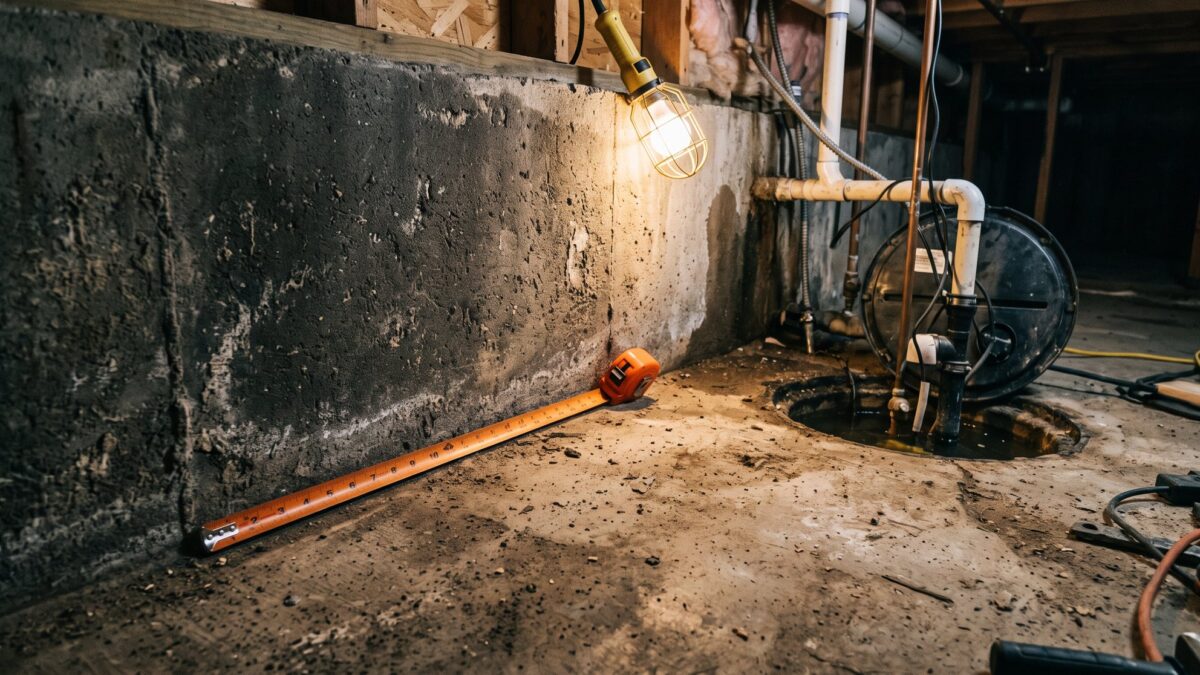
First, measure for free. Walk the basement with a tape, note which walls show water and how many feet of each, and run the per-foot math against the published ranges above. Ten minutes of measuring turns you from a prospect into an informed buyer.
Second, watch one storm. Note where water appears first and what the gutters and grading are doing outside at the same moment. The entry point decides the fix, and the fix decides the price.
Third, get a measured quote in writing. We inspect free within 48 hours and price against the same published list you have already read. Put a measured number on your own basement by requesting the free written estimate, or talk it through first at (630) 335-1128. If cash flow is the obstacle, financing at 0% for 12 months turns a system into a monthly number.
Questions Chicago homeowners ask about waterproofing prices
Why do two quotes for the same basement differ by thousands of dollars?
Usually because they describe different jobs, or because one describes no job at all. A lump sum with no measurements can hide anything, and companies that pay commissioned salespeople price to the living room, not the basement. Reduce every bid to scope: which walls, how many feet, what pump, what warranty. Then check the per-foot math against published ranges. Differences that survive that exercise are real; most do not.
Is exterior waterproofing more expensive than interior?
Once everything is counted, usually yes. Excavating to the footing means removing and rebuilding whatever sits above it: landscaping, walks, stoops, sometimes a driveway, and on many Chicago lots there is no room to dig at all. An exterior French drain at $45 to $90 per linear foot is a different, shallower job that manages surface and yard water, not a substitute for wall-depth work.
Can basement waterproofing be financed?
Yes. We offer financing at 0% for 12 months, which spreads a full system into a flat monthly cost with no interest penalty for using it. The practical effect is that a permanent fix competes with the running cost of cleanup, dehumidifiers and ruined storage on even terms. Ask about it during the estimate; approval takes minutes, not days.
Does every wall of the basement need drain tile?
Often not. Water attacks the walls facing the drainage problem: the uphill side, the side under a failed gutter run, the side with the driveway. Partial runs on one or two walls are common and the per-foot pricing scales down accordingly. The judgment call is groundwater: on a genuinely high water table, a partial run just gives the water a shorter walk to the dry side.
The fastest way to end the guessing is a measured scope with published pricing attached to it. We inspect free within 48 hours, and interior systems carry a lifetime, fully transferable warranty that stays with the house. Call (630) 335-1128 and get the real number for your basement.


