
French Drain Installation in Chicago
A gravel-and-pipe drain built through the wet part of your yard, moving groundwater away from the house before it becomes a basement problem. Built right: fabric-lined, pitched, and discharged somewhere legal.
- Published pricing: $45 to $90 per linear foot
- Fabric-wrapped and pitched, not a gravel-filled ditch
- Free drainage inspection within 48 hours
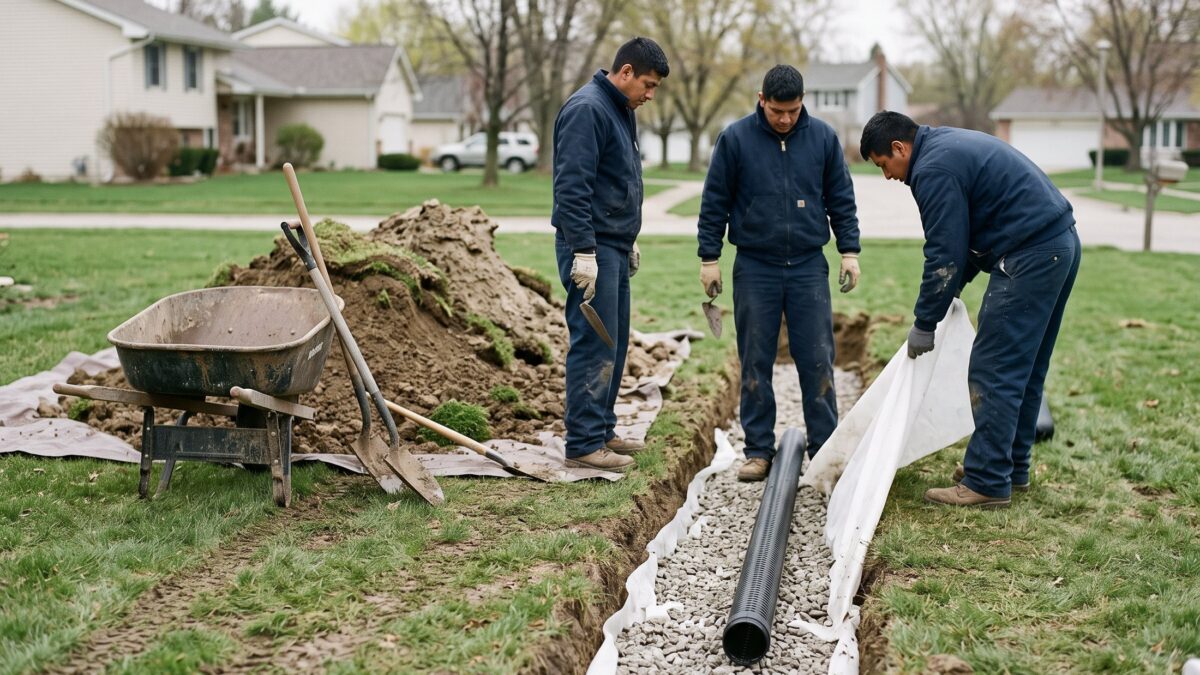 Priced per foot, in writing
What a French drain is actually made of
The name is fancy; the machine is not. Done right, it is a buried gutter for groundwater, and each layer exists to keep Chicago clay from strangling it.

The trench
Cut through the wet path at the right depth and pitch. In clay, depth and slope decide whether the drain works or decorates.

Filter fabric
Geotextile lines the trench so clay fines can't migrate in and clog the stone. Skipping it is how five-year drains happen.
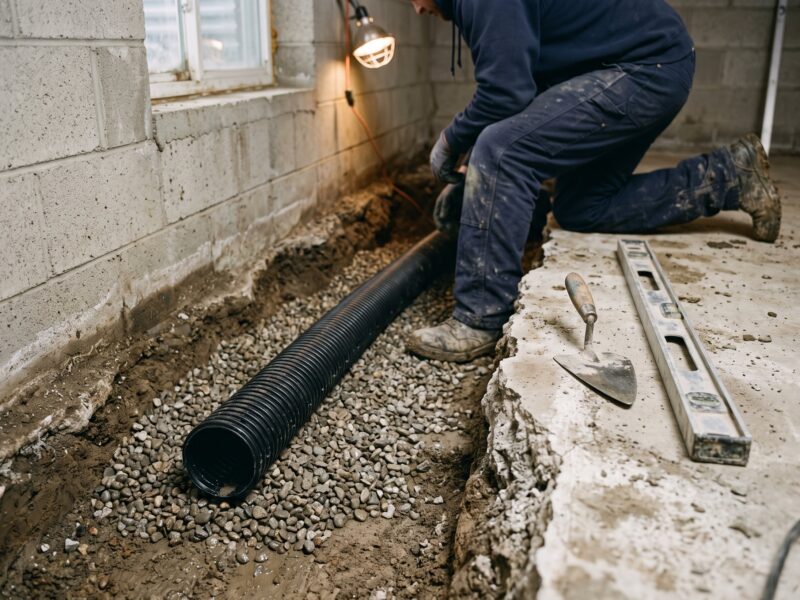
Washed gravel
Clean angular stone gives water fast passage to the pipe. Fines-heavy cheap gravel packs like concrete inside two winters.
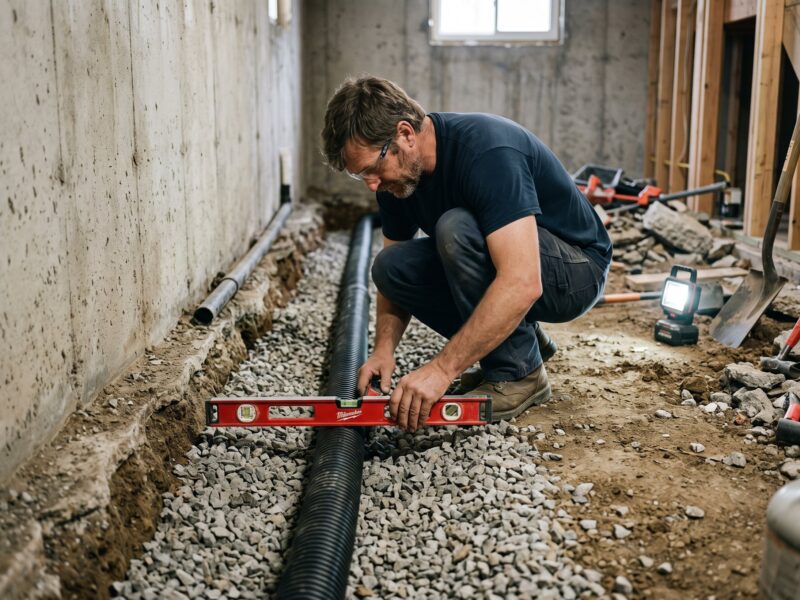
Perforated pipe
The pipe rides in the gravel, pitched continuously toward the exit. We verify slope with a level, not by eyeball.
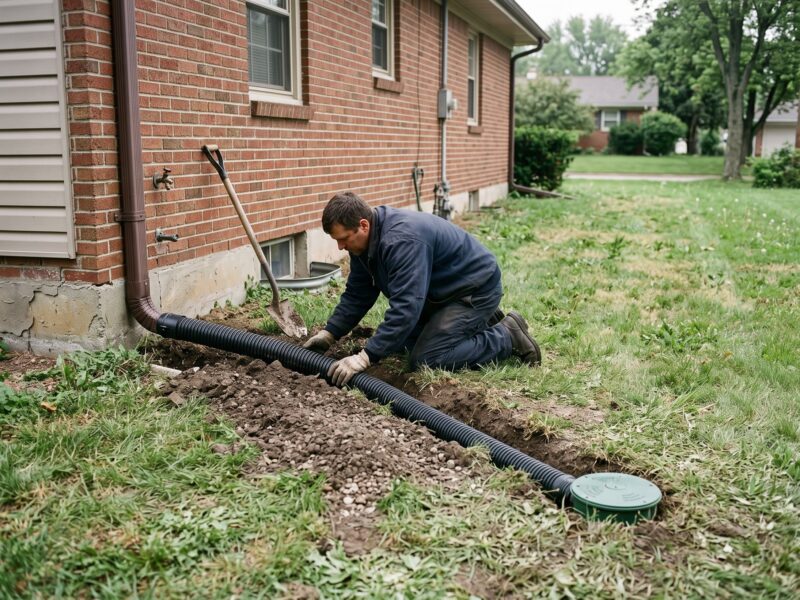
The outlet
Daylight, a pop-up emitter, or a dry well. Water needs a legal, downhill somewhere-to-go or the drain is a buried bathtub.
Restored surface
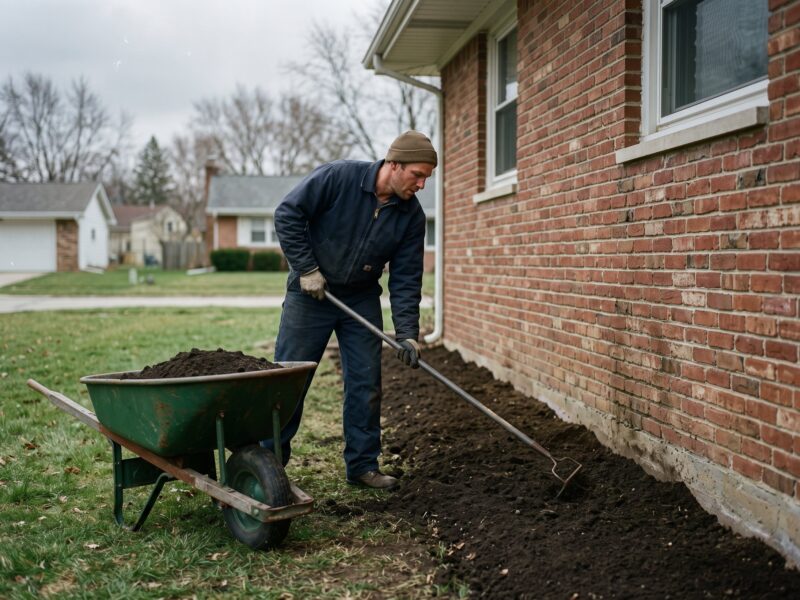
Sod back over the line or a clean gravel top where you want a visible channel. A month later the yard forgets.
When is a French drain the right fix?
A French drain is the right fix when water travels through your yard as groundwater: a soggy strip that stays wet days after rain, a side yard that sheets a neighbor's runoff toward your foundation, or a low seam between houses where two lots drain into one. The drain intercepts that water below the surface and walks it somewhere harmless.
It is the wrong fix for roof water, and this matters in Chicago because half the "yard drainage" problems we inspect are really six-foot downspouts dumping a roof's worth of storm onto flat clay. That fix is extensions and grading at a fraction of the cost. Clay also changes the engineering: water moves through it slowly, so trench depth, width and fabric quality do more work here than they do in sandy suburbs.
 Water still standing a day after rain: the signature of slow Chicago clay.
French drain, or downspouts and regrading first?
The cheap fix comes first when it's the honest one. Here is how the buried drain compares against the surface work that solves half of these problems for a quarter of the price.
| French drain | Downspouts + regrading | |
|---|---|---|
| Solves | Groundwater moving through the yard below the surface | Roof water and rain landing near the foundation |
| Best for | Chronic soggy zones, cross-lot flow, high water table | Short downspouts, settled grade, water at the wall after storms |
| Cost | $45 to $90 per linear foot | $600 to $2,500 for a typical job |
| Lifespan | Decades when fabric-lined with washed stone | Indefinite; it's dirt and pipe doing simple work |
| Tell | Yard stays wet days after rain | Yard dries fast but the basement corner gets wet in storms |
The inspection prices both honestly. If $900 of downspout work solves it, that's the quote you get.
Got a stripe of yard that never dries? That's the water telling you where the drain goes. We'll confirm it free.
How a French drain gets built, flags to sod
Most residential runs are built in one to two days, utilities located before any digging.
Walk the water
We trace where water enters, where it sits and where it can legally exit, then price the run by the foot. Free, within 48 hours.
Day 0Locate and cut
JULIE utility locates come first, always. Then the trench is cut on the flagged line, spoil on boards, sod saved where it can be.
Day 1Fabric, stone, pipe
The trench gets lined, graveled and piped, with the pitch checked by level along the whole run before anything gets buried.
Day 1Outlet and restore
The discharge gets its emitter or daylight cut, the trench tops off, and the surface goes back. You get photos of every layer you'll never see again.
Day 1 to 2How much does a French drain cost in Chicago?
Exterior French drains run $45 to $90 per linear foot. A typical 60-foot side-yard run lands between $2,700 and $5,400, with trench depth and where the water can legally go setting the price inside that range.
| Work | Range | What moves the number |
|---|---|---|
| Exterior French drainper linear foot | $45–$90 | Trench depth, where the water can legally go |
| Downspout extensions and regradingtypical job | $600–$2,500 | Feet of grade to rebuild, soil hauling |
| Interior drain tileper linear foot | $95–$160 | Length of the run, slab thickness, what has to be moved off the walls |
If the water is reaching your basement, interior drain tile may be the better spend; the inspection compares both against your actual problem. All ranges live in the pricing guide.

Built by the crew that sees the failures
We get called to replace French drains more often than we get called to install first ones, and the autopsy is always the same: no fabric, dirty gravel, no pitch, nowhere to discharge. After 20+ years of drainage work around Chicago, our build list is exactly the list of things the failed drains skipped.
- Every layer photographed before burial: fabric, stone, pipe, pitch
- JULIE utility locates before any trench, every time
- Licensed, bonded and insured: $2,000,000 general liability
- Discharge routed legally, never at the neighbor's foundation
Already seeing water inside?
A French drain protects the yard side of the wall, but once water shows up at the cove joint inside, the yard fix alone rarely ends it. Interior drain tile handles the water that's already reaching the footing, and the two systems together cover both sides of the foundation for less than one over-built solution.
Interior Drain Tile
In this guide
The detail behind every part of this work, written out in full.
French drain installation near you
Serving Chicago and the suburbs: Will, Cook, DuPage, Kane, Kendall, DeKalb and Lee counties.
French drain questions, answered straight
How much does French drain installation cost in Chicago?
$45 to $90 per linear foot installed. A typical 60-foot run lands between $2,700 and $5,400. Trench depth, soil handling and where the water can legally discharge are what move the number inside that range.
How deep should a French drain be in clay soil?
Deep enough to sit below the water it intercepts, which in Chicago clay usually means 18 to 24 inches for surface groundwater and deeper where it protects a foundation. Depth is a site decision, not a recipe, and it's part of what the free inspection determines.
How long does a French drain last?
Decades when built with filter fabric and washed stone; a few years when built without them, because clay fines pack the gravel solid. The fabric is the whole difference, which is why we photograph it in the trench before burial.
Do French drains work in Chicago clay at all?
Yes, and they matter more here precisely because clay drains so slowly. The drain gives water the fast path clay refuses to provide. What changes in clay is the engineering: wider trenches, more stone, quality fabric and a properly verified pitch.
Where does the water go once it's in the drain?
Downhill to daylight where the lot allows it, to a pop-up emitter in the lawn, or to a dry well when there's no surface option. Never onto the neighbor's lot and never into the sanitary sewer; both are how drainage projects turn into legal projects.
Will my yard be wrecked?
A trench line, temporarily. Sod gets cut and saved where practical, spoil rides on boards instead of the lawn, and the line is topped and restored when the drain is done. By mid-season most owners can't point to the run without looking for the emitter.

Give the water somewhere better to go
A free drainage inspection within 48 hours, an honest call between the $900 fix and the buried drain, and a per-foot price in writing before a shovel hits the lawn.
Or talk to a human right now
(630) 335-1128
Request your free estimate
Tell us what you're seeing. We'll call back fast and be out within 48 hours.