
Yard Drainage Solutions in Chicago
Standing water, swampy lawns and storm runoff aimed at your foundation, fixed with grading, downspout lines, catch basins and dry wells. The honest-money work that often saves you a five-figure system.
- Published pricing: typical jobs $600 to $2,500
- Surface fixes first when they solve it, buried drains when they don't
- Free yard inspection within 48 hours
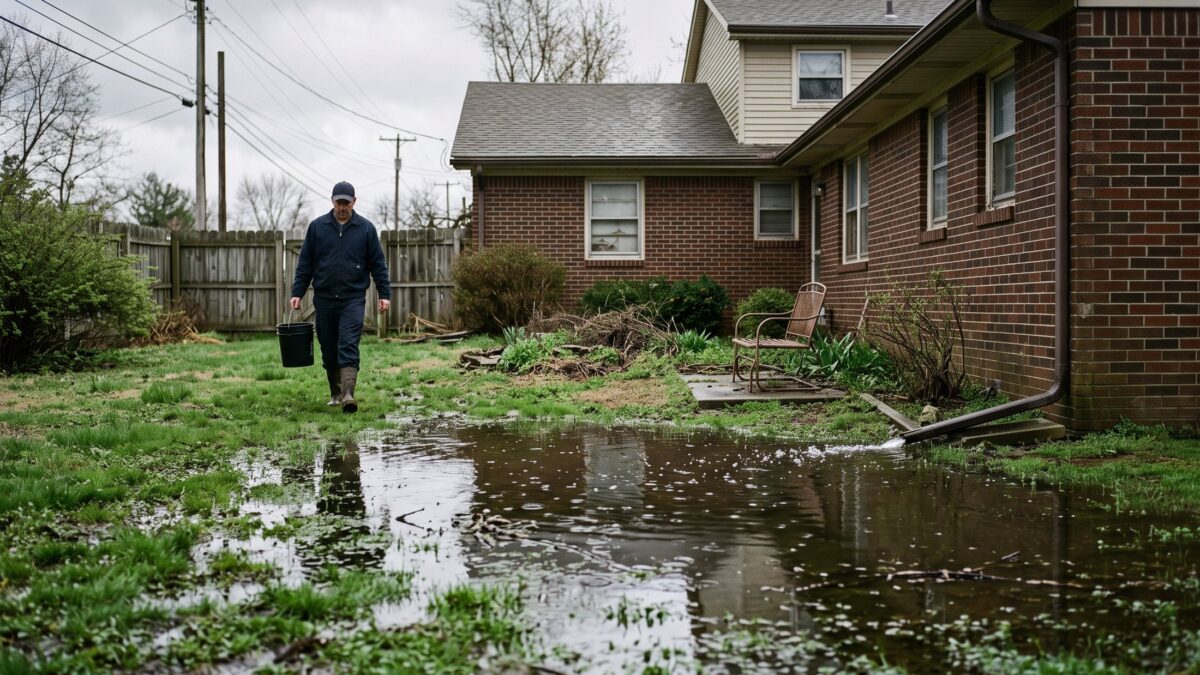 The honest cheap fix, priced first
The yard drainage toolbox
Every wet yard is a plumbing problem wearing a lawn costume. These are the six tools, and most jobs need two or three of them, not all six.
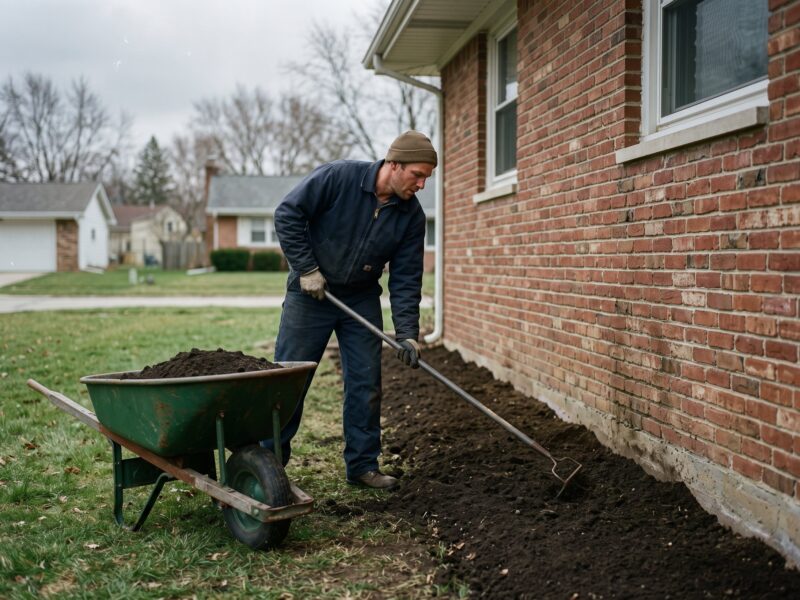
Regrading
Soil rebuilt to slope away from the foundation. The first six feet around the house decide where every storm ends up.
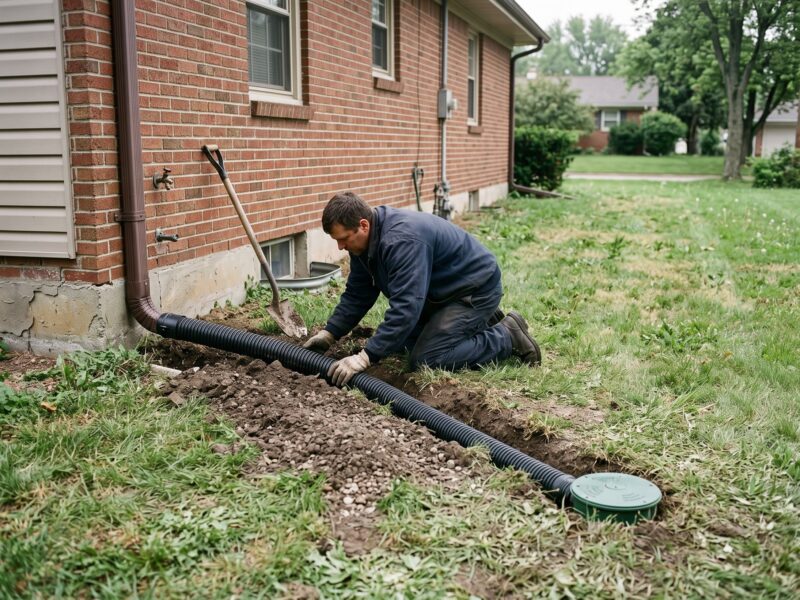
Buried downspout lines
Roof water piped underground from the downspout to a pop-up emitter far from the wall, instead of dumping at the corner.
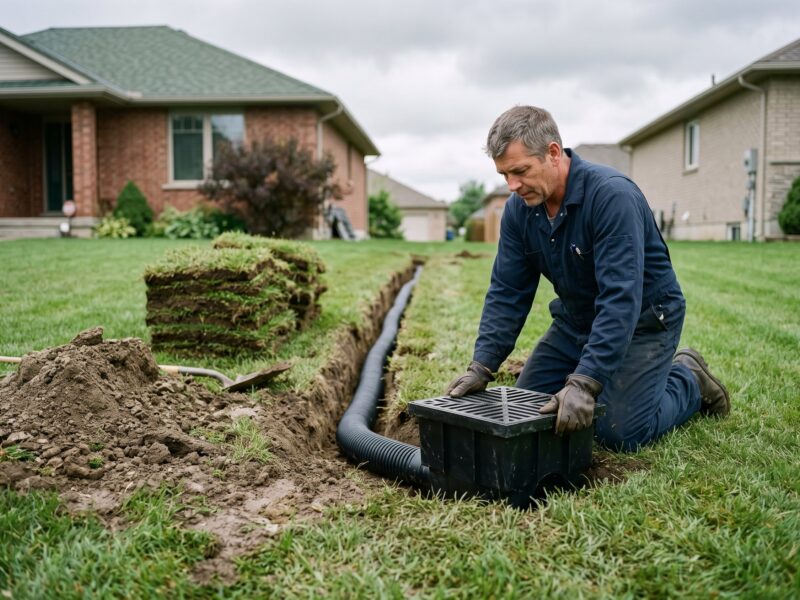
Catch basins
A grated basin in the low spot swallows surface water and pipes it away before it becomes a pond with a mosquito program.

French drains
For water moving through the soil rather than over it: a fabric-lined gravel drain intercepting the flow below grade.

Sump discharge routing
The pump's output belongs far from the foundation, not recycling into the pit. We re-route lines that feed themselves.

Dry wells
Where there's no downhill exit, a buried well takes the water and lets clay absorb it slowly, off the surface and away from the house.
Why does my yard hold water for days?
Chicago yards hold water because the clay underneath absorbs rain about as eagerly as a parking lot. When a storm drops an inch of water, sandy soils drink it in hours; this clay needs days, and any low spot becomes a holding pond while it waits. Add a roof draining two thousand square feet through four short downspouts, and the lot is being asked to swallow a swimming pool every big storm.
The stakes are bigger than soggy grass. Water that lingers against a foundation is the upstream cause of the seepage, hydrostatic pressure and bowing walls we fix downstream, at ten times the price. Grading and drainage are the cheapest foundation repair on this website, which is why the inspection walks the yard before it ever looks at the basement.
 A catch basin taking the low spot's water somewhere useful.
Fix the surface, or bury a drain?
Surface water wants surface fixes; groundwater wants buried ones. Getting this backwards wastes money in both directions, so here is the whole decision in one table.
| Surface fixes (grading, downspouts, basins) | Buried drains (French drain, dry well) | |
|---|---|---|
| Solves | Rain and roof water flowing over the ground | Groundwater moving through the soil below grade |
| The tell | Puddles during and right after rain, dry by next day | Soggy zones that stay wet for days after the sky clears |
| Cost | $600 to $2,500 for a typical job | $45 to $90 per linear foot of drain |
| Time | Usually one day | One to two days per run |
| Where to start | Almost always here; it's cheaper and often sufficient | When surface fixes are done and the ground still weeps |
Half the wet basements we inspect trace back to the yard. The walk-around is free and takes twenty minutes.
Mosquitoes renting your backyard every summer? Standing water is fixable, and usually for less than you fear.
How a yard drainage job goes, walk-around to dry lawn
Most yard drainage work finishes in a single day. Bigger regrades take two.
Walk the lot in the rain's footsteps
We trace where water lands, where it travels and where it stalls, then match tools to each problem and price the whole scope. Free, within 48 hours.
Day 0Move the roof water
Downspouts get buried lines to pop-up emitters or extensions past the grade line, taking the biggest single water source out of the equation first.
Day 1, morningFix the ground
Low spots get catch basins or fill, and the grade against the foundation gets rebuilt to fall away from the house for the first critical feet.
Day 1Prove the flow
We hose-test basins and lines, walk you through where every gallon now goes, and leave photos of the buried work with the paperwork.
Day 1, before we leaveHow much does yard drainage cost in Chicago?
Typical yard drainage jobs run $600 to $2,500: downspout burials, regrading, catch basins or a combination. A full French drain adds $45 to $90 per foot when the problem lives below the surface.
| Work | Range | What moves the number |
|---|---|---|
| Downspout extensions and regradingtypical job | $600–$2,500 | Feet of grade to rebuild, soil hauling |
| Exterior French drainper linear foot | $45–$90 | Trench depth, where the water can legally go |
| Sump pump with battery backupinstalled | $2,800–$4,500 | Pit condition, backup capacity, discharge routing |
Feet of grade to rebuild and soil hauling set the price on surface work. Every range on the site is published in the pricing guide.
The anti-upsell inspection
This page exists because we kept meeting homeowners quoted five-figure interior systems for what was a grading problem. Yard drainage is the least profitable work we do and the most honest, and after 20+ years it's also how half our waterproofing customers found us: we fixed the yard for $1,400 and they remembered.
- The cheap fix quoted first when it solves the problem
- Licensed, bonded and insured: $2,000,000 general liability
- Hose-tested before we leave, photos of everything buried
- The same crew handles the basement side if the yard isn't enough
Yard fixed but the basement still gets wet?
When water still crosses the floor after the grading and downspouts are right, the problem has moved below the footing, and that's interior work: drain tile relieving the pressure the clay applies from below. The yard work wasn't wasted; it just met a problem with two layers.
Basement Waterproofing in Chicago
In this guide
The detail behind every part of this work, written out in full.
- Downspout Extensions and Underground Downspout Drains
- Driveway, Patio and Window Well Drainage
- Dry Wells, Catch Basins and Pop-Up Emitters
- Grading and Slope Around a Foundation
- Standing Water in the Yard After Every Storm
- Stormwater Rules, Rain Gardens and Permeable Options in Chicago
- Sump Discharge: Where That Water Should Actually Go
- Yard Drainage on Clay Soil
Yard drainage near you
Serving Chicago and the suburbs: Will, Cook, DuPage, Kane, Kendall, DeKalb and Lee counties.
Yard drainage questions, answered straight
How do I fix standing water in my yard?
Match the fix to the water. Puddles that clear within a day want grading and downspout work at $600 to $2,500. A zone that stays soggy for days wants a French drain at $45 to $90 per foot, or a catch basin piped to a dry well when there is no downhill exit. The free inspection sorts your yard into the right column.
Can bad yard drainage really damage my foundation?
It is the leading cause of the foundation problems we repair. Water held against a wall saturates the clay, and saturated clay is what pushes walls inward and forces water through the cove joint. A $1,500 drainage fix now routinely prevents a $10,000 structural fix later.
How far should downspouts discharge from the house?
Past the backfill zone at minimum, which means six feet or more, and ten is better on flat lots. Buried lines to pop-up emitters get the water twenty feet out and keep the lawn mowable, which is why they beat surface extensions on most Chicago lots.
What's the difference between a catch basin and a dry well?
A catch basin is the intake: a grated box in the low spot that swallows surface water into a pipe. A dry well is the destination: a buried chamber that stores that water and lets the soil absorb it slowly. Lots with no downhill exit often need both ends of that pipe.
Will regrading against the house hurt my siding or landscaping?
The grade rebuilds to slope away while staying the required distance below siding and sill, and plantings within the work zone get lifted and reset where they can survive it. What actually kills foundations and sills is the opposite: mulch and soil piled high and flat against the wall.
Do you handle the permits for drainage work?
Where a municipality requires one for stormwater work, yes, we pull it and build to that code, including the rules on where water may discharge. What no permit allows is aiming your water at the neighbor, which is the first thing we design around.

Dry lawn, protected foundation, honest price
A free walk-around within 48 hours, the cheap fix quoted first, and every gallon of your storm water given a legal somewhere-else to be.
Or talk to a human right now
(630) 335-1128
Request your free estimate
Tell us what you're seeing. We'll call back fast and be out within 48 hours.