
Wet Basement and Foundation Problems in Chicago
A symptom guide, not a sales page. Find what you are actually looking at, learn what causes it here in Chicago clay, and see which fix it points to, including the times the answer is a plumber or a dehumidifier instead of us.
- Every symptom traced to a cause, not a quote
- Free written diagnosis within 48 hours
- 20+ of Chicago basements, 1,500+ homes
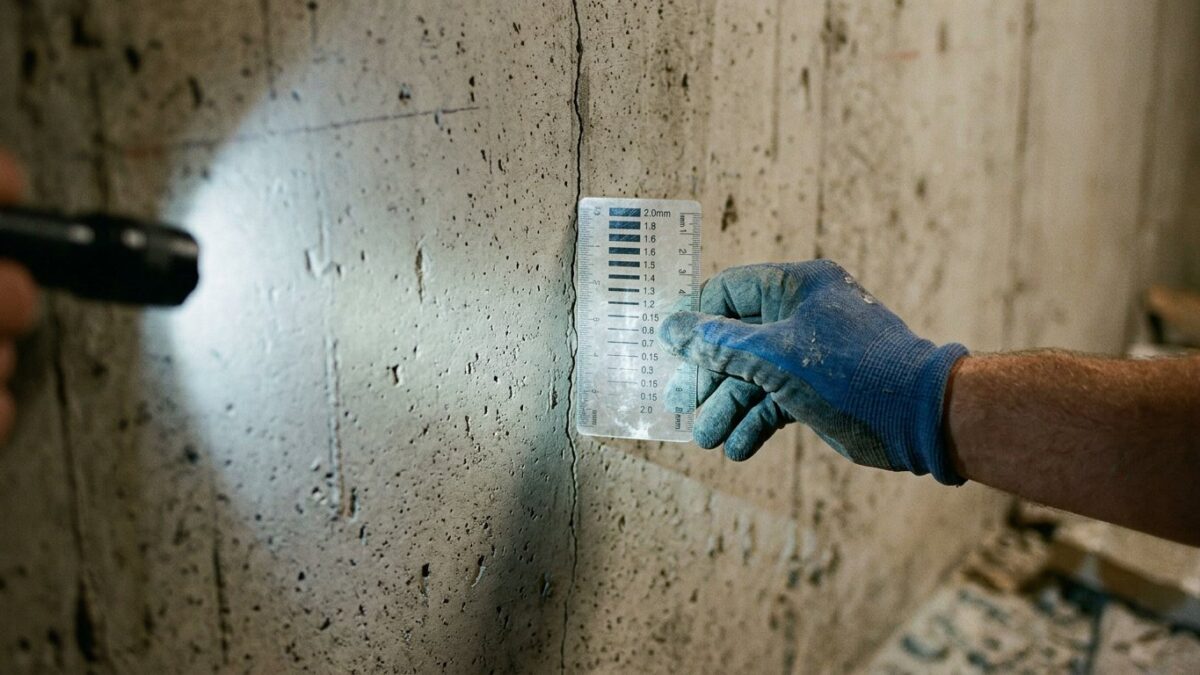 Diagnosis first, always
Start with what you can see
Six symptoms account for nearly every call we take. Find yours, and the cause and the fix follow from it rather than from a salesperson's preference.

Water where the floor meets the wall
The cove joint. Water arriving at the footing has nowhere to go but up through the seam, usually late in a long rain.

White chalky powder on the block
Efflorescence: minerals left behind as water passes through and evaporates. It is a message that water is moving, not a stain.

A wall that looks bowed or leaning
Saturated clay pushing sideways. Block walls hinge at a mortar joint; this one is structural and it gets worse with each wet season.

Cracks stepping through the mortar
Stair-step cracking in block or brick, which usually means one part of the foundation has settled away from another.

A smell that never leaves
Damp air feeding mold and mildew somewhere out of sight. Sometimes seepage, often humidity, occasionally a dry floor drain trap.

Water rising through the floor drain
Not seepage. This is sewer backup, it is a plumber's work, and no waterproofing system will stop it.
Why do Chicago basements and foundations fail the way they do?
Almost everything on this page traces back to the same ground. The Chicago region sits on dense glacial clay that takes water in slowly and gives it up slower, so pressure against a foundation lingers for days after the storm has passed. That clay also swells when it is wet and shrinks when it is dry, which means it pushes on walls in spring and pulls support out from under footings in a drought summer.
The housing stock decides how that force shows up. Pre-war bungalows and two-flats drain their footings through clay tile that has been silting shut since the day it was laid. Post-war block walls wick water through their joints and eventually bow. Poured walls from the 1980s and 90s crack as they cure and weep at that one line. Newer subdivisions have working drainage and a builder-grade pump, plus grading that settles in the first decade. Same clay, four different failures.
If the symptom is water, the waterproofing guide starts here
 One weeping crack in a poured wall: a $450 to $900 repair, not a system.
Is it water, or is it movement?
Every symptom sorts into one of two families, and the difference decides who you should be calling. Water problems are usually cheaper and never structural. Movement problems are the reverse.
| A water problem | A movement problem | |
|---|---|---|
| What you see | Seepage, damp patches, efflorescence, a musty smell | Cracks that widen, bowed walls, sloping floors, sticking doors |
| When it shows up | During and after rain, and through the spring thaw | Gradually, and it does not go back when the weather changes |
| What is happening | Water reaching the footing faster than it can drain away | Clay swelling, shrinking or consolidating under the footing |
| Typical fix | Drainage: grading, drain tile, a sump, crack injection | Structure: carbon fiber, steel, wall anchors, piers |
| Published cost | $600 to $2,500 up to $8,000 to $16,000 for a full system | $450 to $900 per crack up to $1,600 to $3,000 per pier |
| Urgency | Fix it before it ruins what is stored down there | Fix it before the movement takes the wall with it |
| Our warranty | lifetime, fully transferable on interior systems | 25-year transferable on structural work |
Plenty of houses have one of each, and water is usually what caused the movement. That is why the inspection looks at both before anything gets quoted.
Seeing something on this page at your house? Free written diagnosis within 48 hours, and we will tell you if it is not ours to fix.
How we work out what is actually wrong
A diagnosis is a measurement, not a glance. Here is what the free inspection actually covers.
We walk the outside first
Gutters, downspouts, grade, hardscape and where every gallon of roof water lands. A surprising share of basement problems are solved out here for a fraction of the cost of a system.
Twenty minutesWe read the inside
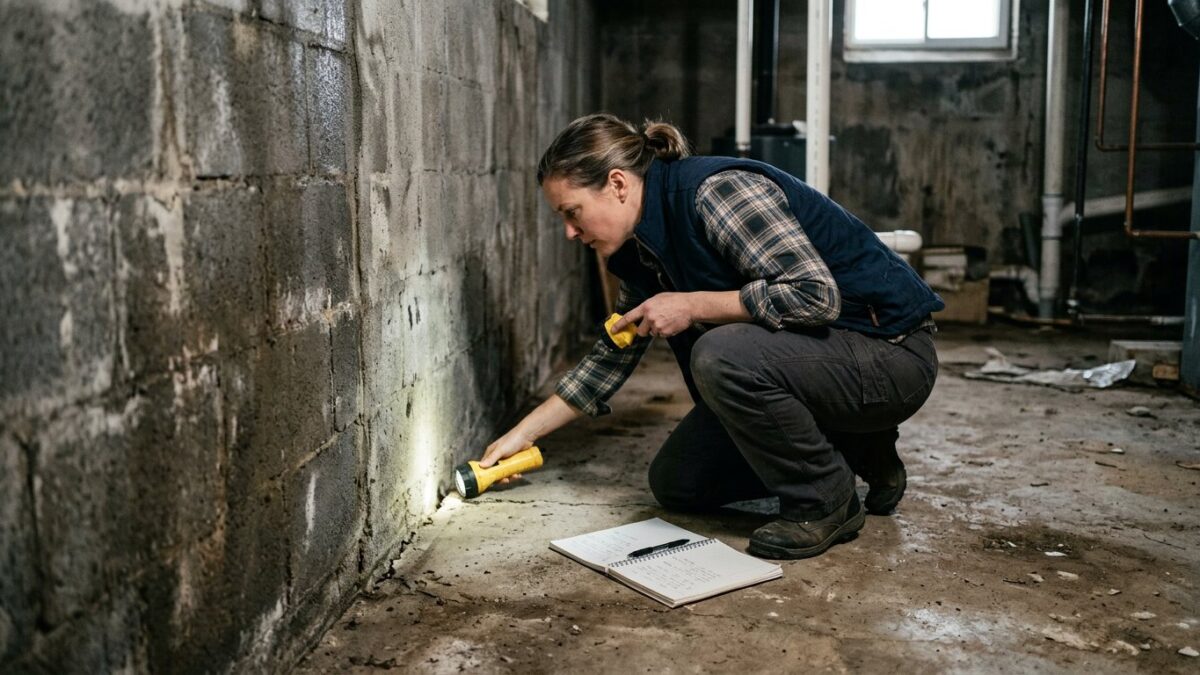
Entry points traced to their source, cove joints, cracks measured for width and offset, block courses checked for bow with a string line, moisture readings taken.
Measured, not guessedWe separate water from movement
Some symptoms belong to a plumber, some to a dehumidifier, some to us. You get told which, in writing, before any price is discussed.
Including the no answersYou get it on paper
A written diagnosis and a quote from published ranges, yours to keep and compare whether you hire us or not.
Free either wayWhat the common fixes cost
Every symptom on this page points to one of these. The ranges are published so you can sanity-check any quote, ours included.
| Work | Range | What moves the number |
|---|---|---|
| Downspout extensions and regradingtypical job | $600–$2,500 | Feet of grade to rebuild, soil hauling |
| Interior drain tileper linear foot | $95–$160 | Length of the run, slab thickness, what has to be moved off the walls |
| Sump pump with battery backupinstalled | $2,800–$4,500 | Pit condition, backup capacity, discharge routing |
Structural repairs are priced on the same public basis, from carbon fiber straps to piers. The full table lives on the pricing page.
Why a contractor publishes a page that talks people out of work
Because the fastest way to lose a Chicago homeowner is to quote a five-figure system for a disconnected downspout, and the fastest way to earn one is to say so out loud. After 20+ years and 1,500+ homes, the diagnoses that end in "call a plumber" or "buy a dehumidifier" have sent us more work than any advertisement.
- Written diagnosis before any price is named
- Published ranges, so no quote is a surprise
- No commissioned salespeople, ever
- $2,000,000 general liability and free second opinions on anyone else's proposal
When the symptom is structural, not wet
Cracks that keep widening, a wall that has moved, floors that slope toward the middle of the house: those belong to the foundation side of the business, and they are measured and priced on the same published basis as the water work.
Foundation Repair in Chicago
In this guide
The detail behind every part of this work, written out in full.
- Doors That Stick and Floors That Slope
- Efflorescence: That White Chalky Residue on the Block
- Foundation Crack Widths: What’s Normal and What Isn’t
- Horizontal Cracks and What They Mean
- Musty Basement Smell and What’s Causing It
- Sewer Backup vs. Basement Seepage: How to Tell
- Signs of Foundation Settlement
- Spring Thaw and Seasonal Basement Flooding in Illinois
- Stair-Step Cracks in Block and Brick
- Trees, Drought and Clay Shrinkage Near Foundations
- Water Where the Floor Meets the Wall: the Cove Joint
- Why Your Basement Only Leaks in Heavy Rain
Where we diagnose basements
Serving Chicago and the suburbs: Will, Cook, DuPage, Kane, Kendall, DeKalb and Lee counties.
The questions that come before a quote
How do I know if my basement problem is serious?
Water that arrives with rain and leaves afterward is a drainage problem, and drainage problems are rarely urgent even when they are expensive. Movement is the serious category: a crack that is wider than it was last season, a wall that is no longer straight, or floors that have started to slope. Movement gets worse on its own; water damage just gets more expensive.
Why is water coming up through my basement floor drain?
That is sewer backup rather than seepage, and it is the one symptom on this page that is not our work. When the sewer main or your lateral cannot carry what is in it, your floor drain is the lowest opening on the line, so that is where it surfaces. Call a licensed plumber and ask about backflow prevention; no wall or footing system will change it.
Is a crack in my foundation normal?
Thin vertical cracks in a poured wall are usually curing shrinkage and are extremely common in this region. What is not normal is a crack that is horizontal, one that steps through mortar joints, one where the two faces have offset, or one that measurably changes over a season. Width matters less than movement over time.
My basement smells musty but I never see water. Why?
Usually humidity rather than seepage. Warm summer air meeting cool foundation surfaces condenses, and the damp feeds mildew in stored cardboard and on joists. Tape a square of foil to the wall for two days: moisture on the room side means humidity and a dehumidifier is the first fix, while moisture under the foil means water is coming through the wall.
Do I need a structural engineer before I call you?
Not to get diagnosed, because our inspection and written report cost nothing. On a large structural proposal from anyone, ours included, paying an independent engineer a few hundred dollars for a second opinion is money well spent, and we will hand over our measurements so they can check our work.
How fast can someone actually look at it?
Free inspections are booked within 48 hours across all seven counties, and 24/7 when water is actively coming in. You get a written diagnosis and a quote from published ranges at the end of the visit, whether you hire us or not.

Get it diagnosed before anyone quotes it
Free written diagnosis within 48 hours, published pricing, and an honest answer when the fix belongs to someone else.
Or talk to a human right now
(630) 335-1128
Request your free estimate
Tell us what you're seeing. We'll call back fast and be out within 48 hours.