
Foundation Crack Widths: What's Normal and What Isn't
Everybody wants a number that means danger. Width is worth measuring and it is worth recording, but on its own it settles less than homeowners expect. What the crack is doing between two measurements is the part that decides the repair.
- Cracks measured, marked and written up free within 48 hours
- Published per-crack pricing, no commissioned salespeople
- 20+ reading Chicago foundation walls, 1,500+ homes
 Injection carries a 10-year warranty
The short answer
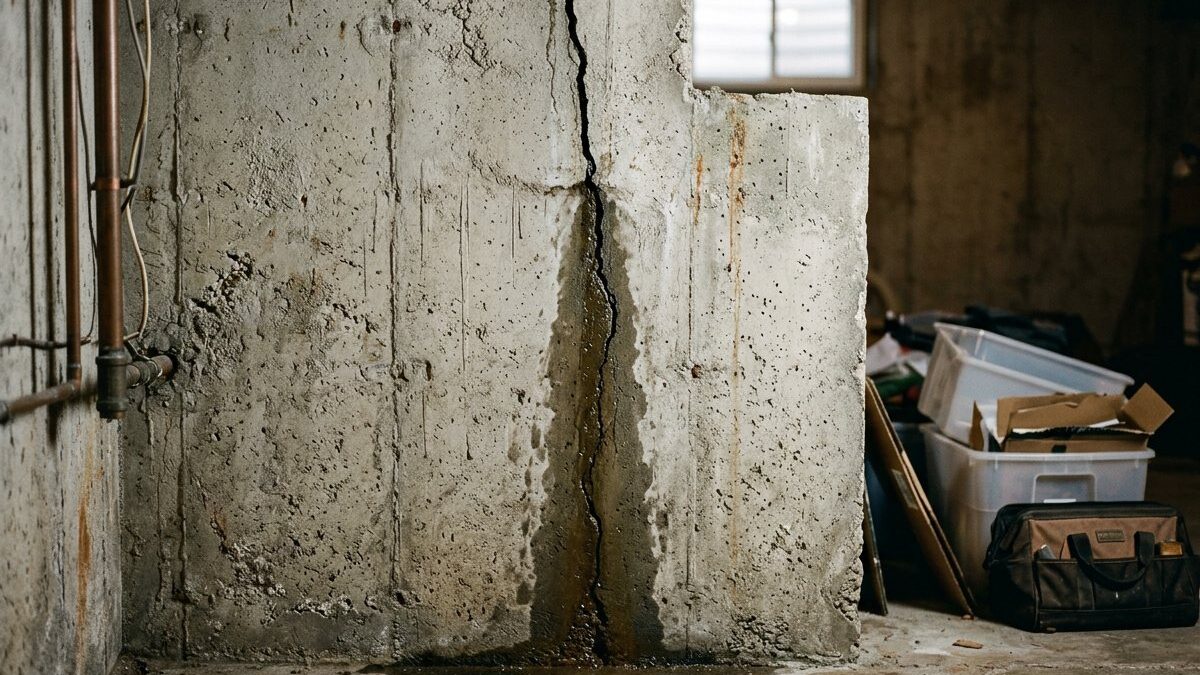
Crack width alone decides less than people expect. Hairlines under 1/16 inch in a poured wall are usually curing shrinkage. Past 1/4 inch, or tapered, offset or horizontal, a crack earns a real diagnosis. Change matters most: a crack that opened 1/16 inch across one season outranks a wider crack that has held still for decades.
Concrete cracks. It shrinks as it cures, it moves with temperature, and it splits rather than stretches when the ground below it shifts, which is why a foundation wall in this region almost always has a line in it somewhere. Width is simply how far the two sides have separated so far. That number is genuinely useful, because it is repeatable and a homeowner can take it without any tools worth owning, but it describes an amount of movement and says nothing at all about whether that movement has stopped.
Chicago clay makes the second question the important one. Our soil swells through a wet April and contracts hard through a dry August, so a wall here gets loaded and unloaded twice a year, every year. A crack measured once in June is a snapshot of a moving picture. Measured again the following February, with the same tool at the same mark, it becomes evidence. The other symptoms worth reading alongside it are gathered in the basement and foundation symptom guide.
How do you measure a foundation crack properly?
A useful crack measurement is one you can repeat six months later and trust. That takes about ten minutes and roughly twenty dollars of equipment.
Do it in this order and your second reading will be worth something.
-
Buy something that reads in sixteenths
A printed crack comparator card or a plastic crack gauge runs about twenty dollars and is far better than a tape measure. Guessing from a photo is how a 1/16 inch line becomes a quarter inch crack in a phone conversation with a contractor.
-
Measure the widest point, then both ends
Record three numbers: the widest opening, the width six inches from the top of the crack, and the width six inches from the bottom. Those three numbers are what tell you later whether the wall is splitting evenly or rotating around one end.
-
Mark and date the ends in pencil
Draw a short line across the crack at each end and write the date beside it. Pencil survives a damp basement wall better than marker. If the crack later runs past your mark, you know exactly when it did and how far it travelled.
-
Photograph with the scale in frame
Hold the gauge or a coin against the crack and shoot straight on, not at an angle. Take one wide shot showing where on the wall it sits. Photos without a reference object are the single most common reason a homeowner cannot prove anything a year later.
-
Note the season, then repeat in the other one
Write down the month and whether the ground has been wet or dry. Read it again after the opposite extreme, so a spring measurement gets paired with a late summer one. Two seasons of identical numbers is the most reassuring result available.
What a record worth keeping contains
- Three widths per crack, taken at the same marked points every time
- Dated pencil marks at both ends of the line
- Photos with a coin, tape or gauge visible in the frame
- The month and the recent weather written next to each reading
- A note on whether it was wet, damp or dry at the time
How homeowners fool themselves
- Measuring at a spalled or chipped edge, which reads far too wide
- Comparing two photos taken from different distances and angles
- Taking one reading and treating it as a trend
- Measuring through paint or old patching compound
What does the shape of a crack tell you?
Direction, taper and offset carry more information than width does. A quarter inch crack can be harmless and a hairline one can be the thing we act on first.
Five things to read off the wall once you have your numbers.
-
Which way does it run
Vertical or near vertical in a poured wall is the common, usually undramatic case. Diagonal from a corner points at settlement. Horizontal points at soil pressure. Stair-stepping through mortar joints in block is its own pattern with its own causes.
-
Does it taper
A crack that is wide at the top and closed at the bottom is a rotation: one end of the wall or footing dropped and the wall hinged. Even width top to bottom is a straight separation, which more often comes from shrinkage or slow uniform movement.
-
Are the two faces still in the same plane
Run a straightedge or a finger across the crack. If one side stands proud of the other, the wall has sheared or moved inward, and that is a different problem from a wall that simply opened. Offset always outranks width in our notes.
-
Is it wet, and when
A dry crack in a dry basement is a monitoring item. A crack that darkens during a downpour and dries in two days is a water path first. A crack seeping steadily for weeks after rain suggests a saturated backfill or a high water table rather than a one-off storm.
-
What is the wall actually made of
A poured wall cracks in lines. Block walls fail along mortar joints, so the same movement shows as stair-stepping. Old rubble stone and brick foundations shed mortar instead of cracking cleanly, and a width reading means very little on them.
Shapes we rarely worry about
- A thin vertical line near the middle of a poured wall panel
- Short cracks running down from a rod hole or a form tie
- Fine map cracking across the surface of a newer wall
- An old crack that has been painted over twice and never moved
Shapes we look at soon
- Anything horizontal, at any width, in any wall type
- A diagonal crack widening as it climbs toward a corner
- One face standing proud of the other across the crack
- A crack that runs through both the wall and the slab
How wide is a serious foundation crack?
These are the bands we use on inspections, read alongside direction and taper rather than instead of them. Find your measurement, then read the rest of the row.
| What it usually means | What we do about it | |
|---|---|---|
| Hairline, under 1/16 inch | Curing shrinkage in a poured wall, often from the first year | Photograph it, note it, leave it alone unless it is wet |
| 1/16 to 1/8 inch, vertical | Shrinkage, or old movement that finished a long time ago | Gauge it across two seasons, inject only if water comes through |
| 1/8 to 1/4 inch | Something moved. Shape now matters more than the number | Three-point measurement, dated marks, recheck the other season |
| Wider than 1/4 inch | Real displacement, commonly settlement at one end of the wall | Floor elevations shot and a cause diagnosed before anything is sealed |
| Wider than 1/2 inch | Substantial movement, usually visible in the doors upstairs too | Structural scope, quoted in writing. Nobody should be selling caulk |
| Any width, tapering top to bottom | Rotation. One end of the wall or footing dropped | Diagnose the footing first, repair the crack second |
| Any width, faces offset | The wall sheared or moved inward rather than simply opening | Looked at promptly regardless of how small the opening reads |
| Any width, horizontal | Soil pressure loading the wall from outside | Treated as the priority no matter what the tape says |
| Any width that grew 1/16 inch in a season | Active movement, which outranks every static width above | Bring the dated readings. That is the number we act on |
These bands are our own field triggers after twenty years of Chicago basements, not a building code standard, and no table replaces looking at the wall. If the line is horizontal or the wall is leaning in, skip the measuring and read horizontal cracks and what they mean instead.
Want the crack measured by somebody who does it daily? We record widths, mark the ends, photograph it and leave you the written diagnosis, free within 48 hours.
What cracks mean in your kind of house
The same width reads differently depending on what the wall is built from, and wall material tracks closely with the decade the house went up.

Pre-war bungalows and two-flats
Rubble stone, brick or early poured walls where mortar loss matters more than any crack width. A gauge reading on a stone wall is close to meaningless, so we measure joint openings and bulges instead.
Measure the bulge, not the line
Post-war block ranches
Block does not crack in straight lines. Movement follows the mortar joints and shows as stair-stepping, so the useful measurement is the offset across the step rather than the width of any one joint.
Read the pattern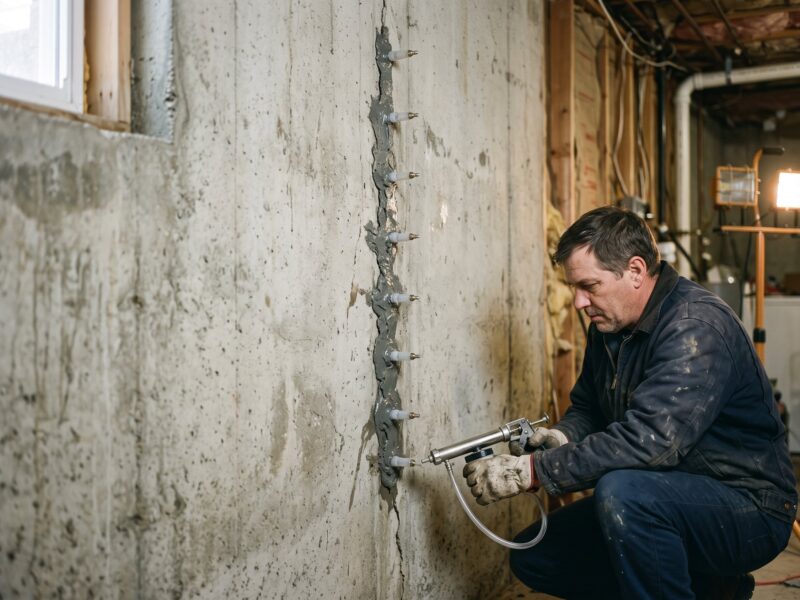
1980s and 90s poured walls
The classic vertical shrinkage crack, often starting at a rod hole and weeping in spring. Widths here are usually small and stable, and injection resolves the water without touching the structure.
Usually just injection
Newer subdivision homes
Walls poured on graded fill, where a diagonal crack in the first fifteen years usually means the fill under one corner compacted more than the rest. Worth measuring early and dating.
Start the record nowWhat does it cost to repair a cracked wall?
Sealing a single crack is the small end of foundation work. Urethane injection runs $450 to $900 per crack, done from inside in a couple of hours, and it carries a 10-year warranty.
| Work | Range | What moves the number |
|---|---|---|
| Urethane crack injectionper crack | $450–$900 | Crack length and width, access to the full height |
| Carbon fiber strapsper strap | $600–$1,000 | Wall height, spacing the deflection requires |
| Push or helical piersper pier | $1,600–$3,000 | Depth to load-bearing strata, access for equipment |
Width is what moves you between those lines. A stable hairline that weeps is an injection. A wall that has opened and is leaning is a strap or a beam. A wall that opened because the footing dropped is a pier job, and sealing it first just buys the crack back. Ranges live on the pricing page.
Cracks that do not need us at all
Most of the cracks people photograph and send to us are not repairs. Saying so is cheaper for you and faster for everybody.
It has not moved and it does not leak
A dry, stable vertical crack in a poured wall is doing no harm. Mark it, gauge it, look again after a dry August, and spend the money on something that is actually failing. A crack gauge costs about twenty dollars and settles the question better than any opinion.
Watch a seasonIt is in the floor slab, not the wall
Basement slabs are thin, unreinforced and poured on fill. They crack as a matter of course and they carry no structural load, so width there means something completely different. Floor cracks and water coming up through the slab covers what does matter down there.
Different animalIt only weeps during a downpour
A crack that stays dry for weeks and then runs during a heavy storm is often reporting a gutter or a grade problem rather than a wall problem. Fixing the water outside runs $600 to $2,500 and sometimes ends it. Why a basement only leaks in heavy rain.
Cheapest real fixThe mortar is the problem, not a crack
On old block and stone walls, soft crumbling mortar joints leak and weaken the wall without ever producing a measurable crack. That is tuckpointing and joint repair, sometimes a mason's job rather than ours, and no gauge reading would have found it.
Sometimes a masonQuestions homeowners ask about crack widths
Is a 1/4 inch crack in my foundation serious?
It is wide enough that we want to see it, and not wide enough to panic over. At that size we care about three things: whether it tapers, whether the two faces are still flush, and whether it was narrower a year ago. A quarter inch crack that is vertical, flush and unchanged for a decade is very different from a quarter inch crack that was an eighth last spring.
Do hairline cracks in a poured wall matter?
Usually not structurally. Concrete shrinks as it cures and most poured foundations develop a few thin vertical cracks in their first year or two, often running down from a rod hole. They matter when they leak, because water tracking through even a hairline can wet a wall for years and rot whatever is framed against it. That is an injection, not a structural repair.
How fast should a crack be growing before I call someone?
Any measurable growth between a wet season and a dry one is worth a call, and roughly a sixteenth of an inch is where we start treating it as active rather than seasonal. Movement that reverses, opening in August and closing in April, usually means the wall is riding the clay cycle. Movement that only ever goes one direction is the pattern we act on.
Can I just fill the crack with hydraulic cement?
You can, and it will often stop the water for a season or two. The limitation is that hydraulic cement is rigid, so a crack that is still moving simply reopens beside the patch or straight through it. It also makes a proper injection harder later, because the ports need a clean path into the crack. If the wall is stable and the crack is dry, patching is fine cosmetically.
Does a crack in one wall mean the whole foundation is bad?
Rarely. Foundations fail locally far more often than globally, and one crack in one panel usually reflects what the soil did under that one stretch of footing. What we do is check the rest of the perimeter, shoot floor elevations, and see whether the rest of the house agrees with the crack. A wall that cracked alone while everything else stayed square is a contained problem.
Should a crack be repaired before I sell the house?
A documented, repaired crack with a transferable warranty behind it usually causes far less trouble in a transaction than an unexplained line a buyer's inspector finds. Our injection warranty transfers with the house. What belongs on your Illinois disclosure depends on the specifics, so ask a real estate attorney rather than taking a contractor's word for it. See our <a href="/warranty/">warranty page</a> for what transfers.
One kind of crack ignores this whole page
A horizontal crack running along a block wall is not a width question. It means the soil outside is pushing harder than the wall can resist, and a hairline horizontal line in the middle course can be more urgent than a half inch vertical one. If your crack runs sideways, or the wall reads out of plumb against a string line, start there instead.
Read what horizontal cracks mean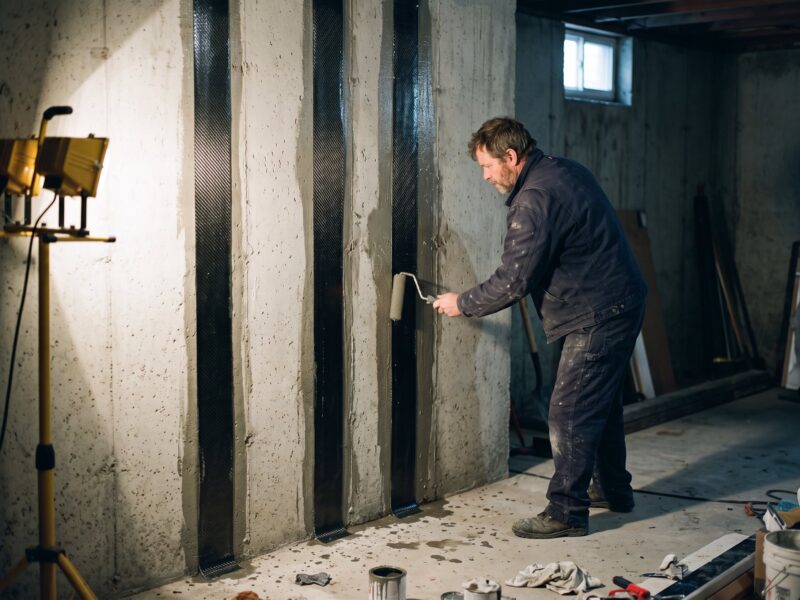

Get a number, a diagnosis and a date on it
We measure every crack, mark the ends and leave the written record with you, free within 48 hours, whether the answer is a repair or a year of watching.
Or talk to a human right now
(630) 335-1128
Request your free estimate
Tell us what you're seeing. We'll call back fast and be out within 48 hours.