

The quick answer
For most Chicago-area homes with recurring water problems, yes, basement waterproofing is worth it. A permanent interior system runs $8,000 to $16,000, a fraction of what a finished basement, ruined mechanicals and years of damaged storage add up to, and it turns your riskiest room into dry, usable space backed by a lifetime, fully transferable warranty.
That is the short version. The honest longer version is that waterproofing pays for itself in avoided damage, reclaimed square footage and resale confidence, but only when the fix is matched to a real, recurring problem. A full basement waterproofing system bought to solve a disconnected downspout is money wasted, and a $600 gutter fix sold to a house with a rising water table is worse. This guide walks through the actual numbers, the cases where the answer is no, and how to decide for your specific house.
What does basement waterproofing cost compared to what it protects?
Waterproofing is priced by the fix, not by the fear. The industry has a reputation for quoting whatever the salesperson thinks a scared homeowner will sign, which is exactly why we publish our ranges. Here is what the real fixes cost in the Chicago area, from the cheapest to the most complete.
The numbers that decide it
- Downspout extensions and regrading$600 to $2,500
- Urethane crack injection$450 to $900 per crack
- Interior drain tile$95 to $160 per linear foot
- Sump pump with battery backup$2,800 to $4,500
- Full perimeter system, average Chicago basement$8,000 to $16,000
Every range above comes straight from our published pricing and holds across all seven counties we serve.
Now weigh that against the other column of the ledger. A basement remodel in this market routinely costs more than a full perimeter waterproofing system. A furnace and water heater sitting in two inches of water can both need replacement in one weekend. Flooring, drywall, a home office, kids’ bedrooms, three generations of photo albums: water does not pick and choose. And unlike a roof or a driveway, water damage compounds, because a basement that flooded once and was patched cosmetically is a basement that will flood again with drywall hiding the evidence.
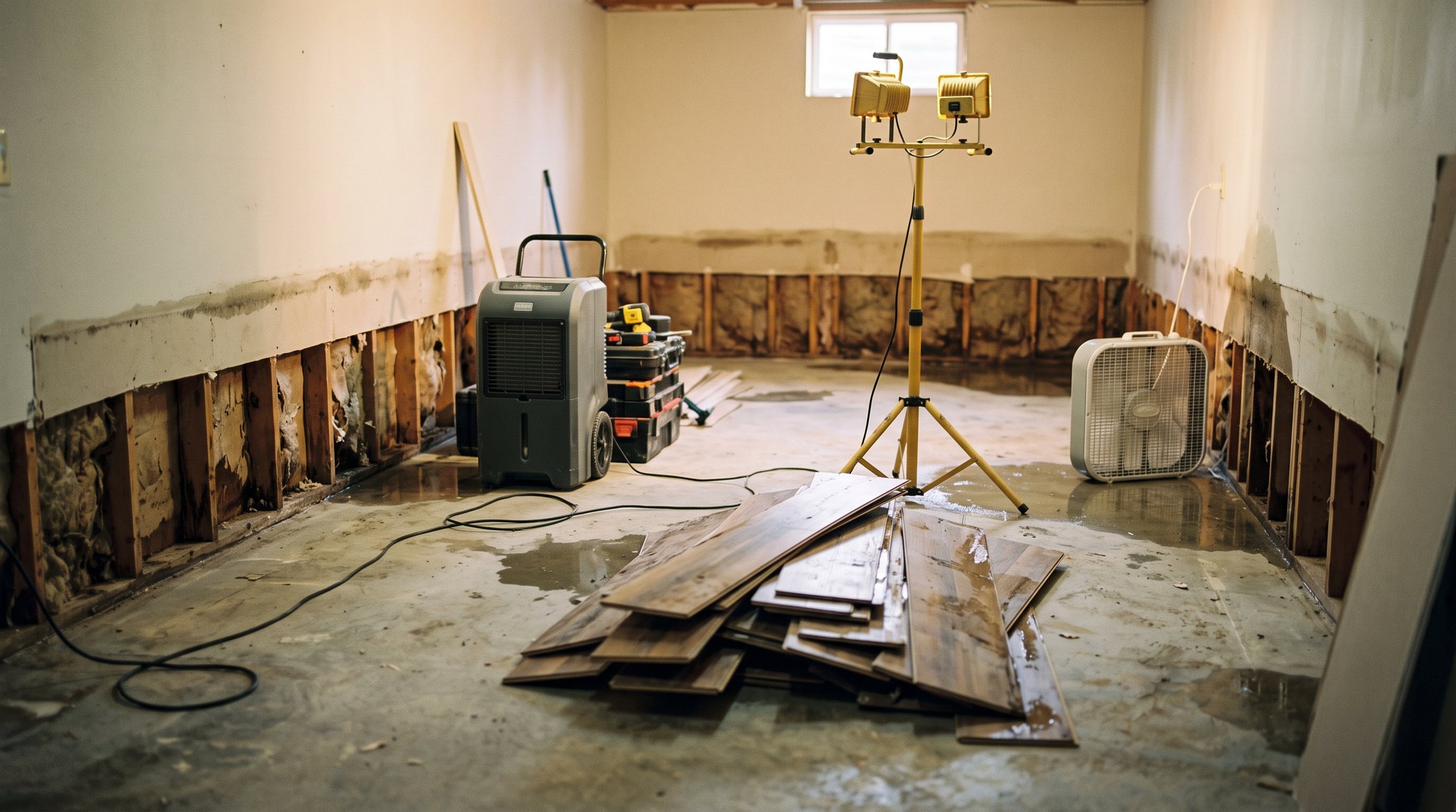
The full breakdown of what moves each number, wall length, depth, access and pump capacity, is on our basement waterproofing cost page. The point here is simpler: the worst outcome is not paying $12,000 for a system. It is paying $6,000 in cleanup every few years while the house quietly loses value.
Why do Chicago basements put waterproofing to a harder test?
The reason this question has a different answer in Chicago than in Phoenix is under your lawn. Nearly the entire region sits on dense glacial clay that absorbs water slowly, swells when it finally does, and then presses against foundation walls with real force. Every storm that stalls over Cook, DuPage or Will County loads that clay like a sponge, and the water it cannot absorb travels along the path of least resistance, which is the disturbed soil right beside your foundation.
Add the freeze-thaw cycle, which opens hairline cracks a little wider every winter, and the age of the housing stock. Most homes here drain their footings through clay tile pipes installed the day the house was built. Those pipes silt shut over decades, which is why basements that stayed dry for a generation suddenly start taking on water. We wrote a full answer on that exact situation: why a basement starts leaking after 20 dry years. The pattern matters for the worth-it question, because in this region a dry basement is not a permanent condition. It is a system that is either still working or quietly failing.
What does worth it look like for your house?
The math changes with the house, because the failure mode changes with the era it was built in. Find yours below.
Pre-war bungalows and two-flats
Brick bungalows and two-flats from the 1910s through the 1940s sit on stone, brick or early concrete foundations whose original drainage retired decades ago. Lots are narrow, gangways are tight, and exterior excavation is often impossible without tearing out everything the owner loves about the property. Interior drain tile at $95 to $160 per linear foot is usually the only practical permanent fix, and because these basements hold laundry, storage and often a rented unit’s mechanicals, it is almost always worth doing once rather than mopping forever. It is the calculus we walk through constantly on basement waterproofing in Chicago itself.
Post-war ranches and Georgians
The concrete block foundations of the 1950s and 60s suburbs wick moisture through their joints and seep at the cove, where the floor meets the wall. Here the worth-it question carries a structural kicker: block walls that stay saturated do not just leak, they eventually bow under clay pressure, and at that point you are buying wall reinforcement on top of a water fix. Waterproofing a block foundation while the walls are still straight is one of the cheapest structural insurance policies in the region, and it is why we treat recurring cove seepage in a block house as a now problem, not a someday problem.
1980s and 90s poured walls
Poured concrete walls crack as they cure and settle, and a vertical shrinkage crack that weeps during spring storms is the most common call we get from this era of house. The fix is urethane crack injection at $450 to $900 per crack, done from inside in a couple of hours, backed by a 10-year warranty. When the problem really is one crack, this is the easiest worth-it answer on this page. The judgment call is making sure it is actually one crack and not the first symptom of a drainage problem, which is what an honest inspection is for.
Newer subdivision homes
Houses built since the late 1990s usually have working perimeter drainage feeding a builder-grade sump pump, and that pump is the single point of failure for the whole basement. Grading also settles in the first decade, sending roof water back toward the foundation. For these homes the worth-it answer is often not a full system at all: a properly sized sump pump with battery backup at $2,800 to $4,500, plus downspout and grading corrections, protects the house for a fraction of the full-system price. Anyone who quotes you a perimeter system without first checking your pump and your gutters is answering a question you did not ask.
When is basement waterproofing not worth it?
An honest company turns down work, so here is when we tell homeowners to keep their money.
A first-ever event with an obvious outside cause. If your basement stayed dry for fifteen years and took water the week a downspout came loose or a window well filled with leaves, fix the cause, dry it out and watch it for a season. One incident with a known cause is maintenance, not a system purchase.
Water rising from the floor drain. Water that comes up through a floor drain during heavy storms is a sewer problem, common in older suburbs on combined sewers, and no wall or footing system will stop it. That fix runs through a plumber and possibly a backflow device, and a waterproofing quote for it is the wrong quote. We say so on inspections and we will say it here.
Humidity wearing a water costume. Damp-feeling air, musty smell and white fuzz on the walls in July is often condensation, not seepage. Tape a square of aluminum foil to the wall for two days: moisture on the room side means humidity, and the first fix is a dehumidifier, not a contractor. That test costs nothing and settles the question.
How do you decide without getting sold?
This industry runs on evening presentations, same-day discounts and quotes that expire before the fear wears off. The defense is boring: match the fix to the problem, and check every number against a published range.
| The option | Published cost | The right fit | Where it falls short |
|---|---|---|---|
| Fix gutters, downspouts, grading | $600 to $2,500 | Water only after hard rain, walls otherwise sound | Cannot relieve water already reaching the footing |
| Urethane crack injection | $450 to $900 per crack | A leaking crack in a poured wall | Wrong tool for cove seepage or block walls |
| Sump upgrade with battery backup | $2,800 to $4,500 | Newer home with working drain tile | Only as good as the drainage feeding it |
| Interior drain tile and sump | $8,000 to $16,000 full perimeter | Recurring seepage, silted drains, high water table | Overkill for a one-gutter problem |
| Do nothing and watch | $0 today | A single explained incident in a long-dry basement | Water keeps its own schedule and damage compounds |
And before you sign anything, from us or anyone else, run the quote through this list.
- The scope is written and measured. Linear feet of drain tile, pump model and capacity, discharge route. A lump sum with no measurements is a guess you are being asked to finance.
- The price sits inside published ranges. If drain tile is quoted far outside $95 to $160 per linear foot, ask what makes your basement special. There is sometimes a real answer. There is usually not.
- The warranty is in writing and transferable. A warranty that dies when you sell protects the company, not the house. Ours is a lifetime, fully transferable warranty, and the terms are public.
- The cheapest fix got considered first. An inspector who never looked at your gutters before quoting a perimeter system was not inspecting, he was measuring for the invoice.
- You know who does the work. Ask whether the crew is the company’s own or a subcontractor chasing volume.
- Nobody needs an answer tonight. A discount that expires when the salesperson leaves the driveway is a pressure tactic, not a price.
What should you do next?
First, spend a free half hour outside during the next hard rain. Watch where the downspouts discharge and where water stands against the house. A surprising share of wet basements are solved for the cost of downspout extensions, and you will walk into any estimate knowing things the salesperson does not.
Second, log what the water actually does. Photograph every event with a date: where it entered, how much, what the weather was doing. Two or three logged incidents turn a vague worry into a diagnosable pattern and keep any contractor honest about what needs fixing.
Third, get the problem diagnosed in writing. We inspect free within 48 hours, measure everything, and put the findings and the published-range price on paper whether you hire us or not. Book it at our free estimate page or call (630) 335-1128. If the numbers are tight this season, financing at 0% for 12 months spreads a permanent fix into a monthly cost most budgets can absorb.
Questions Chicago homeowners ask about the investment
Does basement waterproofing increase home value?
It protects value more than it adds it. Buyers in this region ask about water in the basement almost before they ask about the roof, and a documented system with a lifetime, fully transferable warranty removes the single biggest reason Chicago-area deals get renegotiated after inspection. A wet basement, by contrast, reliably costs you more than the system would have.
Will homeowners insurance pay for waterproofing?
No. Standard policies treat waterproofing as maintenance and exclude damage from seepage and groundwater entirely. Most flood and sump-failure payouts come only from optional endorsements, and they cover cleanup after a failure, never prevention. Insurance is one more reason prevention is on you: the damage you are most likely to suffer is the kind least likely to be covered.
Can I just seal the walls with waterproof paint?
Coatings block vapor and minor damp, and on a wall with real hydrostatic pressure behind it they peel in sheets, usually within a couple of seasons. Paint cannot relieve the water pushing against the foundation; it can only hide the evidence for a while. If a coating were a permanent fix for Chicago clay, nobody here would own a sump pump.
Is it worth waterproofing if I plan to sell soon?
Usually yes, and sometimes it is the difference between selling and not. Illinois sellers must disclose known basement water problems, so the choice is between selling with a disclosed, unfixed defect that invites low offers, or with a fixed one carrying a transferable warranty the next owner inherits. The second house is easier to sell at a defensible price.
If the water keeps coming back, the math keeps getting simpler. A free inspection within 48 hours settles what the problem actually is and what the published-range fix actually costs: call (630) 335-1128 and get the straight answer.


