
Stormwater Rules, Rain Gardens and Permeable Options in Chicago
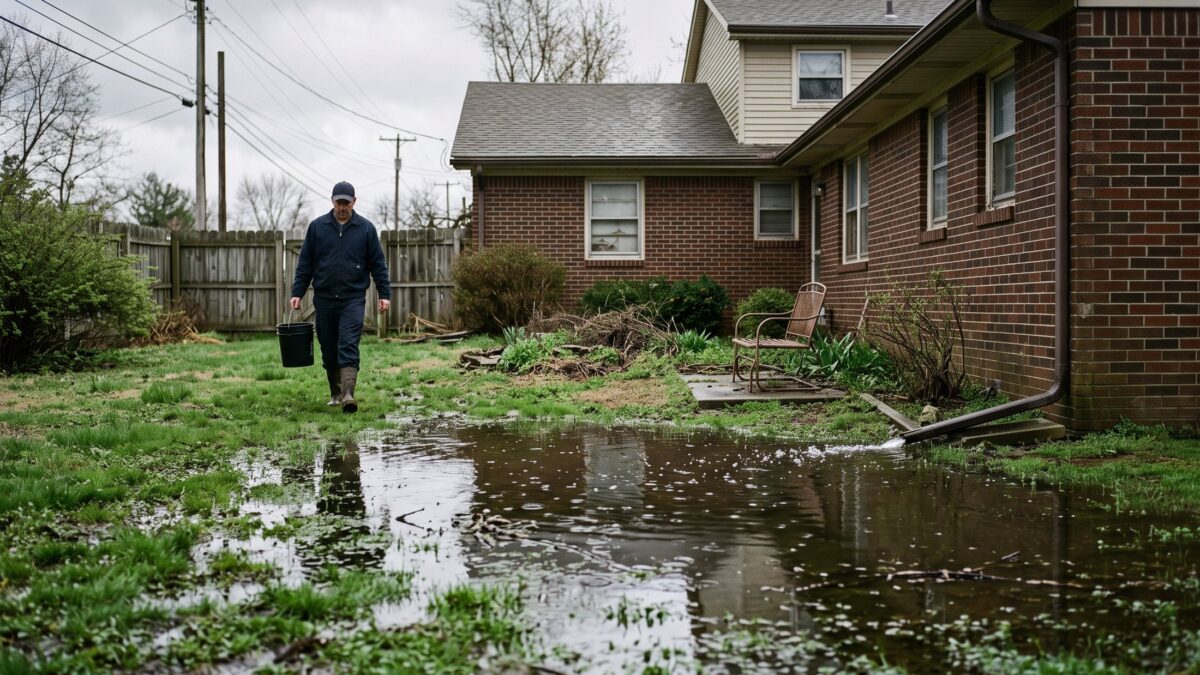
Every storm puts the same water on your lot. The only question is whether it soaks in, runs to an outlet you chose, or stands against the foundation until it finds a way down the backfill.
- Free drainage assessment within 48 hours
- Published pricing on every drainage line item
- 5-year warranty on drainage work
 Drainage work: 5-year warranty
The short answer
A rain garden is a shallow planted basin that catches roof runoff and lets it soak away over a day or two. Permeable paving does the same under a driveway. Both need soil that drains, which most Chicago clay does not, so they usually need amended soil, an underdrain and an overflow. Local stormwater rules vary by village.
Stormwater management on a house lot comes down to three choices for every gallon that lands on it: hold it, move it, or let it stand. A roof turns a rainstorm into a concentrated stream at four or five points around the building, and a driveway does the same for the pavement. Infiltration approaches such as rain gardens and permeable surfaces try to put that water back into the ground where it fell. Piped drainage takes the opposite view and carries it somewhere lower.
That choice is harder here than the design books admit. Most of the Chicago area sits on dense glacial clay that accepts water slowly, the frost line runs deep enough that the ground can be sealed for weeks at a time, and lot lines on older blocks leave almost no room between houses for a basin. Villages and counties across the seven counties we serve each set their own detention, grading and discharge requirements, so check with yours before you dig. Our yard drainage overview covers the systems we install.
How does a rain garden actually handle roof runoff?
A rain garden is storage, not a drain. It holds a few inches of water for a day or two and lets the soil underneath take it, which only works if the soil underneath will take it.
The sequence below is how a working basin gets built, and the order matters far more than the plant list.
-
Measure what the roof sends it
Start with the square footage draining to the downspout you want to capture. One large roof plane can deliver more water in an hour than a small basin will ever hold, which is why a garden sized by eye tends to overflow in its first real storm.
-
Test the soil before you commit
Dig a hole a foot deep, fill it with water, let it drain, then fill it again and time the drop. Ground that empties within about a day can host a basin. Ground still holding water two days later cannot, and no plant selection changes that.
-
Keep it well away from the foundation
A basin belongs downhill of the house, not tucked beside it. Encouraging water into the ground next to a basement wall feeds the loose backfill, and that column of disturbed soil is the one place on the property where water travels down quickly.
-
Rebuild the soil, not just the shape
A basin that works is excavated and refilled with a blended mix that drains far faster than native clay, set over a stone layer, usually with a perforated underdrain running to a lower point. The depression is the visible part and the least important part.
-
Give the overflow a destination
Every basin fills eventually. An overflow lip, a pipe or a swale decides where the excess goes on the day the storm beats the design. Choosing that spot yourself is always better than letting the next storm choose it for you.
Works well when
- The lot has room at least ten feet downhill of the house
- A soil test shows the basin will empty within a day or two
- The goal is cutting how much runoff leaves the property
- The design includes an underdrain and a planned overflow
What it will not do
- It will not dry out a basement that is already leaking
- It will not accept anything while the ground is frozen
- It will not stay a basin without weeding, mulching and reshaping
Why do rain gardens and permeable paving fail on Chicago clay?
Most of the failures we get called out to look at are not plant failures. The water had nowhere to go once it soaked in, or it was invited into the ground somewhere it never should have been.
Five patterns account for nearly every basin and paver installation that quietly stopped working.
-
The soil never percolated
Clay that takes days to empty a test hole turns a basin into a pond. Standing water drowns the planting, breeds mosquitoes and eventually gets filled back in with topsoil. This is a soil result rather than a matter of design taste, and testing first avoids it.
-
It was built too close to the house
A basin ten feet from a basement wall is a recharge well pointed at your footing. Water infiltrating there follows the disturbed backfill down and turns up at the cove joint a day or two after the storm has passed. Distance and downhill placement are not optional.
-
There was no underdrain and no outlet
In clay, infiltration on its own rarely empties a basin between storms. Without a perforated pipe under the stone running to a lower point, the basin carries water from one rain into the next and starts overflowing early in every event that follows.
-
The permeable surface silted shut
Permeable pavers and open-graded gravel work until the voids pack with soil fines, leaf litter and winter grit. Unless somebody vacuums the joints and replaces the top stone periodically, the surface sheds water like ordinary pavement within a few seasons.
-
Winter cancelled the whole idea
Infiltration stops when the top of the ground freezes. Our worst basement calls arrive during a February thaw, with snowmelt running over frozen soil, and that is precisely the day a basin, a dry well or a permeable driveway contributes nothing at all.
Where these do earn their place
- Open suburban lots with sandier fill and a genuine downhill outlet
- Patios and walkways where runoff was pooling on a small area
- Cutting runoff volume as one piece of a larger drainage plan
- Sites where somebody sized the basin from an actual soil test
Red flags after a storm
- Water still standing in the basin two days later
- A ring of silt or grit packed across a permeable surface
- Seepage inside a day or two after the yard fills up
- Turf dying in the basin instead of thriving in it
Should you soak the water in or pipe it away?
Both approaches are legitimate engineering. On a given Chicago lot the soil and the setbacks usually settle the argument before preference gets a vote.
| Infiltration: basin or permeable surface | Piped drainage to an outlet | |
|---|---|---|
| What happens to the water | Held on site and released into the soil over a day or two | Collected and carried to a lower outlet you selected |
| Soil it needs | Ground that empties a test hole within about a day | Works in any soil, including dense glacial clay |
| Distance from the house | Ten feet at an absolute minimum, downhill, farther is better | Starts at the downspout and leaves immediately |
| Winter performance | Nothing infiltrates through frozen ground | Runs whenever the line and the outlet stay clear |
| Published cost | Landscape construction, not a line on our price list | Downspout work and regrading $600 to $2,500 |
| Maintenance | Weeding, mulching, reshaping, vacuuming a paver surface | Clearing the grate and flushing the line |
| Approvals | Varies by village, ask before you excavate | Varies by village, especially where the outlet lands |
| Effect on a leaking basement | Indirect at best, negative if placed too near the wall | Direct, because it removes water feeding the wall |
| Who does the work | A landscape designer or a civil engineer | Our crews, with a 5-year warranty |
Neither approach replaces the ground immediately around your house. Grade and downspouts come first every time: see grading and slope around a foundation.
Water standing where it should not? We measure the lot, the roof area and the outlet options, then quote from published ranges, free within 48 hours.
What does this look like on your block?
Lot width, grading and the age of whatever drainage is already buried out there decide what is possible. These four cover most of the housing we walk across the region.

Pre-war bungalows and two-flats
Narrow lots, a gangway on each side and a roof draining to four downspouts with nowhere to send them. There is rarely room for a basin at a safe distance, so roof water has to be piped toward the street or the alley.
Pipe it, do not pond it
Post-war block ranches
Larger lawns over graded clay fill, usually with the original swale between houses flattened by decades of topdressing and fill. Reshaping that channel moves more water off the property than any basin would, and costs less.
Reshape the swale first
1980s and 90s subdivisions
Poured walls, working perimeter drainage and lot grading that was engineered at the plat and has settled since. Drainage easements often run between properties here, so learn what you are allowed to alter before digging.
Check the easement, then regrade
Newer subdivision homes
Stormwater controls were designed for the whole subdivision rather than your yard, and downspouts often discharge to a set point. Open lots and shallower fill make these the best candidates for permeable surfaces.
Best case for permeableWhat does controlling the water on a lot cost?
Getting roof water away from the building and rebuilding the grade around it runs $600 to $2,500 on most properties, and it is the first money we tell people to spend.
| Work | Range | What moves the number |
|---|---|---|
| Downspout extensions and regradingtypical job | $600–$2,500 | Feet of grade to rebuild, soil hauling |
| Exterior French drainper linear foot | $45–$90 | Trench depth, where the water can legally go |
| Sump pump with battery backupinstalled | $2,800–$4,500 | Pit condition, backup capacity, discharge routing |
Rain gardens, planted basins and permeable pavers are landscape construction, so they are not on our price list and we do not sell them. Everything we do install is published on the pricing page.
When the answer is not a drainage system
Plenty of the yards we walk do not need us at all. Here is what we say on those visits, in the order we say it.
A longer downspout extension is the whole fix
One downspout dumping at a corner can put hundreds of gallons beside the foundation during a single storm. Ten feet of extension is cheap and takes an afternoon. Start with the downspouts, then watch the next few rains before buying anything larger.
Cheapest real fixThe water is arriving from the lot next door
Illinois law generally protects the natural flow of surface water between properties, and villages layer their own grading rules on top of that. Before you build anything that sends water back, talk to your village, and to an attorney if there is already a dispute. That is not a contractor question.
Not our callYou want a rain garden for the garden
If the goal is habitat, native planting and less lawn to mow, this is a landscape project and a landscape designer will do it better than any drainage crew. We are glad to tell you where the basin should not go and leave the rest of it to them.
Hire a landscaperThe basement has never been wet
A yard that puddles for a day after a heavy rain is not automatically a foundation problem. If the basement is dry, the grade falls away and the puddle eventually drains, live with it through a season and watch. Standing water is not always a defect.
Do nothing yetQuestions homeowners ask about stormwater on their own lot
Do I need a permit to put in a rain garden or a dry well?
It depends entirely on where you live. Some villages treat a shallow planted basin as landscaping and ask for nothing. Others review any change to lot grading, any structure that impounds water, and anything altering where runoff leaves the property, with county stormwater review on top for larger projects. Call your village building or engineering department before you excavate, describe the size and the outlet, and get the answer in writing.
Will a rain garden keep my basement dry?
Not on its own, and a badly placed one makes things worse. A basin holds water on your property and encourages it into the ground, which is the opposite of what a leaking foundation wants nearby. Rain gardens reduce how much runoff leaves a lot. Keeping a basement dry means moving roof water away from the wall and relieving pressure at the footing, which is a different job using different tools.
How far from the house should a basin or dry well sit?
Ten feet is the minimum you will usually see quoted, and on clay we would rather see considerably more, always downhill of the foundation. The reason is the backfill. Soil around a basement was dug out and put back loose, so it drains faster than the undisturbed ground beyond it, and anything concentrating water into that zone is feeding the footing. Distance is the cheapest protection in the entire design.
Do permeable pavers work through a Chicago winter?
They work until the ground beneath them freezes, after which they behave like any other driveway. They also collect grit from plowing and salting, and those fines pack the joints that made the surface permeable to begin with. Owners who keep them working vacuum the joints and replace the top stone on a schedule. If nobody plans to do that, expect the surface to shed water within a few seasons.
Can my sump pump discharge into a rain garden?
Usually a bad idea. A sump runs hardest when the ground is already saturated, so a basin near the house is being fed at exactly the moment it cannot accept anything, and that water then works its way back toward the foundation. Discharge belongs well away from the building, at a point where it cannot return. <a href="/yard-drainage/where-sump-water-should-go/">Where sump water should go</a> covers distances and outlets, and local rules vary.
Am I allowed to send runoff onto the neighboring yard?
The general principle in Illinois is that you may not concentrate or redirect surface water onto an adjoining property in a way that increases the burden on it, and villages add their own grading and discharge requirements. In practice, a pipe outlet aimed at a lot line invites trouble even where the water once drifted that way naturally. Check with your village first, and with an attorney if a dispute is already underway.
Clay is the reason most of this is hard
Nearly every drainage decision on a Chicago lot traces back to the same soil. Dense glacial clay accepts water slowly, holds it near the surface for days, then hands it along the loose backfill toward your foundation instead of letting it sink. Understanding that behavior explains why infiltration underperforms here and why piped drainage keeps earning its keep.
Read how clay soil changes yard drainage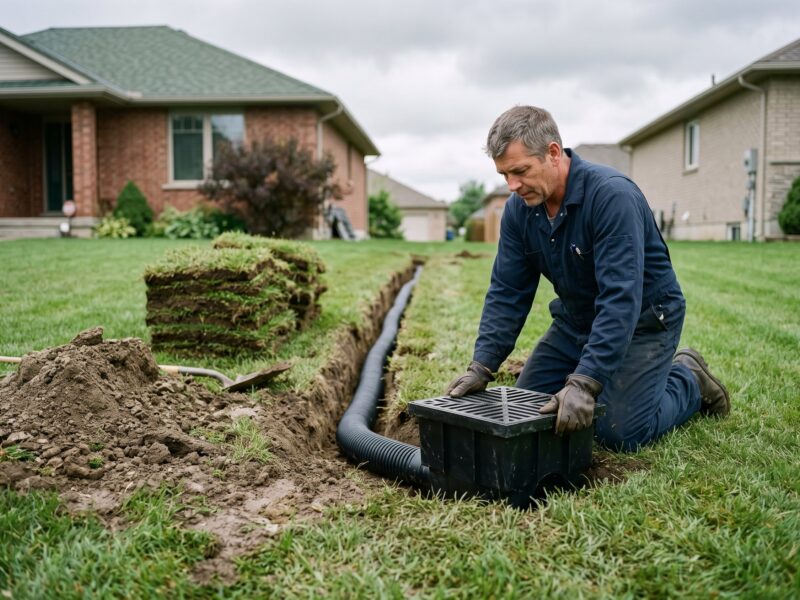

Get the water on your lot measured before you plant anything
Free written assessment within 48 hours, published pricing on every drainage line, and a 5-year warranty on the work we install.
Or talk to a human right now
(630) 335-1128
Request your free estimate
Tell us what you're seeing. We'll call back fast and be out within 48 hours.