Foundation Repair in Yorkville, Illinois
Yorkville holds two structural worlds a mile apart: poured walls from the 2000s growth wave still settling into graded farm ground, and township farmhouses on foundations built before any modern standard existed. We measure first, repair what the numbers show, and back it with a 25-year transferable warranty.
- Structural warranty: 25-year transferable
- Published pricing: injection from $450, piers from $1,600
- Free structural inspection within 48 hours
 25-year transferable warranty
Who does foundation repair in Yorkville?
ProSeal Basement Waterproofing repairs foundations across Yorkville and rural Kendall County from a base in the Joliet and New Lenox corridor. Crack injection runs $450 to $900, carbon fiber straps $600 to $1,000 each, and settlement piers $1,600 to $3,000 apiece, every number published before an estimator sets foot on the property, every structural repair covered by a 25-year transferable warranty.
The skill Yorkville demands is range. A 2000s poured wall off Route 47 fails in predictable, well-documented ways, and the fixes are almost routine. A township farmhouse foundation might be stone, early block or something a farmer improvised eighty years ago, and it deserves an estimator who has seen that before and does not price the unknown as a crisis. The person measuring your wall is paid for the diagnosis, not the invoice.
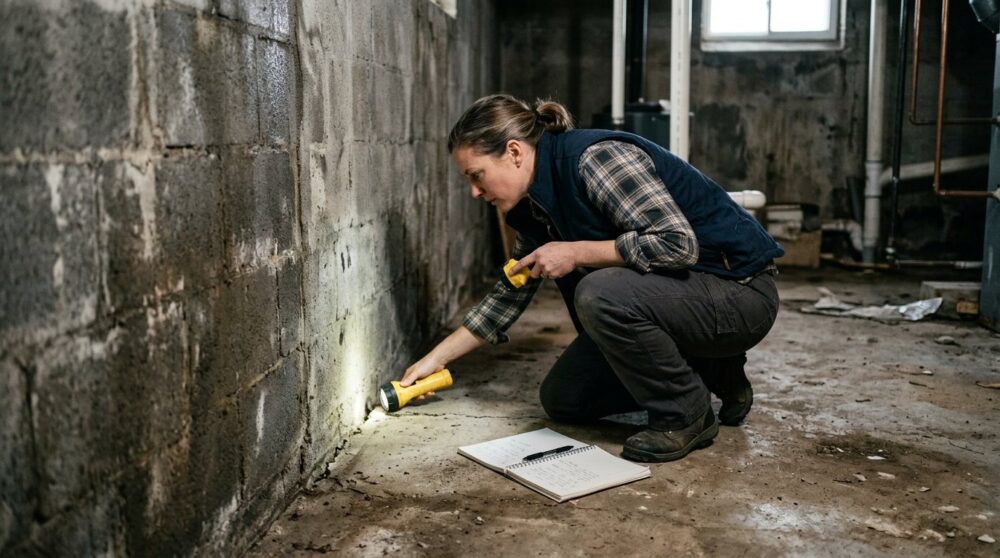 The measurement comes first: crack widths and elevations before any quote.
What does foundation repair in Yorkville include?
Six structural tools cover what Yorkville housing breaks, and the rule is cheapest adequate fix first. A $450 injection wins over a pier job whenever injection is what the crack actually needs.
 Urethane crack injection
The routine subdivision repair: a settling poured-wall crack sealed full depth in a morning.
Learn more
Urethane crack injection
The routine subdivision repair: a settling poured-wall crack sealed full depth in a morning.
Learn more
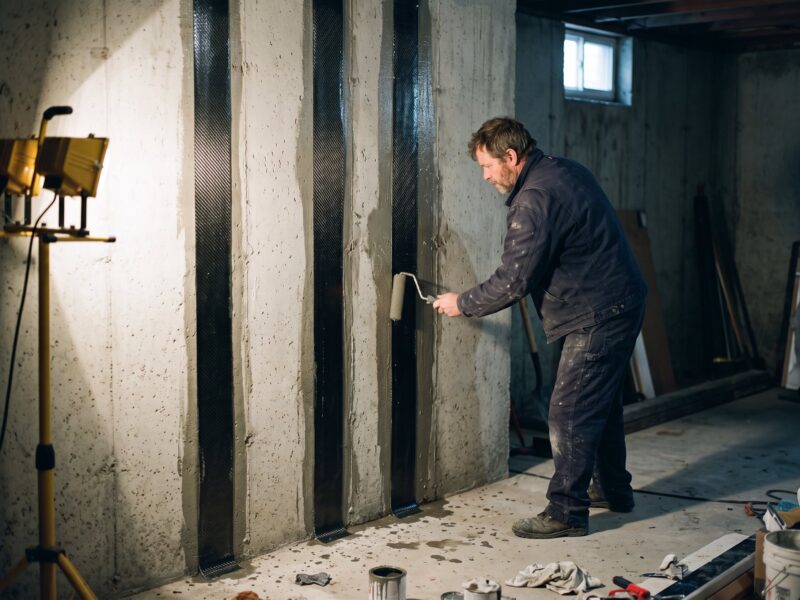 Carbon fiber straps
For block walls caught while the bow is still under two inches.
Learn more
Carbon fiber straps
For block walls caught while the bow is still under two inches.
Learn more
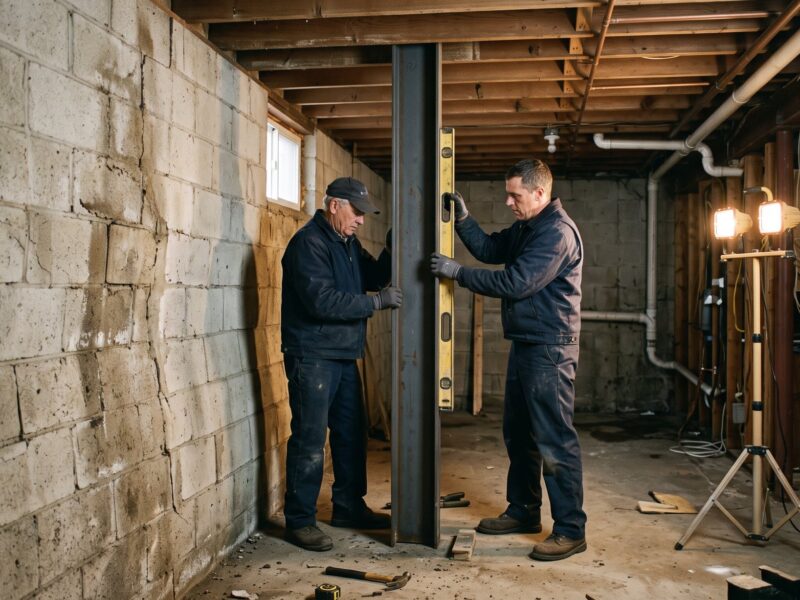 Steel I-beams & wall anchors
Open acreage behind the wall makes anchor installs unusually clean out here.
Learn more
Steel I-beams & wall anchors
Open acreage behind the wall makes anchor installs unusually clean out here.
Learn more
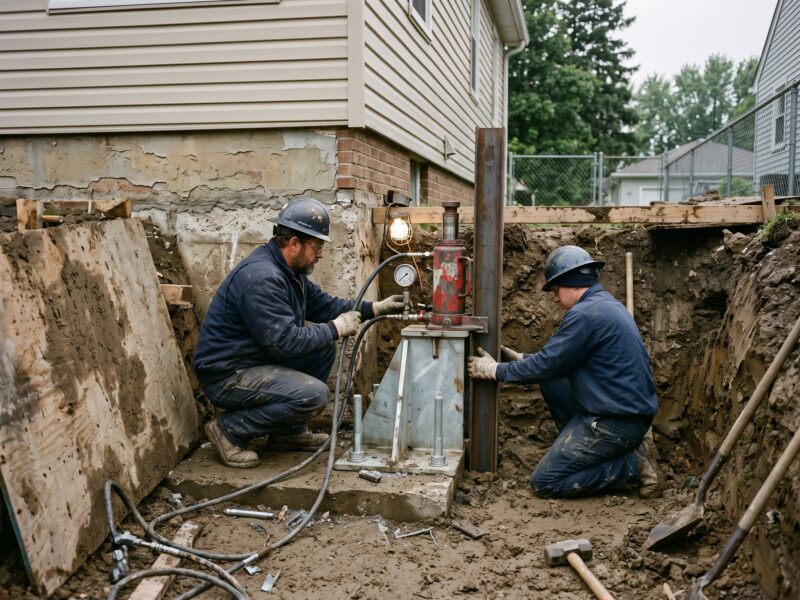 Push & helical piers
For growth-wave houses still settling into graded farm clay.
Learn more
Push & helical piers
For growth-wave houses still settling into graded farm clay.
Learn more
 House leveling
Columns, beams and footings under farmhouse floors that have sagged for decades.
Learn more
House leveling
Columns, beams and footings under farmhouse floors that have sagged for decades.
Learn more
 Not sure what you have?
A plain-language guide to what each kind of movement looks like and what it usually costs.
Learn more
Not sure what you have?
A plain-language guide to what each kind of movement looks like and what it usually costs.
Learn more
Why do Yorkville foundations crack and settle?
Yorkville foundations fail along the same line that splits the housing stock: young poured walls adjusting to graded farmland inside the subdivisions, and older, more varied foundations aging on the acreage and near the river.

The 2000s poured walls
The growth-wave subdivisions went up fast on ground that was farmland first. Poured walls there behave like Oswego's: shrinkage cracks as they cure, settlement cracks over openings, and low corners where compacted fill keeps adjusting under the footing.

Township foundations without a birth certificate
On Kendall Township acreage the foundation might be stone, early block or hand-mixed concrete, built to no code and standing on judgment. These walls fail slowly through mortar loss and moisture cycling, and they want careful handling, not a standard playbook.

The old downtown near the Fox River
The historic core carries the oldest continuously occupied foundations in town, sitting closest to the valley water table. Seasonal moisture works the mortar and the footings year after year, so small movements accumulate into real repairs.
What makes Yorkville ground move?
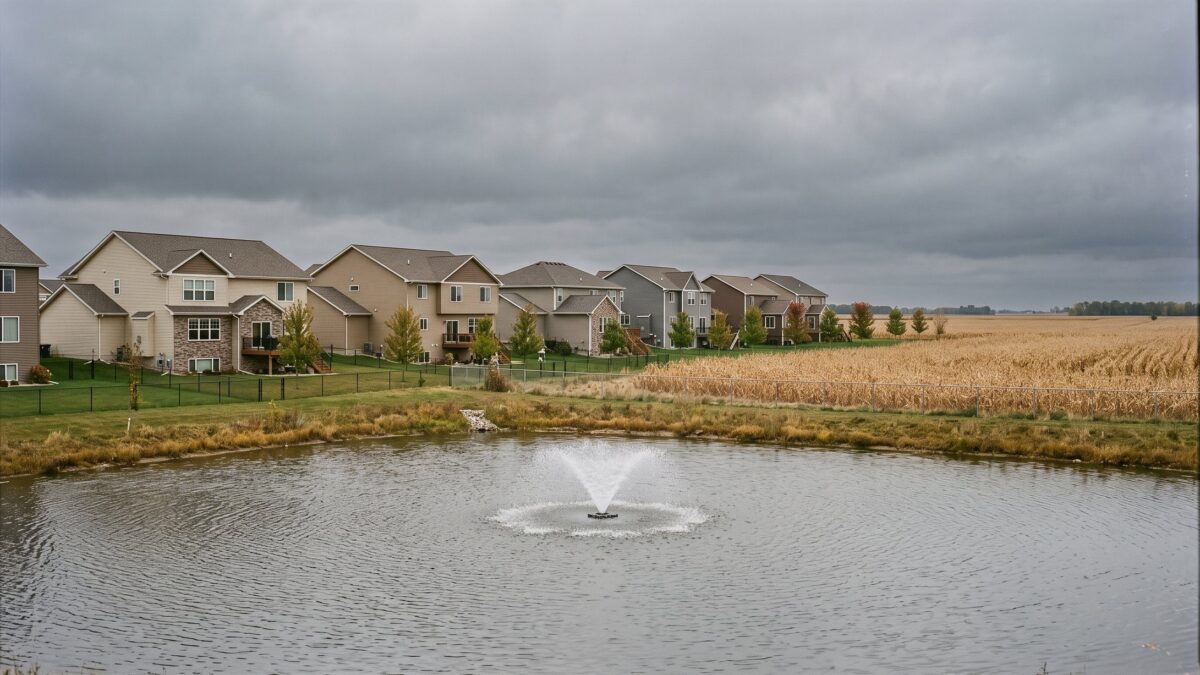
Most of Yorkville stands on former farmland, and that history is the main structural fact about the town. The subdivisions were graded and filled before they were built, and engineered fill keeps consolidating for decades: footings drop a little, corners go low, and cracks open over doors and windows. The clay itself swells in wet springs and shrinks in dry summers, so the movement runs on a seasonal cycle that a single visit can miss but a measurement history catches.
The rural ground adds its own variable. Tiled farm soil drains at whatever rate the old tile still manages, so soil moisture around a township foundation can differ sharply from one side of the house to the other. Uneven moisture means uneven movement, which is why an acreage inspection walks the ground around the house as carefully as the walls inside it. Piers do not care about any of this: they carry the house down to strata that never heard of the farm.
 Graded and filled before it was built: the ground under the growth wave.
Signs you need foundation repair in Yorkville
Six symptoms account for most Yorkville structural calls, from schedule-a-measurement to call-this-week. None of them gets cheaper by waiting a season.

A horizontal crack at mid-height
The serious one: saturated clay actively pushing the wall inward. Caught early it is strap money; ignored through a few more wet springs it becomes steel and anchor money.

Stair-step cracks in block or brick
Mortar joints mapping differential settlement, common where fill compacted unevenly under growth-wave footings. Width and direction tell the story, so we measure both.
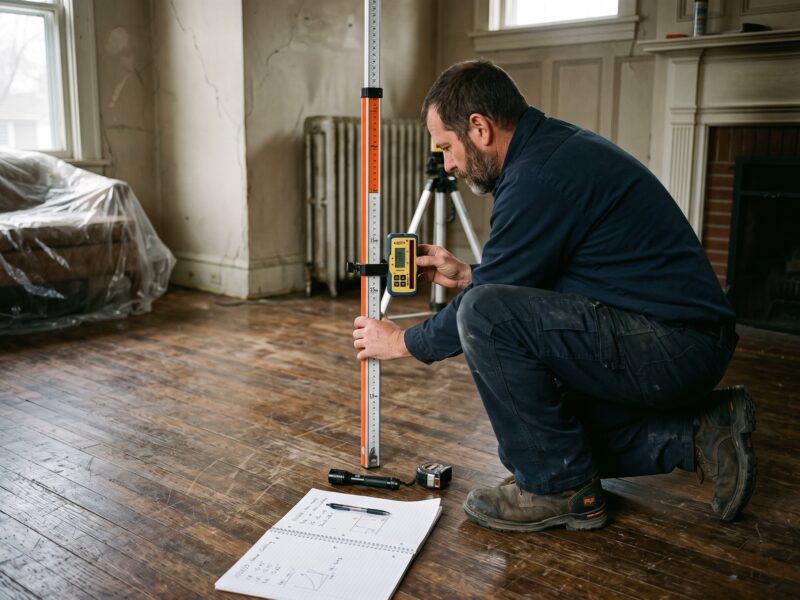
Floors out of level upstairs
When doors quit latching and the floor reads a slope on the laser, something below moved. Often it is a beam or column rather than the foundation, which costs far less to correct.
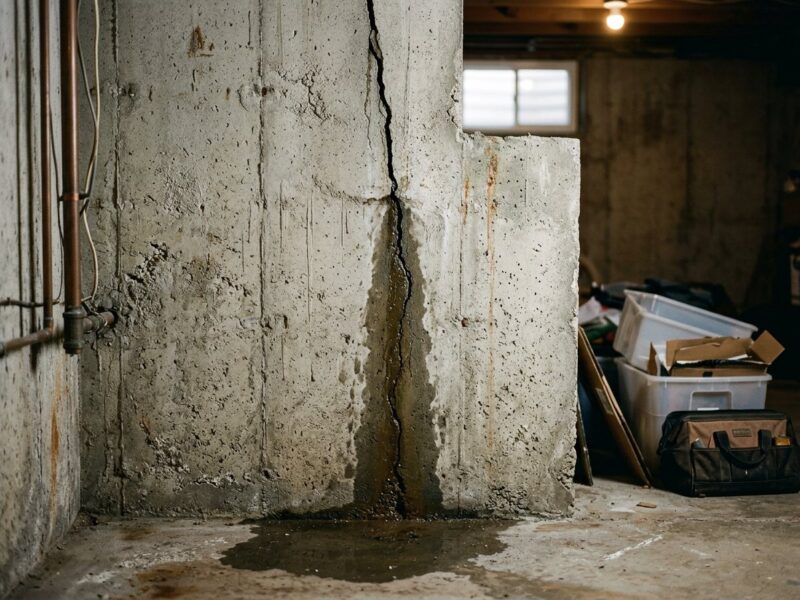
A crack that leaks when it rains
Most wet poured-wall cracks in the subdivisions are stable shrinkage cracks that seal for $450 to $900. The inspection confirms stability before anyone quotes more than an injection.

A farmhouse crawl space going soft
Posts sinking into damp ground, beams crushed at the bearing points, floors bouncing overhead: the classic township symptom set, and usually a leveling repair rather than a foundation rebuild.

A garage or addition pulling away
A gap opening where an addition meets the house means its footing is settling on its own schedule. If the elevations show active movement, that corner is pier territory.
Crack over the patio door wider than last spring? Get it measured before another season moves it. The structural inspection is free.
How does foundation repair work in Yorkville?
A Yorkville foundation repair runs four steps: identify the construction, measure the movement, match the method, verify the result. Most repairs finish in one to three days on site.
Identify what you actually have
Growth-wave poured, older block or a township foundation of uncertain vintage changes everything, so the inspection starts by naming the wall. Free, within 48 hours.
Day 0Measure and match
Crack widths, wall deflection and floor elevations go into a written plan that pairs the failure to the fix, priced from published ranges. On acreage the plan also notes how ground moisture is distributed around the house.
Day 0, same visitInstall and verify
The crew installs, torques to spec and re-measures against the day-zero numbers before packing up. Pier jobs log drive pressures at every bracket.
Days 1 to 3Warranty to the address
Structural work carries the 25-year transferable warranty, registered to the house so it transfers at closing and answers the buyer's inspector without an argument.
On completionReinforce or rebuild: what do Yorkville walls actually need?
Nearly every failing Yorkville wall can be reinforced in place for a fraction of rebuild money, and that stays true even out here, where open acreage would make excavation easy. Access is not the argument for a rebuild; the wall's condition is, and most walls do not make it.
| Reinforce in place | Excavate and rebuild | |
|---|---|---|
| Best for | Bowing, cracked or settling walls still structurally intact, which is most of them | Walls sheared, collapsing or beyond saving, a small minority |
| Growth-wave poured walls | Injection for cracks, piers for settlement: routine, proven repairs | Almost never justified on walls this young |
| Township foundations | Careful reinforcement and leveling respect an old wall's quirks | Rebuilding an undocumented wall invites surprises mid-dig |
| Site impact | Interior work and small pier pits; the yard survives | Weeks of machines, spoil piles and a torn-up acreage approach |
| Cost | $450 injections to $3,000 piers, per published ranges | Tens of thousands per wall before landscaping |
| Warranty | 25-year transferable, registered to the house | Varies by scope; get it in writing before signing |
If an estimator quotes a rebuild without measuring deflection first, get a second opinion. Ours is free and arrives with the numbers.
When do Yorkville foundations move?
Yorkville foundation movement runs on the clay's moisture cycle, and each season has its own cheapest moment to act on it.
Spring: push season
Saturated clay swells against basement walls while the creeks run full. Horizontal cracks widen and bows advance, and a measurement taken now catches movement at its most visible.
March to MaySummer: shrink season
Dry spells pull moisture from the clay and let footings drop. The growth-wave subdivisions do most of their settling talk now: fresh cracks over windows and doors that suddenly rub.
June to AugustFall: measurement season
Calm ground and dry weather make fall the unhurried window to drive piers, set straps or re-check a monitored wall before frost arrives.
September to NovemberWinter: interior season
Injection, carbon fiber, bracing and column work all happen indoors at full speed while the ground is frozen, and Kendall County winter blocks are the easiest to book.
December to FebruaryHow much does foundation repair cost in Yorkville?
Foundation repair in Yorkville costs $450 to $900 for crack injection, $600 to $1,000 per carbon fiber strap, $900 to $1,500 per steel beam, and $1,600 to $3,000 per pier, the same published ranges we hold in every town we serve. Township foundations of unusual construction get scoped at the free inspection rather than guessed at.
| Work | Range | What moves the number |
|---|---|---|
| Urethane crack injectionper crack | $450–$900 | Crack length and width, access to the full height |
| Carbon fiber strapsper strap | $600–$1,000 | Wall height, spacing the deflection requires |
| Steel I-beam wall bracingper beam | $900–$1,500 | Ceiling height, footing condition at the base |
| Push or helical piersper pier | $1,600–$3,000 | Depth to load-bearing strata, access for equipment |
The full structural table lives on the pricing page; your written Yorkville quote lands inside it.
Where we repair foundations in and around Yorkville
The structural calls in 60560 sort by era. The Route 47 and Route 34 corridors send growth-wave work: settlement cracks, low corners and the occasional leaking shrinkage crack in a poured wall. The historic downtown and the Fox River corridor send the oldest walls in town, where moisture has worked the mortar for a century. Bristol, the Blackberry Creek corridor and the Kendall Township acreage send the interesting ones: farmhouse foundations, sagging beams over crawl spaces, and additions settling away from houses older than their records.
Honesty about the drive: Yorkville sits fifty minutes to an hour and ten from our base, so Kendall County runs in scheduled blocks with Oswego and the Fox Valley rather than on same-hour whims. Inspections still land within 48 hours, monitoring re-checks get folded into the next block, and nothing about the distance changes the published price.
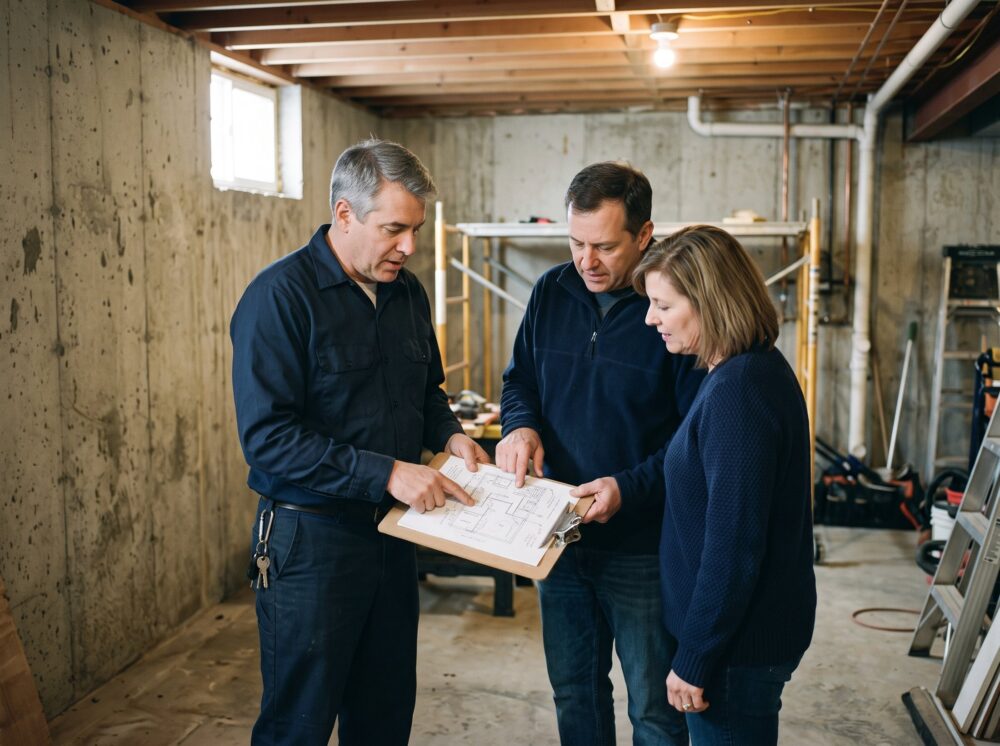 The written plan, walked through on site: what moved, what it needs, what it costs.
Yorkville foundation repair questions, answered straight
How far out do you actually come for Yorkville work?
Dixon is our western edge, so Yorkville sits comfortably inside the ring. We schedule Kendall County in blocks alongside Oswego and the Fox Valley, the structural inspection is free, and we aim to be on site within 48 hours.
My 2000s house near Route 47 has cracks over the windows. Is it still settling?
Possibly, and that is the whole question. Subdivisions built on graded farmland commonly keep adjusting for their first few decades. We measure the elevations: if the movement is active, piers at $1,600 to $3,000 each stop it permanently; if it finished years ago, sealing the cracks is the honest complete answer.
Who repairs old farmhouse foundations in Kendall Township?
We do, and we start by admitting nobody knows exactly what is down there until we look. Stone, early block and improvised concrete each fail differently, so the inspection identifies the construction before anything gets priced. What we will not do is quote a standard subdivision fix against a wall that predates the standards.
How much does foundation repair cost in Yorkville?
Same published ranges as everywhere on our map: $450 to $900 per injected crack, $600 to $1,000 per carbon strap, $900 to $1,500 per steel beam, $1,600 to $3,000 per pier, and support columns from $1,500. Unusual township construction gets scoped in person at the free inspection instead of estimated over the phone.
Do piers work on a rural property with no soil records?
Yes, and that is much of their appeal out here. Push and helical piers drive until they reach load-bearing strata and prove it in the drive logs, so they do not depend on anyone knowing what the fill or the farm ground above was doing. The bracket carries the house on the log, not on a guess.
Will foundation repair hurt the sale of my Yorkville house?
Documented repair usually helps a sale rather than hurting it, especially in subdivisions where buyers already ask about settlement. Our work leaves a packet of measurements, photos, scope and a 25-year transferable warranty registered to the address, which your agent hands the buyer's inspector in place of an awkward conversation.
Does homeowners insurance cover foundation settlement in Illinois?
Usually not. Standard Illinois policies exclude damage from soil movement and hydrostatic pressure, which covers most foundation trouble. That exclusion is the financial argument for catching a moving wall at the $600 strap stage instead of the five-figure stage.
Can you monitor a wall for me given the distance?
Yes, and we will be honest about how: monitoring visits ride along with our scheduled Kendall County blocks rather than as one-off trips, so re-measurements happen on a planned cadence. When a wall deserves watching instead of immediate steel, we say so, log the numbers, and come back on schedule to compare.
Is the cracked wall also a wet one?
In Yorkville the two trades meet constantly: the saturated clay that settles a subdivision footing is the same clay pushing water at the cove joint, and a township wall losing mortar is usually losing it to moisture. If the crack you are watching also seeps in spring, one inspection covers both problems and sequences the fixes correctly.
Basement Waterproofing in Yorkville
Foundation repair near Yorkville

Get the Yorkville wall measured, subdivision or farmstead
A free structural inspection within 48 hours, a method matched to what is actually built under your house, and a 25-year transferable warranty that transfers with it.
Or talk to a human right now
(630) 335-1128
Request your free estimate
Tell us what you're seeing. We'll call back fast and be out within 48 hours.