Foundation Repair in Shorewood, Illinois
Shorewood foundations are young, poured and mostly sound, which makes the diagnosis the whole job: telling a $450 shrinkage crack from real settlement in graded ground that never quite finished compacting. We measure first, fix what the numbers show, and warranty it for 25 years.
- Structural warranty: 25-year transferable
- Published pricing: injection from $450, piers from $1,600
- Free structural inspection within 48 hours
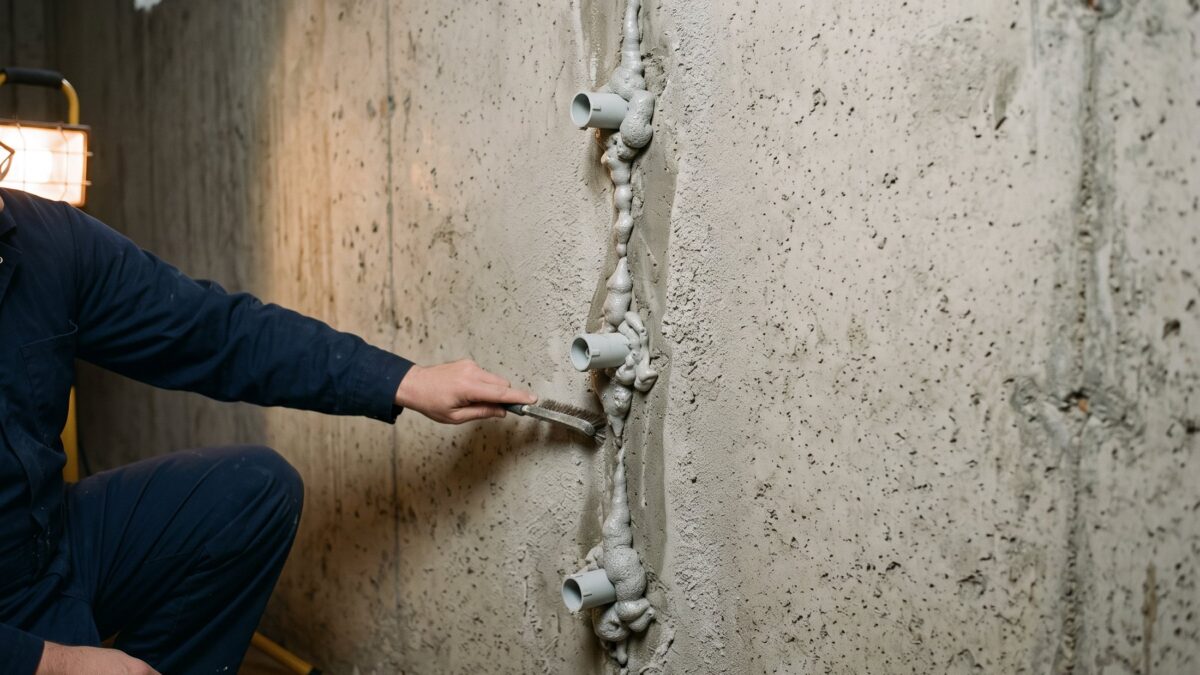 25-year transferable warranty
Who does foundation repair in Shorewood?
ProSeal Basement Waterproofing is a foundation repair contractor covering Shorewood from the Joliet and New Lenox corridor, a drive of fifteen to twenty-five minutes. Urethane crack injection runs $450 to $900, carbon fiber straps $600 to $1,000 each, and settlement piers $1,600 to $3,000 apiece, every figure published before an estimator sees your wall, every repair backed by a 25-year transferable warranty.
In a village built almost entirely since the 1990s, the structural skill that matters is restraint. Most Shorewood cracks are curing shrinkage that an injection retires for good, and quoting steel for those is how bad contractors fund their trucks. The real cases hide among them: subdivisions graded out of farmland, ground near the river that never fully dries, corners that keep dropping. Elevation numbers separate the two, so we take them every time.
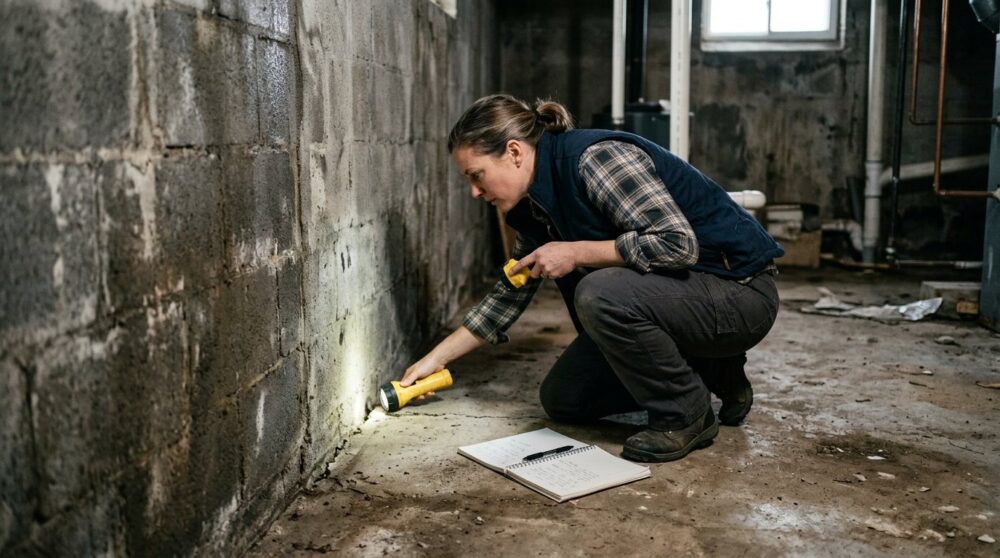 The measurements come first: elevations and crack gauges before any quote.
What does foundation repair in Shorewood include?
Six structural tools cover what Shorewood housing actually breaks, and the cheapest adequate fix always leads the written plan. In this village that plan starts with injection far more often than with steel.
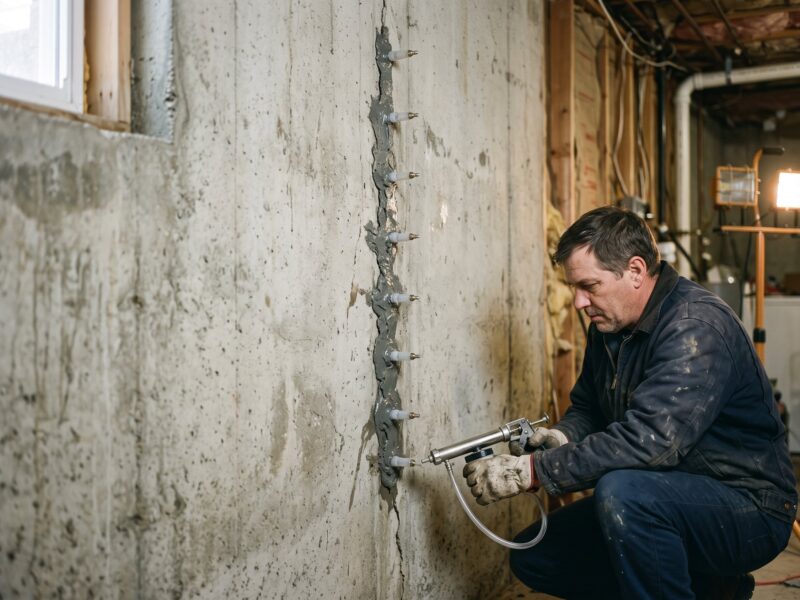 Urethane crack injection
The workhorse for poured-wall shrinkage cracks, sealed full depth in a morning.
Learn more
Urethane crack injection
The workhorse for poured-wall shrinkage cracks, sealed full depth in a morning.
Learn more
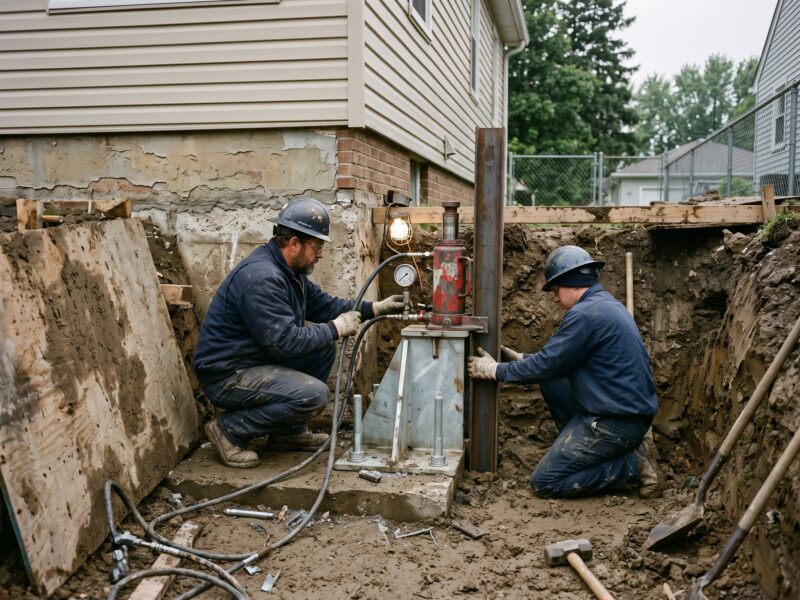 Push & helical piers
For corners settling into graded subdivision fill that quit compacting on schedule.
Learn more
Push & helical piers
For corners settling into graded subdivision fill that quit compacting on schedule.
Learn more
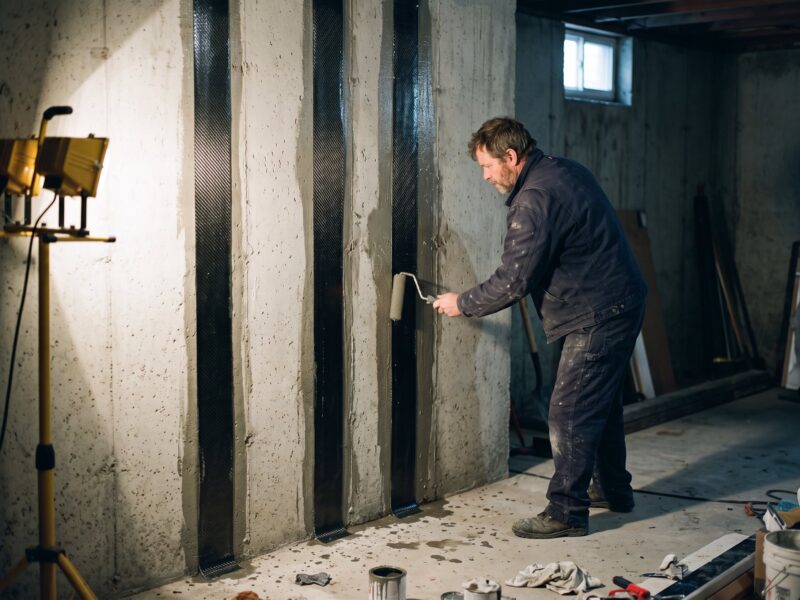 Carbon fiber straps
For the rare Shorewood wall showing early inward movement.
Learn more
Carbon fiber straps
For the rare Shorewood wall showing early inward movement.
Learn more
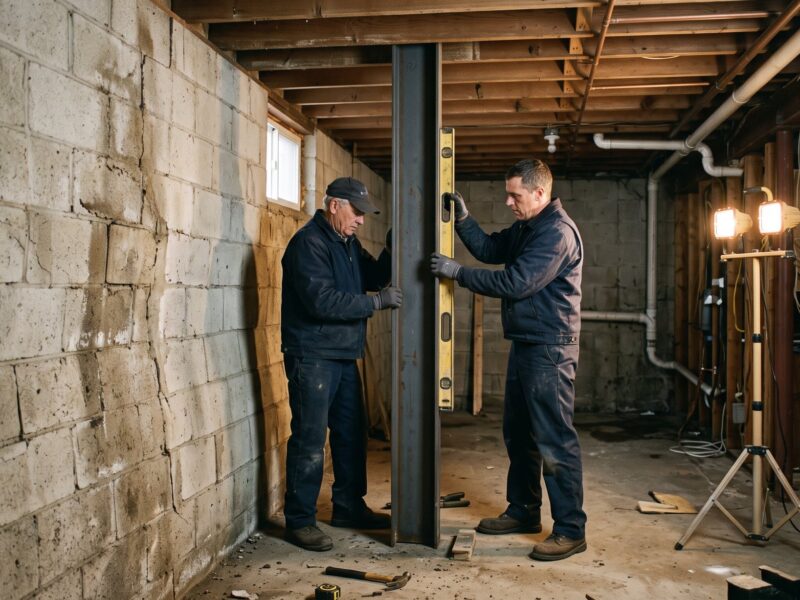 Steel I-beams & wall anchors
The escalation path if deflection ever passes the carbon fiber stage.
Learn more
Steel I-beams & wall anchors
The escalation path if deflection ever passes the carbon fiber stage.
Learn more
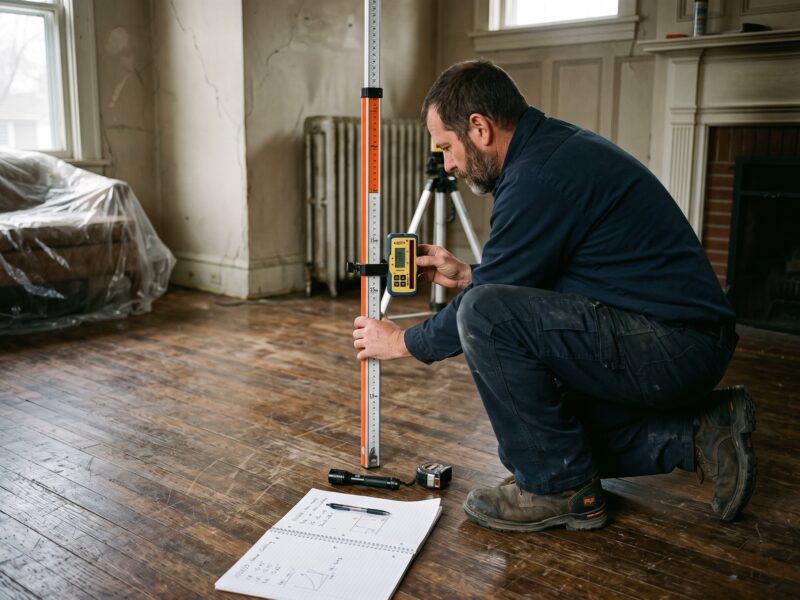 House & floor leveling
Columns and beams for sagging spans in the older Jefferson Street pockets.
Learn more
House & floor leveling
Columns and beams for sagging spans in the older Jefferson Street pockets.
Learn more
 Not sure what you have?
A plain-language guide to what Shorewood walls and floors are trying to report.
Learn more
Not sure what you have?
A plain-language guide to what Shorewood walls and floors are trying to report.
Learn more
Why do Shorewood foundations crack?
Shorewood foundations crack for three reasons that have little to do with bad construction: concrete curing the way concrete cures, graded farmland consolidating under subdivisions, and river-corridor clay that cycles wet to dry every single year.

Poured walls of the 1990s and 2000s
Nearly all of this village stands on poured concrete, and poured concrete shrinks as it cures. The vertical hairlines that result are cosmetic until water finds them, at which point a $450 to $900 injection closes the story. They are the most common structural call in Shorewood by a wide margin.

Subdivisions cut from farmland
Developers graded these lots out of working fields, cutting high ground and filling low ground. Fill keeps consolidating for decades, and the houses over yesterday's low spots show it: cracks over openings, a corner running low, a garage slab parting from the house.
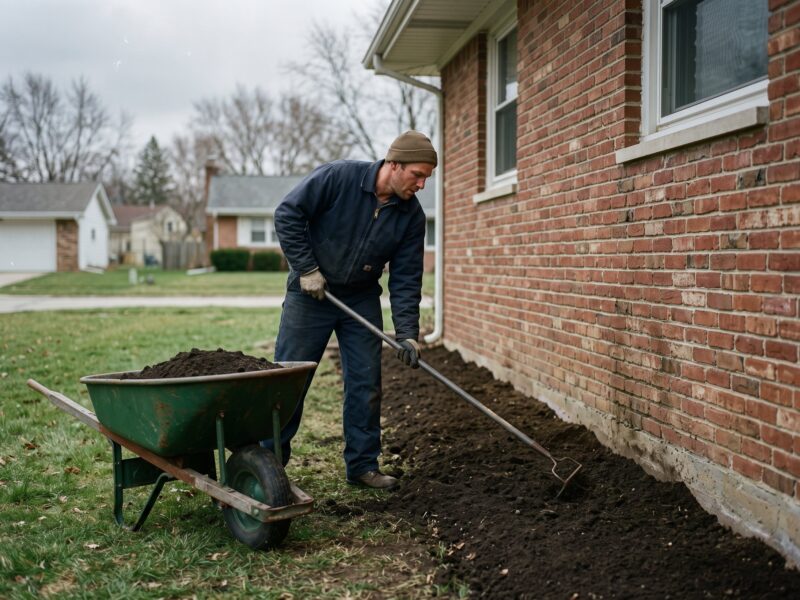
Lots along the river corridor
Near the DuPage the clay never truly dries, and the annual swing between saturated spring and hard summer works footings up and down by fractions. The movement is slow and seasonal, which is exactly why one measurement means little and two a season apart mean everything.
What makes Shorewood ground move?
The ground under Shorewood is clay twice complicated: first by the developers who regraded farm fields into subdivision lots, and second by the DuPage River holding the east side of the village wet. Engineered fill compacts to a standard, but native consolidation takes decades to finish, and homes built over deeper fill settle more than their neighbors on cut ground. The differences are small, but foundations report small differences as cracks.
The river adds the seasonal engine. Clay near a high water table swells hard in a wet spring and shrinks in an August drought, and thirty years of that cycle can walk a footing downward a little at a time. When settlement is active, piers end it by carrying the house past the fill and the fickle clay to strata that do not care about the weather. When it is old and finished, sealing the evidence is the honest whole repair.
 A settling corner leaves a paper trail: cracks, gaps and a slope the level finds.
Signs you need foundation repair in Shorewood
Six symptoms bring Shorewood homeowners to the phone, and in this village most of them turn out cheaper than feared. The measurements decide which ones are the exceptions.
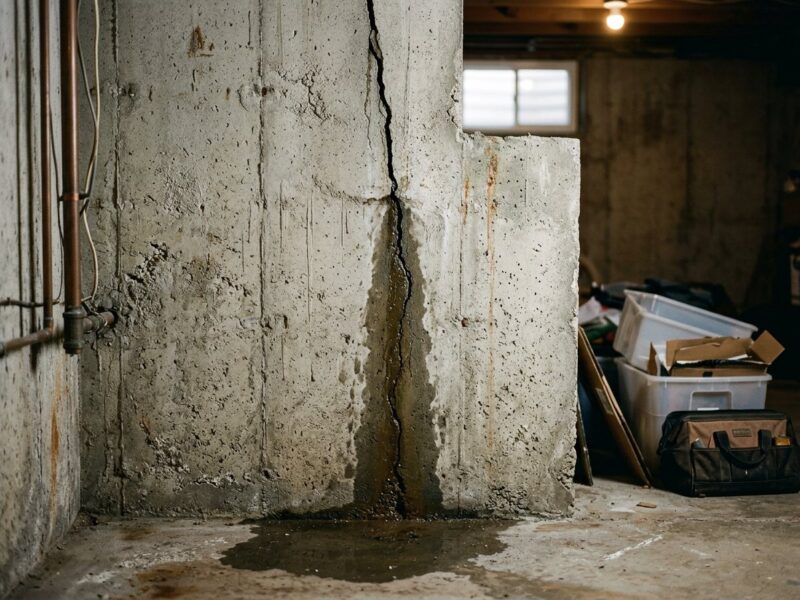
A crack over a window or door
Cracks radiating from openings mark the wall's stress points. Tight and stable usually means finished movement; widening means the ground below is still adjusting, and the gauge tells us which.

Stair-step cracks in brick veneer
The brick face on a Shorewood colonial maps differential settlement joint by joint. The pattern shows which corner moved and roughly when, and elevations confirm whether it is still moving.

A horizontal crack at mid-height
Rare in walls this young, and serious when real: saturated clay pushing inward. Caught early it is carbon fiber money; the measurement, not the fear, sets the response.

Sloping floors and sticking doors
When upstairs doors stop latching, something under the main beam moved. In the older Jefferson Street stock this is often a column or beam fix at a fraction of foundation money.
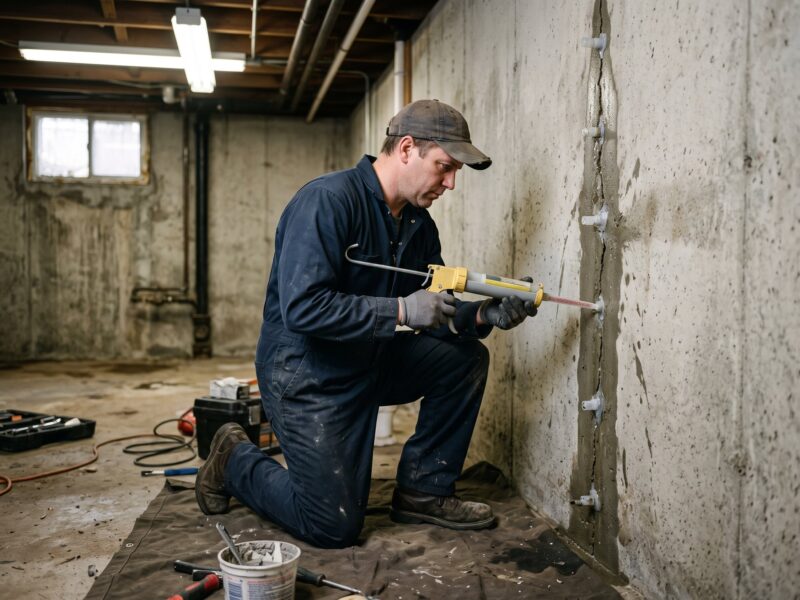
A crack that reopens after sealing
A hairline that returns through caulk or patch is either still moving or was never sealed to full depth. Urethane injection fills the crack wall to wall; returning cracks earn a movement check first.

A garage or stoop pulling away
Attached garages and porch stoops sit on shallower footings than the house, so subdivision fill moves them first. A widening gap is the cheap early warning, and worth a free measurement now.
Watching a crack and wondering if it grew? Stop wondering. The structural inspection is free, and the gauge readings replace the guesswork.
How does foundation repair work in Shorewood?
A Shorewood foundation repair runs four steps: survey the elevations, separate shrinkage from settlement, install the matched fix, verify against the numbers. Most repairs finish in one to three days.
Survey and gauge
We shoot floor elevations, gauge every crack and note where your lot sits relative to the graded fill and the river corridor, because both shape the diagnosis. Free, within 48 hours.
Day 0Separate shrinkage from settlement
A curing crack gets an injection quote and nothing more. Active settlement gets a pier plan with counts and placements drawn on paper. The written scope shows which conclusion the numbers forced.
Day 0, same visitInstall and log
Injection cures the same morning; pier crews log drive pressure or torque at every bracket to prove bearing beneath the fill. Home-ring scheduling keeps the start date close.
Days 1 to 3Verify and warranty
Post-repair elevations get checked against day-zero readings before we leave, and the 25-year transferable warranty registers to the address, transferring intact when the house sells.
On completionPush or helical piers: which works under Shorewood homes?
When a Shorewood settlement case is real, piers are the permanent answer, and the choice between push and helical comes down to the house itself: this village's lighter newer frames and their attached garages often decide it.
| Push piers | Helical piers | |
|---|---|---|
| How they reach bearing | Driven downward using the structure's own weight | Screwed in hydraulically, advancing by torque |
| Best suited for | Heavier loads that can drive the pier to refusal | Lighter structures, garages, stoops and additions |
| Through graded fill | Pushes past consolidating fill to competent strata | Torque readings confirm bearing below the fill |
| In wet river-corridor clay | Unbothered; bearing is proven beneath the wet layer | Unbothered; installs cleanly in saturated ground |
| Proof of depth | Drive pressure logged at every bracket | Installation torque logged at every pier |
| Cost | $1,600 to $3,000 per pier, published | $1,600 to $3,000 per pier, published |
The push-versus-helical call is engineering, made from the structure's weight and the soil, never from what happens to be on the truck. Either way the logs come with the paperwork.
When do Shorewood foundations move?
Shorewood foundation movement follows the clay's water content through the year, and every season offers a cheapest moment to act on it.
Spring: the swell
Thaw and rain saturate the corridor clay and it expands, nudging footings and reopening winter-tight cracks. Gauge readings taken now capture movement at its most honest.
March to MaySummer: the shrink
Drought pulls the clay back down and settling corners drop a little further. This is when the subdivision fill does most of its annual work, and when new cracks over openings appear.
June to AugustFall: the proving season
Comparing fall readings against spring readings settles the active-or-stable question with data. Repairs booked now finish before frost at an unhurried pace.
September to NovemberWinter: the indoor season
Injection, carbon fiber and column work run all winter from inside the basement, at full speed. A crack sealed in January is finished before the spring swell tries it.
December to FebruaryHow much does foundation repair cost in Shorewood?
Foundation repair in Shorewood costs $450 to $900 per injected crack, $600 to $1,000 per carbon fiber strap, $900 to $1,500 per steel beam, and $1,600 to $3,000 per settlement pier, the same published ranges we hold in every town. Because this village's stock is young, the median Shorewood ticket is an injection, not a pier job.
| Work | Range | What moves the number |
|---|---|---|
| Urethane crack injectionper crack | $450–$900 | Crack length and width, access to the full height |
| Carbon fiber strapsper strap | $600–$1,000 | Wall height, spacing the deflection requires |
| Steel I-beam wall bracingper beam | $900–$1,500 | Ceiling height, footing condition at the base |
| Push or helical piersper pier | $1,600–$3,000 | Depth to load-bearing strata, access for equipment |
The full structural table lives on the pricing page; your written Shorewood quote lands inside it.
Where we repair foundations in Shorewood
One ZIP, 60404, covers the village, and the structural calls track the grading history. The subdivisions off Route 59 and Black Road send settlement questions: cracks over openings, low corners, garages easing away from houses built on filled ground. The river-corridor streets near Hammel Woods send leaking cracks and slow seasonal movement in clay that never dries. Jefferson Street and the older township pockets send beam, column and floor-slope calls from the pre-subdivision stock.
Shorewood sits in our home ring, which changes what watchful waiting means: when a crack deserves monitoring instead of money, we can genuinely come back and re-gauge it next season, because the drive is fifteen to twenty-five minutes and we pass through constantly.
 Short drives make honest monitoring possible: we can afford to come back and re-measure.
Shorewood foundation repair questions, answered straight
Is my 1990s Shorewood house still settling?
Possibly, and it is a fair question on graded farmland. Fill and native clay keep consolidating for decades after the builder leaves, so a house from that era can still be finishing its move. Two elevation surveys a season apart answer it definitively: active movement is pier territory, finished movement just needs its evidence sealed.
Are hairline cracks in a poured wall normal?
Usually, yes. Poured concrete shrinks as it cures, and the vertical hairlines it leaves are the signature of the process, not a defect. They matter when they leak or when they widen. A leaker gets a $450 to $900 injection; a widening crack gets gauged, because width change means ground movement rather than curing.
Does the high water table near the DuPage affect pier installation?
It does not stop it. Piers bear on competent strata well beneath the wet seasonal layer, and both push and helical installs come with logged proof of depth: drive pressure for one, torque for the other. Wet corridor clay is precisely the soil piers were designed to bypass.
How much does foundation repair cost in Shorewood?
The published ranges hold here as everywhere: $450 to $900 per injected crack, $600 to $1,000 per carbon strap, $900 to $1,500 per steel beam, and $1,600 to $3,000 per pier. In this village's young stock, most written quotes come in at the injection end of that table.
Does homeowners insurance cover foundation repair in Illinois?
Generally no. Standard Illinois policies exclude soil movement and hydrostatic pressure, which between them cause most foundation trouble. That exclusion is the financial argument for catching a settling corner at the measurement stage rather than the multi-pier stage.
Do I need a permit for foundation repair in Shorewood?
It varies by municipality and by the scope of the work. Injections rarely trigger permitting; structural work sometimes does. Where a permit is required for your job, we pull it as part of the work, and the question costs you nothing either way.
My attached garage is pulling away from the house. How bad is that?
It is the most common real settlement pattern in subdivision construction, because garages ride shallower footings over the same fill. Caught while the gap is small, a few piers under the garage side usually close the case. The free inspection measures whether the gap is growing before anyone talks price.
Can you just watch a crack instead of repairing it?
Yes, and in Shorewood we often recommend exactly that. A gauge goes on, readings get dated, and because this village is in our home ring, returning next season to re-measure is genuinely practical. If the numbers hold still, you spend nothing on structure; if they move, you act on evidence.
Is the cracked wall also a wet wall?
In Shorewood the two trades meet at the same crack: a shrinkage hairline is harmless until the spring water table finds it, and the clay that moves footings is wet because the river keeps it that way. If your crack runs water or your sump works overtime, one inspection covers both sides.
Basement Waterproofing in Shorewood
Foundation repair near Shorewood

Get the Shorewood numbers before the next season moves them
A free structural inspection within 48 hours, a diagnosis built on elevations rather than fear, and a 25-year transferable warranty registered to the address.
Or talk to a human right now
(630) 335-1128
Request your free estimate
Tell us what you're seeing. We'll call back fast and be out within 48 hours.