Basement Waterproofing in Shorewood, Illinois
The DuPage River runs down the east edge of this village on its way to the Des Plaines, and every basement near that corridor lives over a high water table. Shorewood walls are good walls; the water still needs somewhere to go. We build the systems that take it there, warrantied for life.
- Sump systems sized for river-corridor water volumes
- Interior systems warrantied: lifetime, fully transferable
- Free written inspection within 48 hours
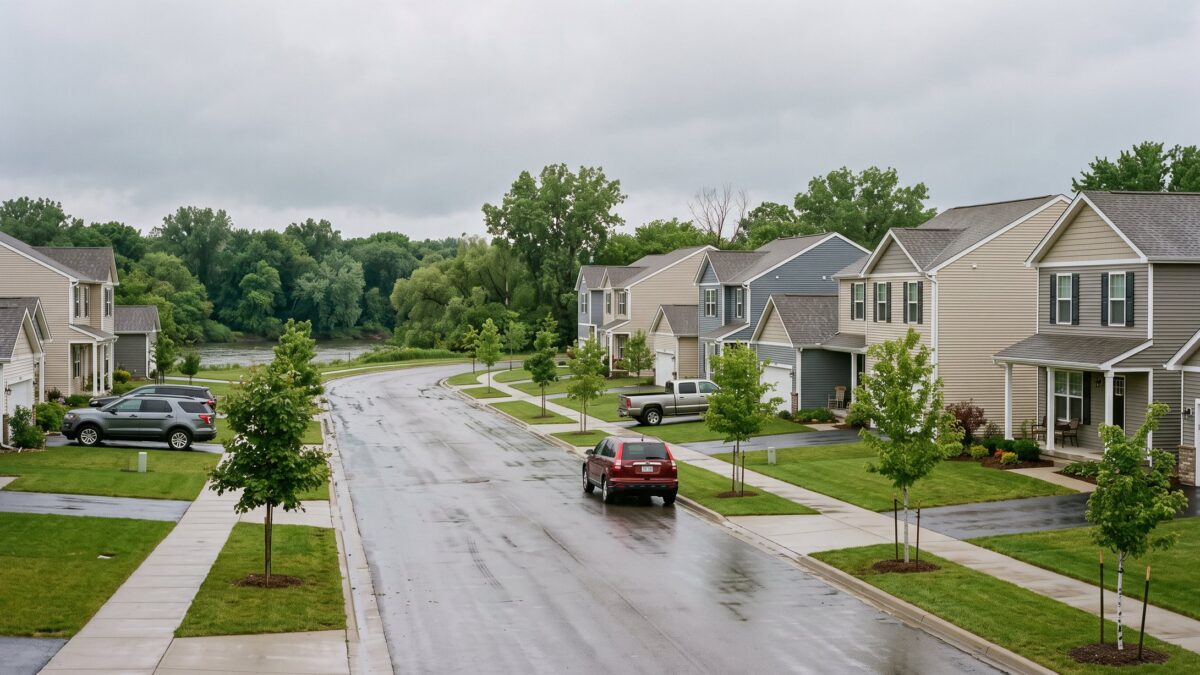 Home ring: fifteen to twenty-five minutes out
Who does basement waterproofing in Shorewood?
ProSeal Basement Waterproofing is a basement waterproofing company serving all of Shorewood from our base in the Joliet and New Lenox corridor, fifteen to twenty-five minutes away. A sump pump with battery backup runs $2,800 to $4,500 installed, interior drain tile $95 to $160 per linear foot, and a full perimeter system lands between $8,000 and $16,000, every number published before we ring the doorbell.
Shorewood asks a specific question of a waterproofing contractor: can you keep a good basement dry over a genuinely high water table? Most of this village is 1990s-and-newer poured concrete, so the walls rarely fail. The system does. Out here the pit, the pump, the check valve and the backup are the whole game, and we treat them as the engineered equipment they are, not accessories.
See the full basement waterproofing system, wall to discharge
 Walking a homeowner through the pit: in Shorewood the sump is the design.
What does basement waterproofing in Shorewood include?
A complete Shorewood waterproofing job draws on six systems, and in this village the pump equipment usually comes first. The free inspection prices only what your house needs, from published ranges, installed by our own crew.
 Sump pumps & battery backup
Sized for the volumes the DuPage corridor water table delivers, with backup for the storms that cut power.
Learn more
Sump pumps & battery backup
Sized for the volumes the DuPage corridor water table delivers, with backup for the storms that cut power.
Learn more
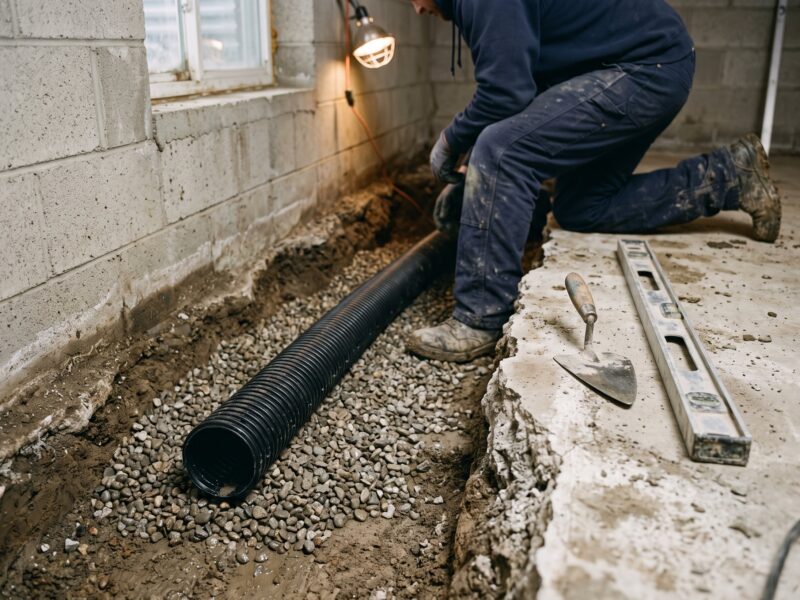 Interior drain tile
The collection network that feeds the pit when the water table rises above your slab.
Learn more
Interior drain tile
The collection network that feeds the pit when the water table rises above your slab.
Learn more
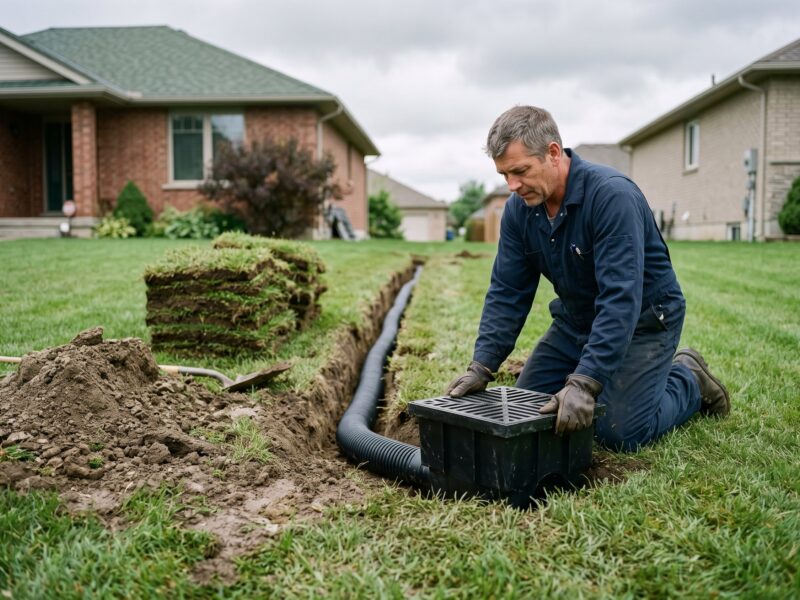 Yard drainage & catch basins
For subdivision lots where settled grading sends roof water back at the wall.
Learn more
Yard drainage & catch basins
For subdivision lots where settled grading sends roof water back at the wall.
Learn more
 French drains
For low lots that collect a neighbor's runoff before it reaches the foundation.
Learn more
French drains
For low lots that collect a neighbor's runoff before it reaches the foundation.
Learn more
 Crawl space encapsulation
For additions and the older pockets along Jefferson Street.
Learn more
Crawl space encapsulation
For additions and the older pockets along Jefferson Street.
Learn more
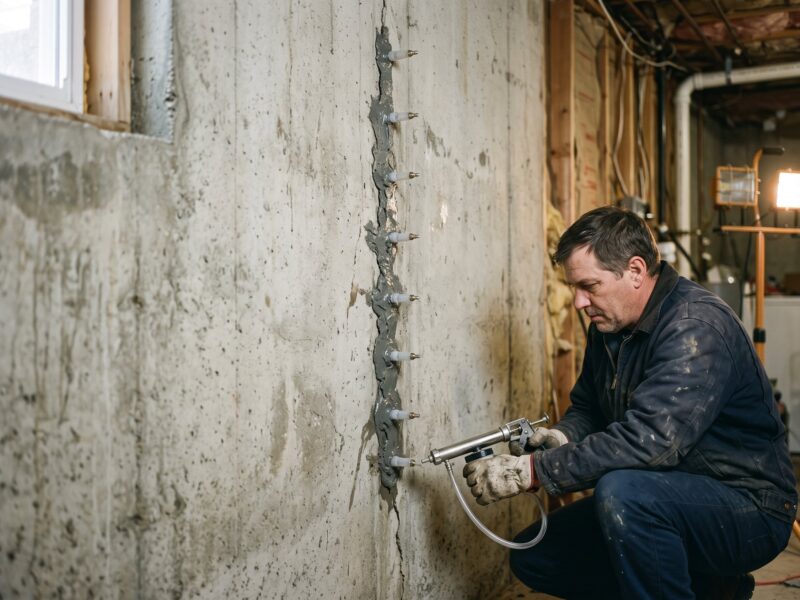 Leaking crack injection
Poured-wall shrinkage cracks sealed full depth from $450.
Learn more
Leaking crack injection
Poured-wall shrinkage cracks sealed full depth from $450.
Learn more
Why do Shorewood basements take on water?
Shorewood basements take on water from below more often than through the wall: a high water table near the DuPage River, recycled roof water in the newer subdivisions, and aging pump equipment in the older pockets. The wall itself is rarely the culprit.

The DuPage River corridor
Close to the river and Hammel Woods the water table sits genuinely high, and in a wet spring it climbs above basement floors. These homes need pit capacity, a healthy check valve and a battery backup, because the difference between dry and four inches deep is whether the pump ran at two in the morning.

Route 59 and Black Road subdivisions
The 1990s-onward stock came with poured walls and a builder-installed sump, and both age. Grading settles, downspouts dump at the wall, and the original pump feeds on its own roof water until it wears out. Half these calls end in yard work, not a system.

Jefferson Street and the older township pockets
The houses that predate the subdivision boom carry smaller pits, older pumps and sometimes no backup at all. Equipment built to an older standard meets the same river-corridor water table, and upgrading the pit is usually the whole fix.
Why is the water table in Shorewood so high?
Shorewood sits where the DuPage River finishes its run, sliding along the east edge of the village toward its confluence with the Des Plaines just downstream, with Hammel Woods holding the corridor between. A river that close keeps the surrounding ground charged, so properties near the water live over a water table that a wet March can lift right past slab level. That is not a defect in the house; it is the address.
The practical consequence is that Shorewood waterproofing is mostly a pumping problem. A poured wall over a high water table does not need a membrane; it needs a drainage path under the slab, a pit that fills before the floor does, a pump with the capacity to keep pace, and a backup that takes over when the same storm that raised the river drops the power. We design for the night the grid fails, because that is the night that decides.
See how a properly sized sump system handles a high water table
 Discharge run carrying groundwater away: the last link in the Shorewood system.
Signs your Shorewood basement needs waterproofing
Six symptoms fill the Shorewood call log, and each one points to a different fix at a different price. The free inspection exists to match your symptom to its actual cause.

A sump pump running around the clock
Near the river that can be honest groundwater needing more capacity; off Route 59 it is usually roof water on a loop. One needs a bigger system, the other needs downspouts, and the pump cannot tell you which.

Water at the floor-wall joint
The cove seep means the water table has risen and hydrostatic pressure is finding the seam. Classic drain tile territory, and the most common river-corridor complaint every spring.

Musty air on the first floor
A damp basement sends its air upstairs, and a smell that returns each spring tracks seasonal groundwater, not housekeeping. The moisture source gets found before anything gets sold.

White mineral bloom low on the wall
Efflorescence marks water moving through concrete and leaving its minerals behind. Low on a Shorewood poured wall, it usually reads high water table rather than surface runoff.
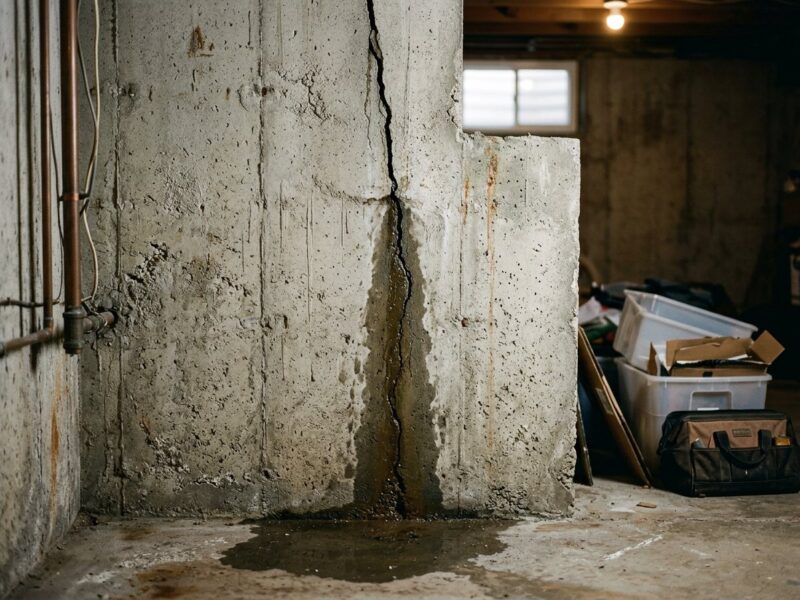
A wall crack that runs in the rain
Poured walls crack as they cure, and most Shorewood cracks are tight hairlines until a storm turns one into a spout. A $450 to $900 injection typically ends it in a morning.

A yard that holds water for days
Standing water along the foundation after storms means the grading quit doing its job. On this village's settled subdivision lots, $600 to $2,500 of surface drainage often prevents the basement problem entirely.
Sump sprinting every time it storms? Tell us how close you are to the river; in Shorewood that one answer shapes the whole diagnosis.
How does basement waterproofing work in Shorewood?
A Shorewood waterproofing job runs four steps from first call to registered warranty, and most full systems finish inside two to four days. This village sits in our home ring, so scheduling moves fast.
Inspect, and place you on the water map
We trace the water indoors, walk the lot, and weigh how close you sit to the DuPage corridor, because distance to the river changes the honest advice. Free, within 48 hours.
Day 0Size the system to the water table
A river-corridor house gets pit volume, pump capacity and backup runtime matched to real spring conditions; a Route 59 lot might get $900 of grading first. The written plan says which and why.
Day 0, same visitInstall and flood test
Trench, tile, gravel, pit, pump, battery backup and new concrete, then a flood test you watch before we load the truck. Finished basements lose only the bottom drywall course along the run.
Days 1 to 4Register the warranty
The lifetime, fully transferable warranty registers to the address and transfers to the next owner, an easy answer for the buyer's inspector in a village where listings mention the river.
On completionInterior or exterior waterproofing: which fits Shorewood?
Interior drainage wins in Shorewood for a reason particular to this village: the water that matters here rises from below, and an exterior membrane on the wall face cannot stop a water table coming up under the slab. Open subdivision lots make excavation feasible; the hydrology just rarely calls for it.
| Interior drain tile & sump | Exterior excavation | |
|---|---|---|
| Best for | A high water table pushing up beneath the slab, the standard Shorewood case | Surface water attacking the wall face itself |
| Against river-corridor groundwater | Relieves pressure under the floor and pumps it out | A membrane sheds wall water but cannot lower the table |
| On newer poured walls | Complements a sound wall instead of re-wrapping it | Re-waterproofs a wall that usually was not the problem |
| Lot impact | No digging; patios, decks and landscaping untouched | Open lots allow it, but hardscape and plantings pay |
| Cost | $95 to $160 per linear foot | Several times interior cost; priced per wall after inspection |
| Season | Installs year-round, frozen ground irrelevant | Weather-dependent; saturated spring clay stalls digs |
Where a wall genuinely takes surface water on its face, exterior work earns its price and we will quote it. The method follows the water, not the sales script.
When do Shorewood basements flood?
Shorewood basement water keeps a calendar set by the river and the grid. Knowing where your month falls on it separates a cheap preventive fix from a midnight emergency.
Spring: the water table climbs
Thaw and rain load the DuPage corridor, and for a few weeks the table can stand above slab level near the river. Sumps that idled all winter suddenly run flat out, and this is when undersized pits get found out.
March to MaySummer: the power test
The violent short storms that dump the most water are the ones that drop the lines. A primary-only pump fails exactly when it is needed most, which is why every system we install in this village carries a battery backup.
June to AugustFall: the surface-water window
Dry ground makes fall the season for regrading, downspout burials and catch basins, the $600 to $2,500 fixes that keep subdivision roof water from ever reaching the pit.
September to NovemberWinter: the install season
Interior tile and sump work happen entirely indoors, so frozen ground changes nothing. Winter installs book fastest, and the system is proven before the thaw sends the river up.
December to FebruaryHow much does basement waterproofing cost in Shorewood?
Basement waterproofing in Shorewood costs $2,800 to $4,500 for a sump pump with battery backup, $95 to $160 per linear foot for interior drain tile, and $8,000 to $16,000 for a full perimeter system on most homes. Shorewood pays the same published ranges as every town we serve, and many river-corridor jobs need only the pump equipment, not the full perimeter.
| Work | Range | What moves the number |
|---|---|---|
| Sump pump with battery backupinstalled | $2,800–$4,500 | Pit condition, backup capacity, discharge routing |
| Interior drain tileper linear foot | $95–$160 | Length of the run, slab thickness, what has to be moved off the walls |
| Exterior French drainper linear foot | $45–$90 | Trench depth, where the water can legally go |
| Downspout extensions and regradingtypical job | $600–$2,500 | Feet of grade to rebuild, soil hauling |
Every range lives on the pricing page, and your written Shorewood quote lands inside it.
Where we waterproof in Shorewood
All of ZIP 60404 is in our first ring, and the calls sort by distance from the water. The DuPage River corridor and the streets near Hammel Woods send spring water tables, cove seepage and battery backup requests. The Route 59 and Black Road subdivisions send worn-out builder sumps, settled grading and downspout problems dressed up as basement problems. Jefferson Street and the older township pockets send undersized pits and pumps past their service life.
This is home-ring territory: crews based in the Joliet and New Lenox corridor, drives of fifteen to twenty-five minutes, standard inspections inside 48 hours and often sooner, 24/7 response when water is standing, and no trip charge anywhere in Will County.
 Shorewood subdivision stock: sound poured walls whose sump does the real work.
Shorewood basement waterproofing questions, answered straight
Do I really need a battery backup sump pump in Shorewood?
Here, more than almost anywhere we work. The storms that push the most groundwater at this village are the same storms that take the power down, and a primary pump without electricity protects nothing. Close to the river, a backup is not an upsell; it is the part of the system that covers the worst night.
My basement stays dry for years, then floods one spring. What is happening?
That pattern is the water table rising above your slab for a few weeks, which is exactly what the DuPage corridor does in a heavy thaw. The wall is fine, and sealing it will change nothing, because the water is coming from underneath. It needs a drainage path and a pump with the capacity to match, and then the pattern ends.
How fast can you get to a Shorewood house?
Fast; this village is roughly fifteen minutes from our base. Standard inspections happen within 48 hours and usually sooner, and if there is water on the floor right now, 24/7 response applies.
How much does basement waterproofing cost in Shorewood?
The same published ranges as everywhere we work: $2,800 to $4,500 for a sump with battery backup, $95 to $160 per linear foot for interior drain tile, $8,000 to $16,000 for a full perimeter system, and $600 to $2,500 for the grading and downspout work that solves many subdivision calls outright.
My house came with a sump pump. Why is water still getting in?
A builder-grade pump from the 1990s was sized for average conditions and has been aging ever since. Near the river, spring volumes can outrun a small pit and a tired pump, and a stuck check valve or a dead float finishes the job. The inspection tests the equipment you have before recommending anything new.
Is my Shorewood house in a floodplain?
The mapped floodplain in this village hugs the DuPage River corridor, so check your address on the FEMA flood map before spending anything. In a mapped zone the honest order is flood insurance first, then drainage, and an interior system only where the water is groundwater rather than river overbank.
How do I pick a basement waterproofing company in Shorewood?
Ask whether they size pump systems from actual conditions or sell one package everywhere, whether pricing is published before a visit, and whether the warranty transfers to the next owner without fees. In a high-water-table village, the company that talks about pit volume and backup runtime before wall coatings is the one that understands the assignment.
Do gutters and grading really matter on a newer Shorewood house?
Enormously. Subdivision grading settles in its first decades, and a downspout dumping at the foundation can feed the sump the same roof water all storm long. We check the surface path first at every inspection, because $600 to $2,500 of yard work beats an interior system the house never needed.
Is the wet basement also showing cracks?
The saturated clay that keeps Shorewood sumps busy also moves under footings, and a hairline that leaks each spring can be the first line of a settlement story. If your water problem comes with cracks over doors, a low corner or a stoop pulling away, one inspection covers both trades.
Foundation Repair in Shorewood
Basement waterproofing near Shorewood

Put a real system between your slab and the river
A free inspection within 48 hours, a sump and drainage design sized for the DuPage corridor water table, and a lifetime, fully transferable warranty registered to the address.
Or talk to a human right now
(630) 335-1128
Request your free estimate
Tell us what you're seeing. We'll call back fast and be out within 48 hours.