Foundation Repair in Plainfield, Illinois
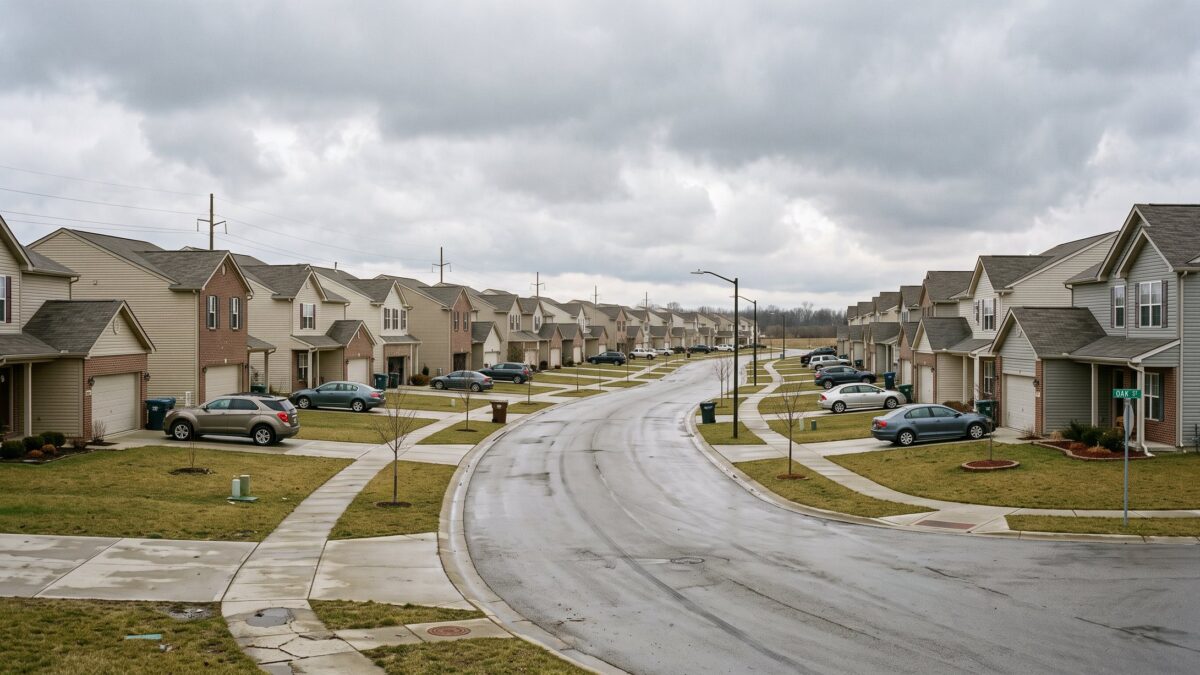
Plainfield grew from a village to forty thousand people in about fifteen years, almost all of it on former farm fields. Those foundations are now fifteen to thirty years old, the exact age when settlement shows its hand. We measure it, name it honestly, and fix only what is moving.
- Structural warranty: 25-year transferable, transferable
- Published pricing: injection from $450, piers from $1,600
- Free elevation survey with every inspection, within 48 hours
 25-year transferable warranty on structural work
Who does foundation repair in Plainfield?
ProSeal Basement Waterproofing is a foundation repair contractor covering all of Plainfield from the Joliet and New Lenox corridor. Crack injection runs $450 to $900, carbon fiber straps $600 to $1,000 each, and settlement piers $1,600 to $3,000 apiece, every number published before an estimator sees your wall, every structural repair backed by a 25-year transferable warranty.
The expertise Plainfield actually needs is diagnostic restraint. A whole generation of poured foundations, backfilled into clay that had been in row crops the season before, is hitting the settlement age at the same time, so nearly every house has some crack to point at. Most are finished moving and need $450, not $15,000. Telling the two apart takes elevations and measurements, and that is exactly what the free inspection produces.
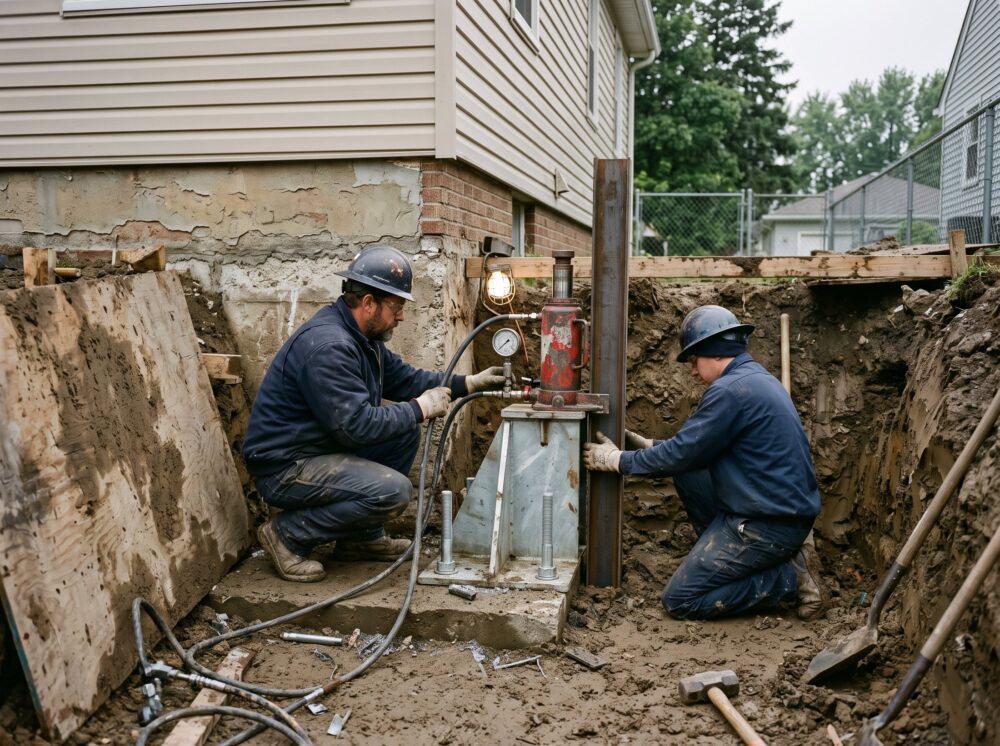 A pier bracket taking the load off failed farm clay for good.
What does foundation repair in Plainfield include?
Six structural tools cover what Plainfield houses actually do, and the plan always starts at the cheapest fix that fully solves the problem. On stock this young, that is more often injection money than pier money.
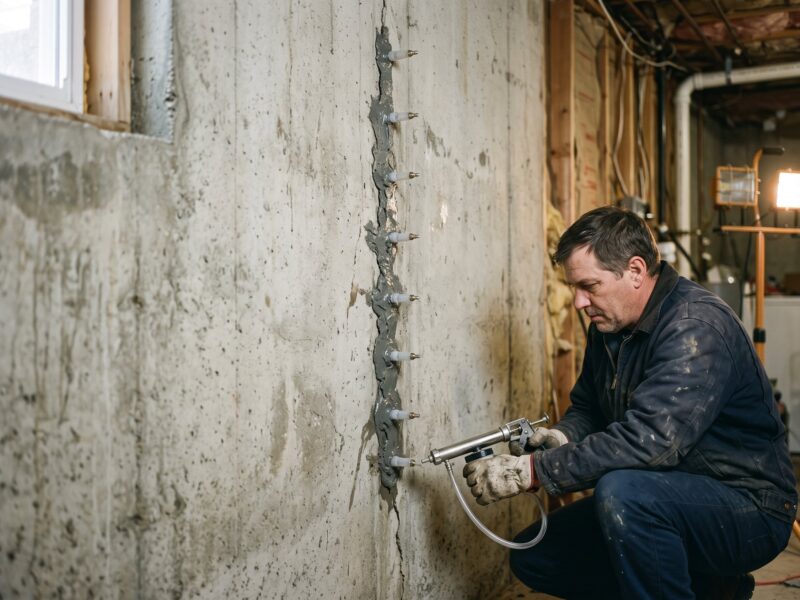 Urethane crack injection
The workhorse for settled-and-stable cracks off windows and doors, from $450.
Learn more
Urethane crack injection
The workhorse for settled-and-stable cracks off windows and doors, from $450.
Learn more
 Push & helical piers
For corners and additions still actively settling into consolidating clay.
Learn more
Push & helical piers
For corners and additions still actively settling into consolidating clay.
Learn more
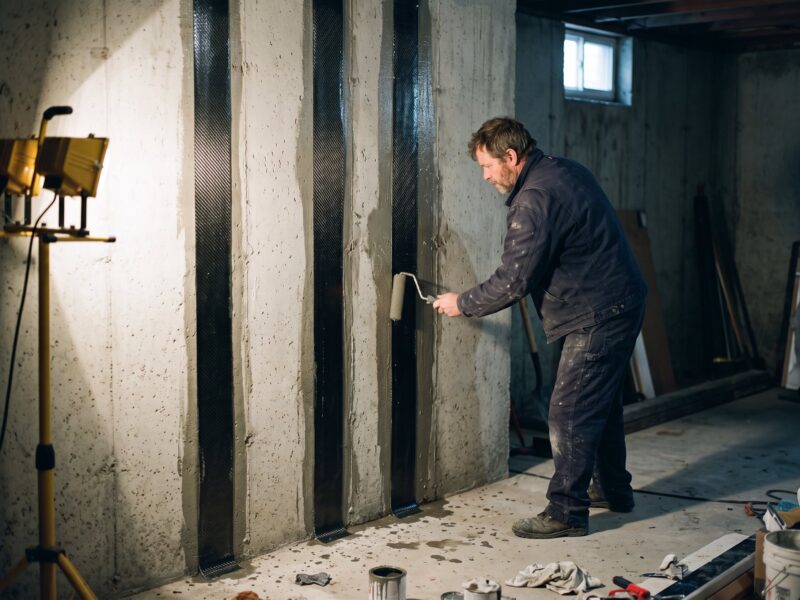
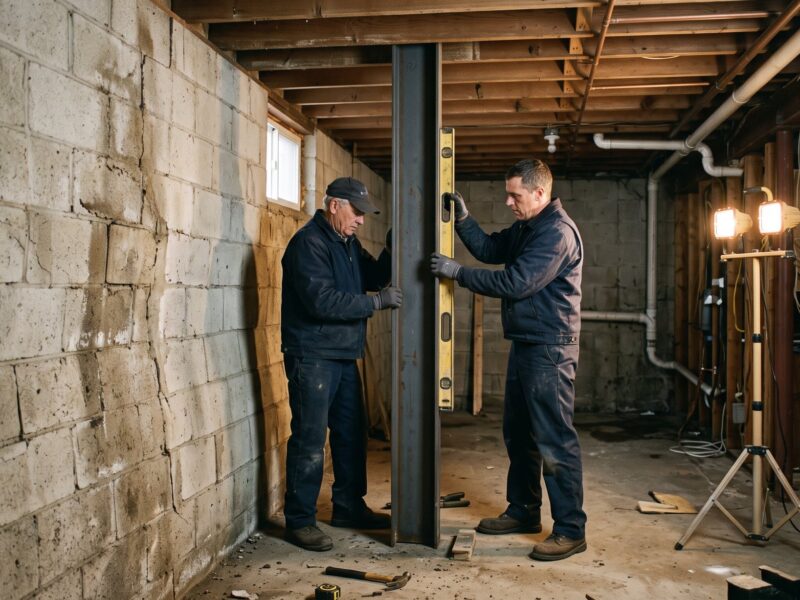 Wall reinforcement
Carbon fiber and steel for the rare Plainfield wall taking real lateral pressure.
Learn more
Wall reinforcement
Carbon fiber and steel for the rare Plainfield wall taking real lateral pressure.
Learn more
 House leveling
Beams, columns and footings when floors have followed the foundation down.
Learn more
House leveling
Beams, columns and footings when floors have followed the foundation down.
Learn more
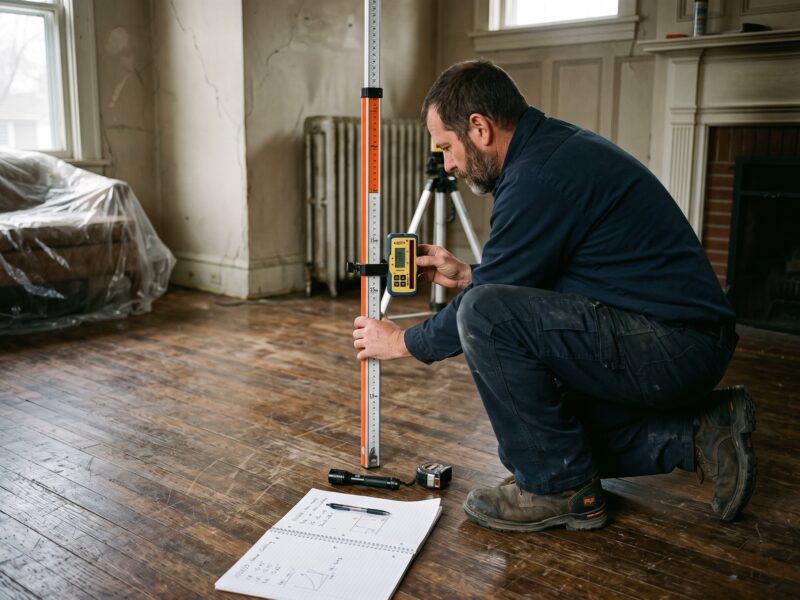 Elevation surveys
Laser mapping that proves whether movement is historic or ongoing.
Learn more
Elevation surveys
Laser mapping that proves whether movement is historic or ongoing.
Learn more
 Not sure what you have?
Separate new-build settling from real movement first.
Learn more
Not sure what you have?
Separate new-build settling from real movement first.
Learn more
Why do Plainfield foundations settle?
Plainfield foundations settle because the town was built fast on ground that had been farmland for a century: backfilled clay consolidating under load, builder grading installed to the minimum, and thousands of houses reaching the reveal age together.

The boom-era streets
Between 1995 and 2010 whole square miles of row-crop fields became subdivisions on tight schedules. The poured walls are strong, but the disturbed clay under and around them kept compressing for years after closing, and the houses record every millimeter.
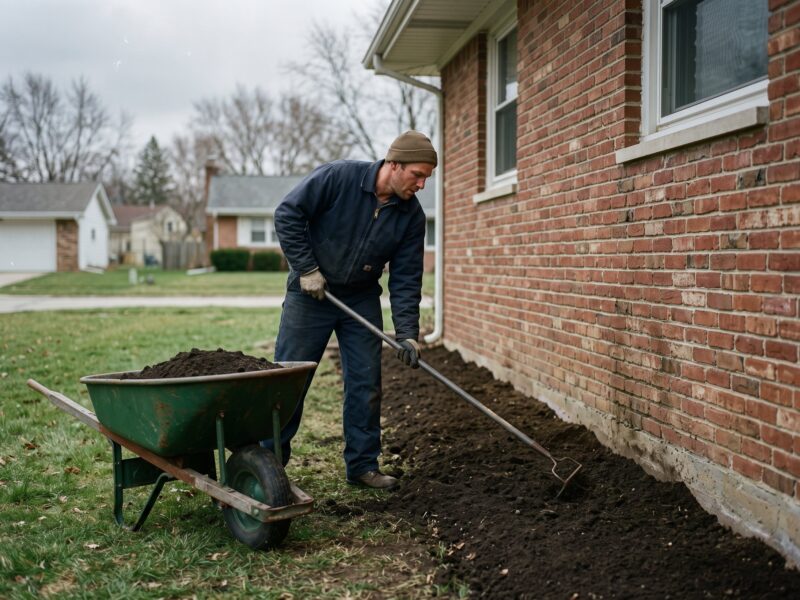
Grading built to the minimum
Lots were finished to the required pitch and not a degree more. Fifteen years of settling backfill turned many of those grades flat or negative, feeding water into the clay beside the footing, which is exactly the moisture cycling that keeps foundations moving.

The Lockport Street originals
The historic centre is the different case: older foundations on long-settled river-corridor ground. Movement there is slower and subtler, and it gets judged by different rules than a twenty-year-old colonial three miles west.
What makes Plainfield ground move?
Plainfield ground moves because almost all of it was rearranged within living memory. Building a subdivision on a farm field means cutting, filling and compacting clay, then backfilling more clay against every new wall. That disturbed soil consolidates under load for years, sometimes decades, and the house above settles with it. At fifteen to thirty years old, the boom-era stock is right in the window where the slow version of that process becomes visible: diagonal cracks off openings, a low corner, a stoop letting go of the house.
The weather keeps the process alive. Wet springs swell the clay and drought summers shrink it, and any lot where the builder grading has flattened feeds extra water into the backfill zone with every storm, amplifying both swings. Near the DuPage corridor downtown the soils are older and calmer, and the judgment changes with them. This is why we survey elevations instead of eyeballing cracks: numbers say whether your house is still moving, and numbers are what we warranty against.
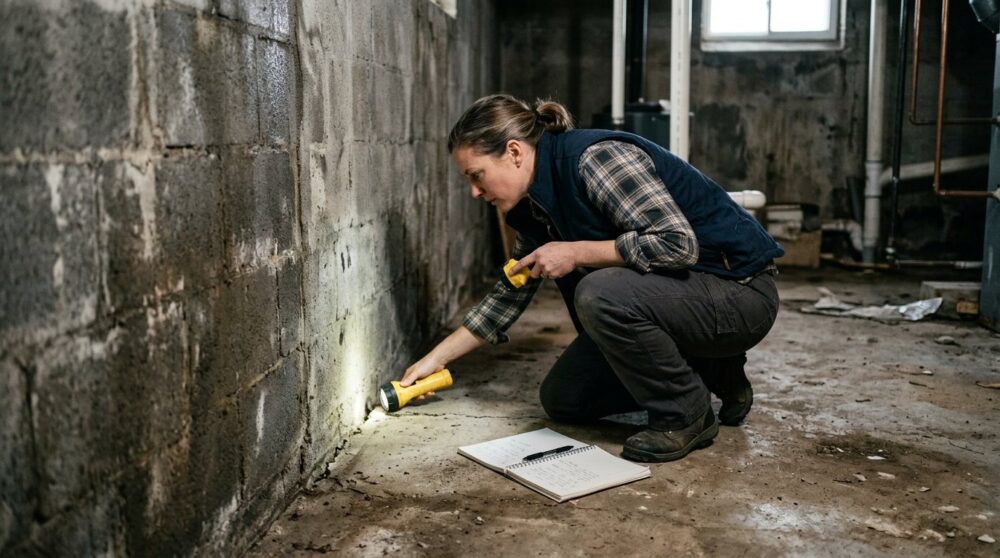 The elevation survey: the difference between a guess and a diagnosis.
Signs you need foundation repair in Plainfield
Six symptoms drive Plainfield structural calls, and on houses this age most turn out to be manageable. What none of them deserves is another year of nobody measuring.
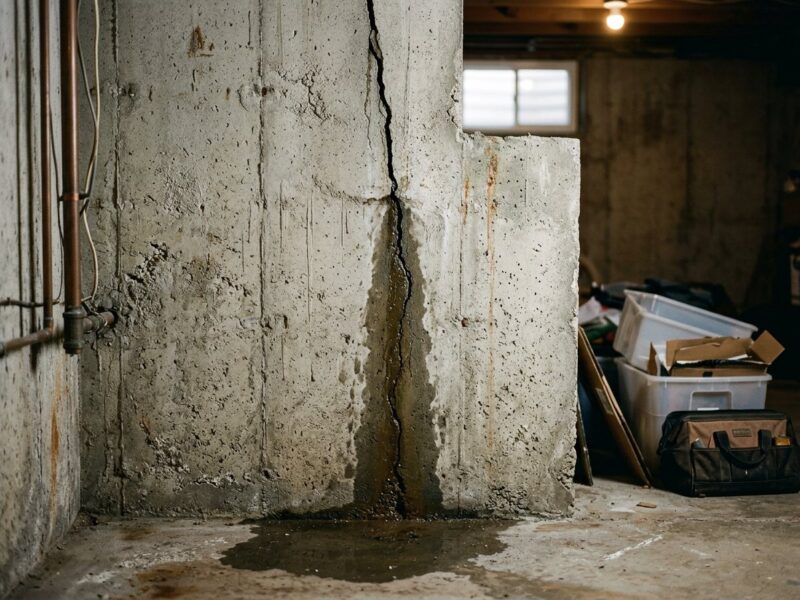
Diagonal cracks off window corners
The signature crack of the boom-era poured wall, radiating from an opening's corner. Usually shrinkage or finished settlement; width and change over time decide, so mark it and measure it.

A stoop dropping away from the door
Stoops sit on backfill, not on footings, so they sink on their own schedule. Annoying and fixable, and usually not evidence your foundation is failing. We tell you which before pricing anything.

Doors sticking, floors going off level
When bedroom doors stop latching and the kitchen floor develops a lean, something below has moved. An elevation survey finds it: sometimes the foundation, often a beam or column at far lower cost.

Stair-step cracks in the brick veneer
Plainfield's brick-front colonials write settlement into their mortar joints. A stair-step line above the garage corner maps exactly which end of the footing dropped and roughly when.
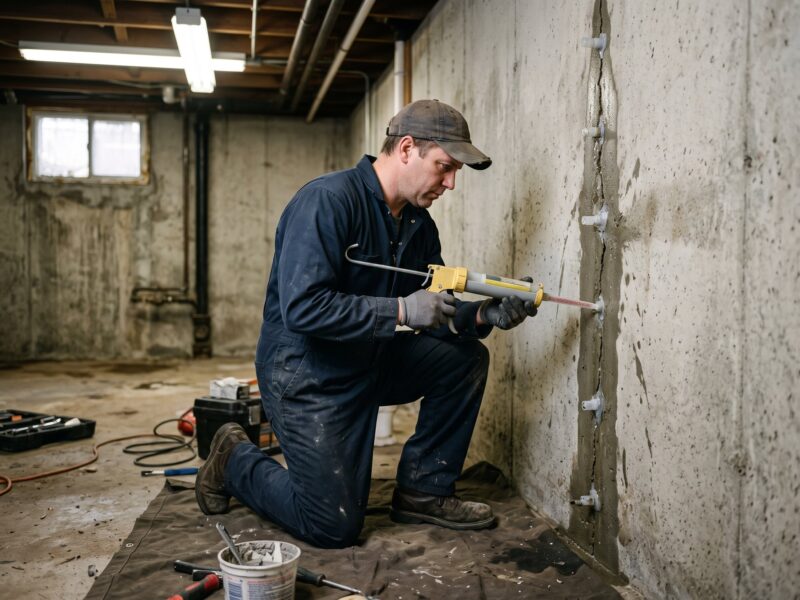
A crack that widens season to season
A crack that was hairline last spring and takes a nickel now is active movement, not history. Active cracks get investigated before they get filled, because filling hides the evidence.

A horizontal line at mid-wall
The rarest and most serious Plainfield symptom: saturated backfill clay pushing the wall inward. Caught early it is strap money, not rebuild money, so a horizontal crack skips the waiting list.
Gap opening between the stoop and the door? Send a photo of the corner; we will tell you straight if it looks like the house or just the stoop.
How does foundation repair work in Plainfield?
Plainfield foundation repair runs on evidence: survey first, method second, verification last. Most repairs finish inside three days, many in one.
Survey the house in numbers
We shoot floor elevations, map every crack with width and direction, and separate the stoop-and-sidewalk settlement Plainfield is full of from movement in the house itself. Free, within 48 hours.
Day 0Decide: stable or still moving
Finished settlement gets sealed and monitored. Active settlement gets piers to load-bearing strata. The written plan states which your house is and shows the measurements that say so.
Day 0, same visitInstall from published ranges
Injection at $450 to $900 per crack, piers at $1,600 to $3,000 each, straps at $600 to $1,000: the crew installs, logs drive pressures where piers go in, and re-checks the day-zero numbers.
Days 1 to 3Warranty and the paper trail
You keep the survey, photos, scope and the 25-year transferable warranty registered to the address, the packet that answers a buyer's inspector in a town where houses trade fast.
On completionPush piers or helical piers: what works under Plainfield homes?
When a Plainfield foundation is still settling, piers end it permanently by carrying the load past the consolidating farm clay to strata that never farmed a day. Which pier depends on the house, and the ground rarely gets a vote against either.
| Push piers | Helical piers | |
|---|---|---|
| How they reach depth | Driven hydraulically, using the house's own weight to push past the fill | Screwed to depth by machine, independent of the structure's weight |
| Best Plainfield fit | Full two-story colonials with the mass to drive against | Lighter loads: porches, additions, garage corners on backfill |
| In disturbed farm clay | Drive logs prove each pier passed the consolidating layer | Torque readings verify capacity in the same soils |
| Proof it worked | Recorded drive pressures at every bracket, re-surveyed elevations | Recorded torque at every pier, re-surveyed elevations |
| Cost | $1,600 to $3,000 per pier, published | $1,600 to $3,000 per pier, published |
| Warranty | 25-year transferable, registered to the house | 25-year transferable, registered to the house |
The push-or-helical call is engineering, made from your house's weight and the survey, never from what is on the truck that week.
When do Plainfield foundations move?
Plainfield settlement keeps a calendar set by the clay's moisture, and each season shows a different card. Knowing which is why we date every measurement.
Spring: the swell
Saturated clay expands against walls and under footings, and cracks that opened last summer squeeze partly shut. Spring readings anchor the yearly comparison, and any horizontal cracking shows up now.
March to MaySummer: the drop
Drought pulls water out of the clay and the boom-era subdivisions do most of their annual settling. Doors start sticking in August, stoops sink a little further, and our survey calendar fills.
June to AugustFall: the repair window
Calm soil and dry ground make fall the season to drive piers and close out monitored cracks before frost. Repairs finish unhurried, and the numbers get verified on stable ground.
September to NovemberWinter: the indoor list
Injection, carbon fiber, columns and beam work carry on full speed inside while frost holds the top of the soil. Winter is also when the year-over-year crack comparison tells its story.
December to FebruaryHow much does foundation repair cost in Plainfield?
Foundation repair in Plainfield costs $450 to $900 per injected crack, $600 to $1,000 per carbon fiber strap, and $1,600 to $3,000 per settlement pier, from the same published table we use in every town. On Plainfield's young stock, the median ticket sits near the injection end, and the inspection that decides is free.
| Work | Range | What moves the number |
|---|---|---|
| Urethane crack injectionper crack | $450–$900 | Crack length and width, access to the full height |
| Carbon fiber strapsper strap | $600–$1,000 | Wall height, spacing the deflection requires |
| Steel I-beam wall bracingper beam | $900–$1,500 | Ceiling height, footing condition at the base |
| Push or helical piersper pier | $1,600–$3,000 | Depth to load-bearing strata, access for equipment |
The full structural table lives on the pricing page; your written Plainfield quote lands inside it.
Where we repair foundations in Plainfield
Plainfield's structural calls sort by plat date more than by street. The Route 59 and 127th Street corridors, Springbank, Wallin Woods and the Van Dyke Road side send the boom-era pattern: diagonal cracks off openings, dropped stoops, garage corners settling separately from the house, all across 60544, 60585 and 60586. Downtown by Lockport Street and the DuPage corridor sends the older, slower questions that get judged against decades of prior movement instead of fifteen years.
Because Plainfield is a first-ring town, twenty to thirty minutes from our base in the Joliet and New Lenox corridor, monitoring is a real service here rather than a brochure word: when a crack deserves watching instead of steel, we come back and re-measure it on schedule.
 Walking up to another boom-era colonial: survey gear first, opinions second.
Plainfield foundation repair questions, answered straight
There is a diagonal crack from the corner of my basement window. Should I be worried?
Usually not yet. On Plainfield poured walls of this vintage, a diagonal crack off a window or door corner is the single most common thing we inspect, and it is typically shrinkage or minor settlement. Width and movement decide it, not existence. Mark it, date it, measure it across a season; we will show you how for free.
My stoop has dropped away from the house. Is my foundation failing?
Almost always no. A stoop is poured on backfill rather than on a frost-depth footing, so it settles on its own schedule, independent of the house. It is a genuine problem worth fixing, and it is not the same problem as your foundation moving. The inspection tells you which one you have before anything gets priced.
My house was built in 2003. Is it done settling?
Probably mostly, and the elevation survey answers it definitively. Consolidation settlement in disturbed farm clay does the bulk of its work in the first couple of decades, which is why so much of Plainfield is showing cracks now. If the numbers say movement has stopped, sealing is the whole honest fix; if it is active, piers end it.
How much does foundation repair cost in Plainfield?
From the published table: $450 to $900 per injected crack, $600 to $1,000 per carbon fiber strap, $900 to $1,500 per steel beam, and $1,600 to $3,000 per pier. Most Plainfield jobs on boom-era houses land at the injection end, because most of the cracking here is settled history rather than active failure.
Do piers actually hold in former farmland?
Yes, because they are designed to ignore it. Piers advance until they reach load-bearing strata beneath the disturbed fill, and the installation itself proves the depth: drive pressures on push piers, torque readings on helicals, both logged at every placement and kept in your file with the 25-year transferable warranty.
Will foundation repair hurt my resale in Plainfield?
Documented repair generally helps it. Plainfield buyers tour a dozen same-vintage houses with the same corner cracks; yours comes with a survey, photos, a scope and a transferable 25-year transferable warranty. Your agent hands the buyer's inspector a packet instead of an explanation, which is the strongest position a seller can hold.
Does homeowners insurance cover settlement damage in Plainfield?
Standard Illinois policies almost universally exclude it: earth movement, settling and hydrostatic pressure are named exclusions on most forms. That is worth knowing early, because it makes catching movement at the $450 injection stage, on your own timeline, dramatically cheaper than discovering the exclusion after a five-figure repair becomes urgent.
Can you just monitor a crack instead of repairing it?
Yes, and in Plainfield we recommend it often. Plenty of boom-era cracks deserve a gauge and a return visit, not immediate steel. Because the town is twenty to thirty minutes from our base, scheduled re-measurement is something we actually do, and you only pay for repair when the numbers say the crack earned one.
Is the settling wall also letting water in?
The clay that is still consolidating under your Plainfield foundation is the same clay holding storm water against it, and a settlement crack is water's favorite door. If the corner crack dampens every spring or the sump has been working harder, one visit scopes both trades and sequences the fixes correctly.
Basement Waterproofing in Plainfield
Foundation repair near Plainfield

Get the Plainfield numbers before the next season moves them
A free elevation survey within 48 hours, a plan built on measurements instead of fear, and a 25-year transferable warranty that transfers with the house.
Or talk to a human right now
(630) 335-1128
Request your free estimate
Tell us what you're seeing. We'll call back fast and be out within 48 hours.