Foundation Repair in Romeoville, Illinois
Romeoville's block walls just turned sixty, and sixty is the age when saturated clay starts winning: a horizontal crack a third of the way down the wall. We measure the deflection, show you the number, and fix the wall that number describes.
- Structural warranty: 25-year transferable
- Published pricing: injection from $450, piers from $1,600
- Free structural inspection within 48 hours
 25-year transferable warranty
Who does foundation repair in Romeoville?
ProSeal Basement Waterproofing is a foundation repair contractor covering all of Romeoville from a base in the Joliet and New Lenox corridor. Crack injection runs $450 to $900, carbon fiber straps $600 to $1,000 each, steel beams $900 to $1,500, wall anchors $1,000 to $1,800, and settlement piers $1,600 to $3,000, every number published before anyone measures your wall and every repair backed by a 25-year transferable warranty.
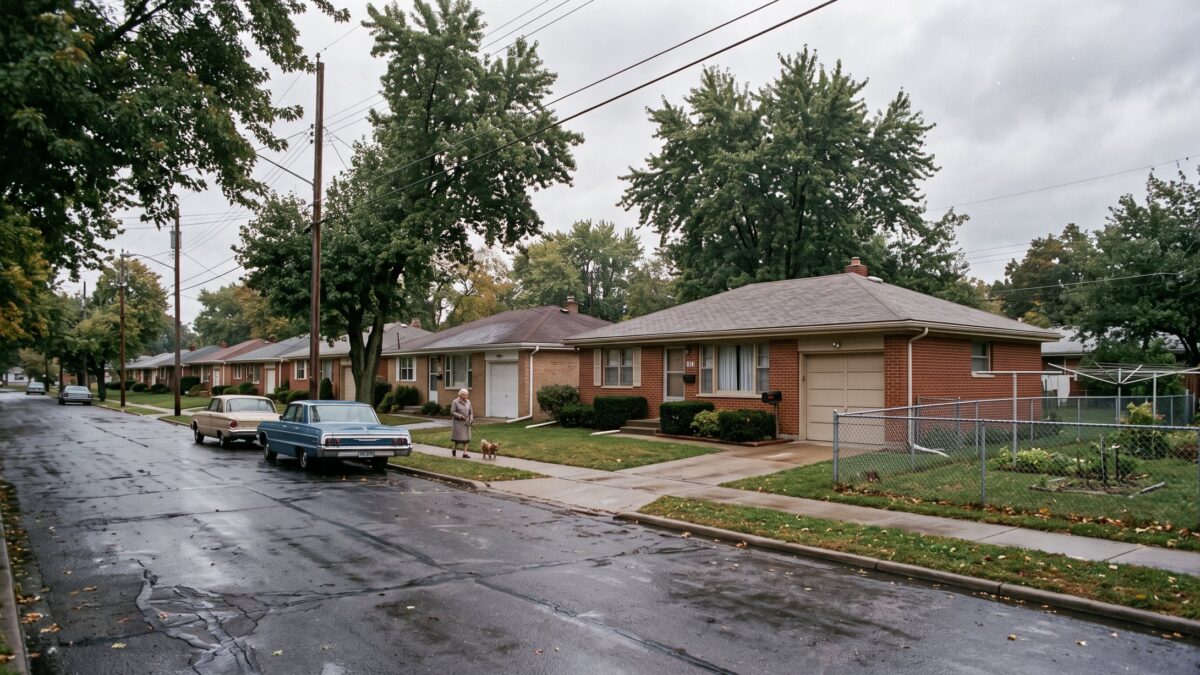
Romeoville splits into two structural populations, and confusing them is expensive. The sixties and seventies block cohort around Hampton Park is at the exact age where lateral clay pressure produces the classic horizontal crack, a genuinely urgent finding. The young poured walls east of Route 53 mostly show curing cracks that a morning's injection retires. The estimator's job is knowing which house is in front of him.
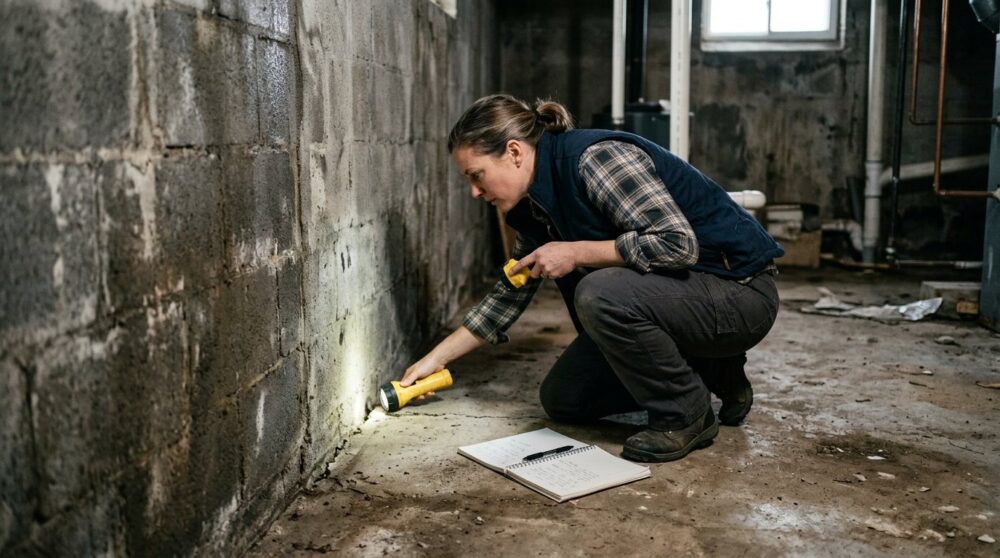 String line and level against sixty-year-old block: the measurement comes first.
What does foundation repair in Romeoville include?
Six structural tools cover what Romeoville housing breaks, and the cheapest adequate fix always leads. A $450 injection wins over a wall of steel whenever injection is what the crack actually needs.
 Urethane crack injection
Curing cracks in the newer east-side poured walls, sealed full depth from $450.
Learn more
Urethane crack injection
Curing cracks in the newer east-side poured walls, sealed full depth from $450.
Learn more
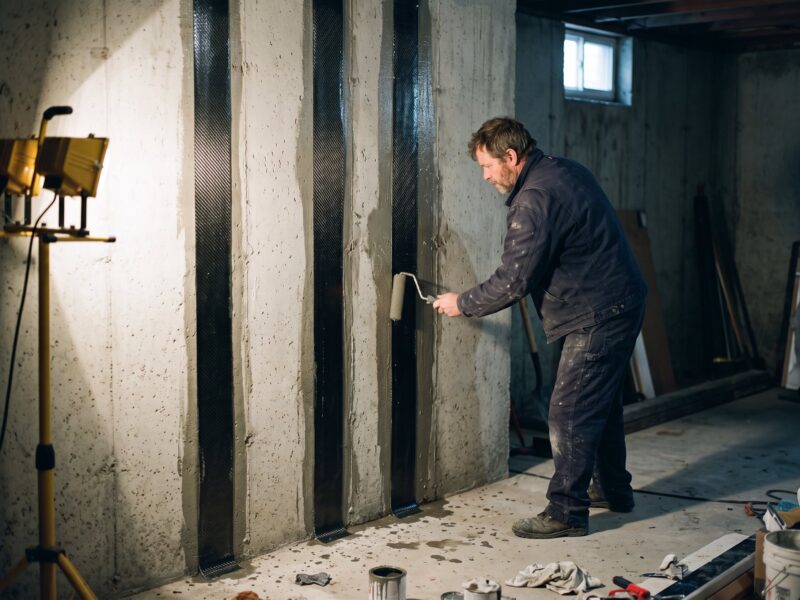 Carbon fiber straps
For Hampton Park block caught while the bow is still under two inches.
Learn more
Carbon fiber straps
For Hampton Park block caught while the bow is still under two inches.
Learn more
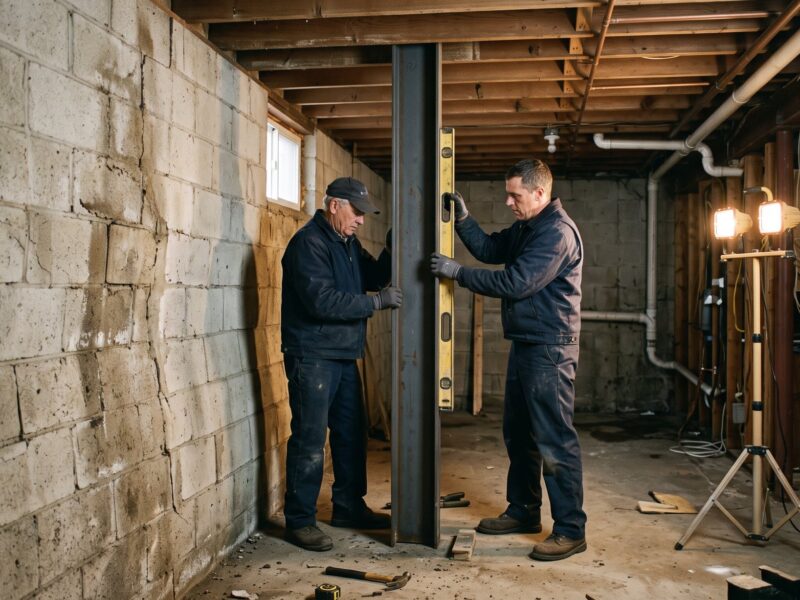 Steel I-beams & wall anchors
For block walls that moved further before anyone measured them.
Learn more
Steel I-beams & wall anchors
For block walls that moved further before anyone measured them.
Learn more
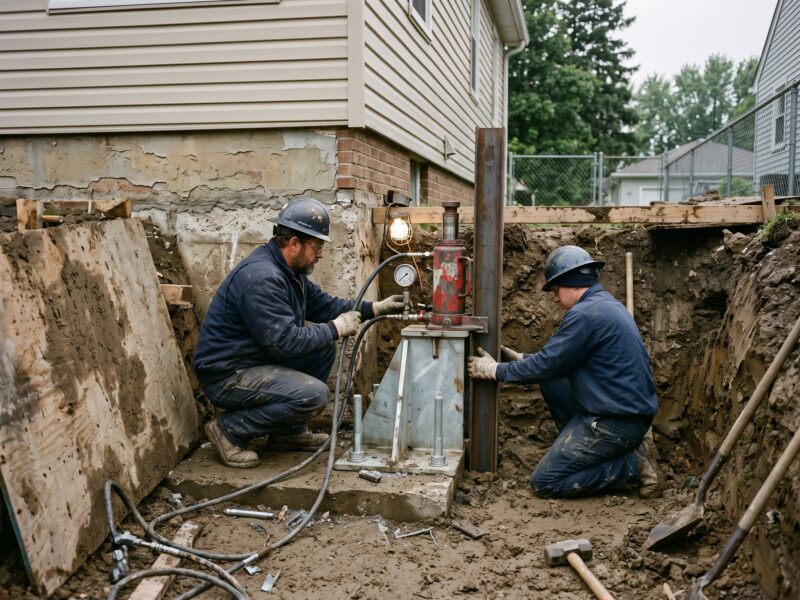 Push & helical piers
For settlement under additions, stoops and the occasional sinking corner.
Learn more
Push & helical piers
For settlement under additions, stoops and the occasional sinking corner.
Learn more
 House leveling
Columns, beams and footings under the sagging midspans of the sixties stock.
Learn more
House leveling
Columns, beams and footings under the sagging midspans of the sixties stock.
Learn more
 Not sure what you have?
A plain-language guide to reading what a Romeoville wall is trying to report.
Learn more
Not sure what you have?
A plain-language guide to reading what a Romeoville wall is trying to report.
Learn more
Why do Romeoville foundations crack and bow?
Romeoville foundations fail on a schedule set by their birth year: block walls from the sixties and seventies bowing under clay pressure at exactly the age it takes clay to win, and young poured walls east of Route 53 showing the ordinary cracks of curing and early settlement.

The Hampton Park block cohort
Thousands of block ranches and split-levels went up in one building wave, so their walls are aging in formation. Sixty years of wet-season clay pressure is now writing horizontal cracks about a third of the way down, the textbook bowing signature.

The newer east-side subdivisions
Poured concrete east of Route 53 fails differently: vertical and diagonal curing cracks, an occasional low corner where fill settled, nothing like the block story. Most of it is injection money, not steel money, and we say so.

Split-level framing of the seventies
The era's split-levels carry long beam spans on posts that were adequate in 1972. Sloping floors and drywall cracks upstairs often trace to a tired beam line, a far cheaper repair than anything involving the foundation itself.
What makes Romeoville ground push and settle?
Romeoville sits on the dense Will County clay that behaves like a slow hydraulic press: it swells when saturated and shoves basement walls inward, then shrinks in drought summers and lets footings ease downward. West of the canal corridor that cycle has been working on Hampton Park's block walls for six decades, and block has less bending strength than poured concrete, which is why the horizontal crack shows up in that stock first and worst.
The east side adds water to the equation. With the Des Plaines River and the Ship Canal holding the water table high along the village's edge, the clay near the corridor spends more of the year saturated, which means more of the year pushing. The walls there are younger and poured, so they resist better, but the pressure never really clocks out, and a leaking crack on that side deserves sealing before the water widens its path.
 Stair-step cracking in block: mortar joints mapping exactly where the wall gave.
Signs you need foundation repair in Romeoville
Six symptoms drive most Romeoville structural calls, and their urgency runs from "book a measurement" to "call this week." None of them gets better on its own, and the measurement is free.
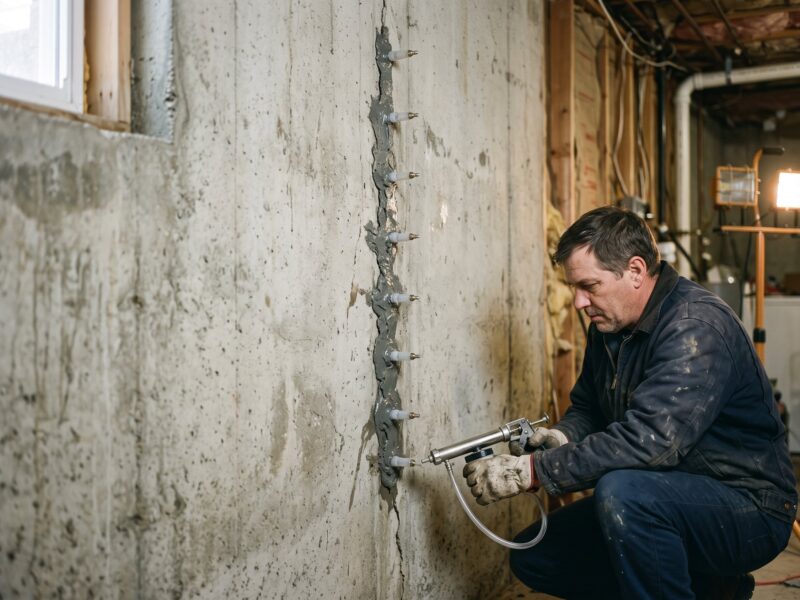
A horizontal crack partway down
The serious one in this village: clay pressure bowing a Hampton Park block wall inward, usually about a third of the way down. Caught early it is strap money, not steel money.

Stair-step cracks at a corner
Cracking that climbs the mortar joints means one section of the foundation is moving relative to the rest. Width and direction tell the story, and we read both with instruments.
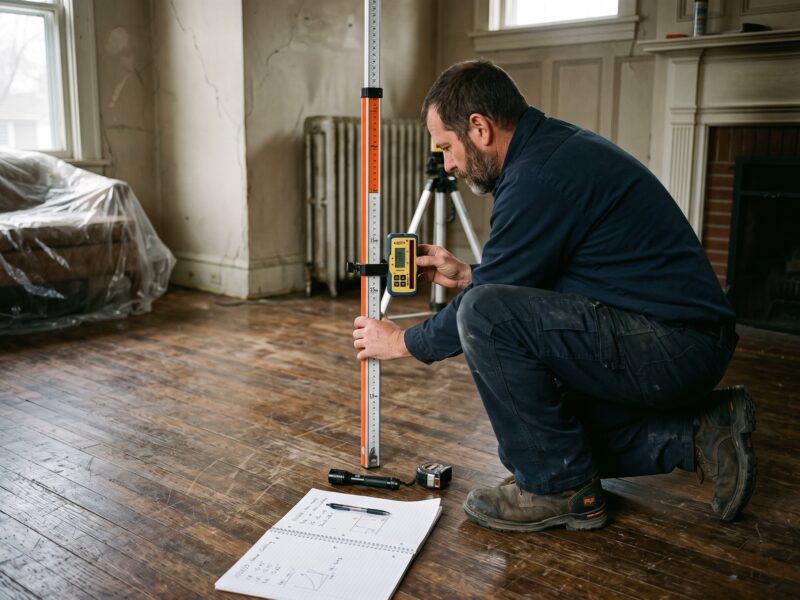
Sloping floors, sticking doors
When bedroom doors stop latching in a seventies split-level, the cause is often a tired beam line rather than the foundation. The laser survey settles it for free either way.
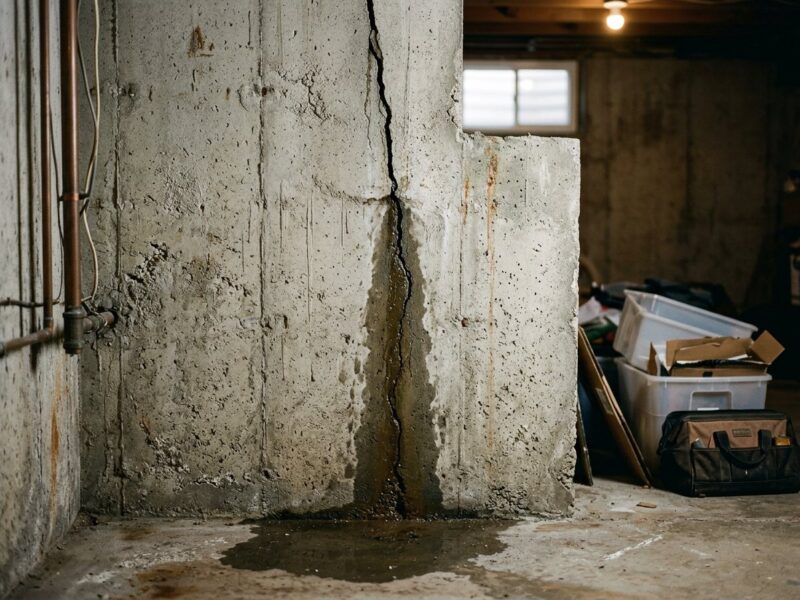
A crack that leaks in the rain
Common in the poured walls east of Route 53 and usually the cheapest fix on this list: a $450 to $900 urethane injection seals it full depth in a morning.

A bow you can sight down the wall
Stand at one end of the wall and look along it. Visible deflection in block means pressure has been winning for a while, and the string-line measurement should happen this season, not next.

A stoop or garage pulling away
A gap opening where a stoop, garage or addition meets the house means its footing is settling on its own schedule. If elevations show active movement, piers at $1,600 to $3,000 each stop it.
Found a horizontal crack in the block? Do not wait a season on that one. The structural measurement is free and takes an hour.
How does foundation repair work in Romeoville?
A Romeoville foundation repair runs four steps: identify the stock, measure the movement, match the method, verify the result. Most repairs finish in one to three days.
Identify the stock, measure the movement
Sixties block or east-side poured changes the whole diagnosis, so we start there, then put numbers on every crack and deflection with a level and string line. Free, within 48 hours.
Day 0Match the method to the number
Under roughly two inches of deflection, carbon fiber holds the wall; past it, steel or anchors take over; curing cracks get injection. The written plan pairs fix to measurement at published prices.
Day 0, same visitInstall and re-measure
The crew installs, torques to spec and re-checks the wall against the day-zero numbers before packing up. Pier work logs drive pressure at every bracket.
Days 1 to 3Warranty to the address
Structural work carries the 25-year transferable warranty, registered to the house, so it survives a sale and satisfies the buyer's inspector without an argument.
On completionReinforce or rebuild: what do Romeoville block walls need?
Nearly every bowing wall in Romeoville's sixties cohort can be reinforced in place for a fraction of rebuild money, because the whole cohort is aging together and most owners call while the deflection is still small. The measurement decides; here is how the two roads compare.
| Reinforce in place | Excavate and rebuild | |
|---|---|---|
| Best for | Bowed or cracked block still structurally intact, which is most of Hampton Park | Walls sheared, collapsing or past saving, a small minority |
| Under two inches of bow | Carbon fiber straps at $600 to $1,000 each end the movement | Wildly out of proportion to the problem |
| Past two inches | Steel I-beams or wall anchors, with the option to pull the wall back | On the table, but only after the numbers rule out bracing |
| Your yard and landscaping | Untouched; the work happens from inside the basement | Excavators through sixty years of mature plantings and fence lines |
| Time and cost | One to three days, from published ranges | Weeks, with shoring, machines and five-figure sums per wall |
| Warranty | 25-year transferable, registered to the house | Varies by scope; insist on it in writing |
Any estimator quoting a rebuild without a deflection number is guessing with your money. Our measurement is free and you keep the numbers.
When do Romeoville foundations move?
Romeoville foundation movement runs on the clay's calendar, and every season has a cheapest moment to act. The block cohort makes the spring reading especially important here.
Spring: push season
Saturated clay swells and shoves, and this is when Hampton Park's horizontal cracks widen and announce themselves. A measurement taken now catches the wall at its most honest.
March to MaySummer: shrink season
Drought pulls water out of the clay and footings ease downward. Settlement cracks open over windows and doors, and the east-side subdivisions do most of their annual moving.
June to AugustFall: the calm window
The clay rests between push and shrink, weather cooperates, and bracing or pier work booked now finishes before frost. The best season to fix a wall at an unhurried pace.
September to NovemberWinter: interior season
Frost locks the top of the soil, but carbon fiber, steel bracing, injection and beam-and-column work all happen indoors at full speed. Winter scheduling is the year's fastest.
December to FebruaryHow much does foundation repair cost in Romeoville?
Foundation repair in Romeoville costs $450 to $900 for crack injection, $600 to $1,000 per carbon fiber strap, $900 to $1,500 per steel beam, $1,000 to $1,800 per wall anchor and $1,600 to $3,000 per pier, the same published ranges we hold in every town we serve. The measurement decides which line applies to your wall.
| Work | Range | What moves the number |
|---|---|---|
| Urethane crack injectionper crack | $450–$900 | Crack length and width, access to the full height |
| Carbon fiber strapsper strap | $600–$1,000 | Wall height, spacing the deflection requires |
| Steel I-beam wall bracingper beam | $900–$1,500 | Ceiling height, footing condition at the base |
| Push or helical piersper pier | $1,600–$3,000 | Depth to load-bearing strata, access for equipment |
The full structural table lives on the pricing page; your written Romeoville quote lands inside it.
Where we repair foundations in Romeoville
The structural map of 60446 follows the building booms. Hampton Park and the surrounding sixties and seventies streets send the block calls: horizontal cracks, stair-steps at corners, carbon fiber and steel. The subdivisions along the Weber Road and 135th Street corridors send poured-wall injection work and the occasional settling stoop. The streets near Lewis University and the Route 53 corridor mix both eras, and the low ground toward the river corridor adds a water question to every structural answer.
Romeoville sits twenty to thirty minutes from our Joliet and New Lenox base, first-ring distance, which makes real monitoring practical: when a wall deserves watching rather than immediate steel, we come back and re-measure it, because the drive is short and we are nearby constantly.
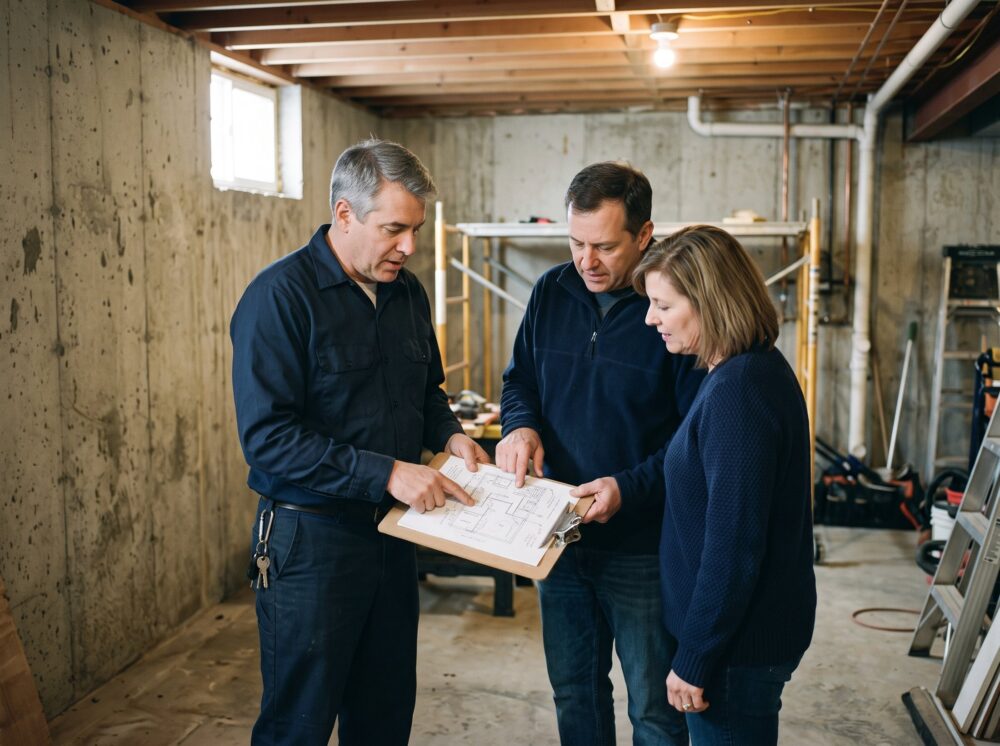 The findings, in numbers, at the kitchen table: deflection measured, options priced.
Romeoville foundation repair questions, answered straight
There is a horizontal crack across my Romeoville block wall. How bad is that?
Worse than a vertical one, and worth a prompt look rather than a someday look. Horizontal cracking in block is the signature of saturated clay pushing the wall inward, and it typically shows up about a third of the way down. At that stage it is very fixable, often with carbon fiber; after the wall has moved an inch, the options narrow and the price climbs.
Carbon fiber or steel for a bowing wall in Hampton Park?
The deflection number decides, not a preference. Under roughly two inches of movement, carbon fiber straps lock the wall where it stands and stop further bowing. Beyond that, or when the wall needs the option of being pulled back toward plumb, steel bracing or wall anchors are the honest answer. We measure with a level and a string line and show you the figure before quoting either.
If you brace my wall, is the water problem fixed too?
No, and assuming so is the mistake that bills people twice. The water that saturated the clay is the force that bowed the wall in the first place, so bracing without addressing drainage leaves the pressure on duty. We evaluate both at the same visit and tell you plainly which one has to happen first at your house.
How much does foundation repair cost in Romeoville?
The same published ranges we hold everywhere: $450 to $900 per injected crack, $600 to $1,000 per carbon strap, $900 to $1,500 per steel beam, $1,000 to $1,800 per wall anchor, $1,600 to $3,000 per pier. Most Hampton Park bowing walls caught early land in strap money, and the free measurement tells you which bracket yours is in.
My newer house east of Route 53 has hairline wall cracks. Should I worry?
Usually not much. Poured concrete cracks as it cures, and hairline vertical cracks in a young east-side basement are ordinary. The ones that earn attention are cracks that leak, widen over time or run diagonally from a corner. Leakers get a $450 to $900 injection; wideners get measured before anyone proposes more.
Can I sell a Romeoville house that has had wall reinforcement?
Yes, and documented work generally reads better to a buyer than a bare crack does. Our repairs come with the before-and-after measurements, photos, scope and a 25-year transferable warranty registered to the address. In a village full of same-age block walls, buyers' inspectors know the issue, and a warranty packet answers them cleanly.
Will homeowners insurance pay for my bowing wall?
Almost never. Standard Illinois policies exclude damage from soil pressure and earth movement, which is precisely what bows a block wall. That exclusion is the financial case for catching the crack at the $600-per-strap stage instead of waiting for it to become a steel or rebuild conversation.
The crack looks stable. Can you monitor it instead of repairing it now?
Yes, when the numbers support waiting. Not every crack needs hardware today, and first-ring distance makes monitoring real: we record the baseline measurement, come back after the next push season, and compare. If the wall has not moved, you have spent nothing; if it has, you catch it at the cheap stage with proof in hand.
Is the bowing wall also a wet wall?
In Romeoville the pressure and the puddle share an author: clay that stays saturated pushes hardest, and near the canal corridor it stays saturated longest. If the wall showing a horizontal crack also seeps every spring, one inspection scopes both trades and sequences the drainage and the reinforcement in the right order.
Basement Waterproofing in Romeoville
Foundation repair near Romeoville

Get the Romeoville wall measured before it moves again
A free structural inspection within 48 hours, a repair matched to the deflection number rather than a sales script, and a 25-year transferable warranty that transfers with the house.
Or talk to a human right now
(630) 335-1128
Request your free estimate
Tell us what you're seeing. We'll call back fast and be out within 48 hours.