Foundation Repair in Homer Glen, Illinois
Homer Glen houses were built one at a time, and they fail one at a time: fifty-year-old custom builds with block walls under clay pressure, 2000s estates settling into slow ground, and additions moving on their own footings. We measure first, then repair what your house actually did.
- Structural warranty: 25-year transferable
- Published pricing: injection from $450, piers from $1,600
- Free structural inspection within 48 hours
 25-year transferable warranty
Who does foundation repair in Homer Glen?
ProSeal Basement Waterproofing repairs foundations throughout Homer Glen from a base in the Joliet and New Lenox corridor, fifteen to twenty-five minutes from any address in the village. Crack injection runs $450 to $900, carbon fiber straps $600 to $1,000 each, steel beams $900 to $1,500, and settlement piers $1,600 to $3,000, all published in advance and all backed by a 25-year transferable warranty.
Custom-built housing means there is no single Homer Glen foundation to memorize. A 1968 build off Cedar Road and a 2004 estate near 143rd Street share nothing but the clay beneath them, and each carries its builder's individual choices: wall heights, footing widths, additions bolted on decades apart. The estimator who measures your wall has to read your house specifically, and ours is paid for that diagnosis rather than for the size of the invoice.
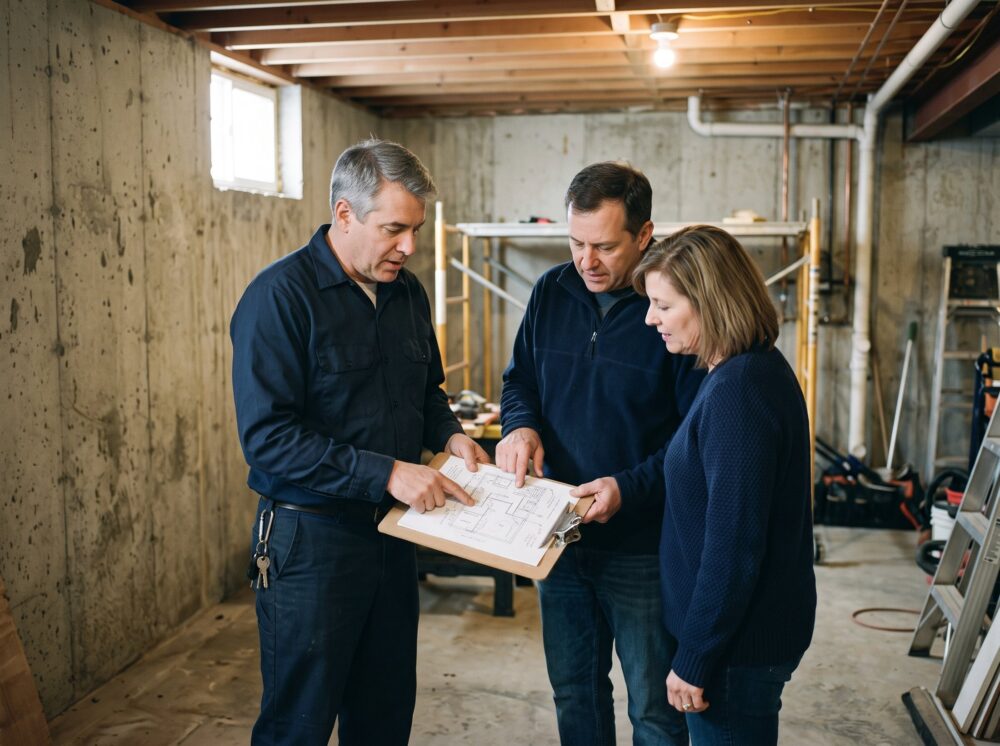 The written plan, explained at the kitchen table before anyone signs anything.
What does foundation repair in Homer Glen include?
Six structural tools cover what Homer Glen housing breaks, and the plan always starts with the cheapest one that genuinely solves the problem. The written scope shows the reasoning line by line.
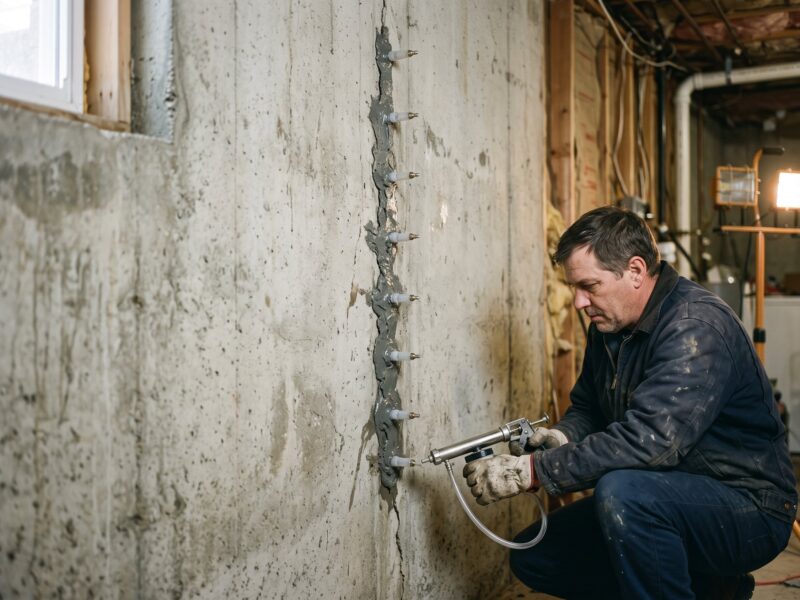 Urethane crack injection
Leaking cracks in the estates' poured walls, sealed full depth from $450.
Learn more
Urethane crack injection
Leaking cracks in the estates' poured walls, sealed full depth from $450.
Learn more
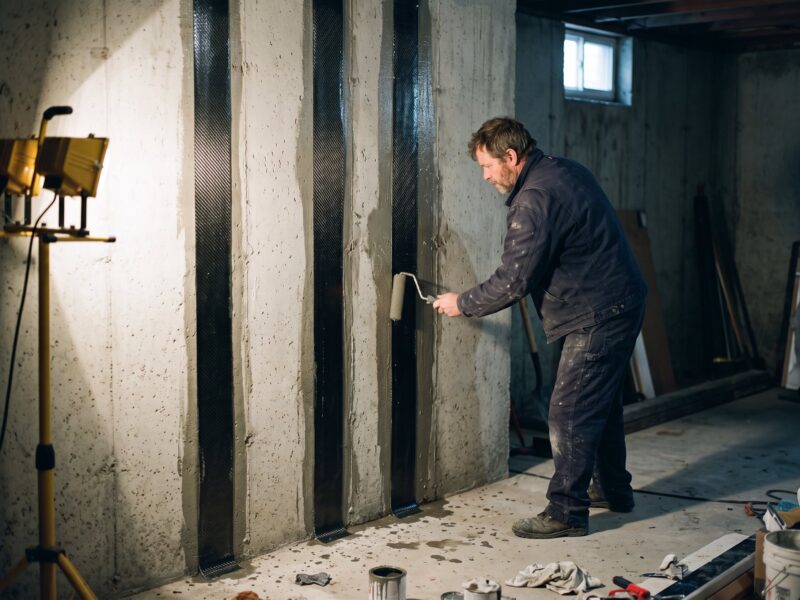 Carbon fiber straps
For older custom builds' block caught while the bow is still small.
Learn more
Carbon fiber straps
For older custom builds' block caught while the bow is still small.
Learn more
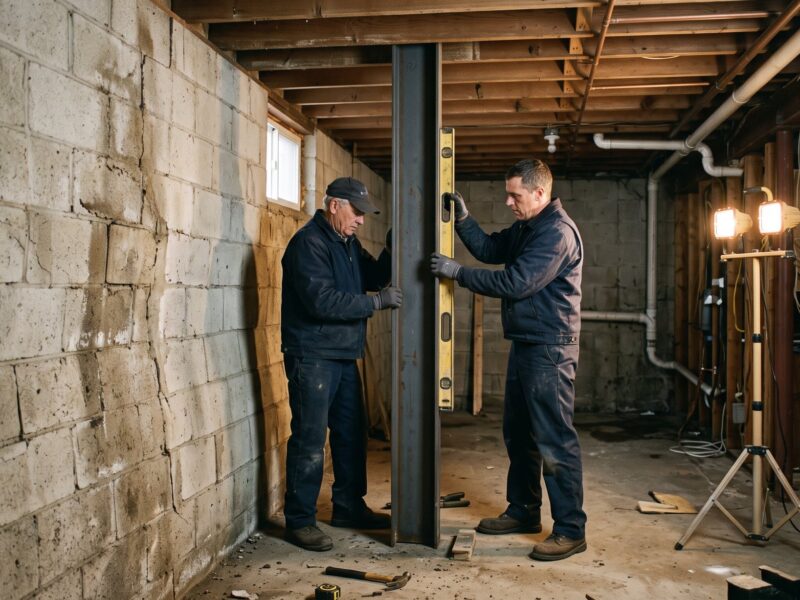 Steel I-beams & wall anchors
For walls past the carbon fiber window, with lot room to anchor.
Learn more
Steel I-beams & wall anchors
For walls past the carbon fiber window, with lot room to anchor.
Learn more
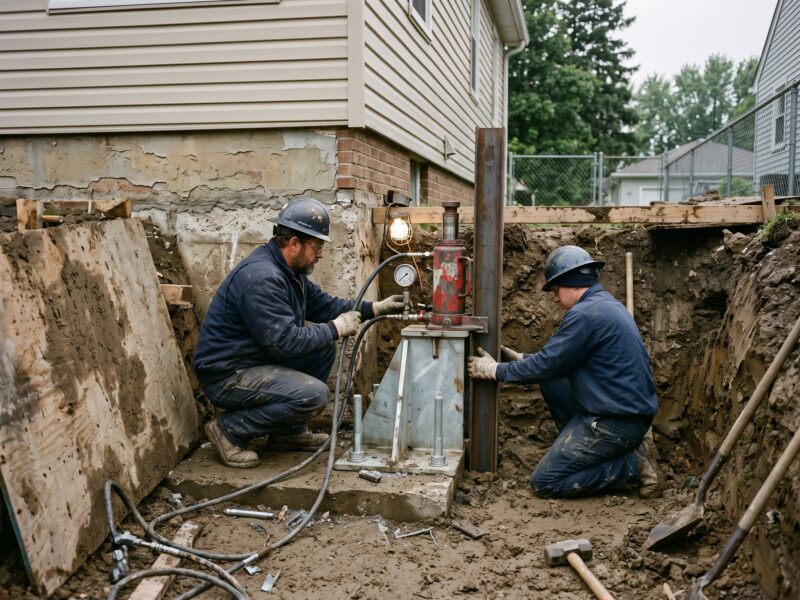 Push & helical piers
For settlement under estate corners, garages and additions.
Learn more
Push & helical piers
For settlement under estate corners, garages and additions.
Learn more
 House leveling
Columns and beams under the long spans custom builders loved.
Learn more
House leveling
Columns and beams under the long spans custom builders loved.
Learn more
 Not sure what you have?
A plain-language guide to what Homer Glen walls and floors do before they fail, and which fix answers each.
Learn more
Not sure what you have?
A plain-language guide to what Homer Glen walls and floors do before they fail, and which fix answers each.
Learn more
Why do Homer Glen foundations crack and settle?
Homer Glen foundations fail through the ground more than through the walls: slow clay that swells wet and shrinks dry works on every era of the housing stock, and each era shows the strain its own way.

The 1960s and 1970s custom builds
Block walls from the first building wave have taken fifty-plus cycles of clay pressure, and mid-height horizontal cracking is how they say so. Caught early it is strap work; ignored, it becomes steel and anchors.

The 2000s estates
The estate wave put heavy houses on freshly graded ground, and some of that ground is still adjusting. Cracks over windows, a low garage corner or a stoop pulling away are settlement talking, and elevations tell whether it is finished.
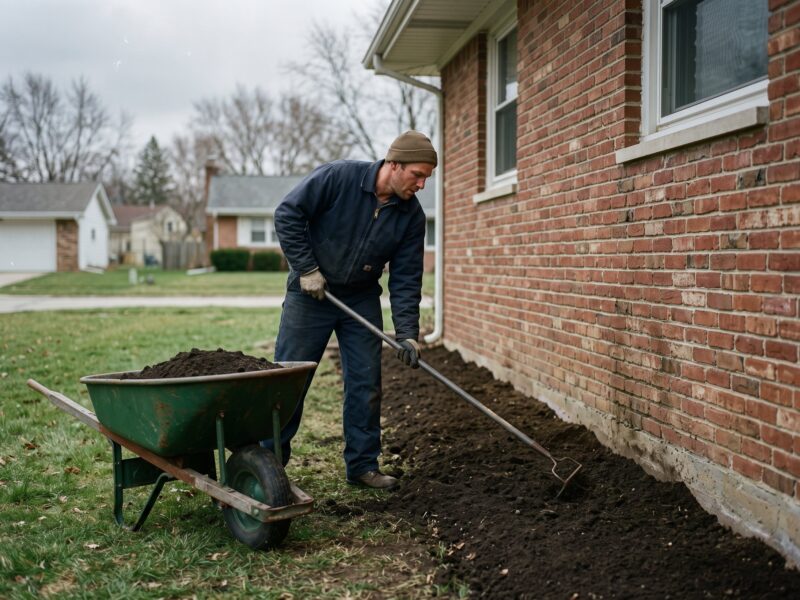
The wet-lot properties
Where drainage fails on this clay, the foundation pays: saturated ground pushes harder on walls and softens under footings. On acre lots with no storm sewer, the structural fix often needs a drainage fix alongside it.
What makes Homer Glen ground move?
Homer Glen sits on the same slow, tight clay that Long Run Creek and the Messenger Woods preserve land drain, and that clay is a moving material. Wet seasons swell it against basement walls; dry summers shrink it away from footings and let them drop a fraction at a time. On large lots where surface water lingers for days, the wet half of that cycle runs longer and pushes harder than it does on ground that drains.
The village's custom-built history shapes the failures too. Houses here were built to individual plans across five decades, so additions, attached garages and walkout sections often sit on footings poured years apart from the main house, and clay moves them separately. A gap opening at an addition is two foundations disagreeing, and the repair is about carrying the lighter one down to ground that stopped moving, which is what piers do.
 A stair-step crack recording exactly how far one corner traveled.
Signs you need foundation repair in Homer Glen
Six symptoms bring Homer Glen homeowners to the phone, from a hairline over a window to a wall visibly out of plumb. Each has a measurement that settles what it means.
A horizontal crack at mid-height
The serious one. Clay pressure is actively flexing the wall inward, and fifty-year-old block has no reserve left. The gap between strap money and anchor money is measured in seasons.

Stair-step cracks in block
Mortar joints crack along the path of differential movement, mapping which part of the foundation moved and which held. Width, direction and change over time tell the story.
Doors sticking, floors out of level
When bedroom doors stop latching and the floor slopes toward one corner, something underneath moved. Sometimes the foundation; often a beam or column, which costs a fraction as much.
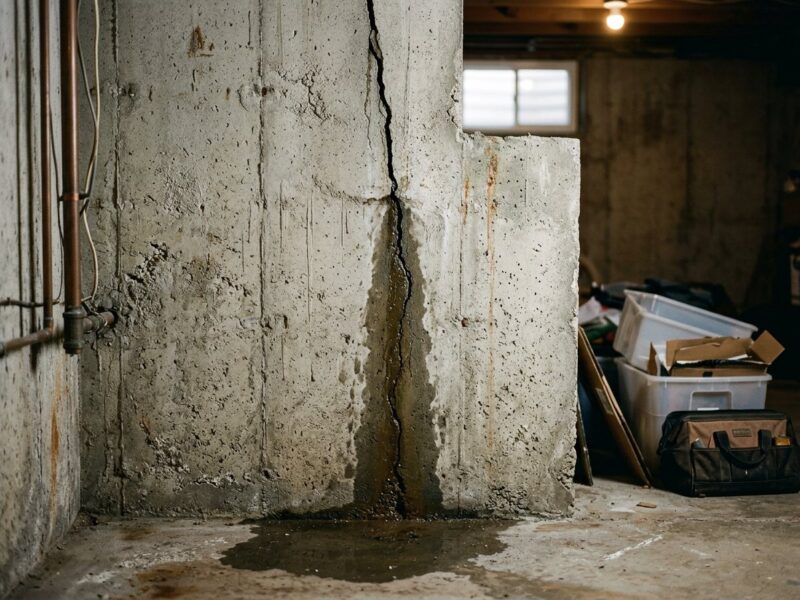
A crack that leaks in the rain
Poured walls in the newer estates crack as they cure and settle. A wet, stable crack is a $450 to $900 injection; the inspection confirms stability before anyone quotes more.

A bouncy or sagging main floor
Custom builders here liked long open spans, and half a century of load finds their limits. Columns, footings and sistered framing restore the line for $1,500 to $3,200 per column.
A garage or addition pulling away
A widening gap where an addition meets the house means its footing is settling on its own schedule. Active movement is pier territory, and the elevation survey proves it either way.
Crack over the window wider than last spring? Get numbers on it before the clay moves again. The structural inspection is free.
How does foundation repair work in Homer Glen?
A Homer Glen foundation repair runs four steps: read the house, measure the movement, match the method, verify the result. Most repairs finish in one to three days.
Read the individual house
Custom construction means the inspection starts from zero: wall type, footing layout, additions and their separate pours, plus the lot's drainage, because wet clay drives movement here. Free, within 48 hours.
Day 0Measure and match
Crack widths, wall deflection and floor elevations go into a written plan that pairs each finding with the cheapest adequate fix from the published ranges.
Day 0, same visitInstall and verify
Straps, steel, piers or columns go in and get checked against the day-zero numbers before the crew leaves. Big-lot access makes exterior anchor and pier work straightforward here.
Days 1 to 3Register the warranty
Structural work carries the 25-year transferable warranty, registered to the address so it transfers with the house and answers a future buyer's inspector.
On completionReinforce or rebuild: what do Homer Glen walls actually need?
Almost every failing Homer Glen wall can be reinforced in place, and the honest argument for it here is not access, which big lots provide, but proportion: rebuild money buys steel, straps or piers several times over, and the measured wall usually needs only one of them.
| Reinforce in place | Excavate and rebuild | |
|---|---|---|
| Best for | Bowing, cracked or settling walls still structurally intact, which is most of them | Walls sheared or failed outright, a small minority |
| On older custom block | Carbon fiber or steel matched to measured deflection | Ends the wall's history; rarely justified by the numbers |
| On settling estates | Piers carry the load past the adjusting clay | Rebuilding a wall does nothing about the soil beneath it |
| Cost | $450 injections to $3,000 piers, per published ranges | Tens of thousands per wall before landscaping |
| Time | One to three days for most repairs | Weeks of shoring, excavation and a torn-up lot |
| Warranty | 25-year transferable, registered to the house | Varies by scope; insist on it in writing |
When a wall truly is past reinforcement we say so with the measurements attached. An estimate that names a rebuild without deflection numbers deserves a second opinion, and ours is free.
When do Homer Glen foundations move?
Homer Glen foundation movement runs on the clay's wet-dry calendar, and each season has a cheapest moment to act on what the last one did.
Spring: push season
Saturated clay swells and shoves on basement walls, hardest on the lots where drainage is poor and the ground stays loaded for weeks. Horizontal cracks widen now, and measurements catch movement at its most legible.
March to MaySummer: shrink season
Drought pulls water out of the clay and footings settle after it. The estate homes do most of their annual moving now: cracks over openings, doors that stick, a corner reading low.
June to AugustFall: work season
Calm clay, dry ground and easy machine access make fall the best window for piers, anchors and column work on big lots, finished well before frost.
September to NovemberWinter: interior season
Frost locks the top of the ground, but injection, carbon fiber, bracing and beam-and-column work all happen indoors at full pace. Winter scheduling is the fastest of the year.
December to FebruaryHow much does foundation repair cost in Homer Glen?
Foundation repair in Homer Glen costs $450 to $900 for crack injection, $600 to $1,000 per carbon fiber strap, $900 to $1,500 per steel beam, and $1,600 to $3,000 per settlement pier, the same published ranges we hold in every town we serve. Support columns for sagging spans run $1,500 to $3,200 installed.
| Work | Range | What moves the number |
|---|---|---|
| Urethane crack injectionper crack | $450–$900 | Crack length and width, access to the full height |
| Carbon fiber strapsper strap | $600–$1,000 | Wall height, spacing the deflection requires |
| Steel I-beam wall bracingper beam | $900–$1,500 | Ceiling height, footing condition at the base |
| Push or helical piersper pier | $1,600–$3,000 | Depth to load-bearing strata, access for equipment |
The full structural table lives on the pricing page; your written Homer Glen quote lands inside it.
Where we repair foundations in Homer Glen
Every Homer Glen address sits in ZIP 60491 and in our first ring, and the structural calls sort by building era rather than by subdivision. Cedar Road, Parker Road and the older custom streets send bowing block, sagging long spans and additions moving on their own footings. The estates off 143rd Street, 159th Street and Bell Road send settlement: cracks over windows, low garage corners and elevation surveys. The wettest ground, along the Long Run Creek corridor and near Messenger Woods, sends walls doing both at once.
The home-ring drive changes what monitoring means in practice. When a crack deserves watching rather than immediate steel, we come back and re-measure it, because Homer Glen is fifteen to twenty-five minutes from our crews and the return trip costs you nothing.
 Walking up to a Homer Glen inspection: tape, level and the day-zero numbers.
Homer Glen foundation repair questions, answered straight
My 2000s Homer Glen estate has cracks over the windows. Is it settling?
Possibly, and the real question is whether it has finished. Heavy houses on freshly graded clay commonly adjust through their first decades. We shoot floor elevations and measure the cracks; if movement is active, piers at $1,600 to $3,000 each stop it permanently, and if it is old and stable, sealing the cracks is the honest whole answer.
Is a horizontal crack in a 1970s Homer Glen block wall serious?
Yes. Horizontal at mid-height means clay pressure is actively bowing the wall, and block of that age has no margin left. Caught while the bow is small it is carbon fiber at $600 to $1,000 per strap; left alone it graduates to steel beams, anchors or worse. Measure it this season, not next.
How much does foundation repair cost in Homer Glen?
The same published ranges we hold everywhere: $450 to $900 per injected crack, $600 to $1,000 per carbon strap, $900 to $1,500 per steel beam, $1,600 to $3,000 per pier and $1,500 to $3,200 per support column. The free inspection turns those ranges into a written number for your specific wall.
Does a big lot make foundation repair easier?
Genuinely, yes. Wall anchors need ground beyond the wall to anchor into, pier rigs need room to set up, and Homer Glen lots supply both without touching a neighbor's property or a lot line. It does not change the published prices, but it widens the menu of methods your house can choose from.
Can my wet yard be the reason my foundation is moving?
On this clay, often. Ground that stays saturated pushes harder on walls and gives less support under footings, so on the lots where water stands for days the structural repair frequently needs a drainage repair beside it. When that is the case the written plan sequences both, and the drainage half is usually the cheaper line.
Does homeowners insurance cover foundation repair in Illinois?
Usually not. Standard Illinois policies exclude damage from soil movement and hydrostatic pressure, which is most of what breaks foundations here. That exclusion is the financial argument for catching a bowing wall at the $600-per-strap stage instead of the five-figure stage.
Will foundation repair hurt my Homer Glen home's resale?
Documented repair tends to read better than an unexplained crack, especially on custom homes where a buyer's inspector has no standard model to compare against. Our work leaves a packet: measurements, photos, scope and a 25-year transferable warranty registered to the address, which transfers at closing.
Can you monitor a crack instead of repairing it right away?
Yes, and in the home ring we actually do it rather than just promising it. When the day-zero numbers say a crack is stable, the honest plan is gauges and a scheduled re-measure, not steel. If a later visit shows movement, the repair is priced from the same published ranges it always was.
Is the cracked wall also a wet wall?
On Homer Glen clay the two problems are one problem seen from two sides: the saturated ground pressing your wall inward is the same ground feeding water to the cove joint. If the crack you are watching also seeps every spring, one inspection covers both trades and sequences the fixes so neither undoes the other.
Basement Waterproofing in Homer Glen
Foundation repair near Homer Glen

Get your one-of-a-kind house measured like one
A free structural inspection within 48 hours that reads your builder's actual choices, a repair matched to the measurements, and a 25-year transferable warranty that transfers with the house.
Or talk to a human right now
(630) 335-1128
Request your free estimate
Tell us what you're seeing. We'll call back fast and be out within 48 hours.