
Basement Waterproofing in Homer Glen, Illinois
On an acre-plus Homer Glen lot there may be no storm sewer in the equation at all. Every drop that lands on the property has to leave across the ground, and when the grading cannot move it, the backfill around your foundation will. We fix the yard first and the basement when it needs it.
- Yard drainage warrantied 5-year, interior systems lifetime, fully transferable
- Free written inspection within 48 hours
- Septic fields mapped before any drainage plan is drawn
 Home turf: fifteen to twenty-five minutes out
Who does basement waterproofing in Homer Glen?
ProSeal Basement Waterproofing handles yard drainage, French drains and basement waterproofing across Homer Glen from our base in the Joliet and New Lenox corridor, fifteen to twenty-five minutes away. Regrading and downspout work runs $600 to $2,500, exterior French drains $45 to $90 per linear foot, and interior drain tile $95 to $160 per linear foot, every range published before we set foot on the property.
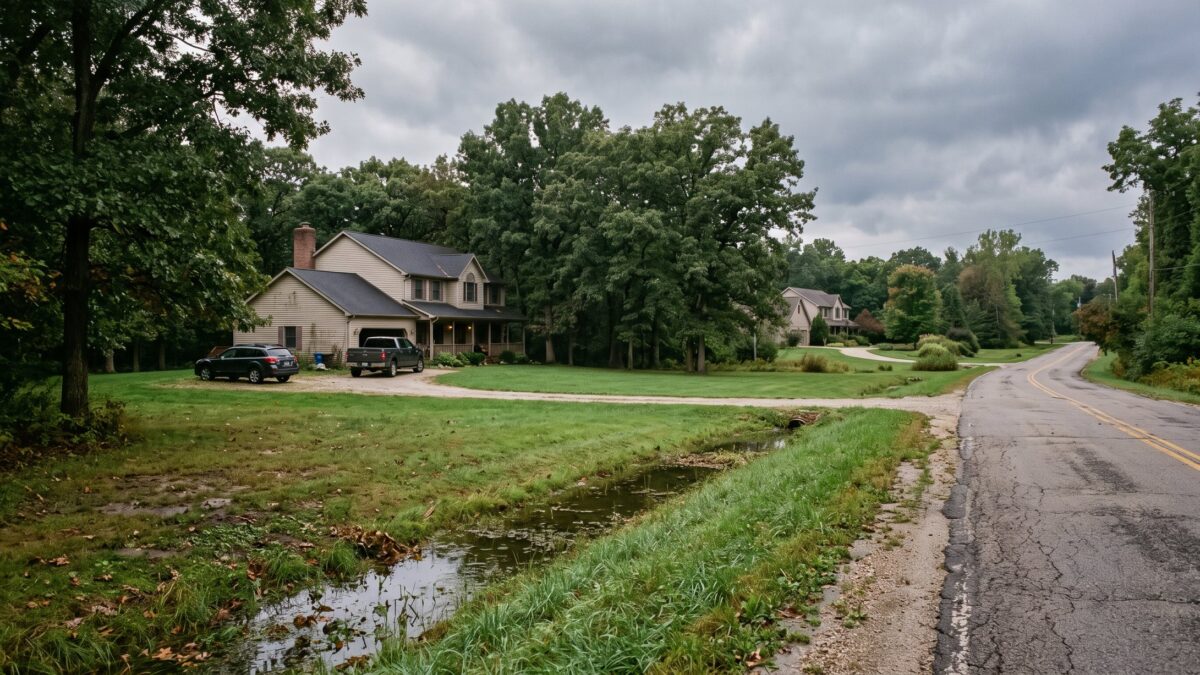
Homer Glen needs a drainage contractor before it needs a basement contractor, and most companies in this market only carry the second playbook. On a quarter-acre subdivision lot the storm sewer takes the water; on a one-acre lot off Parker Road, moving water is your grading's job alone. We diagnose the whole acre, not just the foundation, because out here the yard is usually where the problem starts and where the cheapest fix lives.
 A catch basin taking surface water that Homer Glen clay refuses to absorb.
What does basement waterproofing in Homer Glen include?
On Homer Glen lots the toolbox reads in a different order than it does in town: surface drainage leads, and the interior system is the backstop. The free inspection prices only what your property actually needs.
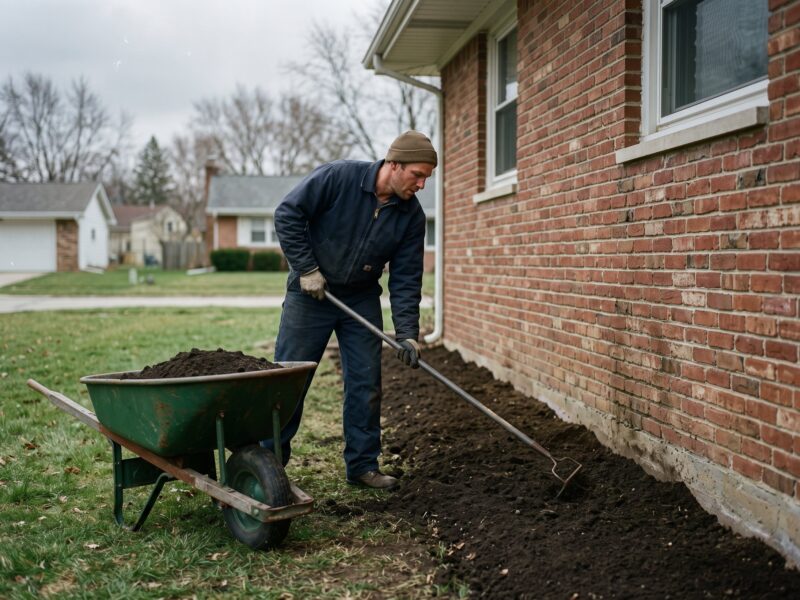 Yard drainage & regrading
The lead discipline on acre lots where the water has nowhere piped to go.
Learn more
Yard drainage & regrading
The lead discipline on acre lots where the water has nowhere piped to go.
Learn more
 French drains
Long runs and swale intercepts sized for properties that drain themselves.
Learn more
French drains
Long runs and swale intercepts sized for properties that drain themselves.
Learn more
 Sump pumps & battery backup
With backup capacity for the outages that come with rural power lines.
Learn more
Sump pumps & battery backup
With backup capacity for the outages that come with rural power lines.
Learn more
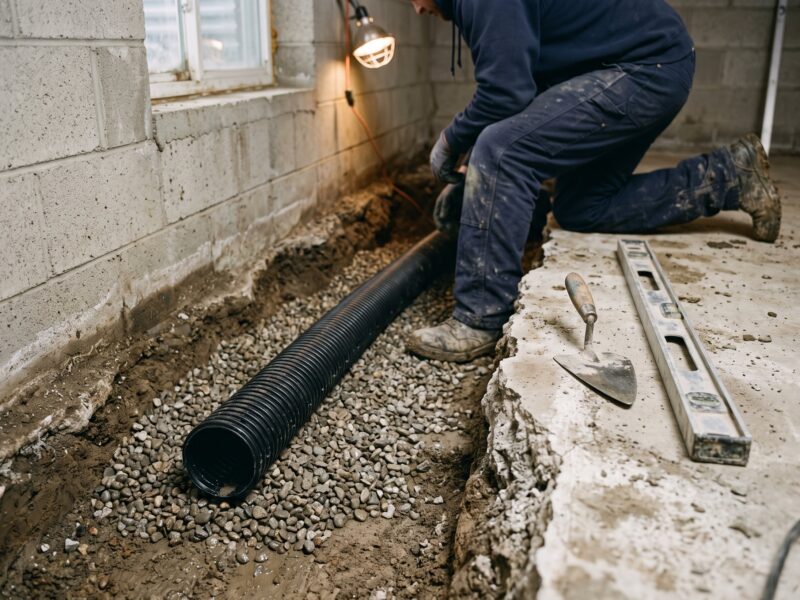 Interior drain tile
The backstop when clay-loaded ground pushes water at the footing anyway.
Learn more
Interior drain tile
The backstop when clay-loaded ground pushes water at the footing anyway.
Learn more
 Crawl space encapsulation
Additions and split-level crawls on the older custom stock.
Learn more
Crawl space encapsulation
Additions and split-level crawls on the older custom stock.
Learn more
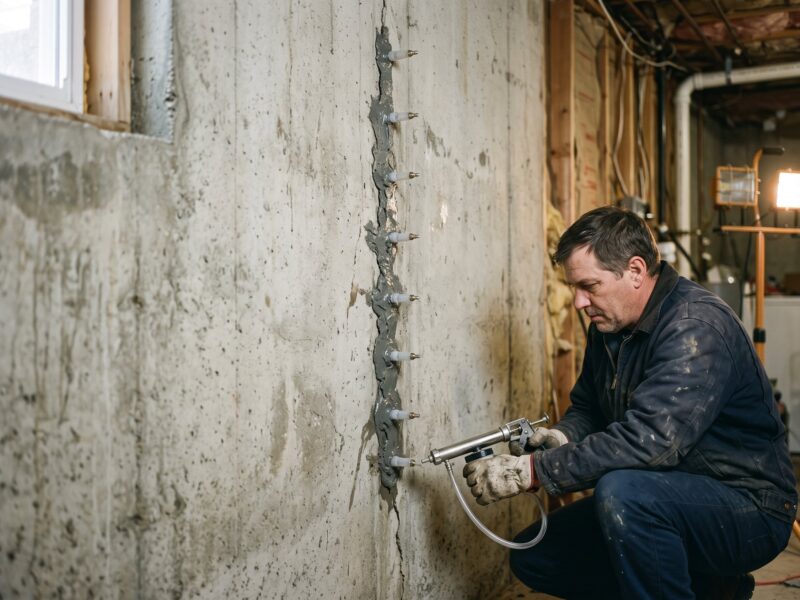 Leaking crack injection
Poured-wall cracks in the newer estates, sealed from $450.
Learn more
Leaking crack injection
Poured-wall cracks in the newer estates, sealed from $450.
Learn more
Why does Homer Glen water sit in the yard?
Homer Glen yards hold water because slow clay meets big lots: rain that a storm sewer would carry away in a subdivision has to cross an acre of ground here, and the clay gives it nowhere to sink. Where the water finally goes decides whether your basement stays dry.

The 1960s and 1970s custom builds
The older stock along Cedar Road and Parker Road was built lot by lot, and so was its grading. Fifty years of settling, added patios and mature trees have rewritten those slopes, and many now hold water where the original builder never intended.

The 2000s estates
The newer estate homes have sound walls and big roofs, and a big roof concentrates a storm. Short downspouts dumping at the corners of a 4,000 square foot footprint can feed the sump the same gallons all day.

The septic and well properties
On the many lots still running septic, standing water is a double problem: a saturated field cannot accept effluent, and the same soaked ground presses on the foundation. The drainage plan has to route around the field, never through it.
What makes Homer Glen drainage different?
Homer Glen drains slowly because most of the village sits on the same tight clay that underlies Long Run Creek and the Messenger Woods preserve land, ground that holds a storm for days rather than passing it along. Long Run Creek carries a large share of the village's runoff, and between the creek corridors the water moves by grade or it does not move at all. On lots of an acre or more, that grade is the entire drainage system.
The septic map changes the engineering. A drainage run that would be routine in a sewered town can wreck a septic field here, so we locate the field and the well before a shovel touches the ground, and the plan works around both. When surface water still finds the backfill trench beside the foundation, the interior side of the toolbox opens: drain tile at the footing, a properly sized sump, and discharge routed far enough out that the clay cannot hand the water straight back.
See how a French drain intercepts water before the foundation
 A pop-up emitter releasing collected water downslope, where the lot can shed it.
Signs your Homer Glen home needs drainage or waterproofing
Six symptoms fill the Homer Glen call log, and on large lots most of them start outside. Reading them in the right order is the difference between a grading invoice and a full-system invoice.
Water standing in the yard for days
Clay that will not percolate leaves ponds after every storm. Near the house it is a foundation threat; near the septic field it is a plumbing threat. Either way, grading and drainage are the fix, not patience.

A sump that runs long after the rain stops
Slow clay drains toward the pit for days, but a pump that never rests is often recycling roof water from short downspouts. On big footprints that is a $600 to $2,500 exterior fix.

Seepage where the floor meets the wall
The cove joint leak means the ground beside the footing is saturated and pushing. On this clay it shows up spring after spring and widens its reach each year.

Musty air in the finished basement
The estate homes finished their basements, and damp air behind the drywall announces itself by smell first. Seasonal mustiness tracks seasonal ground moisture, not housekeeping.

White mineral bloom on the walls
Efflorescence is the residue of water traveling through the wall itself. On the older custom homes' block it means the ground outside stays wet against the masonry.

A discharge line that feeds itself
A sump line ending a few feet from the wall hands its water back to the backfill on flat clay. On a big lot there is always somewhere better to send it.
Pond in the yard that outlasts every storm? Tell us the road and the lot; we will bring the drainage plan, not just the basement pitch.
How does basement waterproofing work in Homer Glen?
A Homer Glen job runs four steps, and on most properties the first one covers the whole acre, not just the basement walls. Home ring drives mean the schedule moves fast.
Walk the lot, locate the systems
We trace how water crosses the property, find where it stalls, and locate the septic field and well head before anything is designed around them. Free, within 48 hours.
Day 0Order the fixes honestly
The written plan starts with the cheapest adequate fix: grading and downspouts before French drains, French drains before interior systems. Each line item carries its published range.
Day 0, same visitBuild the drainage path
Regrading, swale work, drain runs and emitters go in with the machine access big lots make easy; interior tile and the sump follow only where the inspection proved the need.
Days 1 to 4Warranty the work
French drains and yard drainage carry the 5-year warranty and interior systems the lifetime, fully transferable warranty, both registered to the address.
On completionInterior or exterior waterproofing: which fits a Homer Glen lot?
Homer Glen is one of the few towns on our map where the exterior answer competes on even terms, because acre lots give machines room to work and grading room to matter. The honest comparison depends on where your water actually starts.
| Exterior drainage & grading | Interior drain tile | |
|---|---|---|
| Best for | Surface water crossing the lot, ponding and roof runoff | True groundwater pressure at the footing and cove joint |
| On acre lots | Room for swales, long runs and real regrading | Unaffected by lot size; works from inside the basement |
| With septic and well | Routed around the field and well head by design | No excavation near the field at all |
| Cost | $600 to $2,500 grading; French drains $45 to $90 per linear foot | $95 to $160 per linear foot; full systems $8,000 to $16,000 |
| Season | Best in dry ground; frozen or saturated clay pauses digs | Installs year-round, weather irrelevant |
| Disruption | Yard work that big lots absorb easily | Concrete cut inside; landscaping untouched |
Many Homer Glen properties need the exterior work only, some need both, and the inspection proves which before either is priced. Nobody here is paid to sell the bigger system.
When do Homer Glen yards and basements flood?
Homer Glen water keeps a calendar set by slow clay, and every season has one smart move on it. Timing the work right is often worth more than the work itself.
Spring: the saturation season
Snowmelt and rain load the clay past what it can hold, yards pond, Long Run Creek runs full and sumps work overtime. The ponds you photograph now are the map the fall drainage work follows.
March to MaySummer: the outage season
Violent storms drop inches in an hour, and on large-lot power lines the electricity often goes with them. A primary-only sump on a Homer Glen estate is a gamble; the battery backup is the hedge.
June to AugustFall: the digging season
Dry, firm ground is when regrading, swales and French drain runs go in cleanly. The $600 to $2,500 exterior work done now decides how the yard behaves next spring.
September to NovemberWinter: the interior season
Frozen ground stops yard work honestly, but interior drain tile, sump upgrades and crack injection all happen indoors at full speed. The fastest scheduling of the year.
December to FebruaryHow much does basement waterproofing cost in Homer Glen?
Basement waterproofing in Homer Glen costs $95 to $160 per linear foot for interior drain tile, with full perimeter systems between $8,000 and $16,000, but many properties here solve their water for far less: $600 to $2,500 of grading and downspout work, or a French drain at $45 to $90 per linear foot. The ranges are published, and the inspection says which applies to your lot.
| Work | Range | What moves the number |
|---|---|---|
| Interior drain tileper linear foot | $95–$160 | Length of the run, slab thickness, what has to be moved off the walls |
| Sump pump with battery backupinstalled | $2,800–$4,500 | Pit condition, backup capacity, discharge routing |
| Exterior French drainper linear foot | $45–$90 | Trench depth, where the water can legally go |
| Downspout extensions and regradingtypical job | $600–$2,500 | Feet of grade to rebuild, soil hauling |
Every range lives on the pricing page, and your written Homer Glen quote lands inside it.
Where we handle drainage and waterproofing in Homer Glen
All of Homer Glen sits in ZIP 60491 and all of it sits in our first ring. The Long Run Creek corridor and the streets near Messenger Woods send us the wettest ground in the village, clay that holds a storm for a week. Cedar Road, Parker Road and the older custom-build streets send settled fifty-year-old grading and block walls drinking at the cove joint. The 143rd Street and 159th Street corridors and Bell Road send estate-home calls: big roofs, short downspouts, hard-working sumps and finished basements that smell damp in April.
This is home ring territory: crews based in the Joliet and New Lenox corridor reach any Homer Glen address in fifteen to twenty-five minutes, standard inspections happen within 48 hours, standing water gets 24/7 response, and there is no trip charge anywhere in Will County.
 Morning departure: Homer Glen is one of the shortest drives on the route board.
Homer Glen basement waterproofing questions, answered straight
My Homer Glen yard holds water for days after a storm. Will it reach the basement?
If it is standing near the house, eventually yes. Water sitting on clay does not soak away; it hunts for the most permeable path, and the backfill trench around your foundation is exactly that. On a large lot the fix is usually grading and a drainage run across the property, not anything inside the basement, and the inspection will say which.
Can a wet yard damage my septic field?
It can, and on many Homer Glen properties this is the first casualty. A saturated field cannot accept effluent, and the warning signs are slow drains and wet patches over the field long before the basement sees a drop. If you are on septic we design the drainage around the field, never through it, and we say exactly where at the inspection.
Do you warranty yard drainage work in Homer Glen?
Yes: 5-year on French drains and yard drainage, in writing. Almost nobody in this market warranties exterior drainage at all, which says a lot about how it usually gets installed. Interior systems carry the lifetime, fully transferable warranty on top of that.
How much does it cost to fix drainage on a one-acre Homer Glen lot?
Often less than homeowners fear. Regrading and downspout extensions run $600 to $2,500, and a French drain runs $45 to $90 per linear foot, priced by the actual run length the lot needs. A full interior system at $8,000 to $16,000 only enters the conversation when groundwater, not surface water, is proven to be the problem.
Where does the water go if my street has no storm sewer?
Across the ground, which is the whole Homer Glen discipline. We use the lot's own fall: swales and drain runs carry water to the lowest workable corner and release it through pop-up emitters, downslope and away from the house, the septic field and the neighbor. Big lots almost always have somewhere legitimate to send it; small-lot tricks like tight splash blocks do not work out here.
Do I need an interior system, or is grading enough?
The pattern of the water answers that. Seepage that follows storms within hours and enters high on the wall is usually surface water, a grading and downspout problem. Water arriving at the floor-wall joint days after rain is groundwater pressure, and that is drain tile territory. We test both theories at the inspection before either is quoted.
What happens to my sump pump when a storm takes the power out?
Without a backup, it stops at the exact moment the clay is loading the pit fastest. Large-lot lines lose power more than village centers do, which is why every sump we install in Homer Glen is quoted with a battery backup, $2,800 to $4,500 for the pair, sized to run through the outage.
Do I need a permit for drainage work in Homer Glen?
It varies by municipality and by scope: some grading and drain work needs nothing, some triggers a review, and work near regulated areas can involve more. Where a permit is required, we pull it as part of the job, and the written plan says so before work starts.
Is the wet basement wall also cracking?
The clay that keeps a Homer Glen yard wet spends its winters and springs pushing on the foundation too, and a wall that seeps every year is a wall under load. If your water problem comes with a horizontal crack, a stair-step line or a floor going out of level, one inspection covers both trades on the same visit.
Foundation Repair in Homer Glen
Basement waterproofing near Homer Glen

Get the whole acre diagnosed, not just the basement
A free inspection within 48 hours that walks the lot, locates the septic field and prices the cheapest fix that actually works, with drainage warrantied 5-year and interior systems lifetime, fully transferable.
Or talk to a human right now
(630) 335-1128
Request your free estimate
Tell us what you're seeing. We'll call back fast and be out within 48 hours.