Foundation Repair in New Lenox, Illinois
A village built mostly since 1990 on graded farm clay does not have old-wall problems; it has young-house settlement. Diagonal cracks off window corners, stoops down a half inch, a garage easing away from the house: we measure it, fix what is moving, and tell you plainly when nothing is.
- Structural warranty: 25-year transferable
- Published pricing: injection from $450, piers from $1,600
- Free structural inspection within 48 hours, re-checks are easy from here
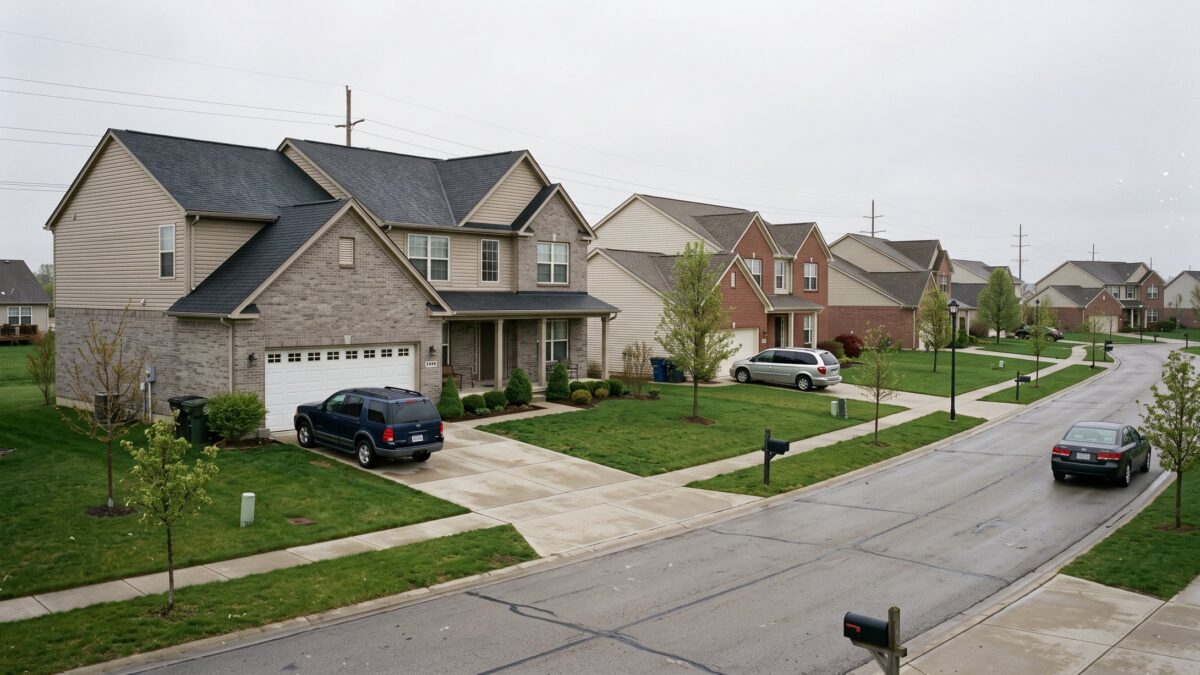 Based minutes away, in New Lenox weekly
Who does foundation repair in New Lenox?
ProSeal Basement Waterproofing is a foundation repair contractor based in the Joliet and New Lenox corridor, which puts New Lenox houses minutes from our crews. Urethane crack injection runs $450 to $900, carbon fiber straps $600 to $1,000 each, and push or helical piers $1,600 to $3,000 apiece, all published in advance and all backed by a 25-year transferable warranty.
The expertise New Lenox actually requires is restraint. On a housing stock this young, most cracks are consolidation and grading, not structural failure, and a fair number of our village inspections end with a monitoring plan or a few hundred dollars of dirt work instead of an invoice. When movement is real, and near the creek corridor or on badly graded clay it sometimes is, we prove it with numbers before we prescribe steel.
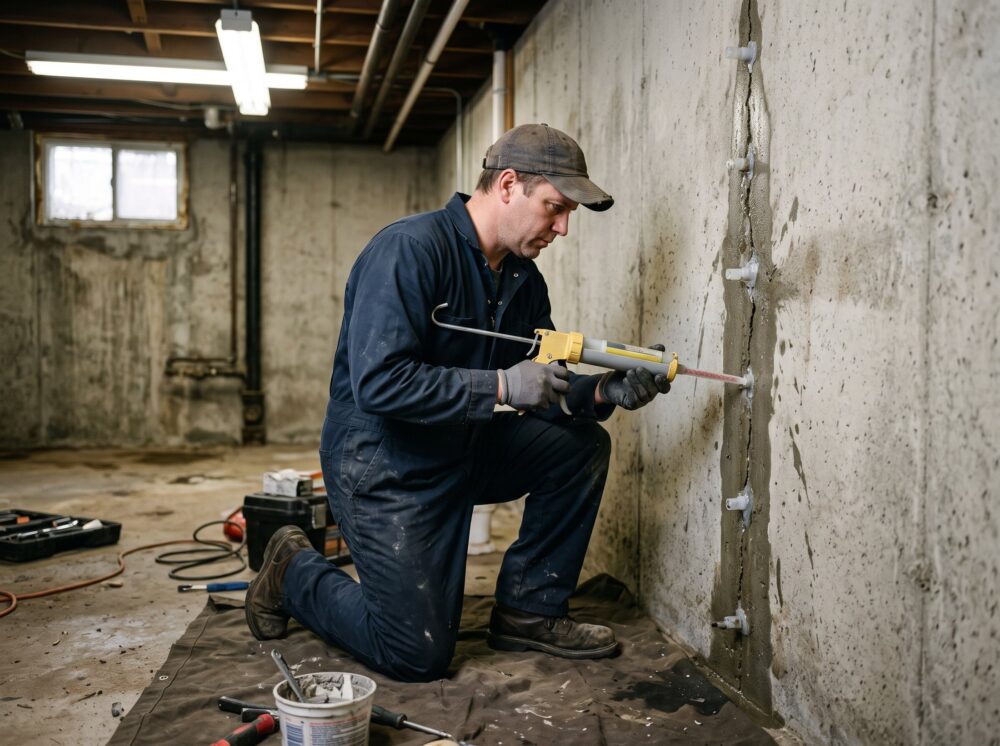 Injection ports on a settling poured wall: the right-sized fix, most days in New Lenox.
What does foundation repair in New Lenox include?
Six structural tools cover what New Lenox houses actually do, ordered cheapest-adequate first. On walls this young, the small fix is usually the correct one, and the written plan shows why.
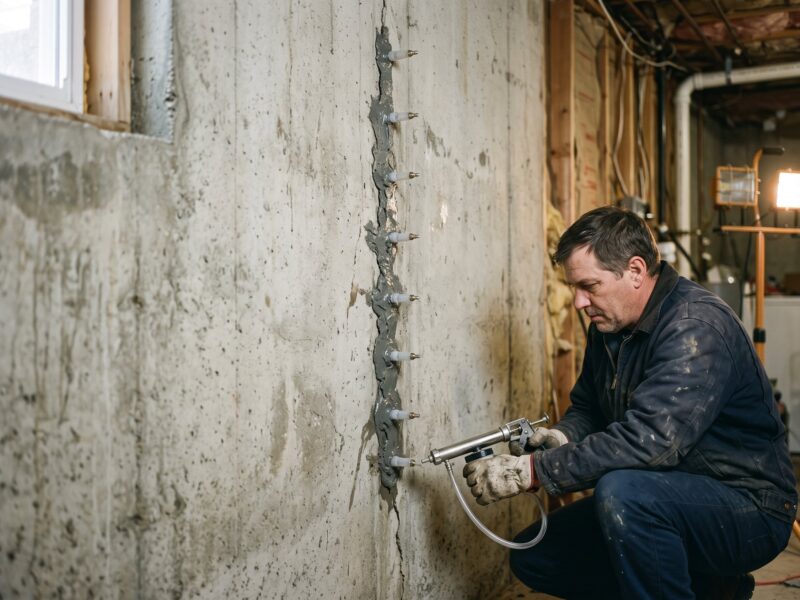 Urethane crack injection
Settlement and curing cracks in post-1990 poured walls, sealed full depth.
Learn more
Urethane crack injection
Settlement and curing cracks in post-1990 poured walls, sealed full depth.
Learn more
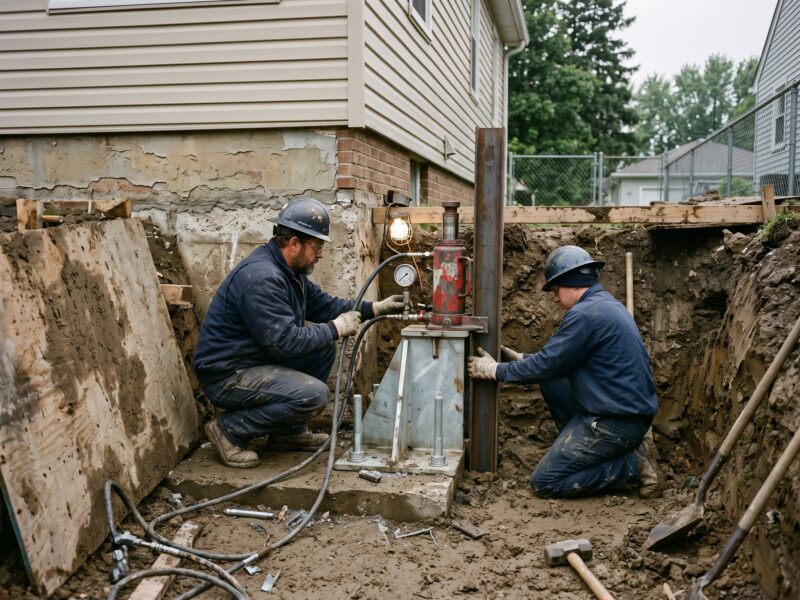 Push & helical piers
For footings still dropping into consolidating farm clay.
Learn more
Push & helical piers
For footings still dropping into consolidating farm clay.
Learn more
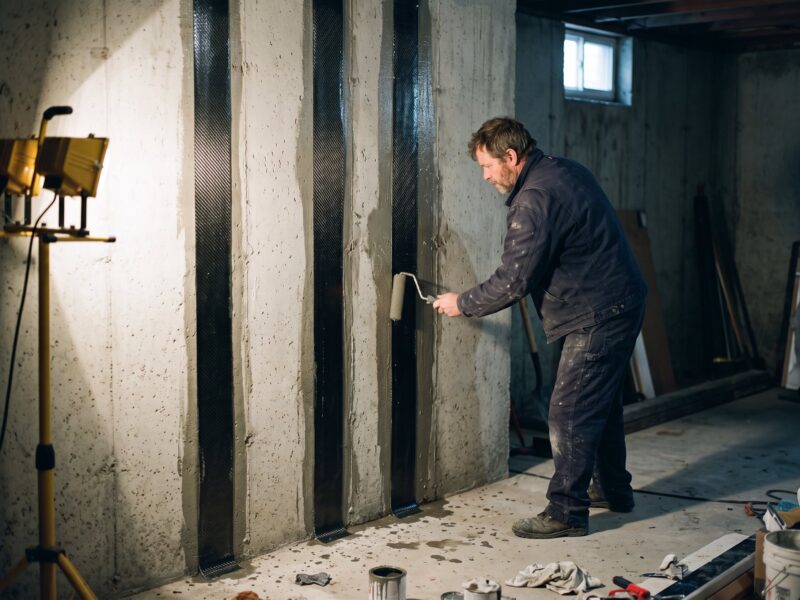 Carbon fiber straps
For the village core's block walls, caught before the bow passes two inches.
Learn more
Carbon fiber straps
For the village core's block walls, caught before the bow passes two inches.
Learn more
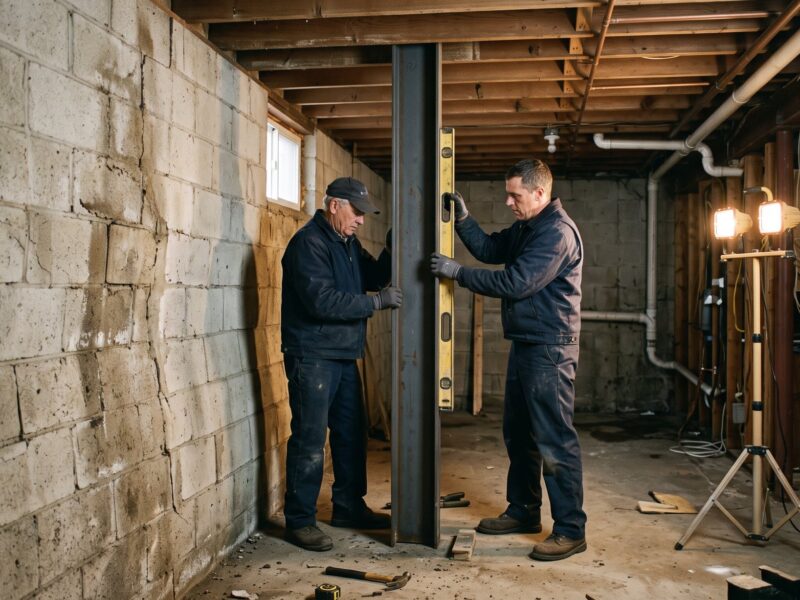 Steel I-beams & wall anchors
For core-area block that waited too long for carbon fiber.
Learn more
Steel I-beams & wall anchors
For core-area block that waited too long for carbon fiber.
Learn more
 House leveling
Beams, columns and footings under sagging spans, old core and additions alike.
Learn more
House leveling
Beams, columns and footings under sagging spans, old core and additions alike.
Learn more
 Not sure what you have?
Check whether young-house cracks are settling or just curing.
Learn more
Not sure what you have?
Check whether young-house cracks are settling or just curing.
Learn more
Why do New Lenox foundations crack so young?
New Lenox foundations crack young because the ground under them is younger than it looks: graded farm clay and backfill that keep consolidating for twenty years after the closing. The wall is rarely the weak point; the soil schedule is.

Houses built 1990 to 2015
The bulk of the village: strong poured walls on lots cut from farmland. The backfill consolidates, the builder-minimum grade flattens, and the movement writes itself as a diagonal crack running off a basement window corner. Common, diagnosable, and usually modest money.

Stoops, garages and additions
Anything poured on its own shallow footing settles on its own schedule. A front stoop down a half inch, a garage slab easing off the house, an addition opening a seam: separate footings, separate movement, and the elevations say whether it has stopped.

The village core along Route 30
The old exception. Block and early poured walls near the core carry decades of clay pressure like the rest of Will County, so this is where New Lenox produces its horizontal cracks and stair-step corners, and where carbon fiber and steel enter the conversation.
What is under a New Lenox foundation?
Under nearly every New Lenox foundation is former farm clay that a site contractor regraded in the 1990s or 2000s, and that history explains most of what the village's walls do. Cut-and-fill grading leaves lots with different soil densities a few feet apart, the trench backfill against the walls consolidates for years, and heavy clay swells in wet springs and shrinks hard in drought summers. Movement here is a soil timetable, not a construction defect.
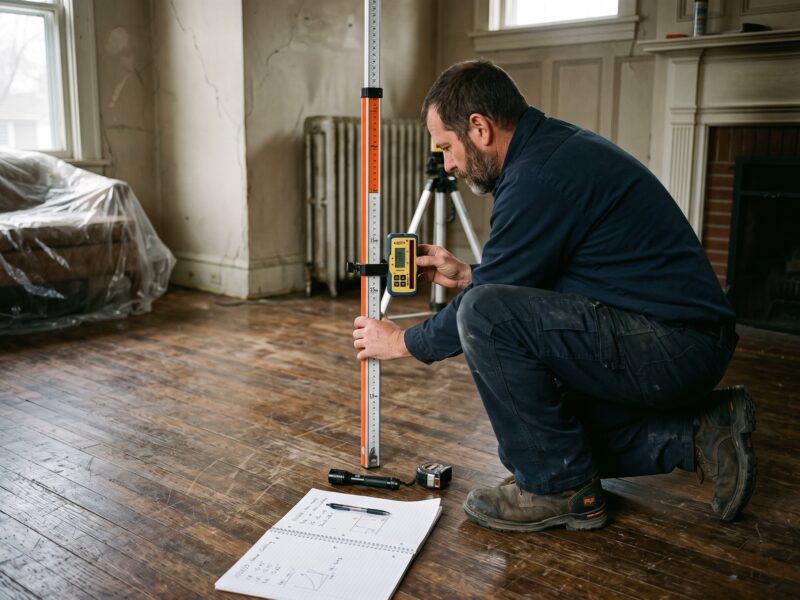
The good news is that this failure mode is the most measurable one in the trade. An elevation survey tells us whether a corner is still dropping or finished, a crack gauge turns a worry into a number, and because our crews are based minutes away, re-measuring a New Lenox wall in ninety days is trivial for us. We prescribe piers when the numbers move and honesty when they do not.
 The elevation survey: how a young house learns if its settling is over.
Signs you need foundation repair in New Lenox
Six symptoms bring New Lenox homeowners to the phone, and on houses this young most of them start subtle. The measurement, not the panic, decides which ones matter.
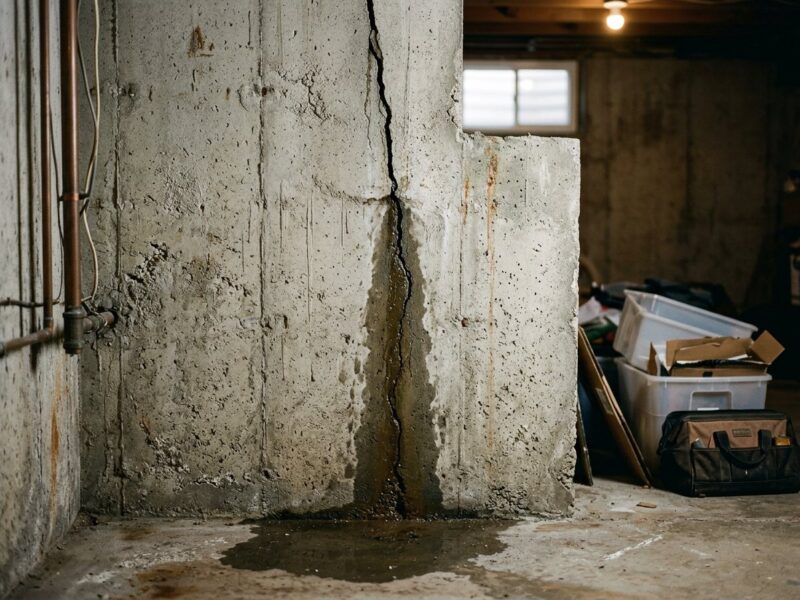
A diagonal crack off a window corner
The signature New Lenox crack: settlement stress finding the basement window opening. Hairline and stable is cosmetic; widening or leaking earns an injection and a gauge.
A stoop or walk that has dropped
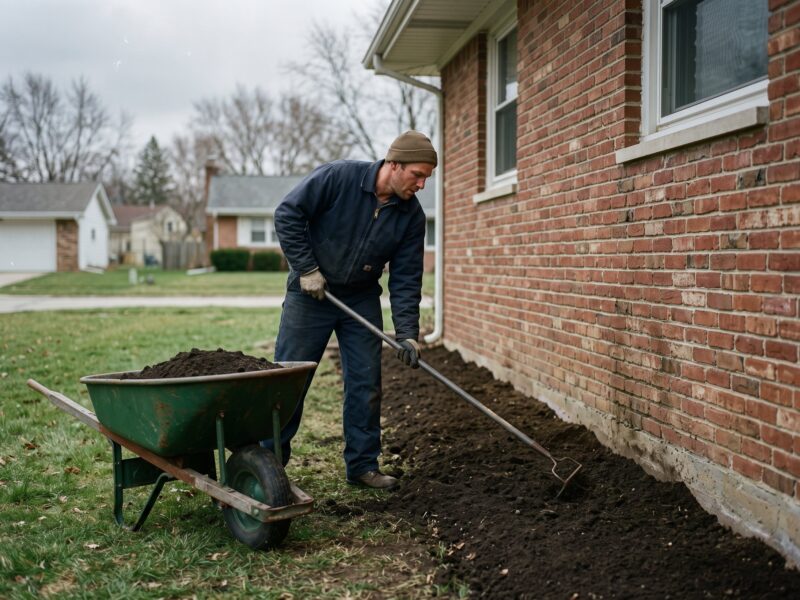
Front stoops on shallow footings sink into consolidating fill ahead of the house. A half-inch drop is common here, and sometimes the fix is grading dollars, not structural ones.
Floors that slope toward one corner
A marble that rolls in a 2005 house means a footing or a beam moved. The laser survey says which, and the two answers cost very different amounts.

A garage or addition pulling away
A gap opening where a later structure meets the house means its footing settles on its own schedule. Active movement is pier territory; the elevations prove it.

A horizontal crack in core-area block
Along the Route 30 core, mid-height horizontal cracking means clay pressure is winning against sixty-year-old block. This one does not wait politely; measure it now.

Doors that quit latching upstairs
When bedroom doors drift and drywall seams crack over openings, the frame is following the foundation. Sometimes it is seasonal clay breathing; the numbers separate that from settlement.
Crack off the basement window getting longer? We are minutes away. Get it measured this week and know what it is.
How does foundation repair work in New Lenox?
A New Lenox foundation repair runs four steps, and on this housing stock the first two do the heavy lifting: measure the movement, then decide whether it deserves hardware at all.
Survey before diagnosis
Elevations across the slab, crack widths on a gauge, and a walk of the grading, because on graded farm clay the yard is a suspect in every structural story. Free, within 48 hours.
Day 0Fix-or-watch decision
Stable numbers get a monitoring plan and a re-check date instead of a contract; New Lenox is close enough that we actually come back. Moving numbers get a written repair plan from the published ranges.
Day 0, same visitInstall and re-measure
Injection cures in a morning; pier crews log drive pressure at every bracket and lift to the surveyed target; core-area bracing is torqued to spec. Day-zero numbers get re-shot before we leave.
Days 1 to 3Warranty to the address
Structural work registers a 25-year transferable warranty and injections a 10-year one, filed to the house so the paperwork outlives your ownership of it.
On completionPush piers or helical piers: which does a New Lenox house need?
When a New Lenox footing is genuinely still moving, piers are the permanent answer, and the choice between push and helical comes down to what is being carried. Graded farm clay takes both; the structure decides.
| Push piers | Helical piers | |
|---|---|---|
| Best for | Full house corners and heavy foundation loads | Stoops, garages, additions and lighter structures |
| How they hold | Driven to refusal using the house's own weight | Screwed to a verified torque that predicts capacity |
| On graded farm clay | Pass through fill and clay to load-bearing strata | Same soils, with capacity confirmed even under light loads |
| Proof it worked | Drive-pressure logs at every bracket | Torque readings at every pier, kept with your file |
| Lot impact | Small pits at the footing; subdivision landscaping largely survives | Compact equipment; the gentlest option on a finished yard |
| Cost | $1,600 to $3,000 per pier, published | $1,600 to $3,000 per pier, published |
The engineering call is ours to justify, in writing, with the load math. Either way the brackets carry a 25-year transferable warranty.
When do New Lenox foundations move?
New Lenox foundations move on the clay's calendar, and a young housing stock makes the summer half of it the loud one. Each season has its cheapest move.
Spring: swell and push
Saturated clay expands against every wall in the village. The core's old block feels it as inward pressure; young poured walls mostly shrug, but this is when winter's new hairlines start weeping.
March to MaySummer: settlement season
Drought is when graded farm clay gives ground back. Footings drop, the diagonal window-corner cracks lengthen, stoops sink, and the subdivisions built since 1990 do most of their year's moving.
June to AugustFall: measure and fix
Calm soil and dry yards make fall the honest measurement window and the easiest install season. Pier work booked now closes out before frost locks the ground.
September to NovemberWinter: indoor structural work
Injection, carbon fiber, bracing and beam-and-column work all happen inside at full speed while frost holds the top of the soil. The most open scheduling of the year, minutes from our base.
December to FebruaryHow much does foundation repair cost in New Lenox?
Foundation repair in New Lenox costs $450 to $900 for urethane crack injection, $600 to $1,000 per carbon fiber strap, $900 to $1,500 per steel beam, and $1,600 to $3,000 per pier, the identical published ranges we hold in every town. On this village's young stock, the injection line gets used far more often than the pier line.
| Work | Range | What moves the number |
|---|---|---|
| Urethane crack injectionper crack | $450–$900 | Crack length and width, access to the full height |
| Carbon fiber strapsper strap | $600–$1,000 | Wall height, spacing the deflection requires |
| Steel I-beam wall bracingper beam | $900–$1,500 | Ceiling height, footing condition at the base |
| Push or helical piersper pier | $1,600–$3,000 | Depth to load-bearing strata, access for equipment |
The full structural table lives on the pricing page; your written New Lenox quote lands inside it.
Where we repair foundations in New Lenox
All of 60451 is first-ring territory, and the structural calls map onto the plat dates. Cherry Hill and the streets off Spencer Road, Haven Avenue and Nelson Road send window-corner cracks, dropped stoops and settlement surveys. The Old Plank Road Trail corridor and the lots near Hickory Creek Preserve add wet-clay movement to the settlement story. The village core along Route 30 supplies the block-wall work: horizontal cracks, stair-steps, carbon fiber and steel.
Proximity changes structural advice more than people expect. Because New Lenox is often a drive of under fifteen minutes for us, a wall that deserves watching gets watched: gauge today, re-measure next quarter, hardware only when the numbers demand it. Contractors an hour away cannot afford that patience; from here it is just Tuesday.
 A short walk from the truck: the advantage of repairing foundations close to home.
New Lenox foundation repair questions, answered straight
My house is only fifteen years old. How does it already have a foundation problem?
Because young houses settle, and that is the normal case rather than the alarming one. Backfill around a new foundation consolidates for years, and a builder-minimum grade sheds a little less water each season as it flattens. Most of what we find on post-1990 New Lenox houses is settlement and grading, and a decent share of it is cured by a few hundred dollars of dirt rather than by structural repair.
Is a diagonal crack off my basement window serious?
It is the most common crack in New Lenox and usually the least dramatic: settlement stress concentrating at the window opening as the backfill consolidates. We gauge the width, and if it is stable, a $450 to $900 injection seals it for good under a 10-year warranty. Widening on the gauge changes the conversation, and the gauge is how we know.
My front stoop has sunk half an inch. Does the house go next?
Almost never. A stoop sits on its own shallow footing in fill dirt and settles on its own schedule; the house rides deep footings and does not follow it down. We check the elevations to confirm the two are moving independently, and a stoop fix is a small job, not a warning shot.
How do I know if my New Lenox house is done settling?
You measure it twice. One elevation survey is a snapshot; a second one after a season is a verdict. Because our crews are based minutes from New Lenox, monitoring is something we genuinely do here rather than a brush-off: gauge and survey now, re-shoot in a few months, and repair only what the numbers say is still moving.
How much does foundation repair cost in New Lenox?
The same published ranges as every town we serve: $450 to $900 per injected crack, $600 to $1,000 per carbon strap, $900 to $1,500 per steel beam, $1,600 to $3,000 per pier. What is different in New Lenox is the mix; young poured walls mean far more invoices at the injection end than the pier end.
Will homeowners insurance pay for settlement damage?
In Illinois, almost certainly not. Standard policies exclude earth movement and settling, which is precisely what young farmland subdivisions do. That exclusion is the practical argument for catching a moving crack at injection prices instead of meeting it years later at pier prices.
Do piers actually hold in former farm clay?
Yes, because they refuse to stop in it. Push and helical piers pass through the graded fill and the soft clay entirely and bear on competent strata below, with drive-pressure logs or torque readings recorded at every placement as proof. The consolidating soil that caused the settlement becomes irrelevant to what now carries the house.
Will a repaired foundation scare off buyers when I sell in New Lenox?
In a village where buyers tour a dozen similar-age houses, documentation wins. A repaired and warrantied wall with elevations, photos and a transferable 25-year transferable certificate answers the inspector in one page; an unexplained crack invites a renegotiation. We build the packet for exactly that moment.
Is the settling side also the soggy side?
In New Lenox the two complaints share an address more often than not: the corner of the lot where the swale quit flowing is the corner where the soil swings wettest and driest, and that swing drives both the seepage and the settlement. One inspection reads the yard, the wall and the numbers together.
Basement Waterproofing in New Lenox
Foundation repair near New Lenox

Get the New Lenox numbers before the next season moves them
A free structural inspection within 48 hours from a crew based minutes away, a fix sized to what is actually moving, and a 25-year transferable warranty registered to the house.
Or talk to a human right now
(630) 335-1128
Request your free estimate
Tell us what you're seeing. We'll call back fast and be out within 48 hours.