Foundation Repair in Lockport, Illinois
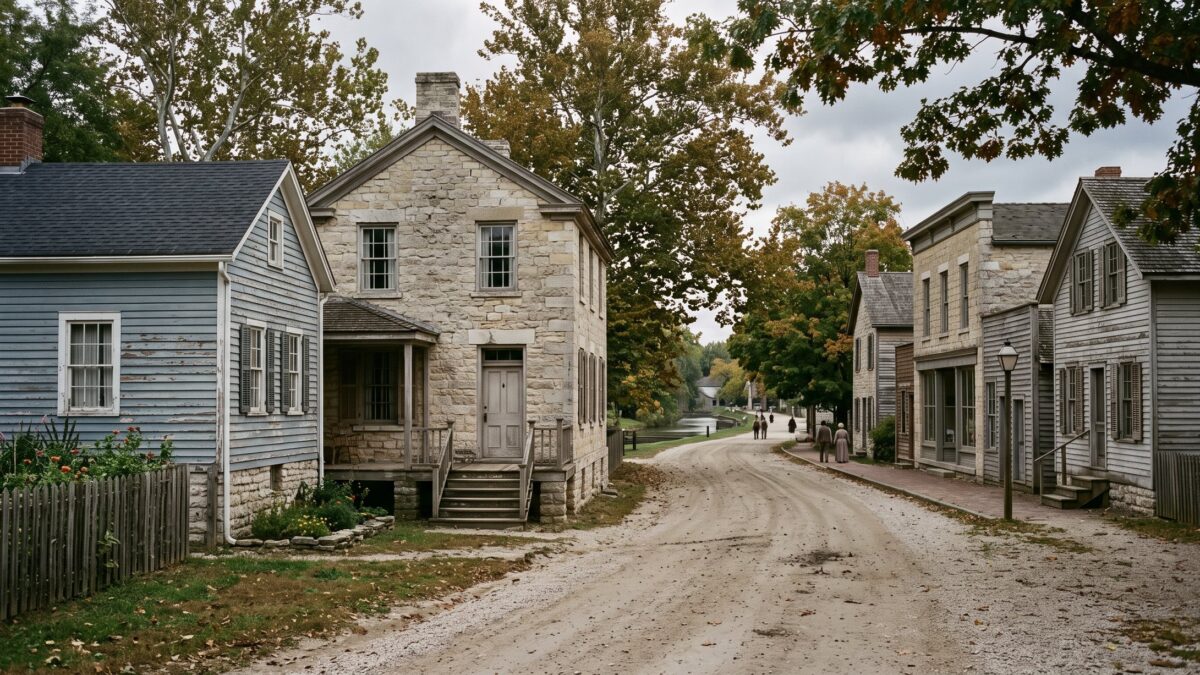
The people who dug the canal built their houses on the stone they cut, and much of Lockport still stands on it. Quarried-limestone foundations need lime mortar and drainage, not a poured-wall playbook, and knowing the difference is the whole trade here.
- Stone, block and poured walls each get their own repair plan
- Published pricing: injection from $450, piers from $1,600
- Free structural inspection within 48 hours
 25-year transferable structural warranty
Who does foundation repair in Lockport?
ProSeal Basement Waterproofing repairs Lockport foundations from a base fifteen to twenty minutes away, with every method priced in public: crack injection at $450 to $900, carbon fiber straps at $600 to $1,000, steel beams at $900 to $1,500, and piers at $1,600 to $3,000 each, all backed by a 25-year transferable warranty. Stone masonry work is scoped at the free inspection because no two old walls carry the same hours.
The reason Lockport deserves a specialist is the stone itself. A nineteenth-century limestone wall is not a poured wall with character; it stands by mass and friction, and its soft lime mortar is a design feature, not a defect. Repoint it with hard modern portland and the mortar outmuscles the stone, spalling faces off over the following decades. The repair has to respect how the wall was built, and we treat that as the entry fee for working here.
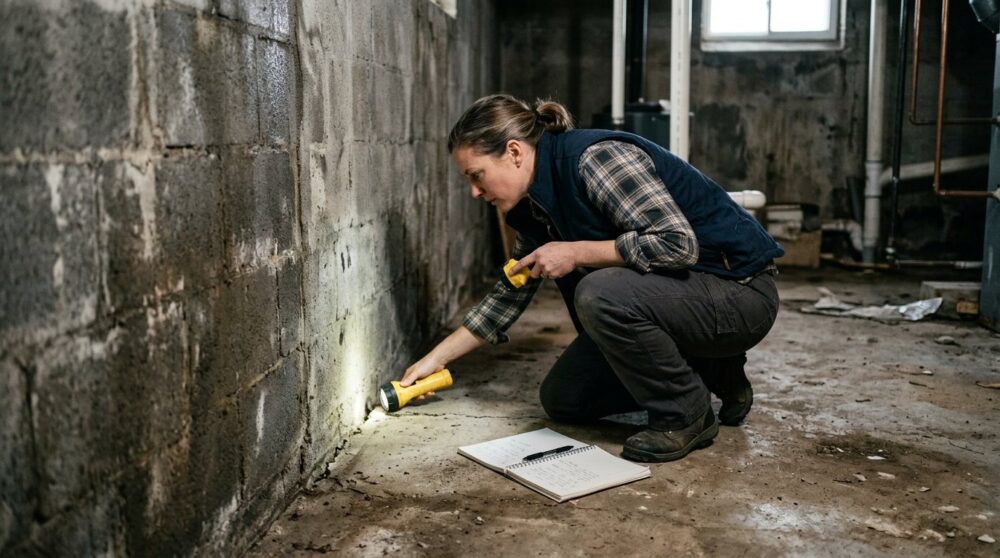 Diagnosis before method: the rule that matters most on a stone wall.
What does foundation repair in Lockport include?
Six structural tools cover Lockport's three generations of foundations, and the plan always starts with the cheapest fix that genuinely solves the problem. The written scope shows the reasoning, not just the number.
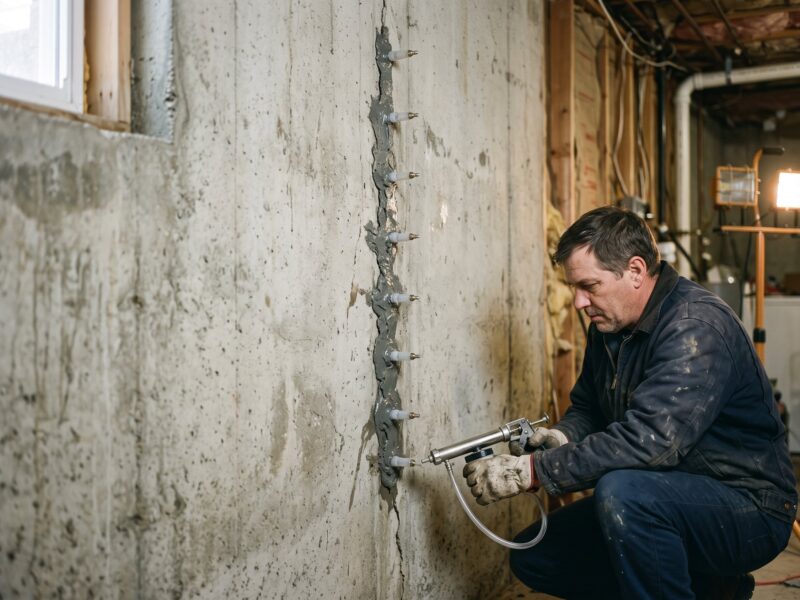 Urethane crack injection
Leaking cracks in the newer poured stock sealed full depth from $450.
Learn more
Urethane crack injection
Leaking cracks in the newer poured stock sealed full depth from $450.
Learn more
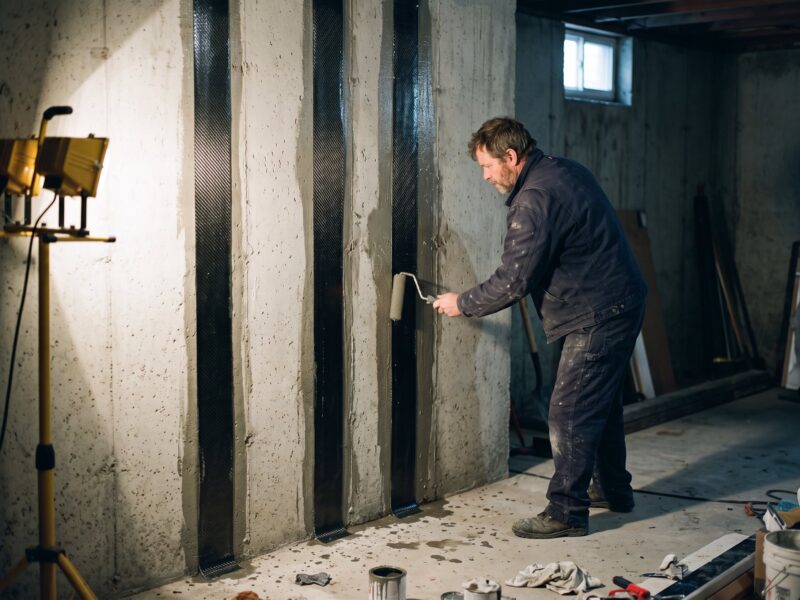 Carbon fiber straps
For post-war block caught while the bow is still under two inches.
Learn more
Carbon fiber straps
For post-war block caught while the bow is still under two inches.
Learn more
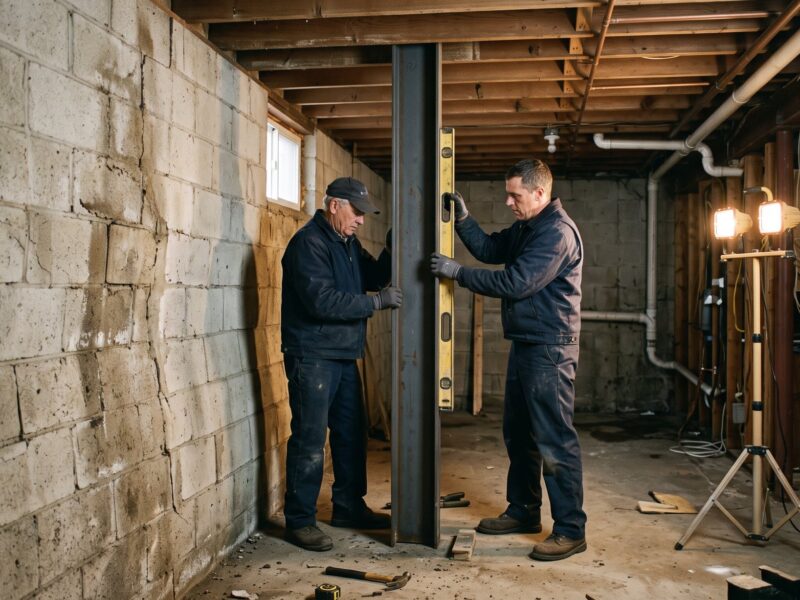 Steel I-beams & wall anchors
For block walls that waited too long for the carbon fiber stage.
Learn more
Steel I-beams & wall anchors
For block walls that waited too long for the carbon fiber stage.
Learn more
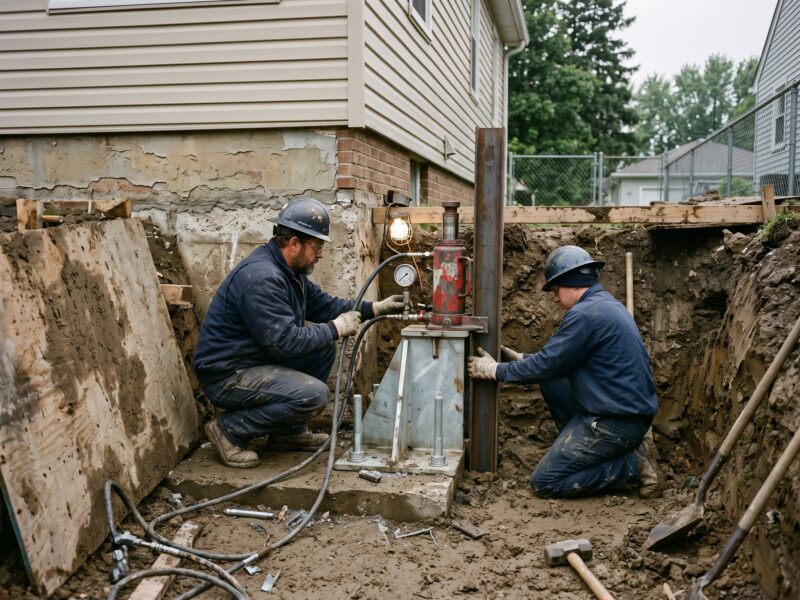 Push & helical piers
For settlement in the newer subdivisions along the Route 7 corridor.
Learn more
Push & helical piers
For settlement in the newer subdivisions along the Route 7 corridor.
Learn more
 House leveling
Beams, columns and footings under the sagging floors of the older stock.
Learn more
House leveling
Beams, columns and footings under the sagging floors of the older stock.
Learn more
 Not sure what you have?
Learn which stone-wall symptoms are age and which are movement.
Learn more
Not sure what you have?
Learn which stone-wall symptoms are age and which are movement.
Learn more
Why do Lockport foundations crack and settle?
Lockport foundations fail along generational lines: canal-era stone loses its mortar, post-war block bows under clay pressure, and the newer poured walls settle or crack as their ground adjusts. Each failure has its own repair and its own price.

Canal-era limestone and rubble
The historic stock near downtown stands on stone stacked by the canal generation, held by mass, friction and soft lime mortar. It fails through mortar loss and moisture cycling, and it wants repointing and drainage relief, handled gently.

Post-war block off the bluff
The mid-century neighborhoods put concrete block against Will County clay, and sixty-some years of swell and shrink is showing: horizontal cracks at mid-height, stair-steps at corners. Carbon fiber early, steel later.

The newer poured stock
Along the Route 7 corridor and the outer subdivisions, poured walls are strong but young ground keeps adjusting under them. Settling cracks over openings and low corners are injection or pier territory, decided by measurement.
What makes Lockport ground move?
Lockport ground moves differently on either side of its bluff, and foundations record the difference. The climb from the canal level happens over a short distance, so houses on the high ground sit on soil that drains fast and cycles hard between wet and dry, the exact recipe for seasonal movement and cracking. Houses on the low ground trade that movement for moisture: their soil stays wet, their walls stay loaded, and their mortar stays under attack.
On the stone foundations, water and structure are one problem. Lime mortar dissolves under long saturation, so a chronically wet stone wall is losing strength even when nothing looks dramatic. That is why our structural plans for the historic stock almost always carry a drainage line item, and why the worst thing a contractor can do here is smear hard portland over a soft-mortar wall and call it repaired. The stone deserves better, and so does the house on top of it.
 A stair-step crack: the masonry keeping minutes on how the ground moved.
Signs you need foundation repair in Lockport
Six symptoms account for most Lockport structural calls, ranging from routine to urgent. None of them heals on its own, and every one is cheaper this year than next.

A horizontal crack at mid-height
Clay pressure actively bowing a block wall inward, the most time-sensitive symptom on this list. Caught early it is carbon fiber money; ignored, it becomes steel and anchor money.

Stair-step cracks in block or brick
Mortar joints tracing differential settlement, one section of foundation moving against the rest. Width, direction and change over time tell us how live it is.

Doors sticking, floors out of level
Upstairs symptoms of downstairs movement. Sometimes the foundation, often just a tired beam or column, which is a far smaller repair, and the measurement sorts them fast.

Mortar turning to sand in a stone wall
Joints you can rake out with a finger, powder at the wall base, stones sitting proud: a limestone foundation asking for repointing and drier ground before anything worse starts.
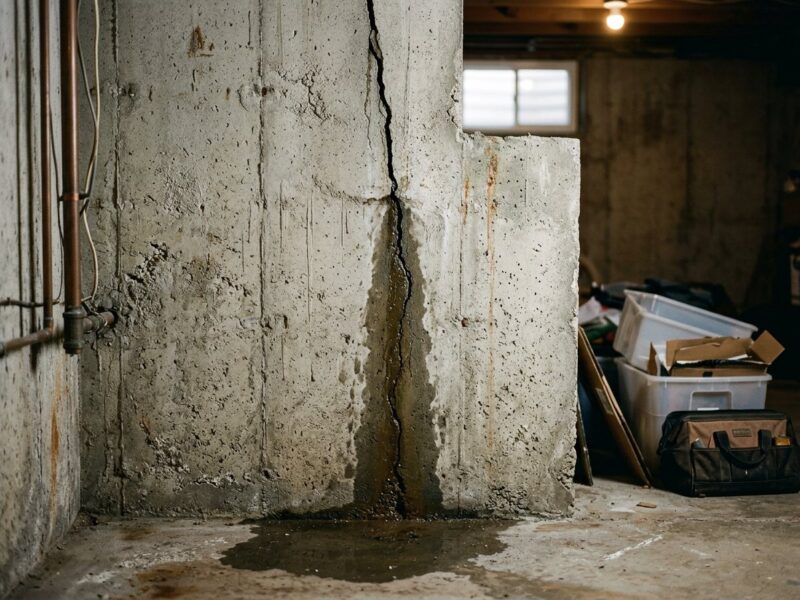
A crack that leaks in the rain
Most wet cracks in poured walls are stable shrinkage cracks that a $450 to $900 injection permanently seals. The inspection confirms stability before anyone sells you more.

A stoop, garage or addition pulling away
A widening gap means a footing settling on its own schedule. If elevations show live movement it is pier work; if the movement is finished, sealing and monitoring may be the whole job.
Old stone wall shedding mortar? Get it looked at by someone who knows what lime mortar is. The structural inspection is free.
How does foundation repair work in Lockport?
A Lockport foundation repair runs four steps: name the wall, measure the movement, match the method, prove the result. Most jobs finish in one to three days.
Name the wall, measure the movement
Stone, block or poured decides everything downstream, so the inspection establishes it first, then records crack widths and deflection in numbers. Free, within 48 hours.
Day 0Match the method and the mortar
Stone gets lime-based repointing and drainage relief; block gets carbon fiber or steel; poured gets injection or piers. The written plan pairs each fix to its failure at published prices.
Day 0, same visitInstall and verify
The crew installs, torques to spec and re-measures against the day-zero numbers before packing up. Pier work logs drive pressures at every bracket.
Days 1 to 3Warranty and paperwork
Structural work carries the 25-year transferable warranty registered to the address, with photos and measurements a future buyer's inspector can read.
On completionReinforce or rebuild: what do Lockport walls actually need?
Almost every failing Lockport wall can be saved in place, and on the historic stone the case is overwhelming: a limestone foundation that has carried its house since the canal era usually needs mortar and drier ground, not demolition, and excavating against a gravity wall is a risk to take only when nothing else works.
| Reinforce and repoint in place | Excavate and rebuild | |
|---|---|---|
| Best for | Sound walls losing mortar, bowing or settling, which is most of Lockport | Walls sheared, collapsing or beyond masonry repair, a small minority |
| On canal-era stone | Lime repointing plus drainage lets the wall keep doing its job | Digging beside a mass-and-friction wall endangers the wall itself |
| Mortar spec | Soft lime-based mortar matched to the original | New construction spec, and the historic fabric is gone |
| Cost | $450 injections to $3,000 piers; stone repointing scoped on site | Tens of thousands per wall before landscaping |
| Time | One to three days for most repairs | Weeks of shoring, machines and an open trench |
| Warranty | 25-year transferable, registered to the house | Varies with scope; demand it in writing |
A quote to tear out a repairable stone wall, or to repoint one with portland, is a quote to walk away from. Our second opinion is free and comes with the measurements.
When do Lockport foundations move?
Lockport foundations move on the clay's calendar, and the bluff houses feel it hardest because their soil swings furthest between wet and dry. Every season has a cheapest moment to act.
Spring: push season
Saturated clay swells against block walls and soaks the stone downtown. Horizontal cracks widen, bows advance, and wet lime mortar softens. Measurements taken now catch movement at its most honest.
March to MaySummer: shrink season
Drought pulls the clay back and lets footings drop, especially on the fast-draining high ground. Doors stick, cracks open over windows, and the newer subdivisions do most of their annual moving.
June to AugustFall: masonry season
Mild, dry weather is when repointing cures best and piers drive on schedule. Repairs booked in fall finish before frost and stand ready for the spring push.
September to NovemberWinter: interior season
Injection, carbon fiber, bracing and beam-and-column work all happen indoors at full speed while the ground is frozen. The fastest scheduling of the year lives here.
December to FebruaryHow much does foundation repair cost in Lockport?
Foundation repair in Lockport costs $450 to $900 per injected crack, $600 to $1,000 per carbon fiber strap, $900 to $1,500 per steel beam, and $1,600 to $3,000 per pier, the same published ranges we hold in every town. Lime-mortar repointing on the historic stone is craft work priced by the wall, and the free inspection puts a written number on it.
| Work | Range | What moves the number |
|---|---|---|
| Urethane crack injectionper crack | $450–$900 | Crack length and width, access to the full height |
| Carbon fiber strapsper strap | $600–$1,000 | Wall height, spacing the deflection requires |
| Steel I-beam wall bracingper beam | $900–$1,500 | Ceiling height, footing condition at the base |
| Push or helical piersper pier | $1,600–$3,000 | Depth to load-bearing strata, access for equipment |
The full structural table lives on the pricing page; your written Lockport quote lands inside it.
Where we repair foundations in Lockport
Lockport's structural calls map onto its history. The blocks around State Street and the canal district, the town's oldest ground near the Gaylord Building end of downtown, send us limestone: repointing, bulge checks and the patient judgment gravity walls require. The post-war streets off the bluff and out toward Fairmont send bowing block and stair-step corners. The Route 7 corridor and the newer subdivisions send settlement measurements, injections and piers. All of it is ZIP 60441 and Lockport Township, all of it first-ring.
Because the drive is fifteen to twenty minutes, monitoring here means something. When a crack deserves watching instead of steel, we say so and actually come back to re-measure it, because Lockport is on the way to half our week anyway.
 First-ring service: close enough to come back and check the numbers.
Lockport foundation repair questions, answered straight
My Lockport foundation is old cut limestone. Can it be repaired, or does it need replacement?
Repaired, almost every time. A structurally sound limestone wall that is losing mortar needs repointing with a soft lime-based mix, never modern portland, which is harder than the stone and will pop the faces off it over a couple of decades. Pair the repointing with getting water away from the wall and these foundations outlast everything built since.
Why do houses up on the Lockport bluff crack more than the ones below it?
The high ground drains fast, which sounds like good news but means the clay under those houses swings hard between soaked and bone dry. That cycling moves footings and cracks walls. The low houses trade cracking for water problems instead. Same town, two different failure modes, one street apart.
How much does foundation repair cost in Lockport?
Published ranges, same as everywhere we work: $450 to $900 per injected crack, $600 to $1,000 per carbon strap, $900 to $1,500 per steel beam, $1,600 to $3,000 per pier, and $1,500 to $3,200 per support column under a sagging beam. Stone repointing is quoted per wall at the free inspection.
Is a horizontal crack in my post-war block wall serious?
Yes, treat it as a deadline. Horizontal at mid-height means clay pressure is actively flexing the wall, and block of that age has little reserve. At under two inches of bow it is usually carbon fiber at $600 to $1,000 per strap; past that it graduates to steel or anchors. The measurement is free and settles which stage you are at.
Can you monitor a crack instead of repairing it right away?
Yes, and in Lockport we actually mean it. Plenty of cracks are old, stable and not worth a dollar of repair; the way to know is a baseline measurement and a re-check next season. Since the drive is fifteen to twenty minutes, return visits are easy for us to honor, and monitoring costs you nothing but patience.
Will a stone foundation hurt my Lockport home sale?
Not if it is documented. Inspectors flag stone foundations they cannot evaluate, and buyers fear what nobody can explain. A repointed wall with photos, measurements, a written scope and a 25-year transferable warranty registered to the address turns the oldest thing about your house into a closed question instead of a negotiation.
Does homeowners insurance pay for foundation repair in Lockport?
Almost never. Illinois policies routinely exclude soil movement, settling and hydrostatic pressure, which between them cover nearly every foundation problem a house can have. Budget as if it is on you, which is the strongest argument for catching problems at the $450 injection stage rather than the five-figure stage.
How do I choose a foundation contractor for an old Lockport house?
Ask one question first: what mortar would you repoint my foundation with? Anyone who answers with a standard portland mix, or does not understand the question, should not touch a canal-era wall. Then check that pricing is published, the warranty transfers, and the estimator measures before recommending anything.
Is the cracked wall also a wet wall?
In Lockport the structural problem and the water problem are usually the same story told twice: saturated ground softens lime mortar, loads block walls and floats footings. If the wall that moved also weeps in spring, one inspection scopes both trades and sequences the fixes so the drainage protects the repair.
Basement Waterproofing in Lockport
Foundation repair near Lockport

Give the canal-era wall the repair it was built for
A free structural inspection within 48 hours, methods matched to stone, block or poured, and a 25-year transferable warranty that transfers with the house.
Or talk to a human right now
(630) 335-1128
Request your free estimate
Tell us what you're seeing. We'll call back fast and be out within 48 hours.