Foundation Repair in Orland Park, Illinois
The heaviest clay in Cook County spends fifty years leaning on a foundation wall, and in Orland Park's 1970s subdivisions that lease is coming due. We measure first, reinforce what can be saved, and put a 25-year transferable warranty behind it.
- Structural warranty: 25-year transferable
- Published pricing: injection from $450, piers from $1,600
- Free structural inspection within 48 hours
 25-year transferable warranty
Who does foundation repair in Orland Park?
ProSeal Basement Waterproofing is a foundation repair contractor serving Orland Park from the Joliet and New Lenox corridor, twenty to thirty minutes away. Crack injection runs $450 to $900, bowing-wall reinforcement $600 to $1,800 per strap, beam or anchor, and settlement piers $1,600 to $3,000 each, with every number published before an estimator ever measures your wall.
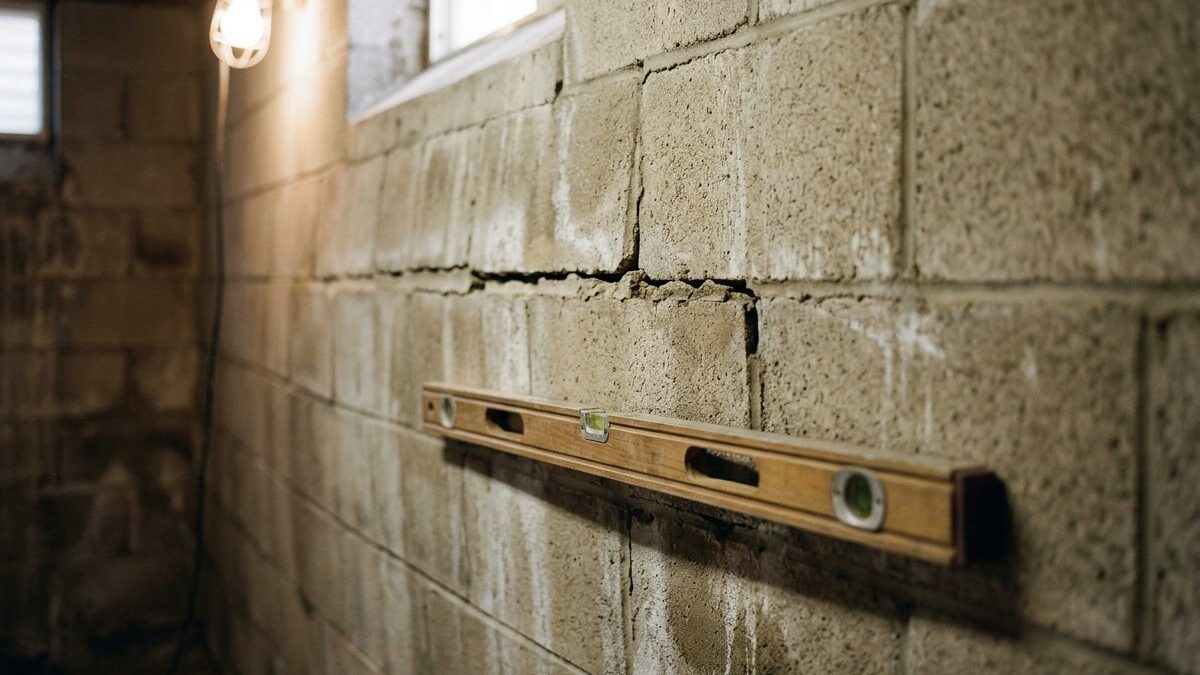
Honesty matters in this village more than most, because a large share of the foundation calls we take in Orland Park turn out not to be foundation problems at all. On streets built sump-dependent, a wet crack or a damp wall often traces back to a tired pump, not a failing structure. We measure the wall either way, and if the fix is a $450 injection or a pump rather than steel, the written report says exactly that.
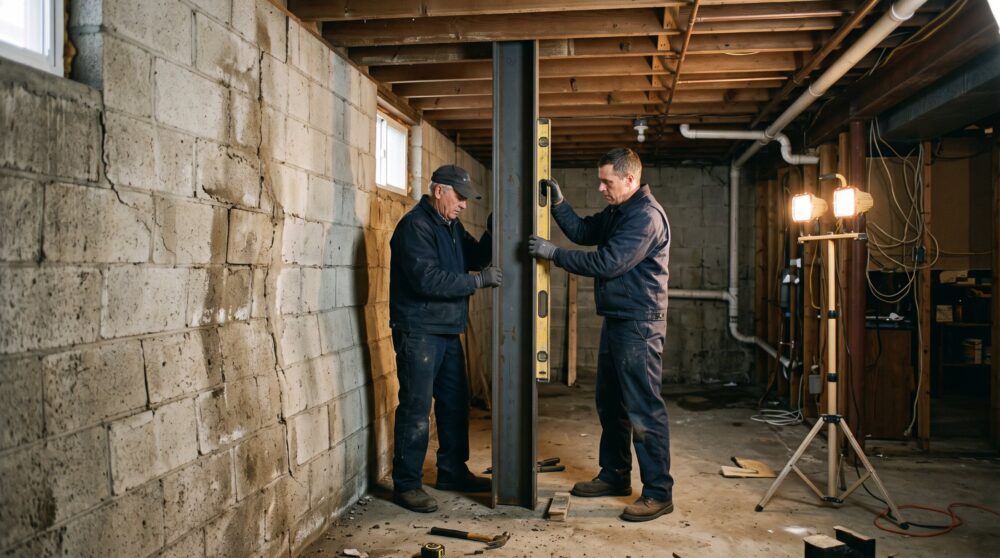 Steel measured against a bowing block wall: the fix sized to the numbers.
What does foundation repair in Orland Park include?
Six structural tools cover what Orland Park housing actually breaks, and the rule is cheapest adequate fix first. The written plan shows the measurement behind every recommendation.
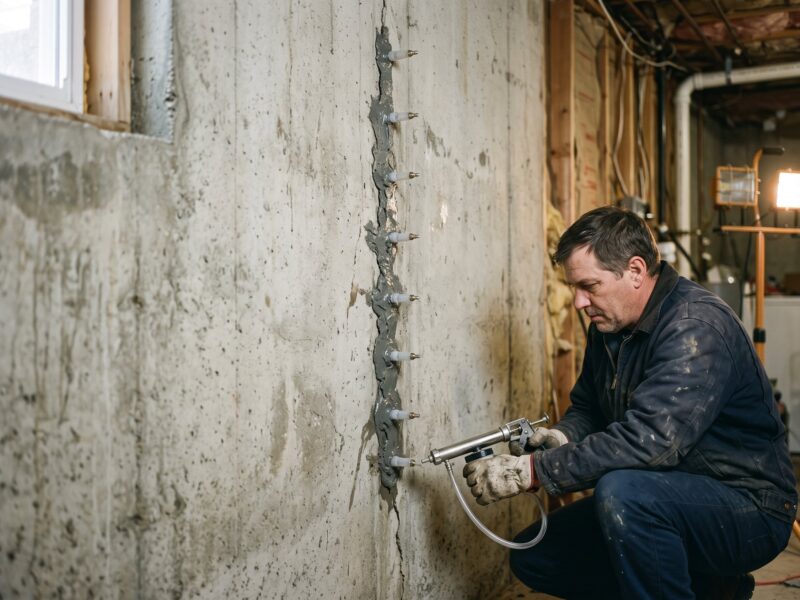 Urethane crack injection
Poured-wall cracks in the 1980s and 1990s stock, sealed full depth in a morning.
Learn more
Urethane crack injection
Poured-wall cracks in the 1980s and 1990s stock, sealed full depth in a morning.
Learn more
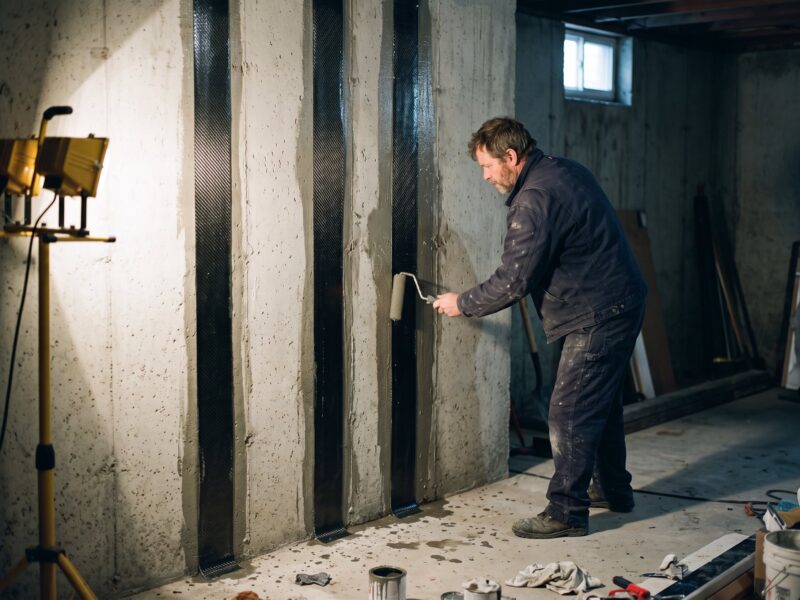 Carbon fiber straps
For 1970s block caught while the bow is still under two inches.
Learn more
Carbon fiber straps
For 1970s block caught while the bow is still under two inches.
Learn more
 Steel I-beams & wall anchors
For walls the clay has pushed past the carbon fiber stage.
Learn more
Steel I-beams & wall anchors
For walls the clay has pushed past the carbon fiber stage.
Learn more
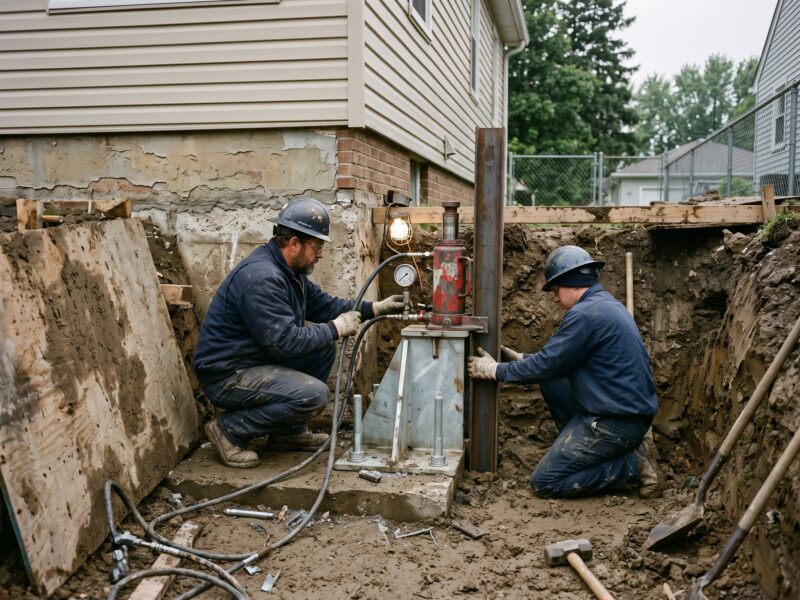 Push & helical piers
For footings settling in clay that swells and shrinks with the year.
Learn more
Push & helical piers
For footings settling in clay that swells and shrinks with the year.
Learn more
 House leveling
Columns, beams and footings under sagging mid-span floors.
Learn more
House leveling
Columns, beams and footings under sagging mid-span floors.
Learn more
 Not sure what you have?
Tell clay-pressure symptoms from simple shrinkage first.
Learn more
Not sure what you have?
Tell clay-pressure symptoms from simple shrinkage first.
Learn more
Why do Orland Park foundations crack and bow?
Orland Park foundations answer to the clay they sit in: dense, expansive and nearly impermeable, it swells against walls in wet years and drops away from footings in dry ones. What that does to a house depends on which decade built it.

The 1970s subdivisions
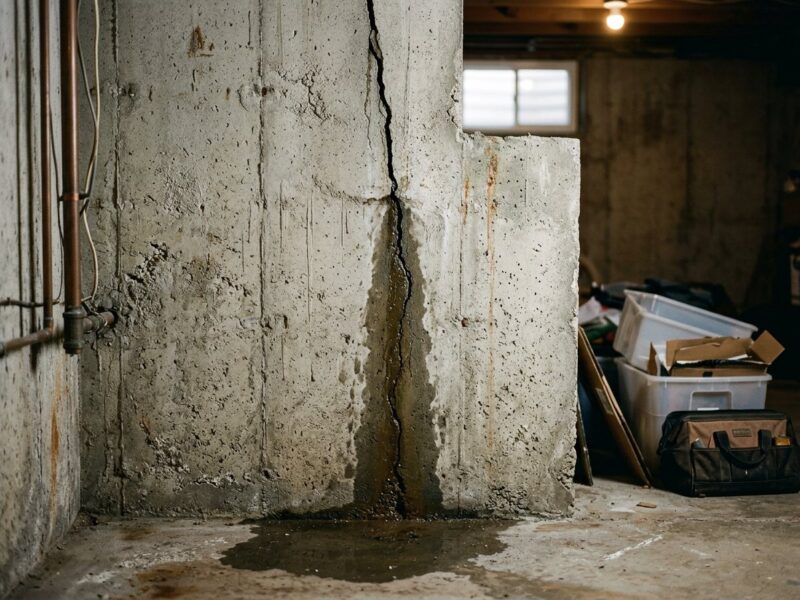
The oldest block and early poured walls have taken fifty seasons of clay pressure, and mid-height horizontal cracking is how they file the complaint. Caught early this is carbon fiber money; ignored, it graduates to steel and anchors.
The 1980s and 1990s stock
Younger poured walls mostly crack as they cure and settle, hairlines that leak before they ever threaten structure. Most need a $450 to $900 injection and a measurement confirming they are stable, not a structural campaign.

Old Orland and the historic blocks
The village's oldest foundations predate the subdivisions by generations, and they move differently: mortar loss, uneven settlement and floors that have drifted for decades. These get craft and judgment, not a standard playbook.
What makes Orland Park ground move?
The same clay that made Orland Park a sump pump town is the clay working on its foundations. Because almost no water passes through it, this soil holds moisture against basement walls long after every storm, and saturated expansive clay pushes. Then a drought summer pulls the moisture back out, the clay shrinks, and footings settle into the gap. Fifty years of that cycle is what a 1970s wall in this village has absorbed.
The basin terrain west of 104th Avenue adds a variable flatter towns do not have: a house near the bottom of a shallow basin keeps its surrounding clay wetter for longer, so its walls carry more pressure for more of the year than the same floor plan two lots uphill. That is why we measure every wall against its own lot instead of quoting from the street, and why the elevations come before any price does.
 Water standing on Orland Park clay: the pressure a foundation wall feels, made visible.
Signs you need foundation repair in Orland Park
Six symptoms account for most Orland Park structural calls, ranging in urgency from a scheduled measurement to a call this week. None of them reverses on its own.

A horizontal crack at mid-height
The serious one: clay pressure actively bowing the wall inward. In 1970s block it is carbon fiber money early and anchor money late, so the measurement date matters.

Stair-step cracks in block
Mortar joints mapping differential settlement, one section of footing moving against the rest. Width, direction and change over time tell the story; we record all three.

Doors sticking, floors out of level
When bedroom doors stop latching and a dropped marble picks a direction, something below has moved. Sometimes footing, often a beam or column, which costs far less.

A bouncy or sagging mid-span floor
Long 1970s spans over open basements sag at the beam line as posts and framing age. Leveling work with columns and footings runs $1,500 to $3,200 per support.
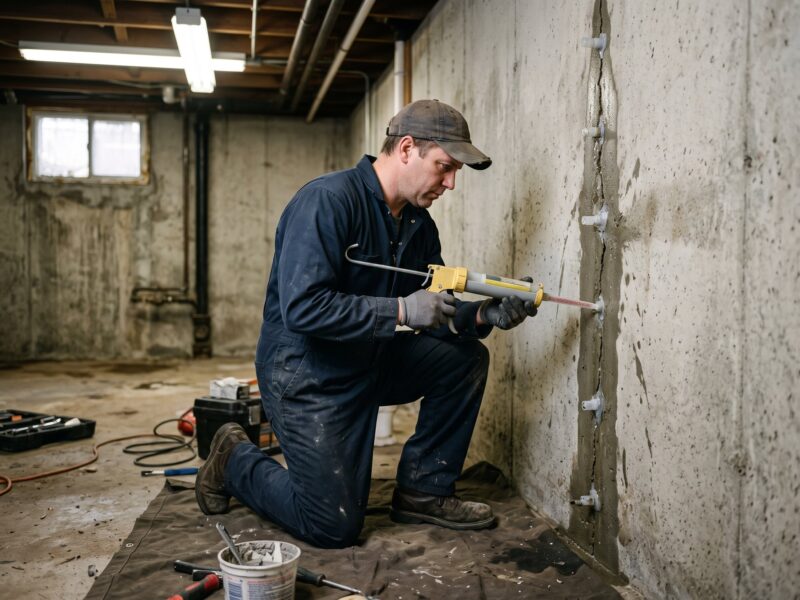
A crack that leaks when it rains
Wet cracks in the newer poured stock are usually sealable for $450 to $900. The inspection confirms the crack is stable before anyone proposes more than an injection.
A gap opening at a stoop or garage
An addition or attached garage pulling away means its footing is settling on its own schedule. Elevation readings prove whether the movement is live before piers enter the conversation.
Crack in the block wall wider than last spring? Get it measured before the clay takes another season's push. The structural inspection is free.
How does foundation repair work in Orland Park?
An Orland Park foundation repair runs four steps: rule out the water story, measure the movement, match the method, verify the result. Most repairs finish in one to three days.
Rule out the pump, then measure
In a sump-dependent village the inspection checks whether water, not structure, explains the symptom, then maps cracks and wall deflection in numbers. Free, within 48 hours.
Day 0Match the method to the decade
1970s block gets the carbon-versus-steel decision, newer poured gets injection or piers, Old Orland gets craft. The written plan pairs fix to failure at published prices.
Day 0, same visitInstall and verify
The crew installs, torques to spec and re-measures against the day-zero readings before leaving. Pier work logs drive pressures at every bracket.
Days 1 to 3Warranty to the address
Structural repairs carry the 25-year transferable warranty, registered to the house so it survives a closing and satisfies the buyer's inspector.
On completionReinforce or rebuild: what do Orland Park walls actually need?
Nearly every failing Orland Park wall can be reinforced in place for a fraction of rebuild money, and on these lots the case is stronger than usual: excavating a wall means tearing out forty years of landscaping, patios and decks in clay that fights the machine the whole way.
| Reinforce in place | Excavate and rebuild | |
|---|---|---|
| Best for | Bowing, cracked or settling walls still structurally intact, which is most of them | Walls sheared or collapsing, a small minority |
| On 1970s block | Carbon fiber early, steel or anchors later, both from inside | Excavation in saturated clay against a weakened wall is high risk |
| Mature lots | Interior work leaves the landscaping and hardscape untouched | Machine access through established yards, restored at your cost |
| Cost | $450 injections to $3,000 piers, per published ranges | Tens of thousands per wall, plus excavation and restoration |
| Time | One to three days for most repairs | Weeks, with shoring, machines and a torn-up yard |
| Warranty | 25-year transferable, registered to the house | Varies by scope; get it in writing before signing |
If an estimator quotes a rebuild without measuring deflection, get a second opinion. Ours is free and arrives with the numbers.
When do Orland Park foundations move?
Orland Park foundation movement runs on the clay's moisture calendar, and each season has a cheapest moment to act in it.
Spring: push season
Weeks of saturation swell the clay against every wall in the village, and the basin lots west of 104th Avenue feel it longest. Horizontal cracks widen and bows advance; measurements taken now catch movement at its most legible.
March to MaySummer: shrink season
A dry stretch pulls moisture out of the clay and lets footings drop into the shrinkage. Cracks open over windows and doors start sticking, especially in the newer stock still finding its final elevation.
June to AugustFall: measurement season
The clay goes quiet between swell and freeze, which makes fall the best season to establish baselines, brace walls and drive piers at an unhurried pace before frost.
September to NovemberWinter: interior season
Frost locks the top of the soil, but injection, carbon fiber, steel bracing and column work all happen indoors at full speed. Winter books fastest of the year.
December to FebruaryHow much does foundation repair cost in Orland Park?
Foundation repair in Orland Park costs $450 to $900 for crack injection, $600 to $1,800 per strap, beam or anchor for a bowing wall, and $1,600 to $3,000 per pier for settlement, the same published ranges we hold in every town we serve. The measurement decides which line applies, and the written quote lands inside it.
| Work | Range | What moves the number |
|---|---|---|
| Urethane crack injectionper crack | $450–$900 | Crack length and width, access to the full height |
| Carbon fiber strapsper strap | $600–$1,000 | Wall height, spacing the deflection requires |
| Steel I-beam wall bracingper beam | $900–$1,500 | Ceiling height, footing condition at the base |
| Push or helical piersper pier | $1,600–$3,000 | Depth to load-bearing strata, access for equipment |
The full structural table lives on the pricing page; your written Orland Park quote lands inside it.
Where we repair foundations in Orland Park
The structural calls in 60462 and 60467 sort by decade. The 1970s streets around the 143rd Street corridor send the block-wall work: horizontal cracks, bows and the carbon-versus-steel decision. The newer stock toward LaGrange Road and the western edge sends curing cracks and the occasional settling garage or addition, and the basin ground west of 104th Avenue sends the walls that carry more clay pressure than their uphill neighbors. Old Orland sends the historic-district foundations that want judgment more than hardware.
Orland Park is first-ring territory, twenty to thirty minutes out, and we are in the village several times a week. That proximity makes monitoring real: when a wall deserves watching rather than immediate steel, we actually come back and re-measure it.
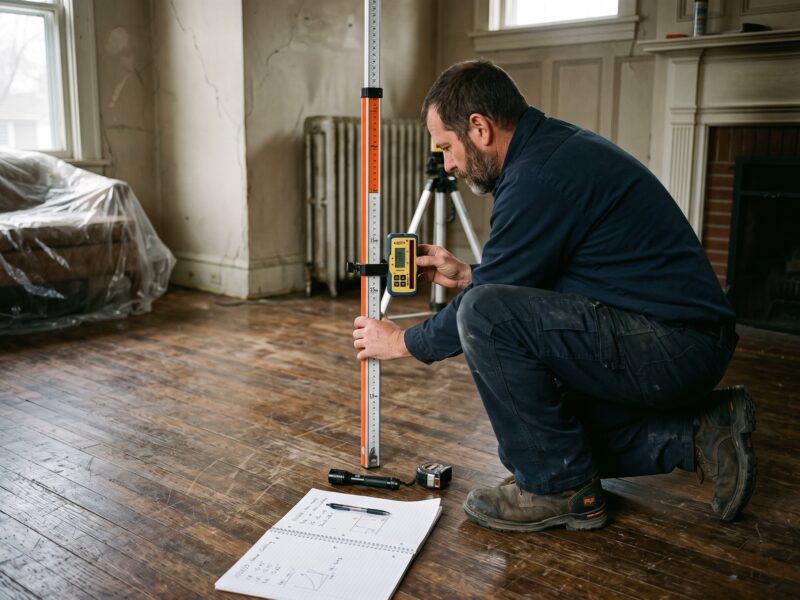
 The walk-up: elevations and crack gauges before anyone talks price.
Orland Park foundation repair questions, answered straight
Is a horizontal crack in my 1970s Orland Park block wall serious?
Yes. Horizontal cracking at mid-height means the clay is actively bowing the wall, and fifty-year-old block has little reserve left. Caught under two inches of deflection it is usually carbon fiber at $600 to $1,000 per strap; left to advance, it becomes steel, anchors or rebuild money. Measure it this season, not next.
My 1990s Orland Park house has cracks over the windows. Is it settling?
Possibly, and the useful question is whether the movement is finished. Poured walls from that era crack as they cure, and clay this expansive keeps footings adjusting longer than sandier ground would. We shoot elevations: active settlement is pier territory at $1,600 to $3,000 each, while old stable cracks often need nothing but sealing.
Is it my foundation or my sump pump?
In Orland Park, genuinely ask this first. On streets built sump-dependent, a damp wall or a leaking crack often traces to a pump or drain line problem rather than a structural one, and a large share of our foundation calls here end that way. The inspection measures the wall and tests the pit, so you get the real answer either way.
Do piers work in Orland Park's heavy clay?
Yes; piers exist precisely because surface clay cannot be trusted. Push and helical piers drive through the expansive layer to strata that do not move with the weather, and the installation logs record depth and pressure at every bracket. The choice between push and helical follows the structure's weight, and the numbers come with the job.
How much does foundation repair cost in Orland Park?
The published ranges hold here like everywhere: $450 to $900 per injected crack, $600 to $1,000 per carbon strap, $900 to $1,500 per steel beam, $1,000 to $1,800 for wall anchors and $1,600 to $3,000 per pier. Most Orland Park jobs land at the injection or strap end, because the stock is young enough to catch problems early.
Does homeowners insurance cover foundation repair in Illinois?
Usually not. Standard Illinois policies exclude damage from soil movement and hydrostatic pressure, which is precisely what heavy clay does to a wall. That exclusion is the financial argument for catching a bow at the $600-per-strap stage instead of the five-figure stage.
Can I sell an Orland Park house that has had foundation repair?
Documented repair generally reads better to a buyer than an unexplained crack. Our jobs close with measurements, photos, the scope and a 25-year transferable warranty registered to the address, a packet your listing agent hands the buyer's inspector in place of an awkward conversation.
My house is in Old Orland and much older than the subdivisions. Do you work on it?
Yes, and differently. Historic-district foundations predate the sump-pump era and the modern playbook, so they get masonry judgment, gentle reinforcement and drainage relief rather than the standard subdivision fix. If a contractor quotes your Old Orland wall the same repair as a 1990s poured basement, get a second opinion; ours is free.
Is the moving wall also wet?
In Orland Park the two trades share one cause: the clay pressing your wall inward is the same clay holding water against it, and in a sump-dependent village a struggling pump makes both problems worse at once. If the cracked wall also seeps in spring, one inspection covers both and the fixes get sequenced properly.
Basement Waterproofing in Orland Park
Foundation repair near Orland Park

Get the Orland Park wall measured before the clay moves again
A free structural inspection within 48 hours, a method matched to your house's decade and your lot's terrain, and a 25-year transferable warranty that transfers with the house.
Or talk to a human right now
(630) 335-1128
Request your free estimate
Tell us what you're seeing. We'll call back fast and be out within 48 hours.