
Standing Water in a Crawl Space
Water sitting on a dirt crawl floor is not a mystery, it is a drainage report. Where it comes from and when it shows up tell you almost everything about what the repair costs.
- Free written crawl space diagnosis within 48 hours
- Published per-square-foot pricing before we start
- 1,500+ homes across seven counties
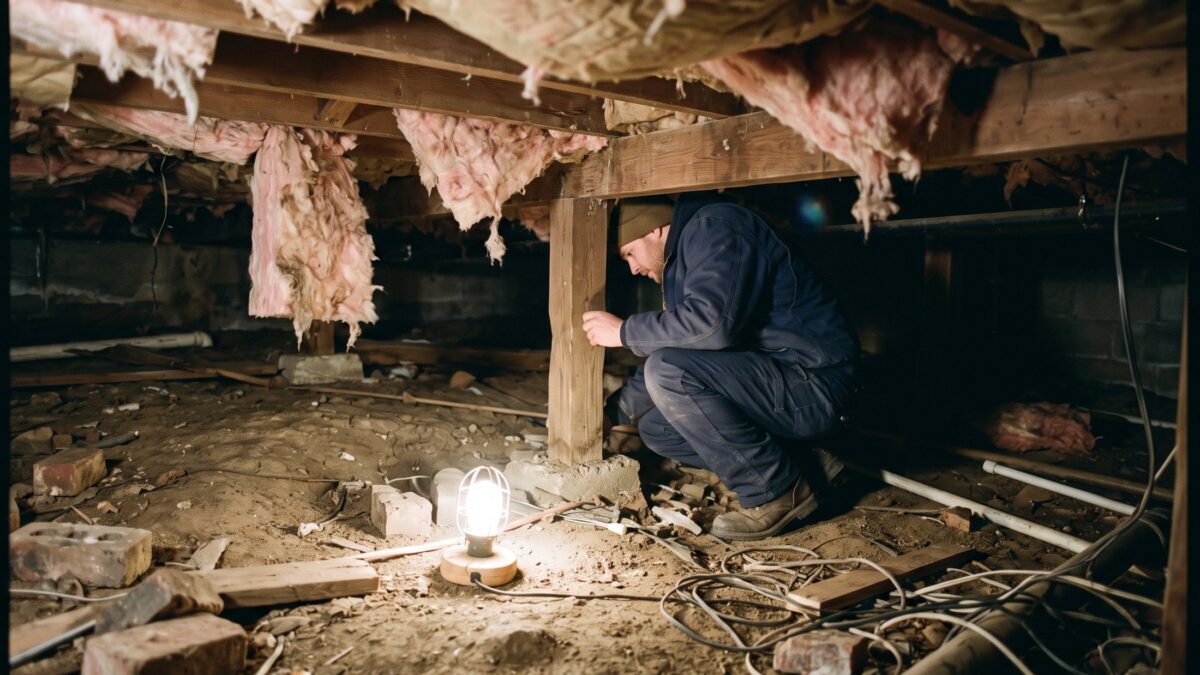 20+ under Illinois houses
The short answer
Standing water in a crawl space comes from one of three sources: roof and surface runoff entering at the wall, groundwater rising through the dirt floor, or a plumbing leak. Timing tells you which. Fix the outside water first, then drain the crawl to a sump and line it. Encapsulation runs $7 to $14 per square foot.
Water stands in a crawl space for the same reason it stands in a bowl. The floor of most Illinois crawl spaces is bare soil sitting below the surrounding yard, with no slab, no drain and nowhere for arriving water to go except down into the dirt, until the dirt gives up. Once the ground under the crawl saturates, everything that shows up after that has to sit on top. The puddle you are looking at is the overflow point, not the source.
Our soil makes that worse than it would be somewhere sandy. Dense glacial clay releases water slowly, so a storm that soaks a yard in Will or DuPage County keeps feeding the low ground under the house for days after the sky clears. Add a March thaw draining onto subsoil that is still frozen and the water has nowhere at all to go. That is why a crawl space here needs a drainage answer and a moisture answer in the same visit, which is exactly what crawl space encapsulation is built around.
Where is the water in my crawl space coming from?
Every crawl space puddle has a source, and there are only a few candidates. Ruling them out in order costs nothing and decides which trade you should be calling.
Work through these five checks before anyone quotes you a system.
-
Time it against the weather
Water that arrives within hours of a storm and is gone in a day is surface runoff. Water that turns up two days later, or that never fully leaves, is groundwater. Note the date and the depth each time you look. Two storms usually settle it.
-
Watch the outside during rain
Stand at each downspout in a real downpour and see where the water lands. A splash block three feet from the wall, a grade that has settled back toward the house, or a window well with no drain will each deliver more water to the foundation than the storm itself does.
-
Read the walls and the piers
Look for a level stain line, white powder on the block, or fans of silt spreading in from one point. A stain that holds the same height all the way around tells you how deep the water gets. A silt fan tells you where it enters.
-
Rule out the plumbing
Shut every fixture in the house and watch the water meter for fifteen minutes. If it creeps, you have a supply leak, and that belongs to a licensed plumber rather than to us. Clear water with no storm behind it points the same way.
-
Test the ground itself
Dig a small hole in the crawl floor away from the puddle and leave it overnight. If it fills and holds water, the water table is at or above your crawl floor. No amount of gutter work by itself is going to change that.
Points to surface water
- It appears during the storm and drains within a day
- It pools under one corner, usually the one below a downspout
- You can see silt or mulch tracked in from a single entry point
- The yard beside that wall holds puddles after every rain
Points to groundwater
- It shows up late and lingers for a week
- The whole floor is wet, not one corner
- A test hole fills on its own and stays full
- It gets worse during the spring thaw regardless of rainfall
How does a wet crawl space get dried out for good?
Drying a crawl space is a sequence, not a product. Water has to be removed, given a permanent path out, and then kept from evaporating back into the house.
This is the order our crews work in on a typical wet crawl.
-
Clear the space and pump it down
Standing water gets pumped out and the floor is cleared of debris, collapsed batts and whatever plastic was laid down years ago. Wet fiberglass hanging between the joists holds moisture against the wood and comes out on day one.
-
Trench the perimeter beside the footing
A narrow channel is hand dug around the inside of the crawl next to the footing and pitched toward one low corner. Everything comes out in buckets through the access door, which is why crawl work is slower per foot than basement work.
-
Bed pipe in washed stone
Perforated pipe goes into the channel in washed stone under filter fabric so silt cannot pack it shut. The stone gives the water somewhere to sit while the pipe carries it, which matters in clay that drains as slowly as ours does.
-
Set the pit and the pump
A sealed pit is set at the low corner, deep enough that the pipe drains into it rather than at it. The pump is sized to the inflow we measured, and the discharge is run far enough out that the water does not walk straight back.
-
Line the floor and the walls
Heavy liner goes over the soil, up the walls and around the piers, sealed at the seams and fastened at the top. That stops soil moisture evaporating into the joists and turns the crawl into part of the house instead of a hole under it.
What that buys you
- Water leaves by pipe instead of sitting on the soil
- Joists, subfloor and ductwork stop living in damp air
- The floor above stops feeling cold and smelling like the crawl
- Interior systems carry our lifetime, fully transferable warranty
What it will not do
- It does not fix a downspout still dumping at the wall
- It does not stop a leaking supply line above your head
- The pump needs power, and power fails during storms
Do you drain the crawl space, or just line it?
A liner and a drainage system solve two different problems, and buying the wrong one is the most common mistake we get called in to correct.
| Liner alone | Drainage plus liner | |
|---|---|---|
| What it handles | Vapor rising out of dry soil | Liquid water arriving plus the vapor |
| Standing water after a storm | Ends up on top of the plastic | Runs to the pipe and out to the pit |
| Needs a pump | No | Yes, with a sealed pit |
| Published cost | $7 to $14 per square foot for the encapsulation scope | Encapsulation plus $95 to $160 per linear foot of drain |
| Days on site | Usually one to two | Two to four, depending on access |
| Effect on the floor above | Drier air, warmer floor | Same, and the wood actually gets a chance to dry |
| When it is genuinely enough | A crawl that has never held water | Any crawl that has puddled even once |
| Our warranty | Quoted in writing with the scope | A lifetime, fully transferable warranty on the system |
If your crawl is dry and always has been, the lighter scope is the honest recommendation and we will say so on site. Weigh the two scopes side by side at encapsulation versus a vapor barrier alone.
Water under your house right now? We measure the crawl, find the entry point and put the diagnosis in writing, free within 48 hours, with 24/7 response when it is actively flooding.
Which crawl spaces hold water around here?
Crawl spaces in this region are almost always an addition, a porch enclosure or a bump-out rather than the whole footprint. The era it was built in predicts how it gets wet.

Pre-war bungalows and two-flats
The crawl is usually under a rear kitchen addition or an enclosed back porch, dug shallow and tied to a basement wall. Rubble or early block, no drainage, and gangways too tight for a machine to reach from outside.
Interior work only
Post-war block ranches
Half basement, half crawl, with a knee wall between them and a dirt floor on the crawl side. Water follows the block joints in and the smell travels straight up into the bedrooms over it.
Drain and seal together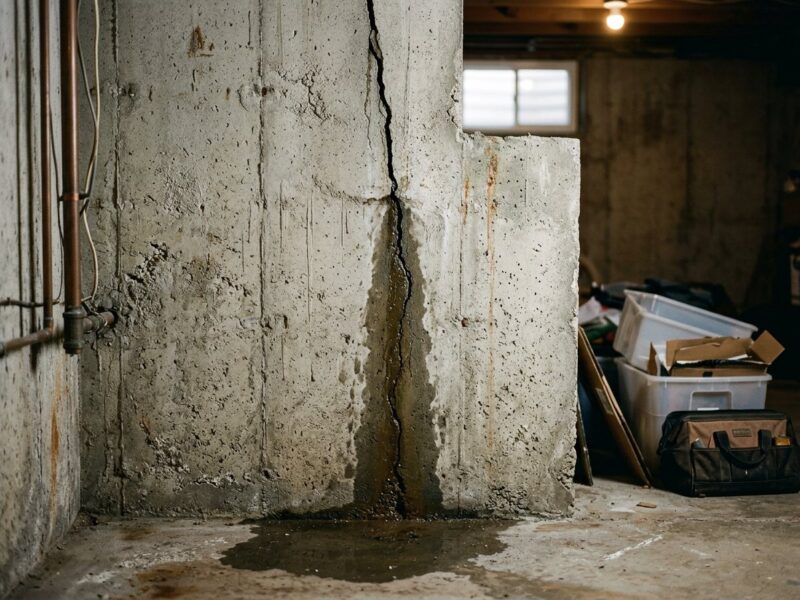
1980s and 90s poured additions
Poured crawl walls under a family room or sunroom added after the fact, often with the grade sloping back toward the seam where old and new foundations meet.
Check the grade first
Newer subdivision homes
A shallow crawl under a bump-out, with builder drainage that works until the backfill settles and the downspouts get shortened by a landscaper.
Often a $600 to $2,500 fixWhat does it cost to fix a crawl space that holds water?
Encapsulation runs $7 to $14 per square foot on published pricing, and a crawl that also needs drainage adds perimeter pipe and a pump on top of that number.
| Work | Range | What moves the number |
|---|---|---|
| Crawl space encapsulationper square foot | $7–$14 | Access height, standing water, whether drainage goes in first |
| Interior drain tileper linear foot | $95–$160 | Length of the run, slab thickness, what has to be moved off the walls |
| Sump pump with battery backupinstalled | $2,800–$4,500 | Pit condition, backup capacity, discharge routing |
| Downspout extensions and regradingtypical job | $600–$2,500 | Feet of grade to rebuild, soil hauling |
Crawl access swings the labor more than any other factor we price. A twenty-four inch door and thirty inches of headroom means everything moves by bucket, and we say so in the quote instead of hiding it in a lump sum. You can read the numbers we work from before you call, on the pricing page.
When you do not need us for this
Roughly a third of the wet crawl spaces we get called to do not need a drainage system. Here is how to spot yours before you spend anything.
The water meter is moving
A slow supply line leak under the floor puts clean water in a crawl with no weather attached to it. Shut everything off, watch the meter, and if it creeps, call a licensed plumber. Repiping is their trade and we will not quote around it.
Not our workIt all comes from one downspout
A single disconnected leader can pour hundreds of gallons at one corner of the foundation in an ordinary storm. Extensions and regrading run $600 to $2,500, carry a 5-year warranty, and deserve a full season of watching before anyone sells you more. See grading and slope around a foundation.
Cheapest real fixThe pump you already have is unplugged
We have driven to crawl spaces where the fix was a tripped breaker, a float pinned against the pit wall, or a discharge line a landscaper crushed. Lift the lid, pour in a bucket of water and watch. That check costs nothing and settles it.
Free to checkOne record storm, then five dry years
If the crawl went under during a storm that flooded the whole street and has been dry since, you saw the storm, not a defect. Keep a mark on the wall, photograph it after each big rain, and decide next spring with data instead of adrenaline.
Watch a seasonQuestions homeowners ask about water under the house
Is standing water in a crawl space actually a problem?
Yes, and the damage is rarely to the water itself. Everything structural down there is wood, and wood sitting above open water stays damp, which is how sill plates, joist ends and subfloor lose strength over years rather than weeks. The air in a crawl space also rises into the house, so the smell and the humidity end up in the rooms above. Dry soil under a house is a maintenance issue. Open water is a repair.
How much water is too much before I should call?
Any water you can see pooling on the soil is worth a look, but the honest threshold is repetition. Once after a record storm is weather. Twice in a season, or water that is still there a week later, is a drainage problem that will not correct itself. If the wood above the water is dark, soft at the ends or growing anything, stop measuring and get it inspected. Our crawl inspections are free within 48 hours.
Will a sump pump on its own fix standing water in a crawl space?
Only if the water can reach it. A pump sitting in a hole in the middle of a dirt floor drains whatever puddles right around it and leaves the rest sitting in the clay ten feet away. The pipe and stone are what collect water from the whole perimeter and deliver it to the pit. Buying the pump without the collection system is the single most common half-fix we find under Illinois houses.
Can I just fill the crawl space with gravel or pour a slab?
Filling a crawl space buries the exact wood you need to be able to inspect, and a thin slab poured over wet clay traps the water underneath rather than removing it. It also cuts off access to plumbing and ductwork for good. Drainage plus a sealed liner costs less, keeps everything reachable, and deals with the water instead of hiding it. If headroom is the real complaint, that is a different conversation.
Does homeowners insurance cover water in a crawl space?
Standard Illinois policies exclude groundwater seepage, which is what most crawl space water is. Sump pump failure and sewer backup are usually available as optional endorsements you have to add before the loss, and surface flooding is a separate flood policy entirely. Damage from a burst pipe is treated differently from damage from the ground. Read your declarations page and ask your agent which endorsements you actually carry.
How long does a crawl space take to dry out after the work?
The standing water leaves the day the pump runs. The soil, the joists and the subfloor take longer, usually several weeks, because wood gives up moisture slowly and clay gives it up slower still. A dehumidifier moves that along in a sealed crawl. What you should notice within days is that the floor above stops feeling cold and the smell in the room over the crawl starts fading.
Where does all that water actually go?
Once the water is collected it has to be lifted out and sent somewhere it will not return from, and that is a design decision, not an accessory. Pit depth, discharge routing and what happens during a February outage all get settled before a crew shows up.
How crawl space drainage and sumps work

Find out where the water is getting in, at no cost
A measured crawl space inspection and a written diagnosis within 48 hours, published pricing, and 0% for 12 months if you move forward.
Or talk to a human right now
(630) 335-1128
Request your free estimate
Tell us what you're seeing. We'll call back fast and be out within 48 hours.