Foundation Repair in Bolingbrook, Illinois
The walls that went up by the thousands in 1970s Bolingbrook have now carried fifty years of clay pressure, and fifty is the age when block finally shows it. We measure the movement, reinforce the wall for a fraction of rebuild money, and put a 25-year transferable warranty behind it.
- Structural warranty: 25-year transferable
- Published pricing: injection from $450, piers from $1,600
- Free structural inspection within 48 hours
 25-year transferable structural warranty
Who does foundation repair in Bolingbrook?
ProSeal Basement Waterproofing repairs foundations throughout Bolingbrook from our base in the Joliet and New Lenox corridor. Crack injection runs $450 to $900, carbon fiber straps $600 to $1,000 each, steel I-beams $900 to $1,500, wall anchors $1,000 to $1,800, and settlement piers $1,600 to $3,000 per pier, every number published before an estimator sees your wall, every repair carrying a 25-year transferable warranty.
Bolingbrook is a village hitting a structural birthday. The enormous 1970s build-out put up block and early poured walls by the subdivision, that entire cohort turned fifty together, and fifty is when opened mortar joints, tired walls and decades of accumulated clay pressure produce cracks you can finally see. The estimator's job here is telling the harmless fifty-year-old crack from the one that is still moving.
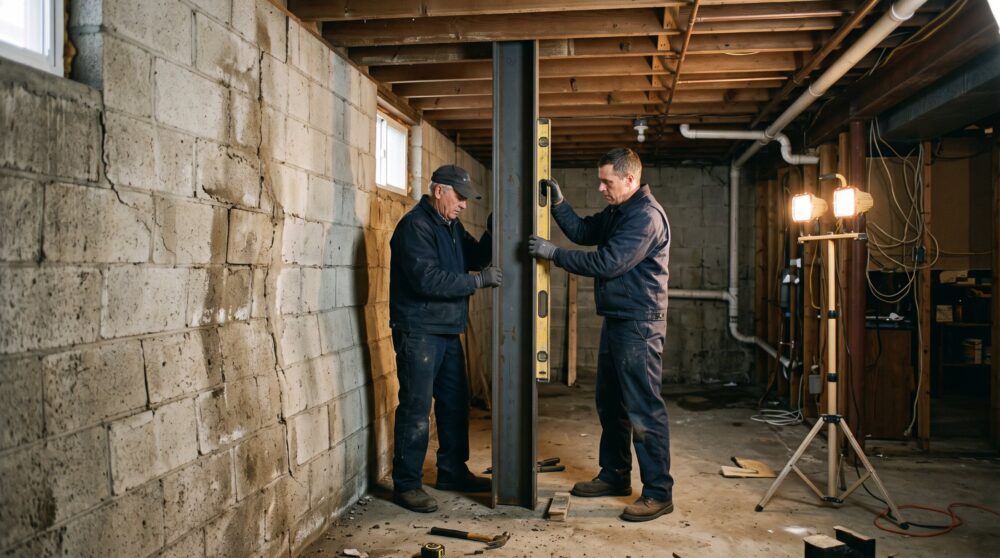 Steel meeting a bowing block wall: caught, measured and stopped.
What does foundation repair in Bolingbrook include?
Six structural tools handle what fifty-year-old walls and thirty-year-old soil do in Bolingbrook, and the plan always starts with the cheapest fix that actually holds. The written scope shows the reasoning line by line.
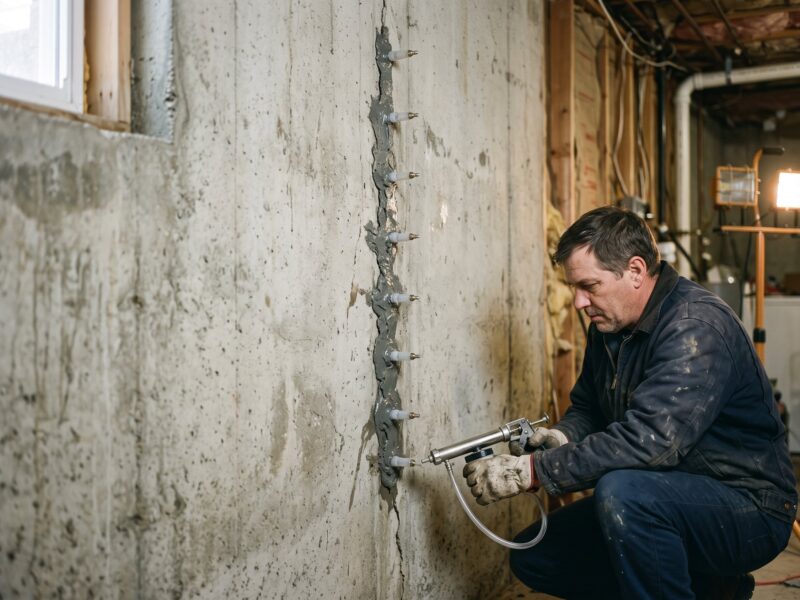 Urethane crack injection
Leaking cracks in the era's early poured walls, sealed in a morning.
Learn more
Urethane crack injection
Leaking cracks in the era's early poured walls, sealed in a morning.
Learn more
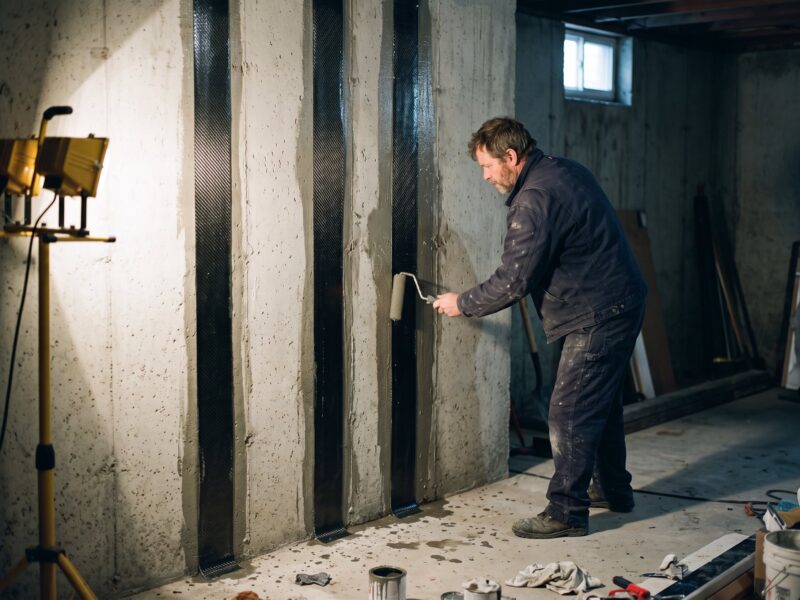 Carbon fiber straps
The right-now fix for 1970s block bowing less than two inches.
Learn more
Carbon fiber straps
The right-now fix for 1970s block bowing less than two inches.
Learn more
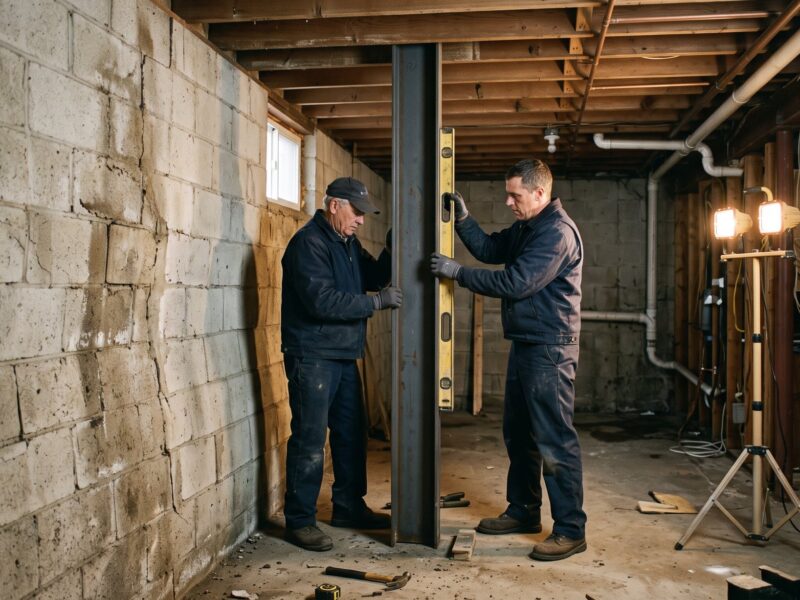 Steel I-beams & wall anchors
For walls that waited past the carbon fiber window.
Learn more
Steel I-beams & wall anchors
For walls that waited past the carbon fiber window.
Learn more
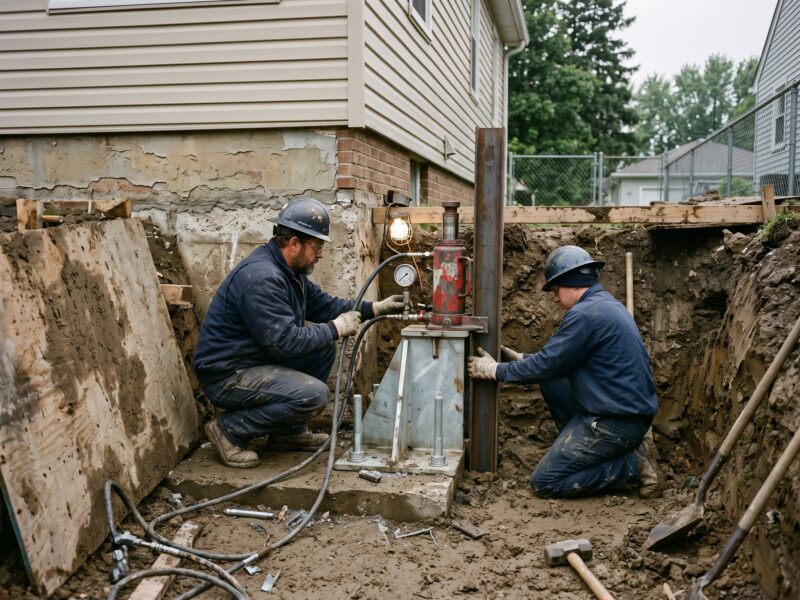 Push & helical piers
For settlement, including the young far-west-side stock.
Learn more
Push & helical piers
For settlement, including the young far-west-side stock.
Learn more
 House leveling
Beams, columns and footings under fifty-year-old floor framing.
Learn more
House leveling
Beams, columns and footings under fifty-year-old floor framing.
Learn more
 Not sure what you have?
See what a 1970s wall's crack pattern is telling you.
Learn more
Not sure what you have?
See what a 1970s wall's crack pattern is telling you.
Learn more
Why do Bolingbrook foundations crack and bow?
Bolingbrook foundations are failing on an age curve: an entire 1970s cohort of block and early poured walls reached fifty at the same time, on flat ground that keeps the clay against them wet and pushing. The 2000s far west side fails differently and far less often.

Fifty-year-old block
Mortar joints only take so many freeze-thaw cycles before they open, and lateral clay pressure has been leaning on these walls since the Ford years. Horizontal cracks at mid-height and inward bow are that whole history becoming visible at once.
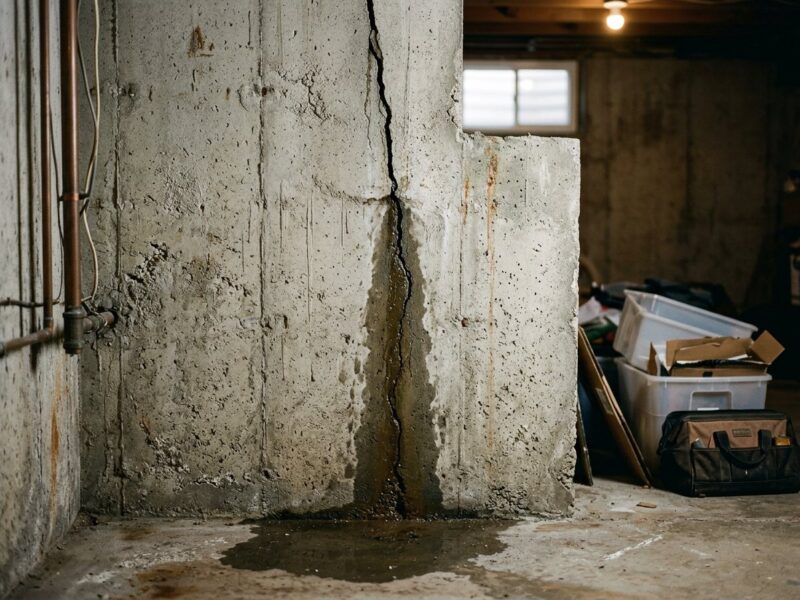
Early poured walls of the same era
The 1970s subdivisions also poured walls, thinner and less reinforced than modern work. At fifty they show vertical shrinkage cracks that leak and the occasional diagonal crack from a settling footing, most of them injection or monitoring cases.

The 2000s far west side
The young stock near Weber Road and the Naperville Road area has decades of reserve left in its walls. Its calls are settlement cracks over openings and garage slabs moving separately, soil problems rather than wall problems.
What makes Bolingbrook ground push so hard?
Bolingbrook ground pushes hard because it never fully drains. The village is nearly flat, Lily Cache Creek and the East Branch of the DuPage River move its water off slowly, and backfill that stays saturated is backfill at close to its maximum weight, pressing on the wall day after day. Sloped towns get pressure spikes after storms; Bolingbrook walls get the sustained version, and over fifty years the difference compounds.
Add the surface cycle and the picture is complete. The clay skin swells against the wall in wet seasons, shrinks back in drought summers, and freezes through the top few feet every winter, working the mortar joints open a little more each year. None of this moves fast, which is exactly why a measurement matters: numbers separate a wall that finished moving in 1995 from one that is still losing ground every spring.
 Stair-step cracking: fifty years of pressure written in the joints.
Signs you need foundation repair in Bolingbrook
Six symptoms bring Bolingbrook homeowners to the phone, and in the 1970s subdivisions most trace back to walls reaching the age where accumulated pressure shows. Urgency runs from "watch it for a season" to "measure it this week."
A horizontal crack at mid-height
The one that matters most in this village: clay pressure actively flexing fifty-year-old block inward. Caught early it is carbon fiber money; caught late it is steel or anchor money.

Stair-step cracks in the block
Cracks following the mortar joints are extremely common at this age and often long finished moving. Width, displacement and whether they are still growing decide it, so we measure instead of assuming.
Doors out of square upstairs
Sticking doors and sloping floors mean something under the house moved. In fifty-year-old framing it is often a beam or column fix, which costs far less than foundation work.
A vertical crack that leaks
The early poured walls of the 1970s crack vertically as a rule, and a leaking one usually needs a $450 to $900 injection, not structural intervention. Stability gets confirmed first.

Crumbling or dusting mortar joints
Joints that shed sand and show white mineral tracks have been moving water for years, and mortar that is washing out is strength leaving the wall. Worth an inspection before the first visible bow.
A stoop, garage or addition pulling away
A gap opening where an addition meets the house means its footing is settling on its own schedule. If the elevations show active movement, piers end it permanently.
Found a crack in a wall poured when Ford was president? Fifty-year-old cracks deserve numbers, not guesses. The structural measurement is free.
How does foundation repair work in Bolingbrook?
A Bolingbrook foundation repair runs four steps: date the house, measure the movement, match the method, verify the result. Most repairs finish in one to three days.
Date the house, measure the wall
A 1974 block wall and a 2004 poured wall get read completely differently, so the inspection starts with the era, then maps every crack and bow in numbers. Free, within 48 hours.
Day 0Match the method to the movement
Stable old cracks get monitoring, bowing block gets carbon fiber or steel by measured deflection, active settlement gets piers. The written plan pairs each fix to its evidence at published prices.
Day 0, same visitInstall and re-measure
The crew installs, torques to spec and checks the finished work against the day-zero numbers before packing up. Pier jobs log drive pressure at every bracket.
Days 1 to 3Warranty to the address
Structural repairs carry the 25-year transferable warranty, registered to the house, which answers the buyer's inspector when a fifty-year-old Bolingbrook home sells.
On completionReinforce or rebuild: what do Bolingbrook walls actually need?
Almost every bowing wall in the 1970s subdivisions can be reinforced in place, because fifty years of pressure usually flexes block before it breaks it. Catching the wall inside the carbon fiber window is the whole financial game in this village.
| Reinforce in place | Excavate and rebuild | |
|---|---|---|
| Best for | Bowing or cracked walls still structurally intact, the vast majority here | Sheared or collapsing walls, a small minority |
| At the fifty-year mark | Carbon fiber under two inches of bow, steel or anchors beyond it | Reserved for walls that were left to fail completely |
| On the 1970s lots | Interior work spares mature trees, drives and fifty-year landscaping | Machine excavation through everything the yard grew since 1975 |
| On this flat, wet ground | Unaffected; the work happens inside the basement | Saturated flat-lot backfill makes big digs slow and ugly |
| Cost | $450 injections to $3,000 piers, per published ranges | Tens of thousands per wall before landscaping repair |
| Warranty | 25-year transferable, registered to the house | Varies by scope; insist on it in writing |
An estimator who quotes rebuild money without a deflection measurement is skipping the step that protects you. Our measurement is free and you keep the numbers.
When do Bolingbrook foundations move?
Bolingbrook walls move on the clay's schedule, and on ground this wet the spring entry runs long. Each season has a smartest move, and none of them is waiting.
Spring: push season
Saturated clay leans hardest on the 1970s block while the flat ground holds its water for weeks. Bows advance, horizontal cracks widen, and a measurement now catches movement at its most honest.
March to MaySummer: shrink season
Drought pulls the clay back from footings and the settlement side of the ledger opens: cracks over windows, doors going out of square, and the far west side doing most of its moving.
June to AugustFall: booking season
Calm soil and dry basements make fall the easy time to strap or brace a wall, and jobs booked now are warrantied and finished before the freeze starts working the joints again.
September to NovemberWinter: indoor season
Frost grips the top of the wall, but injection, carbon fiber, bracing and column work all happen from inside at full speed. The measurement queue is shortest all winter.
December to FebruaryHow much does foundation repair cost in Bolingbrook?
Foundation repair in Bolingbrook costs $450 to $900 per injected crack, $600 to $1,000 per carbon fiber strap, $900 to $1,500 per steel beam, $1,000 to $1,800 per wall anchor and $1,600 to $3,000 per pier, the identical published ranges we hold across every town we serve. Which fix your wall needs is what the free measurement decides.
| Work | Range | What moves the number |
|---|---|---|
| Urethane crack injectionper crack | $450–$900 | Crack length and width, access to the full height |
| Carbon fiber strapsper strap | $600–$1,000 | Wall height, spacing the deflection requires |
| Steel I-beam wall bracingper beam | $900–$1,500 | Ceiling height, footing condition at the base |
| Push or helical piersper pier | $1,600–$3,000 | Depth to load-bearing strata, access for equipment |
The full structural table lives on the pricing page; your written Bolingbrook quote lands inside it.
Where we repair foundations in Bolingbrook
Across ZIPs 60440 and 60490 the structural calls sort by decade. The 1970s streets off Boughton Road and the Route 53 corridor send the bowing block, opened mortar joints and horizontal cracks that define this village's repair work. Low-lying lots along the Lily Cache Creek corridor and the East Branch of the DuPage add the wettest backfill and the hardest-pushed walls. Hidden Lakes and the 2000s far west side out toward Weber Road and the Naperville Road area send settlement questions from a much younger stock.
First-ring logistics make honest monitoring possible: Bolingbrook is twenty-five to thirty-five minutes from our Joliet and New Lenox base and our crews pass through weekly, so when a stair-step crack deserves a season of watching instead of immediate steel, coming back to re-measure it costs us nothing and saves you thousands.
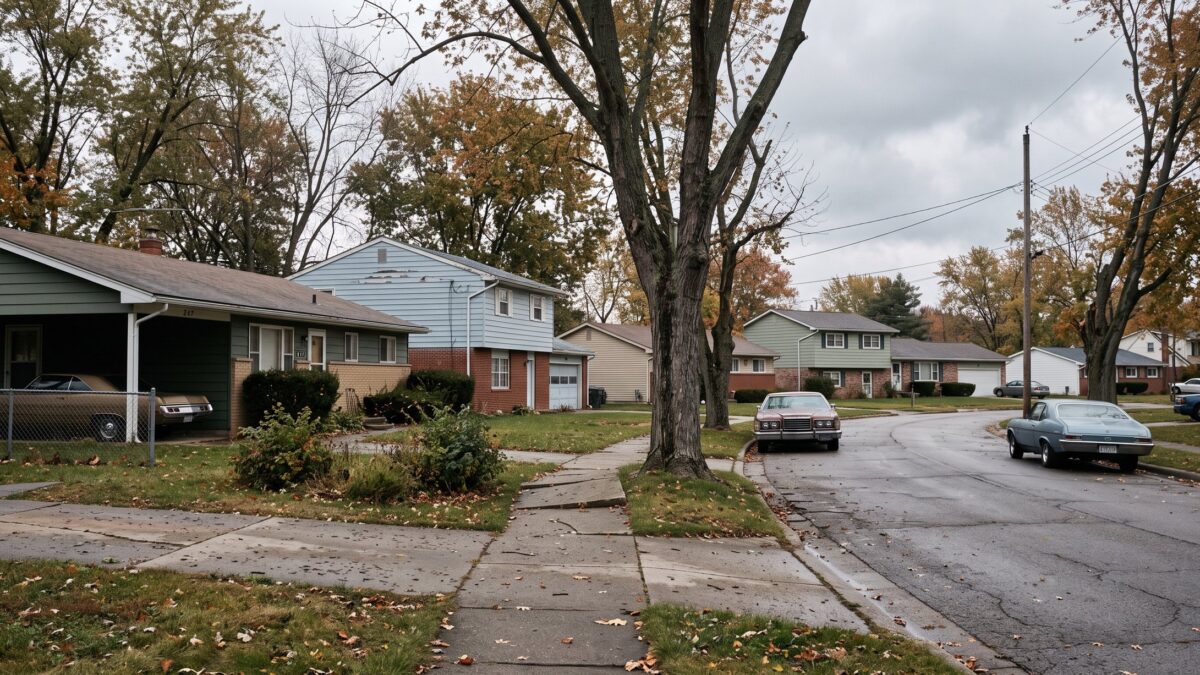
 A 1970s block: one build-out, one birthday, thousands of walls at fifty.
Bolingbrook foundation repair questions, answered straight
Are stair-step cracks in my Bolingbrook block wall always serious?
No. In fifty-year-old block a crack tracking the mortar joints is common and frequently records movement that ended long ago. What decides it is width, whether the crack is displaced in or out, and whether it is still growing, so we measure it and, when the numbers allow, show you how to watch it for a season before anyone spends a dollar.
Is a horizontal crack in a 1970s Bolingbrook wall an emergency?
It is a this-week measurement, not a tonight emergency. Horizontal at mid-height means clay pressure is winning against block with no reserve left at this age. Inside two inches of bow it is usually $600 to $1,000 per carbon fiber strap; past that it graduates to steel or anchors.
My whole subdivision is the same age. Is every wall on my street bowing?
No, and the variation is the point. Identical houses fare differently depending on drainage, gutters, tree placement and plain luck with backfill, so one wall on a street can need steel while its twin next door is fine. Your wall gets judged on its own measurements, never on the cohort's reputation.
My 2000s house near Weber Road has cracks over the windows. Same problem as the old part of town?
Different problem entirely. Your walls are decades from the fifty-year concerns; cracks over openings in young stock usually mean the fill under part of the footing is still adjusting. We measure elevations, and active settlement gets piers at $1,600 to $3,000 each while stable old movement just gets its cracks sealed.
How much does foundation repair cost in Bolingbrook?
The same published ranges as every town we work: $450 to $900 per injected crack, $600 to $1,000 per carbon strap, $900 to $1,500 per steel beam, $1,000 to $1,800 per wall anchor, $1,600 to $3,000 per pier. Most 1970s walls caught early land at the strap end, which is why the free measurement pays for itself.
Does homeowners insurance cover a bowing wall in Bolingbrook?
Almost never. Standard Illinois policies exclude soil movement and hydrostatic pressure, which is precisely what pushes fifty-year-old block inward. The practical defense is timing: the wall you reinforce at the per-strap stage never becomes the five-figure claim your policy would have declined anyway.
Will foundation repair hurt my Bolingbrook house at resale?
Documented repair usually helps it. Buyers touring fifty-year-old subdivisions expect foundation questions, and a repaired wall with measurements, photos and a 25-year transferable warranty registered to the address answers them better than an untouched crack the inspector finds first.
Will you actually tell me if my wall just needs watching?
Yes, and in Bolingbrook we say it constantly, because fifty-year-old block produces plenty of cracks that finished moving decades ago. Nobody who inspects your wall is paid on the invoice, and first-ring drives make a re-measure next season genuinely easy, so "monitor it" is a real recommendation here, not a brush-off.
Is the cracked wall also letting water in?
In Bolingbrook the two trades meet at the same wall: the saturated flat-ground clay bowing fifty-year-old block is the same soil feeding water through its opened joints, and the original drain tile that quit is part of why the pressure climbed. If the wall that cracked also weeps in spring, one inspection scopes and sequences both fixes.
Basement Waterproofing in Bolingbrook
Foundation repair near Bolingbrook

Fifty years of pressure deserves a measurement
A free structural inspection within 48 hours, reinforcement matched to what the numbers show, and a 25-year transferable warranty that transfers with the house.
Or talk to a human right now
(630) 335-1128
Request your free estimate
Tell us what you're seeing. We'll call back fast and be out within 48 hours.