
Foundation Repair in Mokena, Illinois
A short walk in Mokena crosses eighty years of foundation building: block and rubble under the old village grid, poured concrete under everything south and west of it. Each fails in its own way, so every repair here starts with a measurement and ends with a 25-year transferable warranty.
- Structural work warrantied: 25-year transferable
- Published pricing: injection from $450, piers from $1,600
- Free structural inspection within 48 hours
 25-year transferable warranty
Who does foundation repair in Mokena?
ProSeal Basement Waterproofing repairs foundations across Mokena from a base in the Joliet and New Lenox corridor, close enough that a measurement visit rarely waits more than a day. Crack injection is $450 to $900, carbon fiber straps $600 to $1,000 each, steel beams $900 to $1,500, and settlement piers $1,600 to $3,000, every figure published before an estimator sees your wall, all under a 25-year transferable warranty.
The skill Mokena demands is telling its two housing stocks apart structurally. Block and rubble under the village grid fails slowly under decades of clay pressure and wants reinforcement with restraint, while the poured walls of the 1990s and 2000s mostly present shrinkage cracks and the occasional settling corner where graded ground keeps adjusting. Treating one like the other wastes your money in both directions.
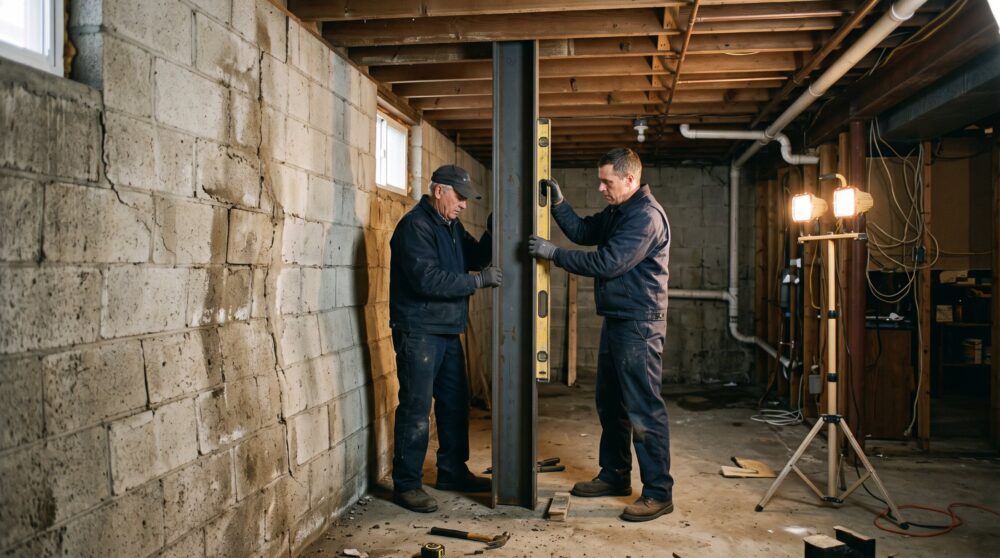 Reinforcement sized to the wall in front of it, not to a sales target.
What does foundation repair in Mokena include?
Six structural tools handle everything Mokena housing breaks, and the rule is cheapest adequate fix first. A morning-long injection that solves the problem always beats a bigger repair that was never needed.
 Urethane crack injection
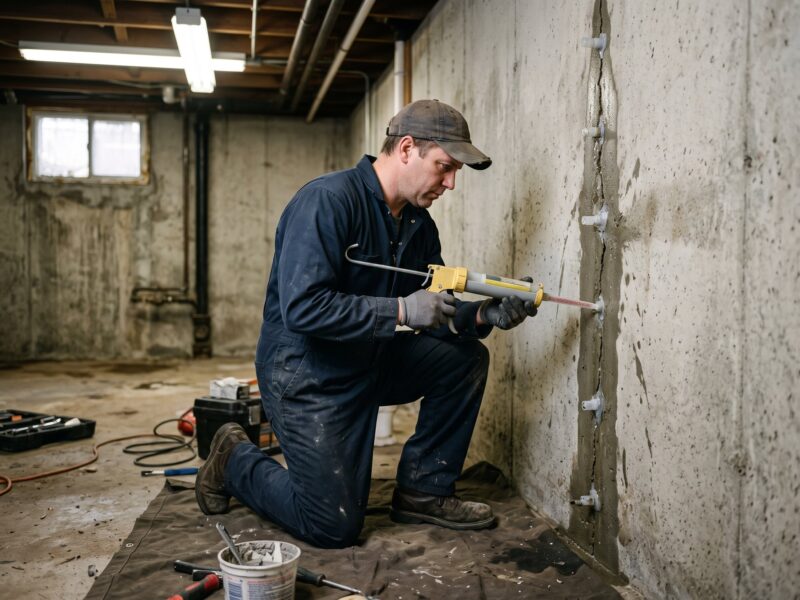
Shrinkage cracks and cold joints in subdivision poured walls, from $450.
Learn more
Urethane crack injection
Shrinkage cracks and cold joints in subdivision poured walls, from $450.
Learn more
 Carbon fiber straps
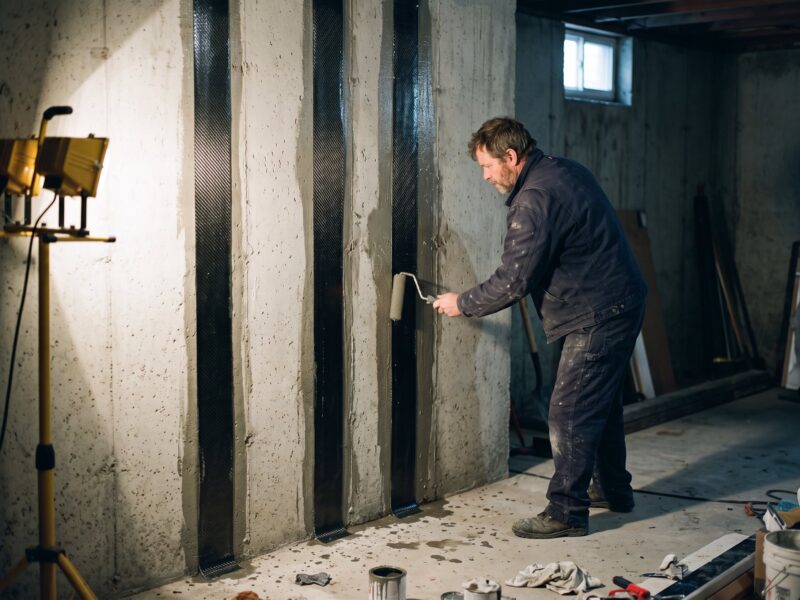
For village-core block caught while the bow is still small.
Learn more
Carbon fiber straps
For village-core block caught while the bow is still small.
Learn more
 Steel I-beams & wall anchors
For older walls where the deflection has gone past carbon fiber.
Learn more
Steel I-beams & wall anchors
For older walls where the deflection has gone past carbon fiber.
Learn more
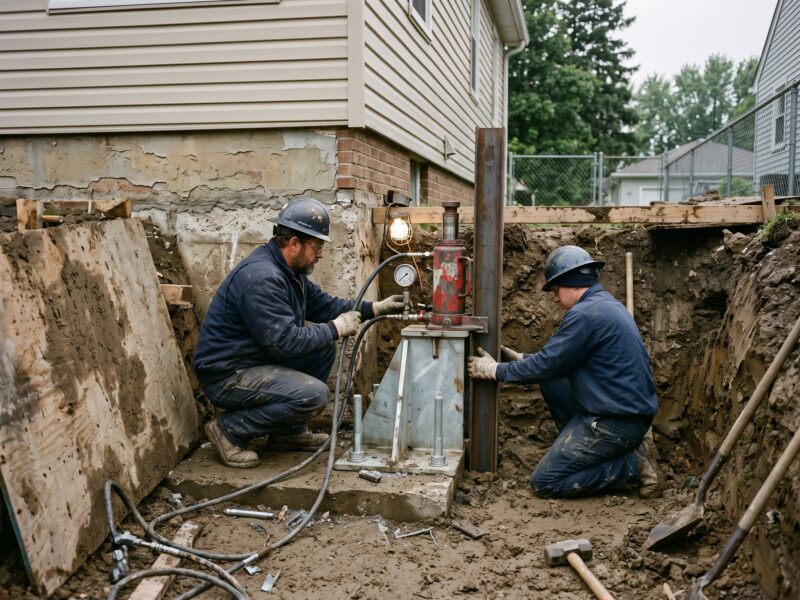 Push & helical piers
For settling corners and garages in the graded newer sections.
Learn more
Push & helical piers
For settling corners and garages in the graded newer sections.
Learn more
 House leveling
Beams, columns and footings under sagging pre-war floors.
Learn more
House leveling
Beams, columns and footings under sagging pre-war floors.
Learn more
 Not sure what you have?
Compare your wall's symptoms before booking anything.
Learn more
Not sure what you have?
Compare your wall's symptoms before booking anything.
Learn more
Why do Mokena foundations crack and settle?
Mokena foundations fail along the same line that divides its housing: age-driven clay pressure on the pre-war walls, ground adjustment and curing behavior in the newer poured stock, with the low-lying lots taking extra load in both. Naming which failure you have is most of the repair.

Block and rubble in the old grid
Foundations near Front Street have carried Will County clay pressure for eighty to a hundred years, and the wear shows as horizontal cracking, stair-steps at corners and mortar giving way. These walls reward early reinforcement and punish rough handling.

Poured walls, 1990s to 2000s
The subdivision stock is young and mostly sound. Its cracks are usually curing shrinkage, sealable for $450 to $900, but a corner or garage dropping on adjusting graded ground is real settlement, and elevations tell the two apart.

The low lots on rolling streets
A house at the bottom of a graded bowl keeps wetter clay against its walls than its uphill neighbors, so pressure symptoms arrive earlier there. The lot's position on the slope is part of any honest structural read.
What makes Mokena ground move?
Mokena stands on dense Will County clay, a soil that swells hard when saturated and shrinks hard in drought, cycling pressure against foundation walls year after year. Under the village grid that cycle has been running since before the war, which is why block and rubble walls there show cumulative damage: hairlines that became stair-steps, walls that measure a little further out of plumb each time anyone checks.
The newer sections add a second kind of movement. Their streets were cut and filled through rolling ground, and regraded earth keeps consolidating for decades, so a garage slab, stoop or corner founded on deeper fill can settle away from the house it is attached to. Near the north edge, ground along the Hickory Creek corridor holds moisture longest and gives the clay cycle its widest swing. None of this movement reverses on its own, which is why we measure first and repair to the measurement.
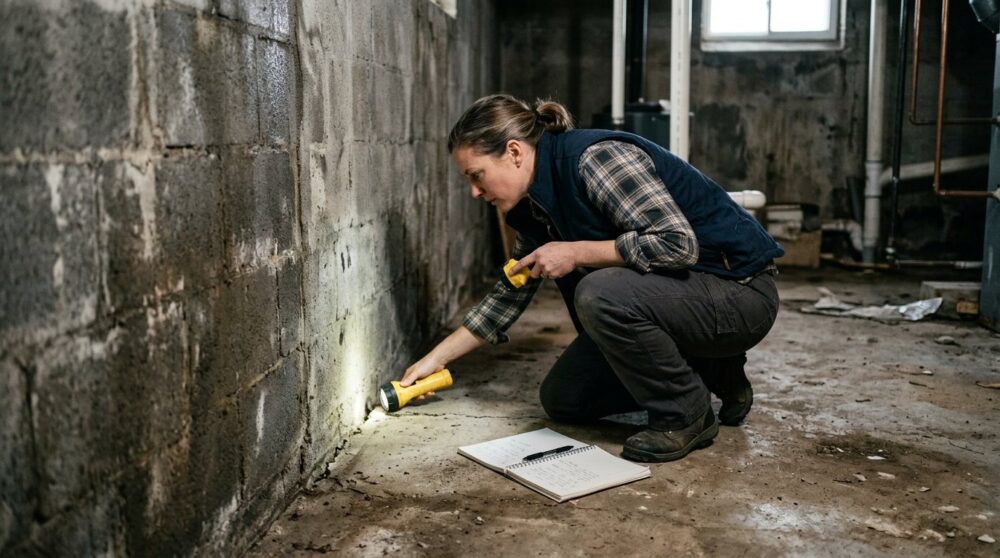 Numbers before methods: deflection and elevation set the plan.
Signs you need foundation repair in Mokena
Six symptoms drive most Mokena structural calls, ranging from a cheap sealed crack to steel on a schedule. Every one of them is worth a measurement, and none improves by waiting.

A horizontal crack at mid-wall
On village-core block this is clay pressure winning, and it is the symptom with a deadline. Caught early it is carbon fiber money; left alone it becomes steel, anchors or worse.

Stair-step cracking in block or brick
Mortar joints trace differential movement like a chart. Width, direction and change over time separate an old scar from an active problem, and we measure all three.
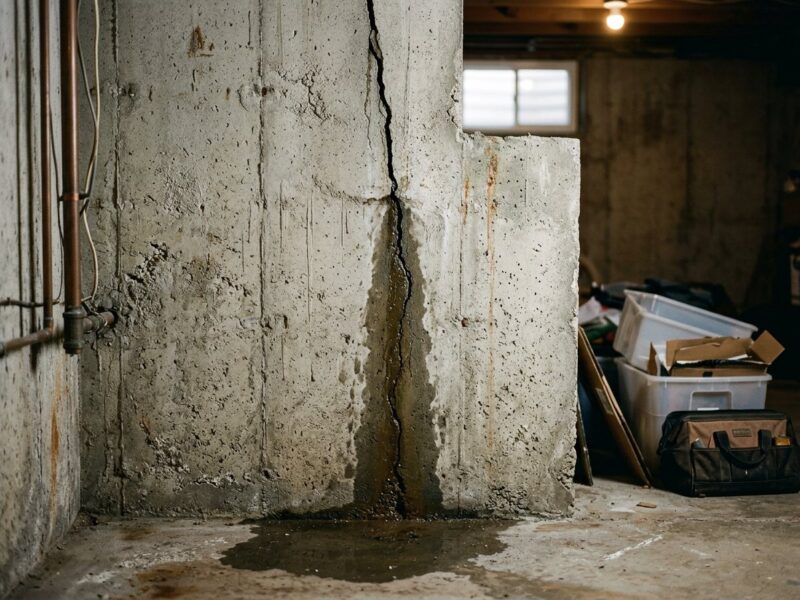
A vertical crack in a poured wall
Most subdivision-era cracks are curing shrinkage, closed permanently by a $450 to $900 injection. The inspection confirms the crack is stable before anyone proposes more.

A garage or stoop pulling off the house
A widening gap means that piece is settling on its own fill, separately from the main foundation. Active movement like this is what piers were built for.
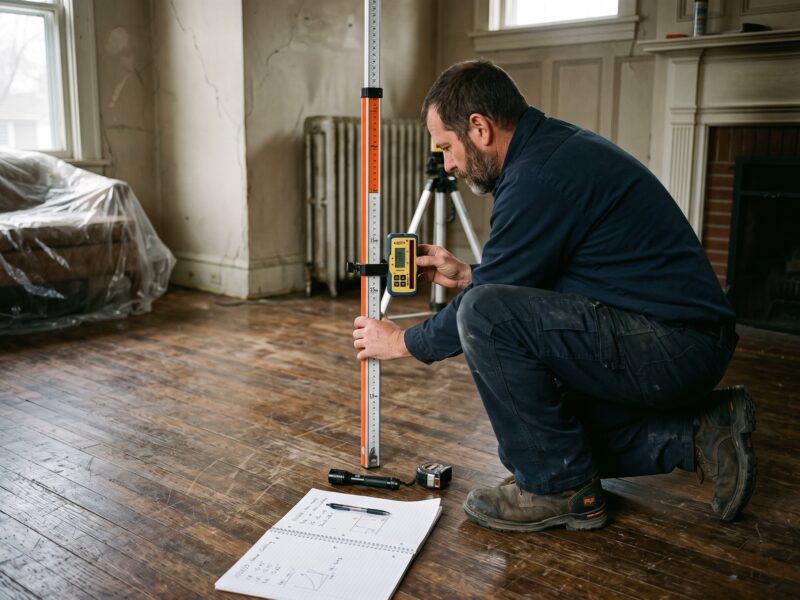
Sloping floors, doors that will not latch
When the upstairs geometry drifts, something underneath moved. Often it is a beam or column in a pre-war basement, which costs far less to correct than a foundation.

Bounce or sag in older floor framing
Village-core houses often need framing help before they need wall work: sistered joists, a new column, a proper footing. Honest diagnosis starts below the floorboards.
Watching a crack instead of measuring it? Guessing is free but worthless; the measurement is free and settles it. Mokena visits usually book next-day.
How does foundation repair work in Mokena?
Every Mokena repair follows the same arc: identify the wall, quantify the movement, apply the matched fix, prove the result. Most jobs run one to three days.
Identify the wall, quantify the movement
Block, rubble or poured decides the toolkit, so the inspection establishes that first, then records crack widths, deflection and elevations. Free, within 48 hours, and next-day for most of Mokena.
Day 0Match the fix to the failure
Carbon fiber or steel for pressured block near the old grid, injection for stable shrinkage cracks, piers where graded fill is still settling. The written plan pairs each line to a published price.
Day 0, same visitInstall and re-measure
The crew installs to spec and checks the finished work against the day-zero numbers before packing up. Pier work logs drive pressure at every placement.
Days 1 to 3Paper that outlives you owning the house
The 25-year transferable warranty registers to the address and transfers at sale, and the measurement file goes with it.
On completionReinforce or rebuild: what do Mokena foundations need?
Almost every failing wall in Mokena can be reinforced where it stands for a fraction of what replacement costs, and the town's tight old-grid lots and mature subdivision landscaping make the excavation route even less attractive than usual.
| Reinforce in place | Excavate and rebuild | |
|---|---|---|
| Best for | Bowing, cracked or settling walls that remain intact, the large majority | Walls sheared, collapsing or beyond safe reinforcement |
| Village-core block and rubble | Carbon fiber, steel and careful masonry respect an old wall's limits | Digging beside a rubble wall risks collapsing what you meant to save |
| Subdivision poured walls | Injection and piers address shrinkage and settlement directly | Overkill for the defects this stock actually develops |
| Cost | $450 injections up to $3,000 piers, from published ranges | Tens of thousands per wall before landscaping repair |
| Time | One to three days on most projects | Weeks of shoring, machinery and an excavated yard |
| Warranty | 25-year transferable, registered to the house | Depends on scope; insist on it in writing |
A rebuild quote that arrives without deflection numbers is a sales pitch, not an engineering opinion. Our second opinion is free and includes the measurements.
When do Mokena foundations move?
The clay under Mokena moves on a seasonal cycle, and each season leaves a different fingerprint on the housing stock.
Spring: pressure season
Saturated clay swells against walls, hardest on the low lots that stay wet longest. Old-grid block does its inward creep now, so this is the season horizontal cracks announce themselves and measurements catch them moving.
March to MaySummer: settlement season
Drought shrinks the clay and lets footings and fill drop. Subdivision corners, garages and stoops do most of their separating in dry stretches, and doors upstairs start telling on them.
June to AugustFall: repair season
Stable soil moisture and mild weather make fall ideal for bracing walls, driving piers and setting columns before frost. Work booked now is finished and verified before winter.
September to NovemberWinter: indoor season
Frost locks the top of the soil, but injection, carbon fiber, steel bracing and beam-and-column work all happen inside at full pace. Winter scheduling in a ring-one town is the fastest of the year.
December to FebruaryHow much does foundation repair cost in Mokena?
Foundation repair in Mokena costs $450 to $900 for an injected crack, $600 to $1,000 per carbon fiber strap, $900 to $1,500 per steel beam, and $1,600 to $3,000 per pier, drawn from the same published table every town we serve gets. Pre-war village-core walls sometimes add masonry hours, and those get scoped in writing at the free inspection, never sprung later.
| Work | Range | What moves the number |
|---|---|---|
| Urethane crack injectionper crack | $450–$900 | Crack length and width, access to the full height |
| Carbon fiber strapsper strap | $600–$1,000 | Wall height, spacing the deflection requires |
| Steel I-beam wall bracingper beam | $900–$1,500 | Ceiling height, footing condition at the base |
| Push or helical piersper pier | $1,600–$3,000 | Depth to load-bearing strata, access for equipment |
The full structural table lives on the pricing page; your written Mokena quote lands inside it.
Where we repair foundations in Mokena
Structural calls in 60448 sort by era. The Front Street village core and the streets around the Metra line send block and rubble work: bowing walls, stair-step corners, sagging pre-war floors that want columns and beams. LaPorte Road, Wolf Road, Schoolhouse Road and the 191st Street corridor send poured-wall calls: shrinkage cracks to inject, and the occasional garage or corner settling into graded fill. Lots along the Hickory Creek corridor and at the bottoms of rolling blocks get flagged for the extra clay load they carry.
Ring-one distance changes how monitoring works here. When a Mokena crack deserves watching rather than immediate steel, we genuinely come back and re-measure it, because the drive is ten to twenty minutes and the follow-up visit costs you nothing but a calendar slot.
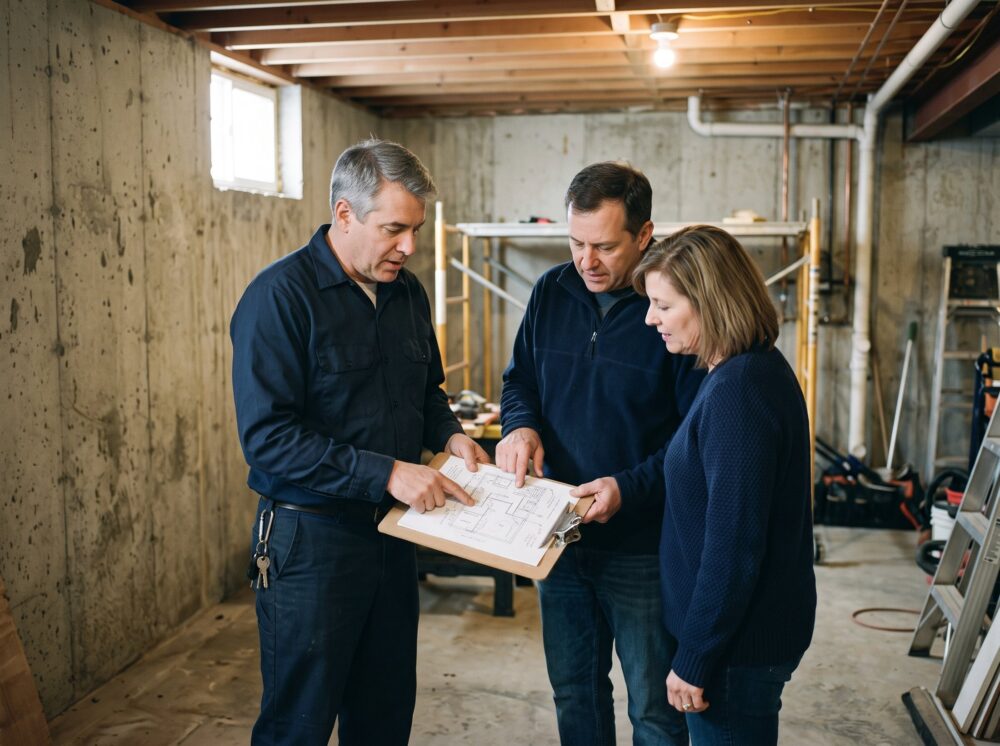 The walkthrough: what moved, how much, and what it costs from the published table.
Mokena foundation repair questions, answered straight
Who repairs old block and rubble foundations near downtown Mokena?
We do, and the village core supplies a steady stream of them. Walls of that age want measured reinforcement, mortar attention and restraint, not the standard subdivision playbook. If an estimator offers your pre-war wall the same fix as a 2005 poured basement, that is your cue to get a second opinion, and ours is free.
Is a horizontal crack in my Mokena block wall an emergency?
It is the one crack we tell people not to sit on. Horizontal at mid-height means clay pressure is actively deflecting the wall, and old block has little reserve strength left. Addressed early it is carbon fiber at $600 to $1,000 per strap; addressed late it is steel beams, wall anchors or rebuild territory.
My 2000s house has a vertical crack in the basement wall. Should I worry?
Usually not much. Poured walls crack as the concrete cures, and most vertical hairlines in Mokena's newer stock are exactly that: cosmetic, or at worst a leak path sealable for $450 to $900. The measurement matters because a crack that is widening or offset is a different animal, and elevations distinguish the two in one visit.
My garage is pulling away from the house. Can that be stopped?
Yes, and permanently. Attached garages, stoops and additions in the newer subdivisions often sit on shallower footings in regraded fill that is still consolidating, so they settle independently of the house. Piers at $1,600 to $3,000 each carry the settling piece down to competent soil, and the drive logs document the depth reached.
Does my lot sitting at the low point of the street make foundation problems worse?
It raises the odds. A bowl lot keeps wetter clay against its walls than its uphill neighbors, which means more swell pressure in spring and a wider seasonal swing overall. It is one reason we look at where your house sits on the block before interpreting its cracks, and why drainage advice sometimes rides along with a structural repair.
Will homeowners insurance pay for foundation repair in Mokena?
Almost never. Illinois policies routinely exclude soil movement and hydrostatic pressure, which between them cause nearly every foundation problem in Will County. Budget as if the answer is no, which is the strongest argument for fixing a wall at the carbon fiber stage instead of the steel stage.
Will past foundation repair hurt my Mokena home sale?
Documented repair typically helps. A buyer's inspector who finds an unexplained crack writes a scary paragraph; one who finds our measurement file, photos, scope and a 25-year transferable warranty registered to the address finds nothing to argue about. The warranty transfers to the buyer, which listing agents like to say out loud.
Can you monitor a crack instead of repairing it right away?
Yes, and in Mokena we actually mean it. When the numbers say a wall is stable enough to watch, we record baseline measurements and come back to re-check, because the drive from our base is ten to twenty minutes. You only buy steel when the trend line says the wall needs it.
Is the cracked wall also a wet wall?
Water and movement travel together in Mokena clay: the saturated ground that bows a block wall near the old grid is the same ground feeding spring seepage at its base, and a leaking rod hole sits in a wall worth glancing at structurally. One inspection reads both, and the repairs get sequenced so neither undoes the other.
Basement Waterproofing in Mokena
Foundation repair near Mokena

Measure the Mokena wall before it decides for you
A free structural inspection within 48 hours, a repair matched to block, rubble or poured, and a 25-year transferable warranty that transfers with the house.
Or talk to a human right now
(630) 335-1128
Request your free estimate
Tell us what you're seeing. We'll call back fast and be out within 48 hours.