
Foundation Repair in La Grange, Illinois
In La Grange the foundation story is written by the trees. Mature hardwoods on clay pull the ground dry every August and let footings drop, while wet springs push the same clay back against the walls. We measure both movements before repairing either, and warranty the result.
- Structural warranty: 25-year transferable
- Published pricing: injection from $450, piers from $1,600
- Free structural inspection within 48 hours
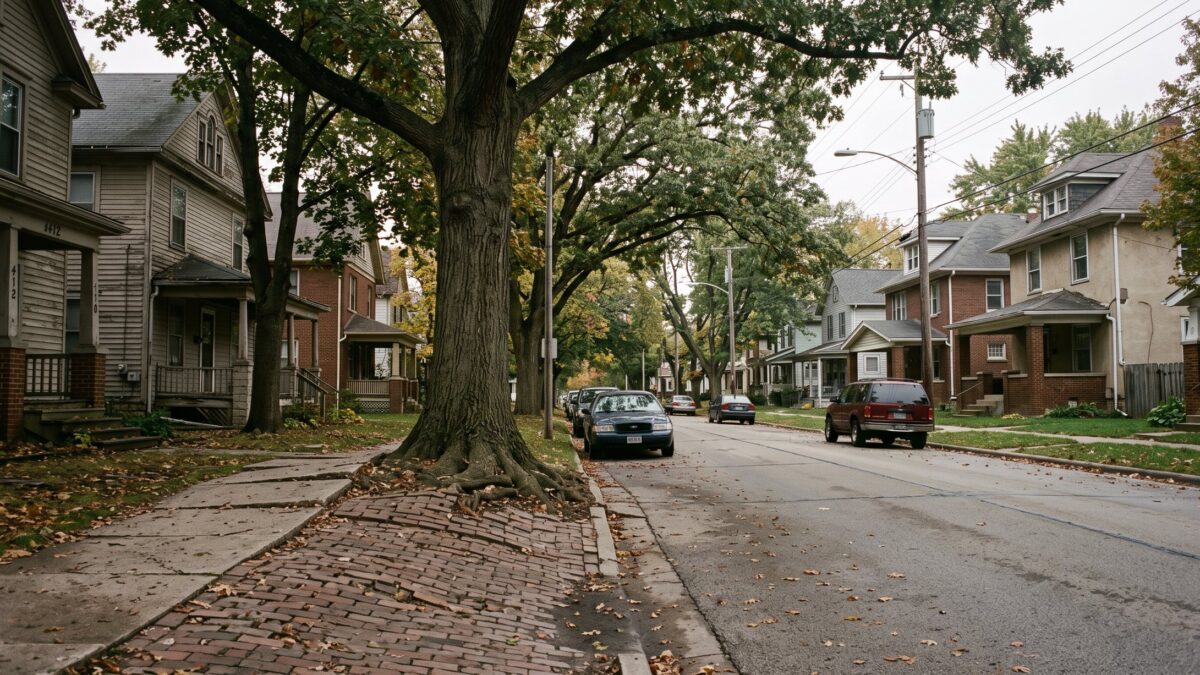 25-year transferable warranty
Who does foundation repair in La Grange?
ProSeal Basement Waterproofing is a foundation repair contractor serving La Grange from a base in the Joliet and New Lenox corridor, with crack injection at $450 to $900, bowing-wall reinforcement at $600 to $1,800 per strap, beam or anchor, and settlement piers at $1,600 to $3,000 each, every number published before an estimator sets foot in the house and every repair backed by a 25-year transferable warranty.
This village needs a contractor who understands what its trees do to its clay. A big parkway hardwood can dry the soil under one corner of a footing in a hot August, and the crack that opens in September gets misread by companies that only know the wet-spring playbook. We also carry the second playbook La Grange requires: pre-1900 stone and brick walls that must never be treated like subdivision concrete.
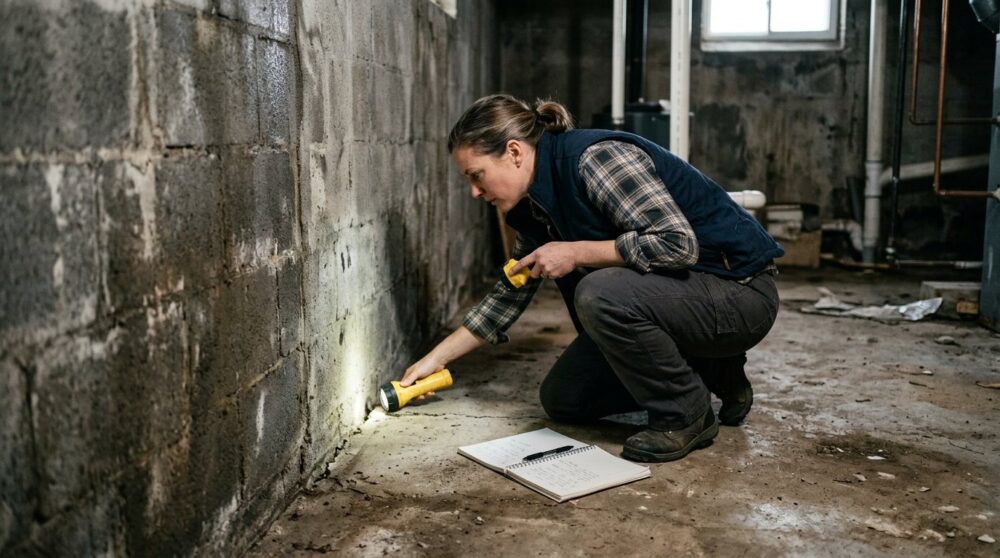 The measurement comes first: elevations and crack widths before any repair talk.
What does foundation repair in La Grange include?
Six structural tools cover what La Grange housing actually breaks, and the rule is cheapest adequate fix first. A $450 injection that solves the problem beats steel that was never needed, and the written plan shows the reasoning either way.
 Urethane crack injection
Cracks in poured and early concrete walls sealed full depth in a morning.
Learn more
Urethane crack injection
Cracks in poured and early concrete walls sealed full depth in a morning.
Learn more
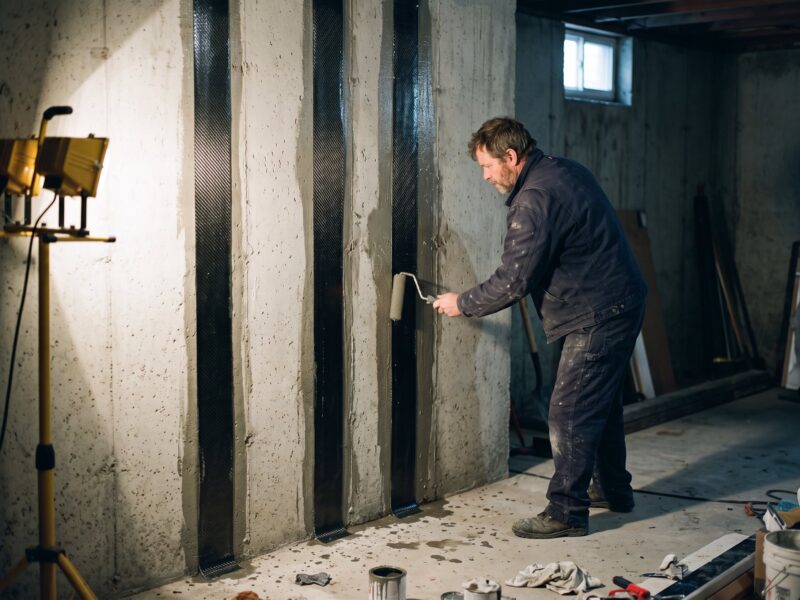 Carbon fiber straps
For mid-century block caught while the bow is still under two inches.
Learn more
Carbon fiber straps
For mid-century block caught while the bow is still under two inches.
Learn more
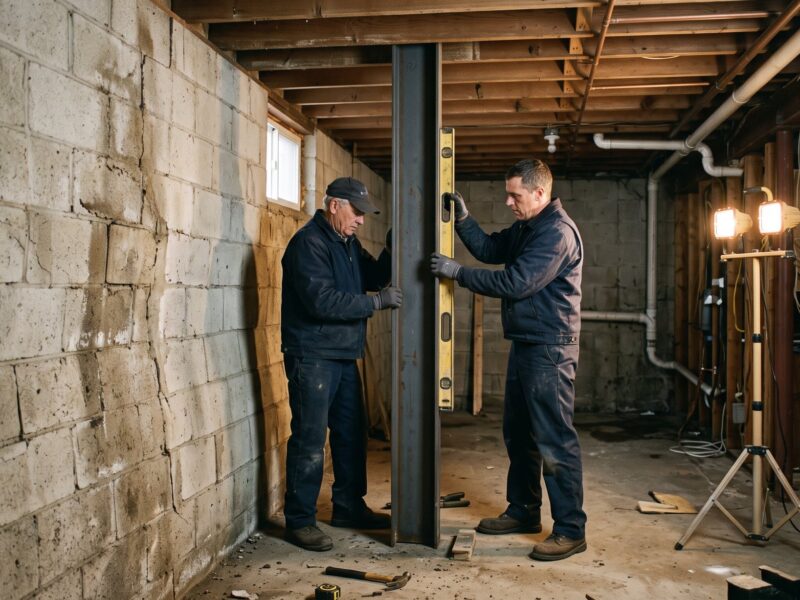 Steel I-beams & wall anchors
For block walls the spring clay has pushed past the carbon stage.
Learn more
Steel I-beams & wall anchors
For block walls the spring clay has pushed past the carbon stage.
Learn more
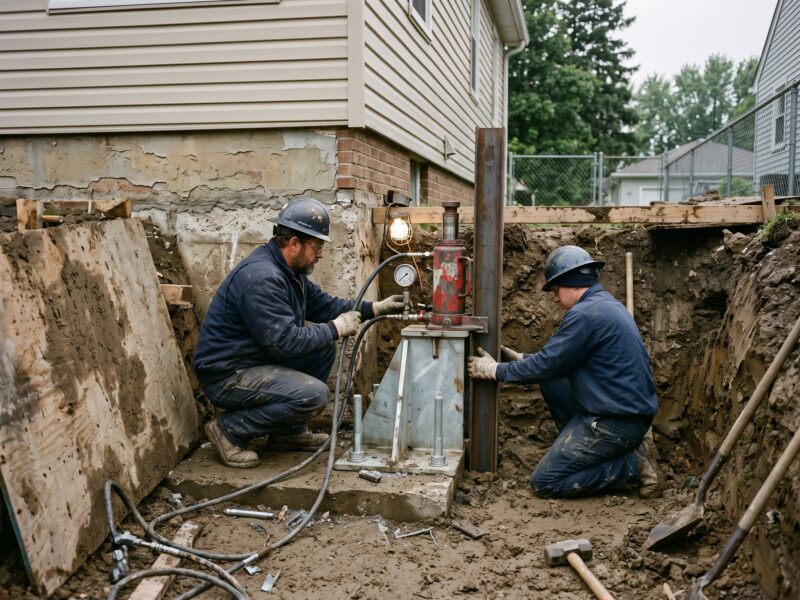 Push & helical piers
For footings dropped by drought-shrunk clay under the big hardwoods.
Learn more
Push & helical piers
For footings dropped by drought-shrunk clay under the big hardwoods.
Learn more
 House leveling
Columns, beams and footings under the old core's sagging floors.
Learn more
House leveling
Columns, beams and footings under the old core's sagging floors.
Learn more
 Not sure what you have?
Read the symptom guide and see which La Grange failure your wall is describing.
Learn more
Not sure what you have?
Read the symptom guide and see which La Grange failure your wall is describing.
Learn more
Why do La Grange foundations crack and settle?
La Grange foundations move because clay changes volume with its water content, and this village puts the clay through both extremes every single year: saturated in spring, dried out by the canopy in late summer. The housing eras just decide how each foundation shows it.

The pre-1900 core
Around the historic district and the village center, stone, brick and early concrete walls hold the house up by weight and craft. They fail slowly through mortar loss, bulges and moisture cycling, and they want repointing and gentle structural judgment, never aggressive digs.

The mid-century block ring
Block walls of the mid-century ring have taken sixty-plus springs of clay pressure. Horizontal cracks at mid-height and stair-steps at the corners are this era's handwriting, and catching the bow early is the whole cost difference.

Every yard with a big hardwood
A mature tree pulls a remarkable amount of water from clay in a dry August, the soil shrinks as it dries, and the footing above the driest roots drops. Cracks that open in September, near the biggest tree, are this exact mechanism.
What makes La Grange ground move?
La Grange sits on clay between Salt Creek and Flagg Creek, and clay moves with its moisture. In a wet spring the ground swells and pushes on basement walls; in a dry late summer it shrinks and pulls support out from under footings. Most towns get one of those problems as their signature. La Grange reliably gets both in the same calendar year, on the same house, which is why a single measurement never tells the whole story here.
The canopy is what tips the balance toward settlement. A large hardwood withdraws water from the soil fastest exactly when the clay has the least to give, so the drying under a tree-side footing is deeper and more uneven than in an open yard. That is why some La Grange cracks appear in September rather than April, and why our inspections record which side of the house the big trees stand on before we interpret a single crack.
 Shooting elevations across the floor: the drop always has a direction, and it points to the cause.
Signs you need foundation repair in La Grange
Six symptoms bring La Grange homeowners to the phone, and their urgency runs from "mark it and watch" to "measure it this week." What none of them does is improve on its own.

A horizontal crack at mid-height
The serious one. Spring clay pressure is actively bowing the wall, and in mid-century block this is carbon fiber money caught early or steel money caught late.

Stair-step cracks in block or brick
Mortar joints tracing differential movement, one section of foundation dropping relative to the rest. Width, direction and date tell us whether it is live.
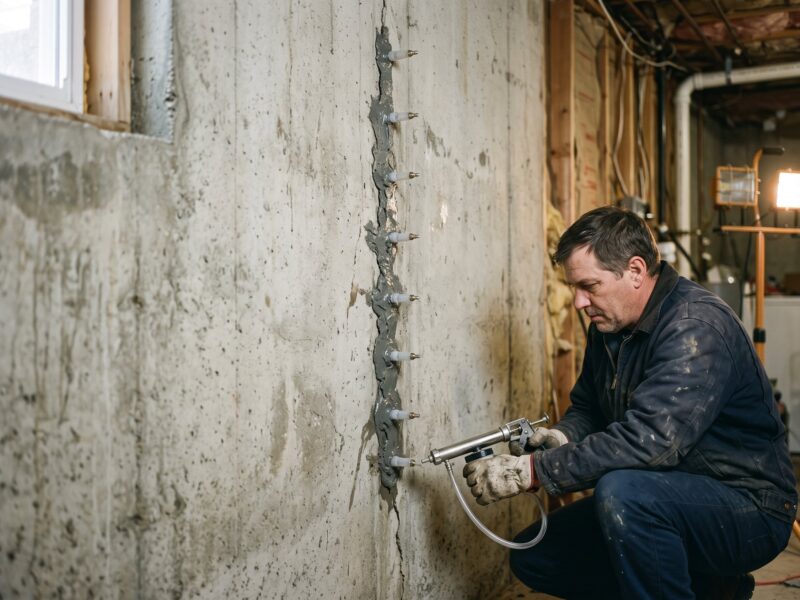
A crack that opened in late summer
September cracks near a big tree are the canopy's signature: drought-shrunk clay letting a footing down. The elevations confirm it before anyone quotes piers.

Sloping floors and sticking doors
In the old core this is often a beam, column or joist tired after a century, which costs far less than foundation work. We check the framing before blaming the footing.
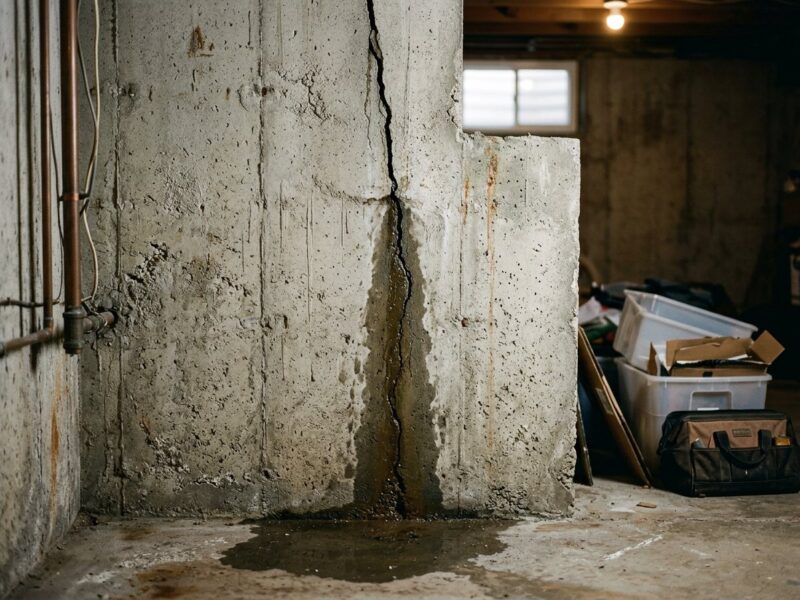
A crack that leaks when it rains
A wet crack in a poured or early concrete wall is usually a $450 to $900 injection, provided measurement shows the crack is stable rather than growing.

Cracks that open and close by season
Seasonal cycling is common on this clay and often benign. The test is year-on-year width, so we mark, date and photograph, and teach you to read it.
New crack near the biggest tree on the lot? That pairing is the most La Grange symptom there is. Get the elevations shot before another season moves it.
How does foundation repair work in La Grange?
A La Grange foundation repair runs four steps: read the era, measure the movement, match the method, verify the result. Most repairs finish in one to three days.
Read the wall and the yard
Stone, brick, block or poured decides the repair vocabulary, and the trees decide half the diagnosis, so the inspection maps both, plus crack widths and floor elevations. Free, within 48 hours.
Day 0Match the method
Repointing and relief for the old core, carbon or steel for bowing block, piers where the canopy has dropped a footing. The written plan pairs each failure to its fix at published prices.
Day 0, same visitInstall and verify
The crew installs, torques to spec, and re-measures against the day-zero numbers before leaving. Pier work logs drive pressures at every bracket so the depth is proven, not promised.
Days 1 to 3Warranty to the address
Structural repairs carry the 25-year transferable warranty registered to the house, paperwork that answers a buyer's inspector years later.
On completionReinforce or rebuild: what do La Grange walls actually need?
Nearly every failing La Grange wall can be reinforced in place for a fraction of rebuild money, and this village stacks the argument higher than most: rebuilding means excavation, and excavation on these lots means trenching through the root zones of the very trees that define the street.
| Reinforce in place | Excavate and rebuild | |
|---|---|---|
| Best for | Bowing, cracked or settling walls still structurally intact, which is most of them | Walls sheared or collapsing, a small minority |
| On the pre-1900 walls | Repointing, pressure relief and careful reinforcement suit a gravity wall | Pulling the earth off old stone or brick risks the wall itself |
| Under the tree canopy | Interior methods and small pier pits leave root systems alone | Trench excavation cuts roots and can destabilize tree and soil alike |
| Where clay shrinks in drought | Piers carry the footing to soil the trees cannot dry out | A rebuilt wall on the same shallow clay inherits the same movement |
| Cost | $450 injections to $3,000 piers, per published ranges | Tens of thousands per wall, plus excavation and a wrecked yard |
| Warranty | 25-year transferable, registered to the house | Varies by scope; insist on it in writing before signing |
An estimator who proposes a rebuild without deflection numbers has skipped the diagnosis. Ours is free and arrives with the measurements attached.
When do La Grange foundations move?
La Grange foundations move twice a year, in opposite directions, and knowing which season caused your crack is half the diagnosis.
Spring: the push
Saturated clay swells against basement walls, horizontal cracks widen and block walls in the mid-century ring do their annual announcing. Measurements taken now catch inward movement at its most visible.
March to MayLate summer: the drop
This is the La Grange season. The canopy drinks the clay dry, the shrinking soil eases away from footings, and settlement cracks open over doors and windows, especially on the tree side of the house.
June to AugustFall: the reading
With the clay calm between its two extremes, fall elevations give the cleanest baseline of the year, and repairs booked now are finished before frost.
September to NovemberWinter: the indoor season
Injection, carbon fiber, steel bracing and column work all happen inside at full speed while the frost holds the ground. Winter scheduling is the fastest on the calendar.
December to FebruaryHow much does foundation repair cost in La Grange?
Foundation repair in La Grange costs $450 to $900 for crack injection, $600 to $1,800 per strap, beam or anchor for a bowing wall, and $1,600 to $3,000 per pier for settlement, the same published ranges we hold in every town we serve. Masonry craft on the pre-1900 walls is scoped at the free inspection because old stone is its own trade.
| Work | Range | What moves the number |
|---|---|---|
| Urethane crack injectionper crack | $450–$900 | Crack length and width, access to the full height |
| Carbon fiber strapsper strap | $600–$1,000 | Wall height, spacing the deflection requires |
| Steel I-beam wall bracingper beam | $900–$1,500 | Ceiling height, footing condition at the base |
| Push or helical piersper pier | $1,600–$3,000 | Depth to load-bearing strata, access for equipment |
The full structural table lives on the pricing page; your written La Grange quote lands inside it.
Where we repair foundations in La Grange
The structural calls in 60525 sort by era and by shade. The historic district and the blocks near the Metra station send stone and brick questions: bulges, tired mortar and floors that have relaxed over a century. The mid-century ring and the 47th Street corridor send bowing block and stair-step corners. The Country Club district, the Ogden Avenue corridor and the leafiest streets everywhere send the September calls: settlement cracks under big hardwoods, which is the most La Grange call of all.
The drive from our Joliet and New Lenox base runs thirty-five to fifty minutes, and it is a run our crews make constantly, so monitoring is real here: when a crack deserves watching rather than steel, we put it on the route and come back to re-measure it instead of selling the repair early.
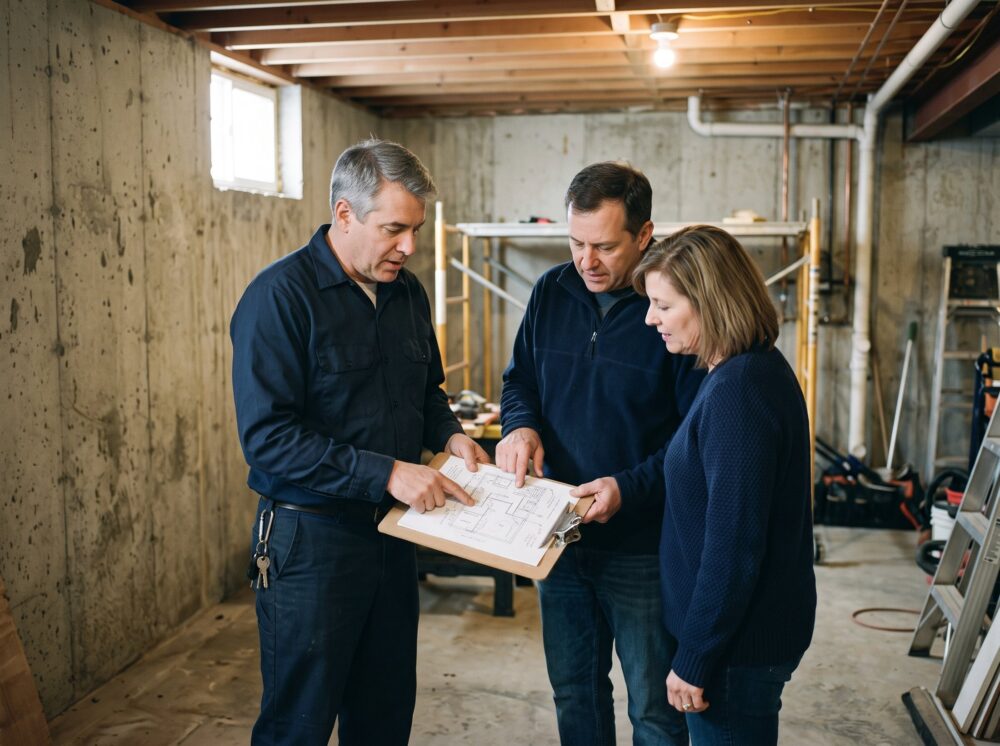 The walkthrough where the crack dates, tree positions and numbers get explained in plain English.
La Grange foundation repair questions, answered straight
Can the big oak in my front yard really crack my foundation?
It can contribute, and in La Grange it regularly does. A mature hardwood draws hundreds of gallons out of the soil on a dry day, and on clay that loss shrinks the ground. When the drying is uneven across the footprint, the footing settles unevenly with it, which is why a share of this village's cracks open in September instead of April.
Should I cut the tree down to protect the foundation?
Usually not, and never on our say-so alone. Removing a mature tree lets the clay rehydrate and heave, which can trade a settlement problem for an uplift problem. The right order is to prove the movement is real and ongoing, then weigh root barriers and soil watering, with an arborist in the conversation before anyone touches a saw.
My cracks open in summer and close in spring. Is that normal here?
On this clay, seasonal cycling is common and by itself usually not alarming. The number that matters is year-over-year width, not season-over-season. Mark the crack, date it and photograph it; we will show you the method at a free inspection, and if the trend line is flat, the honest advice is to keep watching.
Who repairs stone and brick foundations in La Grange?
We do, and the pre-1900 core is exactly why we keep masonry judgment on staff. A gravity wall wants repointing, moisture relief and careful reinforcement, not the standard poured-concrete script. If a quote for your historic-district wall reads like a subdivision quote, get a second opinion; ours is free.
How much does foundation repair cost in La Grange?
The published ranges hold here as everywhere: $450 to $900 per injected crack, $600 to $1,000 per carbon strap, $900 to $1,500 per steel beam, $1,000 to $1,800 for wall anchors and $1,600 to $3,000 per pier. Repointing on the oldest walls is priced at the inspection because stonework is scoped by the wall, not by a table.
Is a horizontal crack in a mid-century La Grange block wall an emergency?
It is a this-season problem, not a this-hour one, but do not let it ride. Horizontal at mid-height means spring clay pressure is bowing the wall, and the price climbs with the deflection: carbon fiber while the bow is small, steel or anchors once it is not. A free measurement tells you which side of that line you are on.
Will foundation repair hurt the sale of my La Grange house?
Documented repair typically sells better than a mystery crack in a century-old wall. Our work leaves a packet: the day-zero measurements, photos, the scope and a 25-year transferable warranty registered to the address. Your listing agent hands that to the buyer's inspector and the conversation gets short.
Do piers work in La Grange's clay?
Yes, and they are the specific answer to the canopy problem. Piers drive through the shallow clay the trees dry out and bear on strata below the root zone, so the footing stops caring what the summer does to the surface soil. Drive logs at every bracket prove the depth, and the 25-year transferable warranty stands behind the result.
Is the cracked wall also wet in spring?
The clay that drops a La Grange footing in August is the same clay that pushes water at the wall in April, so the two trades meet in a lot of the village's basements. If the wall that cracked in the drought also seeps in the melt, one inspection reads both and the fixes get sequenced in the right order.
Basement Waterproofing in La Grange
Foundation repair near La Grange

Get the crack measured before the next season moves it
A free structural inspection within 48 hours, a method matched to stone, block or poured, and a 25-year transferable warranty that transfers with the house.
Or talk to a human right now
(630) 335-1128
Request your free estimate
Tell us what you're seeing. We'll call back fast and be out within 48 hours.