Foundation Repair in Downers Grove, Illinois
Downers Grove walls carry unusual loads: teardown rebuilds hold back two more feet of clay than the ranches they replaced, and the famous canopy pulls moisture out of the ground in every drought. We measure the movement first, match the repair to the era, and warranty the result for 25 years.
- Structural warranty: 25-year transferable
- Published pricing: injection from $450, piers from $1,600
- Free structural inspection within 48 hours
 25-year transferable warranty
Who does foundation repair in Downers Grove?
ProSeal Basement Waterproofing repairs foundations across Downers Grove, in ZIPs 60515 and 60516, from a base in the Joliet and New Lenox corridor. Crack injection runs $450 to $900, carbon fiber straps $600 to $1,000 each, steel beams $900 to $1,500, and settlement piers $1,600 to $3,000, every number published before an estimator sets foot in your basement, every repair backed by a 25-year transferable warranty.
The structural spread here is wide: masonry walls near the original village that predate 1900, a big band of mid-century block, and new poured walls dug deeper than anything the village had seen before. Each fails differently and each deserves its own repair. An estimator with one answer for all three eras has not measured enough Downers Grove walls, and ours are paid for the diagnosis, not the invoice.
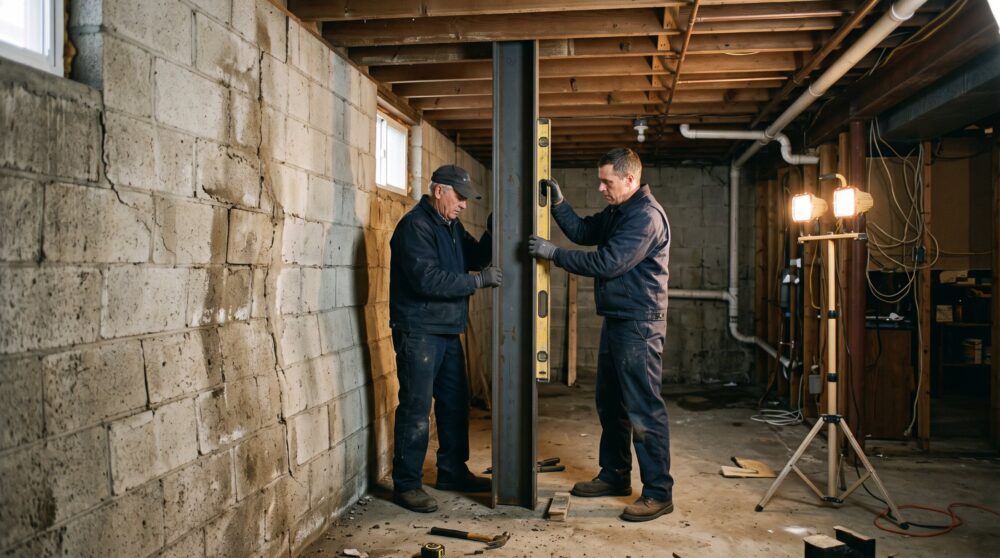 Reinforcement matched to the measurement, not to the sales script.
What does foundation repair in Downers Grove include?
Six structural tools cover what Downers Grove housing breaks, and the cheapest adequate fix always leads the written plan. An injection that solves the problem beats a brace that flatters the invoice.
 Urethane crack injection
Full-depth sealing for cracks in poured walls, including the newest rebuild pours.
Learn more
Urethane crack injection
Full-depth sealing for cracks in poured walls, including the newest rebuild pours.
Learn more
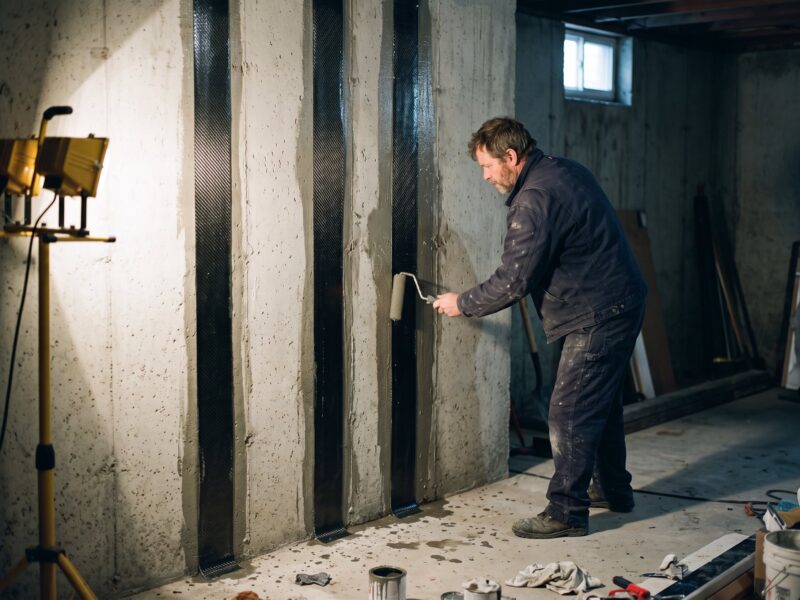 Carbon fiber straps
For mid-century block caught while the bow is still under two inches.
Learn more
Carbon fiber straps
For mid-century block caught while the bow is still under two inches.
Learn more
 Steel I-beams & wall anchors
For deep walls where clay pressure has moved past the carbon fiber stage.
Learn more
Steel I-beams & wall anchors
For deep walls where clay pressure has moved past the carbon fiber stage.
Learn more
 Push & helical piers
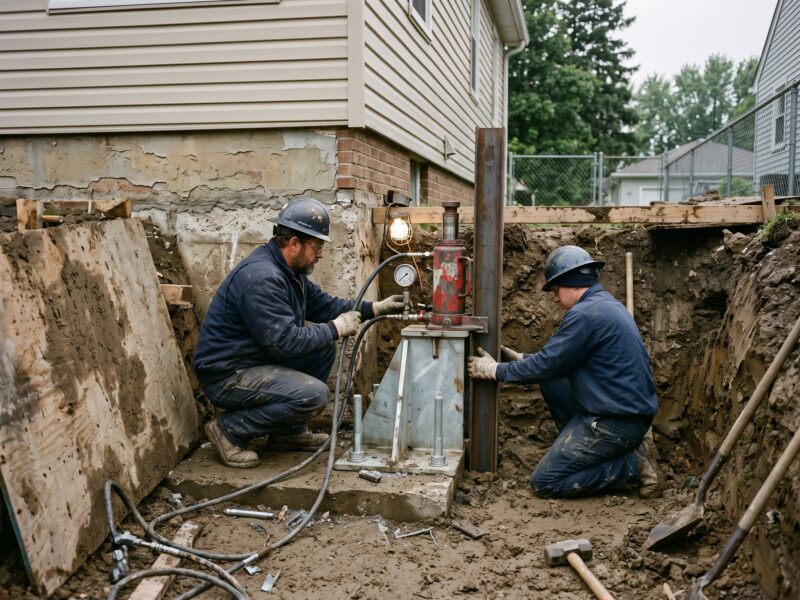
For footings dropped by drought-shrunk clay under the heavy canopy.
Learn more
Push & helical piers
For footings dropped by drought-shrunk clay under the heavy canopy.
Learn more
 House leveling
Columns, beams and footings under the older stock's sagging floors.
Learn more
House leveling
Columns, beams and footings under the older stock's sagging floors.
Learn more
 Not sure what you have?
A plain-language guide to what Downers Grove walls do when they move, and which fix answers each.
Learn more
Not sure what you have?
A plain-language guide to what Downers Grove walls do when they move, and which fix answers each.
Learn more
Why do Downers Grove foundations crack and settle?
Downers Grove foundations fail along era lines because the village was built in layers: century-old masonry near the original village, mid-century block through the boom decades, and deep new pours on teardown lots. Depth and drought are the two forces that connect all three.

The pre-1900 village walls
Foundations near the old village and the Metra line hold themselves together with mortar that has been cycling wet and dry for over a century. They fail gradually, through joint loss and bulging, and they want careful relief and repointing, never aggressive intervention.

The mid-century block band
Belmont and the blocks off Main Street and Ogden carry 1950s to 70s block walls at exactly the age where clay pressure starts winning: horizontal cracks at mid-height, stair-steps at the corners, a slow inward lean that measurement catches early.

The deep rebuild pours
Teardown rebuilds put nine-foot walls where seven-foot walls stood, and a deeper wall is a longer lever for the same clay. The concrete is young and strong, but shrinkage cracks appear as it cures, and the added depth raises the lateral load for the wall's whole life.
What makes Downers Grove ground move?
Downers Grove foundations sit in clay that swells when St. Joseph Creek weather saturates it and shrinks hard in drought, and the village's signature tree canopy amplifies the dry half of that cycle. A mature tree moves an enormous volume of water out of the soil in a dry summer, and footings inside a big root zone can drop as the clay around them shrinks. The wetter the spring and the drier the August, the wider the annual swing every wall must ride.
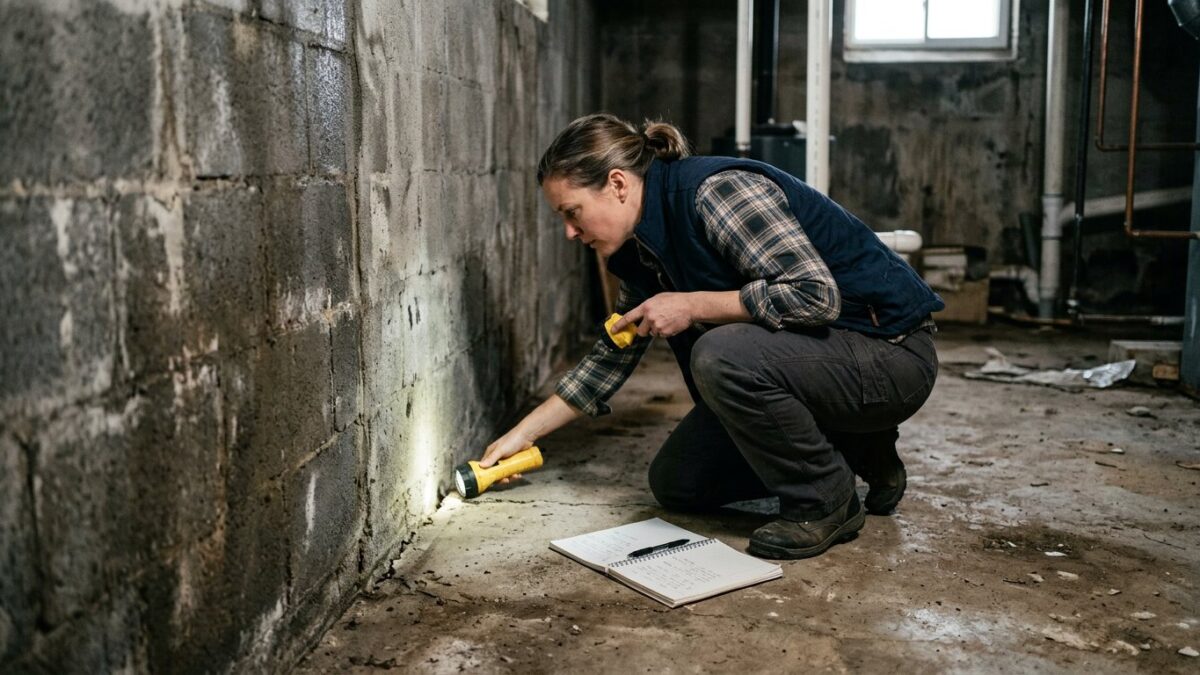
The teardown era added a second force: depth. A basement dug two feet deeper carries a taller column of saturated clay against its walls, so the newest foundations in the village bear the highest lateral loads in it. That is why our inspection measures rather than guesses, deflection in numbers, elevations across the floor, crack widths logged, because in this village the era of the wall and the trees on the lot change what the same crack means.
 Elevations in numbers: how a Downers Grove floor tells us what moved.
Signs you need foundation repair in Downers Grove
Six symptoms bring most Downers Grove structural calls, ranging from "schedule a measurement" to "call this week." Clay movement never reverses itself, so none of them improves on its own.

A horizontal crack at mid-height
The serious one: clay pressure actively bowing the wall. On the mid-century block band this is carbon fiber money if caught early and steel money if watched too long.
A crack that opens and leaks
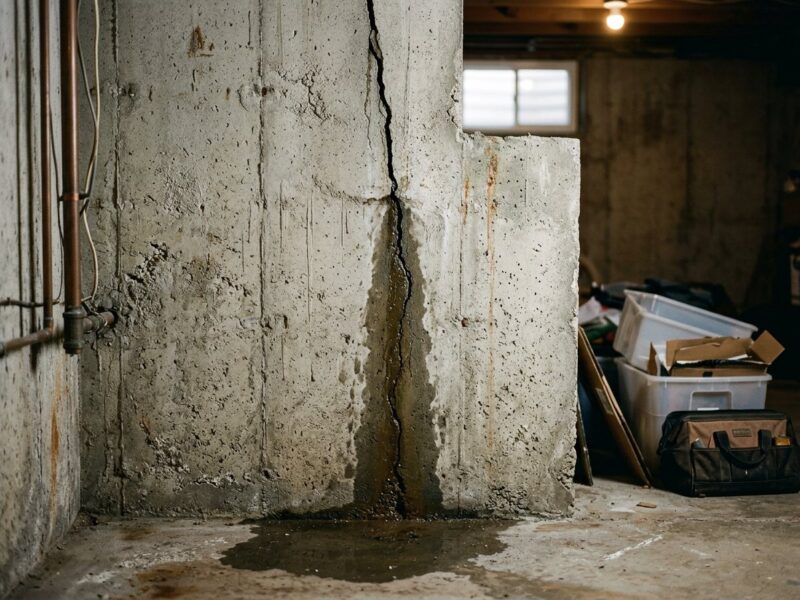
Poured-wall cracks that pass water are usually sealable for $450 to $900. The inspection confirms the crack is stable before anyone proposes more than an injection.

Doors sticking, floors sloping
When upstairs doors stop latching after a dry summer, something below moved. Under heavy canopy the culprit is often drought-shrunk clay, and elevations tell us where.

A sag along the middle of the house
In the older stock the dip is often a tired beam or column line, not the foundation at all. That distinction can be a four-figure fix instead of five, and measurement makes it.
Hairline cracks in a newer pour
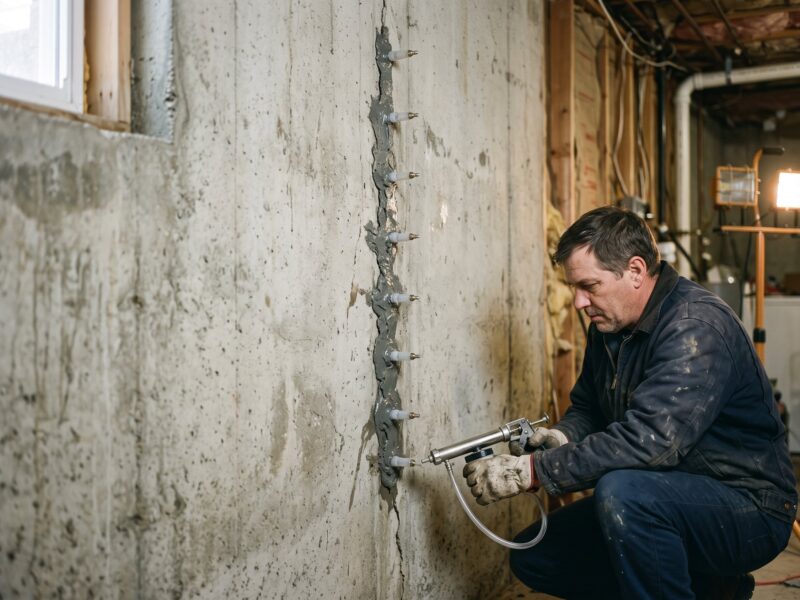
Rebuild walls crack as they cure, and most shrinkage cracks are cosmetic. The ones that widen season over season are telling you about load, and logging them costs nothing.

A crack you have been watching grow
A photographed, dated, measured crack is evidence; a remembered one is a guess. If yours has visibly moved since you first noticed it, it has earned a free measurement.
Rebuild wall showing cracks the builder never mentioned? Get them measured before the next wet spring loads the wall again. The structural inspection is free.
How does foundation repair work in Downers Grove?
A Downers Grove foundation repair runs four steps: date the wall, measure the movement, match the method, verify the result. Most repairs finish in one to three days.
Date the wall, measure the movement
Pre-1900 masonry, mid-century block or a deep new pour changes every downstream decision, so the inspection starts by identifying the era, then logs deflection, elevations and crack widths in numbers. Free, within 48 hours.
Day 0Match the method
Relief and repointing for the old village walls, carbon or steel for the block band, injection or piers for the pours: the written plan pairs the fix to the failure at published prices.
Day 0, same visitInstall and verify
The crew installs, torques to spec, and re-measures against the day-zero numbers before packing up. Pier work logs drive pressures at every bracket, and finished basements lose only the drywall along the repair line.
Days 1 to 3Warranty to the address
Structural work carries the 25-year transferable warranty registered to the house, a document that matters when a Downers Grove listing meets a buyer's inspector.
On completionReinforce or rebuild: what do Downers Grove walls actually need?
Nearly every failing Downers Grove wall can be reinforced in place for a fraction of rebuild money, and the village makes the case louder than most: rebuild means excavating beside deep walls, through mature root zones, on lots where the landscaping alone took decades to grow.
| Reinforce in place | Excavate and rebuild | |
|---|---|---|
| Best for | Bowing, cracked or settling walls still structurally intact, which is most of them | Walls sheared or collapsing, a small minority |
| On deep rebuild walls | Interior steel and anchors handle the added lateral load without digging | Nine feet of excavation with shoring beside a house you are living in |
| Under the canopy | No roots cut, no trees risked; the work stays indoors | Trenching a mature root zone endangers the trees the village is named for |
| On finished basements | Drywall opens along the repair line only | The wall and everything attached to it comes apart |
| Cost | $450 injections to $3,000 piers, per published ranges | Tens of thousands per wall, plus excavation and landscape restoration |
| Time | One to three days for most repairs | Weeks, with machines parked on the lawn |
If an estimator proposes a rebuild without showing you deflection numbers, get a second opinion. Ours is free and arrives with a tape, a level and a written measurement.
When do Downers Grove foundations move?
Downers Grove foundation movement follows the clay's water content through the year, and the canopy makes the dry swing here sharper than in less-planted towns. Every season has its cheapest moment to act.
Spring: push season
Saturated clay swells and loads every wall, and the deep rebuilds feel it most because they hold back the tallest column of it. Horizontal cracks widen and bows advance; a measurement now catches movement at its most visible.
March to MaySummer: shrink season
Drought plus a thirsty canopy pulls moisture out of the soil fast, and footings inside big root zones drop. Doors stick, settlement cracks open over windows, and elevation surveys do their best diagnostic work.
June to AugustFall: repair season
The clay is calm between its two extremes, which makes fall the unhurried time to brace a wall, drive piers or inject the spring's cracks before frost.
September to NovemberWinter: interior season
Frost owns the top of the wall, but injection, carbon fiber, steel bracing and column work all happen indoors at full speed. Winter books fastest and finishes before the thaw.
December to FebruaryHow much does foundation repair cost in Downers Grove?
Foundation repair in Downers Grove costs $450 to $900 for crack injection, $600 to $1,000 per carbon fiber strap, $900 to $1,500 per steel beam, and $1,600 to $3,000 per settlement pier, the same published ranges we hold in every town we serve. Pre-1900 masonry work is craft-scoped at the free inspection.
| Work | Range | What moves the number |
|---|---|---|
| Urethane crack injectionper crack | $450–$900 | Crack length and width, access to the full height |
| Carbon fiber strapsper strap | $600–$1,000 | Wall height, spacing the deflection requires |
| Steel I-beam wall bracingper beam | $900–$1,500 | Ceiling height, footing condition at the base |
| Push or helical piersper pier | $1,600–$3,000 | Depth to load-bearing strata, access for equipment |
The full structural table lives on the pricing page; your written Downers Grove quote lands inside it.
Where we repair foundations in Downers Grove
The structural calls sort by era and by trees. The downtown Metra district and the old village core send century-old masonry: repointing, bulge relief and gentle handling. Belmont and the Main Street and Ogden Avenue corridors send bowing mid-century block, carbon fiber and steel. The teardown streets send young pours with shrinkage cracks and the occasional wall carrying more clay than its builder planned for. Denburn Woods and the heaviest canopy blocks send drought settlement, elevation surveys and piers. Both ZIPs, 60515 and 60516, get the same crew and the same published prices.
We are based in the Joliet and New Lenox corridor, thirty-five to forty-five minutes out, and we make the drive constantly. That matters for monitoring: when a wall deserves watching rather than immediate steel, a re-measure visit is a routine stop on a route we already run, not a favor.
 On the road early: Downers Grove is a standing stop on the weekly route.
Downers Grove foundation repair questions, answered straight
Is a horizontal crack in my 1960s Downers Grove block wall serious?
Yes. Horizontal at mid-height means clay pressure is actively bowing the wall inward, and block of that age has little reserve left. Caught under two inches of bow it is usually carbon fiber at $600 to $1,000 per strap; left to grow, it graduates to steel beams, anchors or worse. Measure it now, while the cheap fix is still on the table.
Our teardown rebuild already has cracks in the foundation. Is that normal?
Some of it is. Poured concrete shrinks as it cures, and hairline vertical cracks in a young wall are common and usually cosmetic. What deserves attention is a crack that widens season over season or starts passing water, because a deeper wall carries more lateral load than the ranch that stood there. We log widths and settle the question with numbers.
Can the big trees on my lot really make my house settle?
In a dry year, yes. A mature tree draws a large volume of water out of the clay, and a footing inside its root zone can drop as the soil shrinks. The pattern shows up as late-summer sticking doors and cracks over openings on the tree side of the house. Elevations confirm it, and if the movement is active, piers end it.
How much does foundation repair cost in Downers Grove?
Published ranges, same as every town on our map: $450 to $900 per injected crack, $600 to $1,000 per carbon strap, $900 to $1,500 per steel beam, $1,000 to $1,800 for wall anchors, and $1,600 to $3,000 per pier. Century-old masonry near the village core is scoped at the free inspection because old walls are their own craft.
Will foundation repair hurt the resale of our Downers Grove house?
Documented repair usually helps it. In a market where teardown-era houses trade at serious prices, buyers' inspectors look hard at basements, and a repair that comes with measurements, photos, scope and a 25-year transferable warranty registered to the address answers their questions before they are asked. An unexplained crack does the opposite.
Does homeowners insurance cover foundation repair in Illinois?
Usually not. Standard Illinois policies exclude damage from soil movement and hydrostatic pressure, which is most foundation trouble. That exclusion is the financial argument for catching a bowing wall at the per-strap stage instead of the five-figure stage.
Do I need a permit for foundation repair in Downers Grove?
It varies by municipality and by the scope of the work; structural repairs often need one and minor injection work often does not. Where a permit is required for your job, we pull it as part of the work rather than leaving the paperwork to you.
You are based near Joliet. Can you really monitor a wall out here?
Yes, because the drive is thirty-five to forty-five minutes and we make it constantly. When the honest advice is to watch a wall rather than brace it, we put the re-measure on the calendar and show up, and the day-zero numbers make each visit a comparison rather than an opinion.
Is the moving wall also wet?
In Downers Grove the two problems arrive together, because the clay pressing a deep wall inward is the same saturated clay pushing water through it. If your cracked wall also seeps every spring, one inspection covers both trades and sequences the fixes so the drainage relieves the pressure the steel resists.
Basement Waterproofing in Downers Grove
Foundation repair near Downers Grove

Get the Downers Grove wall measured, whatever era poured it
A free structural inspection within 48 hours, a repair matched to the wall's age and depth, and a 25-year transferable warranty that transfers with the house.
Or talk to a human right now
(630) 335-1128
Request your free estimate
Tell us what you're seeing. We'll call back fast and be out within 48 hours.