
Basement Waterproofing in La Grange, Illinois
Salt Creek to the north, Flagg Creek to the south, and clay in between that soaks up every wet spring. La Grange basements sit under some of the oldest walls we work on, and we dry them out with a system chosen for the wall, warrantied for life.
- Free written inspection within 48 hours
- Interior systems warrantied: lifetime, fully transferable
- $2M insured, 24/7 response for standing water
 Serving La Grange from the Joliet and New Lenox corridor
Who does basement waterproofing in La Grange?
ProSeal Basement Waterproofing installs interior drain tile, sump pump systems and yard drainage throughout La Grange and ZIP 60525, with interior drain tile priced at $95 to $160 per linear foot and a full perimeter system with sump and battery backup landing between $8,000 and $16,000 on most houses. The prices are published before we ever see your basement, and the free inspection decides which pieces you actually need.
La Grange asks more of a waterproofing company than most suburbs because the walls span more than a century. A pre-1900 stone or brick foundation near the historic district takes water differently than the block ring built at mid-century, and it deserves a different trench detail. Whoever inspects your basement should be able to name your wall type from the stairs, and ours can.
See the full basement waterproofing system, wall to discharge
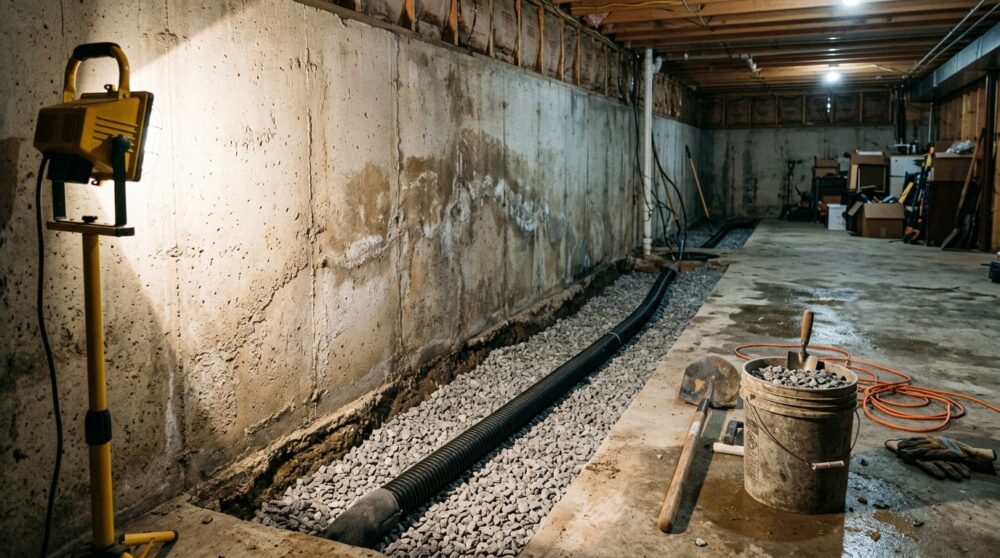 Perimeter tile to sump to discharge: the system that outlasts the spring.
What does basement waterproofing in La Grange include?
Six systems cover everything that gets a La Grange basement wet, from the century-old walls near the village center to the block basements of the mid-century ring. The inspection prices only the pieces your house needs, all from the published ranges.
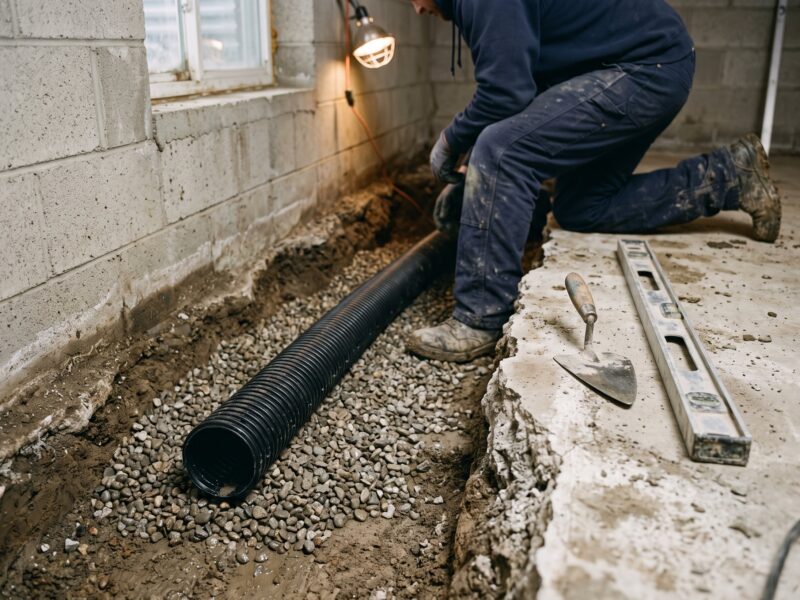 Interior drain tile
Footing-level drainage with the gentler trench detail old stone and brick walls require.
Learn more
Interior drain tile
Footing-level drainage with the gentler trench detail old stone and brick walls require.
Learn more
 Sump pumps & battery backup
Sized for the spring surges the clay between two creeks delivers.
Learn more
Sump pumps & battery backup
Sized for the spring surges the clay between two creeks delivers.
Learn more
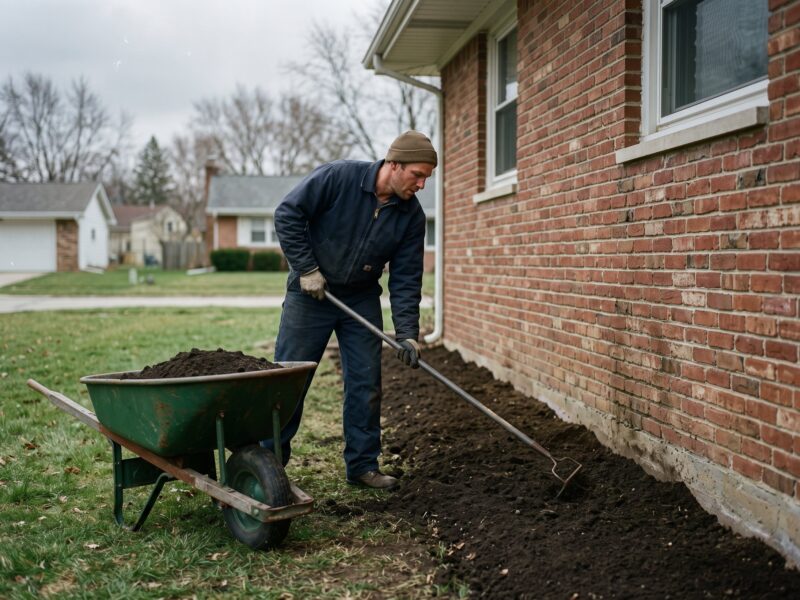 Yard drainage & regrading
Grading that moves roof water off the clay before it reaches the wall.
Learn more
Yard drainage & regrading
Grading that moves roof water off the clay before it reaches the wall.
Learn more
 French drains
For low lots along the creek corridors that collect the neighborhood's runoff.
Learn more
French drains
For low lots along the creek corridors that collect the neighborhood's runoff.
Learn more
 Crawl space encapsulation
Additions and porch foundations under the old housing stock included.
Learn more
Crawl space encapsulation
Additions and porch foundations under the old housing stock included.
Learn more
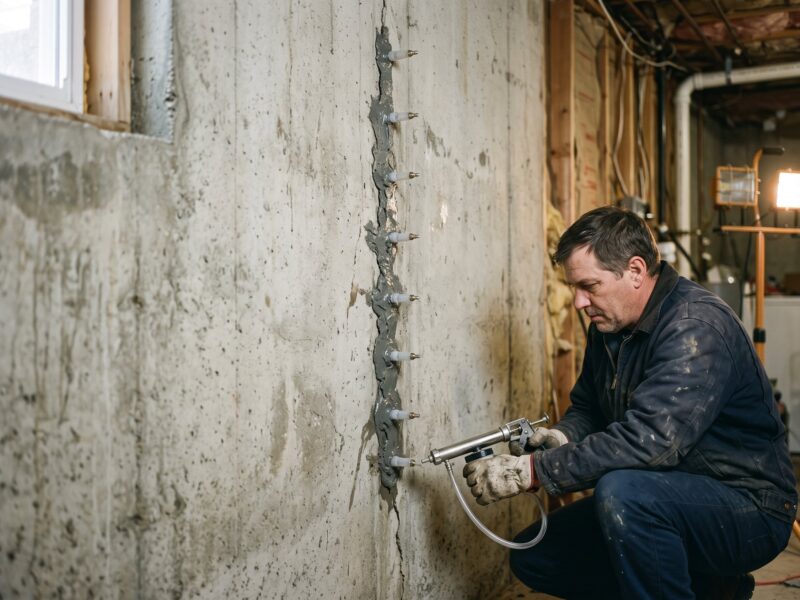 Leaking crack injection
Wet cracks in poured and early concrete walls sealed from $450.
Learn more
Leaking crack injection
Wet cracks in poured and early concrete walls sealed from $450.
Learn more
Why do La Grange basements leak?
La Grange basements leak because the village sits on clay between two creeks, and because much of its housing predates any idea of waterproofing. Which of those matters more at your house depends mostly on when your street was built.

The historic district and village center
The pre-1900 and turn-of-the-century houses around La Grange Road stand on stone, brick and early concrete with no membrane and no footing drain. These walls admit water through joints and porous mortar, and the fix pairs drainage with respect for old masonry.

The mid-century ring
The block basements built around the old core take the classic clay squeeze: dry summers, wet floor lines every March, and original drain tile that silted shut decades ago. Cove-joint seepage is the signature call from these streets.
The creek corridors
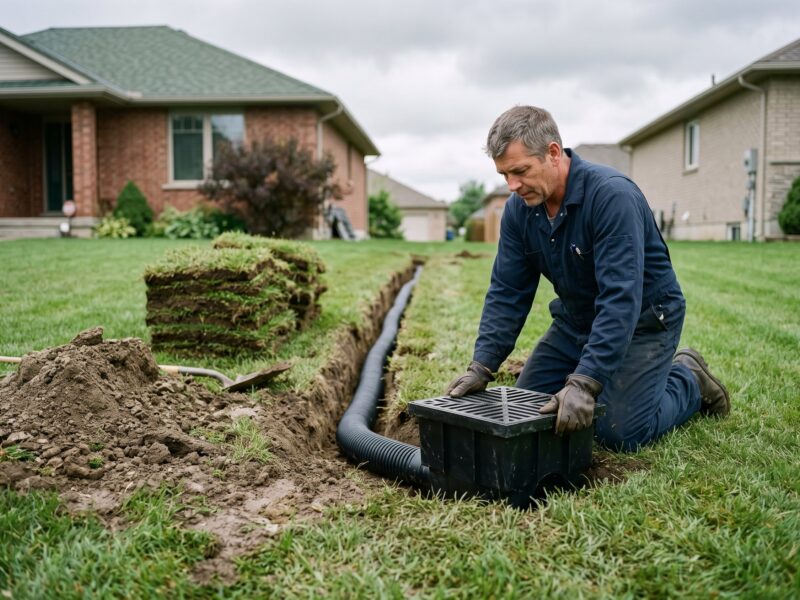
Blocks toward Salt Creek and Flagg Creek sit lower on clay that stays loaded longest after a storm. Out here the first conversation is often surface water, discharge routing and grading before anyone opens a floor.
What makes La Grange groundwater different?
La Grange sits on clay between two waterways, Salt Creek to the north and Flagg Creek to the south, and that geography sets the rhythm of its basement water. A wet spring saturates the clay across the whole village, hydrostatic pressure builds against walls and under floors, and basements that behaved all winter suddenly show a wet cove joint. The clay drains slowly, so the pressure hangs around long after the rain stops.
The tree canopy adds a wrinkle few towns share. Mature hardwoods on nearly every parkway pull enormous amounts of water from the clay in late summer, which is good news for August basements and hard news for footings. It also means fall delivers a heavy leaf load into gutters, and a clogged gutter under a big canopy dumps roof water exactly where a foundation least wants it. Part of every inspection here happens outside, looking up.
 Discharge carried well away from the wall, headed for daylight, not back into the clay.
Signs your La Grange basement needs waterproofing
Six symptoms account for most La Grange water calls, and each one points to a different fix at a different price. The free inspection exists to match your symptom to its actual cause before anyone quotes a system.
A wet line where floor meets wall
Hydrostatic pressure pushing groundwater under the footing, the classic spring complaint from the mid-century block ring. This is the drain tile call.

White mineral bloom on old walls
Efflorescence on stone, brick or block near the village center means water is moving through the wall itself and leaving its minerals behind. Drainage relieves the source.

A sump that runs all spring
Constant cycling between March and May is the clay between the creeks unloading. The question is whether the pit has the capacity and the backup to keep up.

Musty air on the first floor
A century-old basement exports damp air upstairs through every gap in the old framing. A smell that returns each spring is seasonal groundwater talking.

Water standing in the yard for days
Slow-draining clay under a shaded lot holds puddles long after a storm. Standing water near the house becomes wall pressure; grading and drains intercept it.
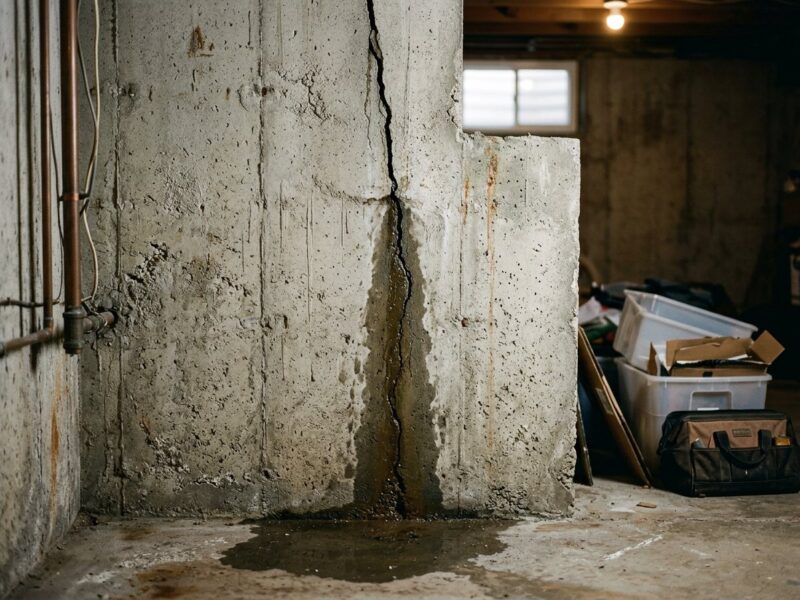
A crack that only leaks in rain
Early concrete and poured walls crack with age, and a crack that runs during storms is usually a $450 to $900 injection, finished in a morning.
Wet floor line every March in the same corner? Tell us the street and the decade your house was built; the fix usually follows from those two facts.
How does basement waterproofing work in La Grange?
A La Grange waterproofing job moves through four steps from your call to a registered warranty, and most full systems are installed in two to four days.
Inspect inside and out
We trace the water in the basement, walk the grading, and check the gutters under that canopy, because a leaf-choked downspout can mimic a groundwater problem. Free, within 48 hours.
Day 0Match the trench to the wall
Stone and brick near the historic district get an off-footing trench and a masonry conversation; mid-century block gets wall drainage into the tile. The written plan names which and why.
Day 0, same visitInstall and flood test
Trench, tile, gravel, sump with battery backup, fresh concrete, then a flood test you watch before we load the van. Finished rooms lose only the lowest drywall course along the run.
Days 1 to 4Register the warranty
The lifetime, fully transferable warranty is registered to the address and transfers to the next owner, which buyers of century-old La Grange houses ask about specifically.
On completionInterior or exterior waterproofing: which works in La Grange?
Interior drain tile wins most La Grange comparisons, and the village itself is the reason: tight lots around the historic core, mature tree roots you do not want an excavator cutting, and old masonry walls that should not have the earth pulled off their outside face.
| Interior drain tile | Exterior excavation | |
|---|---|---|
| Best for | Cove-joint seepage and saturated spring clay, the standard La Grange pattern | Walls deteriorating from the outside face |
| On stone and brick walls | Works with an off-footing trench that leaves old masonry undisturbed | Excavating beside a century-old gravity wall is a serious risk |
| Around mature trees | No digging outdoors, so parkway and yard hardwoods keep their roots | Trenching severs roots and can destabilize the tree and the clay |
| Lot access | Installs entirely from inside; narrow historic-district side yards do not matter | Needs machine access along every excavated wall |
| Cost | $95 to $160 per linear foot | Several times interior cost, priced per wall after inspection |
| Season | Installs all year, including frozen January | Weather-dependent, and saturated spring clay stops digs |
Where a wall genuinely needs exterior work we say so in writing and price it. The method should fit the wall and the lot, not a sales script.
When do La Grange basements flood?
La Grange basement water follows the clay's calendar, and each season has a smartest move. Knowing where your month falls is the difference between a $600 fix and an emergency.
Spring: the clay unloads
Snowmelt and rain saturate the ground between Salt Creek and Flagg Creek, and the whole village's cove joints and sump pits feel it at once. Our busiest La Grange season, which is when the 48 hours promise earns its keep.
March to MaySummer: storms and outages
Violent short storms drop inches in an hour and knock out power, which is precisely when a primary-only sump quits. The battery backup is not an upsell here; it is the season's lesson.
June to AugustFall: the gutter season
The canopy that shades the village all summer fills every gutter in October. Cleaning, downspout burials and regrading now, in the $600 to $2,500 range, keep roof water off the wall all spring.
September to NovemberWinter: the install window
Interior drain tile happens entirely indoors, so frozen ground is irrelevant and scheduling is fastest. Systems installed now are tested and proven before the thaw arrives.
December to FebruaryHow much does basement waterproofing cost in La Grange?
Basement waterproofing in La Grange costs $95 to $160 per linear foot for interior drain tile, with a full perimeter system including a sump and battery backup landing between $8,000 and $16,000 on most homes. La Grange pays the same published ranges as every town on our map, and masonry hours on the oldest walls are scoped at the free inspection.
| Work | Range | What moves the number |
|---|---|---|
| Interior drain tileper linear foot | $95–$160 | Length of the run, slab thickness, what has to be moved off the walls |
| Sump pump with battery backupinstalled | $2,800–$4,500 | Pit condition, backup capacity, discharge routing |
| Exterior French drainper linear foot | $45–$90 | Trench depth, where the water can legally go |
| Downspout extensions and regradingtypical job | $600–$2,500 | Feet of grade to rebuild, soil hauling |
Every range lives on the pricing page, and your written La Grange quote lands inside it.
Where we waterproof in La Grange
All of ZIP 60525 is on the route, and the calls map neatly onto the village. The historic district and the blocks around La Grange Road and the Metra station send weeping stone and brick, narrow side yards and questions about protecting original masonry. The mid-century ring and the 47th Street corridor send cove-joint seepage and silted original tile. The Salt Creek corridor, the Country Club district and the Ogden Avenue side send slow-draining yards, sump capacity questions and grading work under big trees.
Straight about the drive: our crews are based in the Joliet and New Lenox corridor, and La Grange is thirty-five to fifty minutes away. It is a run we make constantly, standard inspections still land within 48 hours, and standing water gets the 24/7 response regardless of the mileage.
 Loaded and northbound early: La Grange is a regular morning on this route.
La Grange basement waterproofing questions, answered straight
Can you waterproof a stone or brick foundation in the La Grange historic district?
Yes, and it is a job we take seriously rather than generically. Old gravity walls want an off-footing interior trench, drainage that relieves pressure without undermining the masonry, and honesty about any repointing the wall needs. The system installs from inside, so the house's exterior and landscaping stay exactly as they were.
Does living near Salt Creek or Flagg Creek mean my basement will flood?
Not by itself. The creek corridors mean slower-draining clay and longer-loaded soil after storms, which raises the odds of seepage, but that is groundwater, and drain tile and sump capacity handle it. If your address sits in mapped floodplain, we say so at the inspection and talk insurance before systems.
My gutters are full of leaves every fall. Could that be my whole problem?
It genuinely can be. Under a canopy this heavy, a clogged gutter or a short downspout puts a roof's worth of water against one wall all winter. The inspection checks the roofline and grading before the basement, because $600 to $2,500 of outside work sometimes ends a leak a system was about to be sold for.
How much does basement waterproofing cost in La Grange?
The same published ranges we hold everywhere: $95 to $160 per linear foot for interior drain tile, $8,000 to $16,000 for a full perimeter system with a sump and battery backup, $2,800 to $4,500 for a sump with backup on its own, and $600 to $2,500 for downspout and grading work. Your written quote lands inside those numbers.
Can you work on a narrow lot near the village center?
Yes. Interior drain tile needs no yard access at all, which suits the older blocks where houses sit close and side yards are an arm span wide. Everything comes through the basement, and the garden along the foundation never knows we were there.
Will homeowners insurance cover basement seepage in La Grange?
Almost never. Standard Illinois policies exclude groundwater seepage and hydrostatic pressure, which is exactly what wets most La Grange basements. That exclusion is the practical argument for fixing the water path once, with a lifetime, fully transferable warranty, instead of filing claims that will be denied.
Do I need a permit to waterproof a basement in La Grange?
It varies by municipality and by the scope of the work. Some interior drainage and sump work needs a permit and some does not, and where one is required we pull it as part of the job. That paperwork is on us, not on you.
How fast can you get to La Grange, honestly?
The drive from our base in the Joliet and New Lenox corridor runs thirty-five to fifty minutes, and we make it constantly. Standard inspections happen within 48 hours, and a basement with standing water gets the 24/7 response, drive time included.
Is the wet wall also cracking?
In La Grange the clay works both directions in a single year: spring saturation pushes water and pressure against the wall, and late-summer shrinkage under the big trees lets footings drop. If your damp basement also has a widening crack or a door that quit latching, one inspection reads both problems and sequences both fixes.
Foundation Repair in La Grange
Basement waterproofing near La Grange

Dry the basement under the old trees
A free inspection within 48 hours, a system matched to stone, brick or block, and a lifetime, fully transferable warranty registered to the address.
Or talk to a human right now
(630) 335-1128
Request your free estimate
Tell us what you're seeing. We'll call back fast and be out within 48 hours.