Foundation Repair in Elmhurst, Illinois
The teardown boom rebuilt Elmhurst one lot at a time, so a 1920s block wall and a nine-foot poured basement now share a fence line. They carry different loads, they crack for different reasons, and we measure both before prescribing anything.
- Structural warranty: 25-year transferable
- Published pricing: injection from $450, piers from $1,600
- Free structural inspection within 48 hours
 25-year transferable warranty
Who does foundation repair in Elmhurst?
ProSeal Basement Waterproofing repairs foundations across Elmhurst, Illinois, with urethane crack injection at $450 to $900 per crack, bowing-wall reinforcement at $600 to $1,800 per strap, beam or anchor, and settlement piers at $1,600 to $3,000 each, every number published before an estimator sets foot in the house and every repair backed by a 25-year transferable warranty.
Elmhurst asks a contractor to hold two playbooks at once. The old blocks need someone who knows when sixty-year movement is finished and when it is not, so nobody oversells a stable stair-step. The rebuilds need someone who can tell shrinkage from structure and put it in writing while the builder warranty still means something. We are paid for that judgment, not for the size of the invoice.
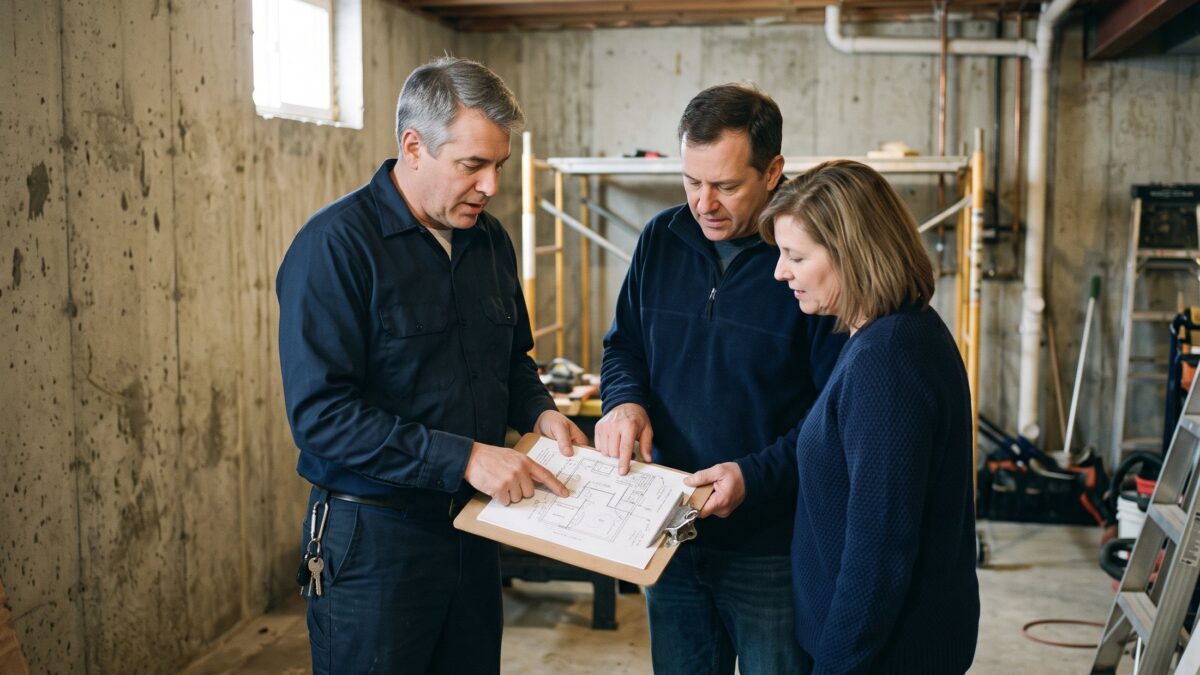
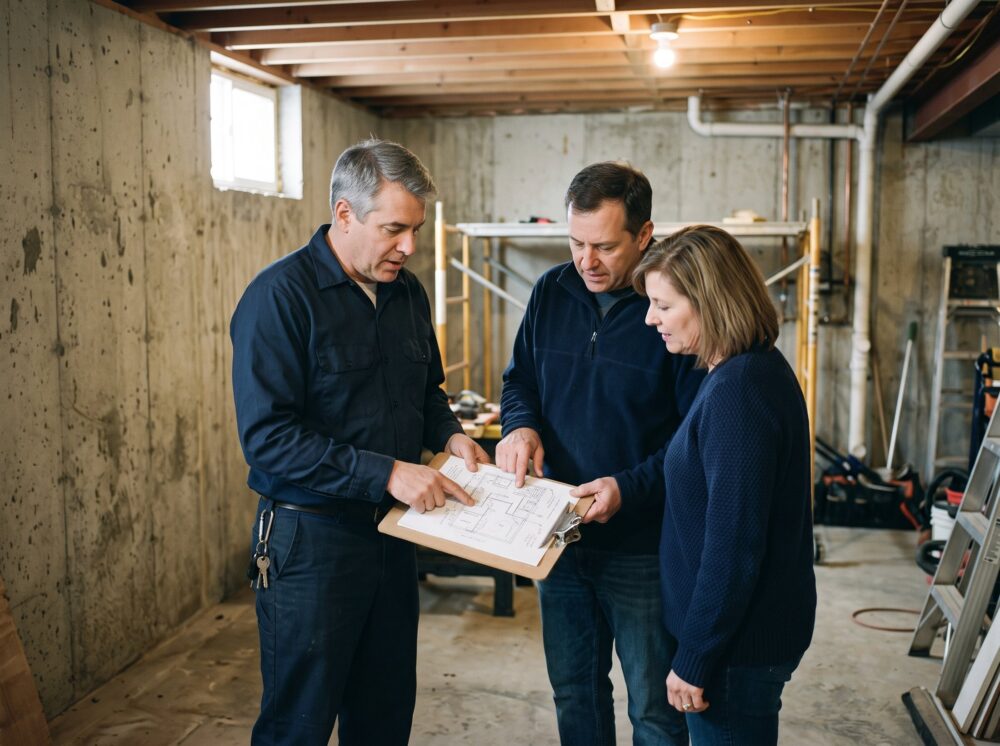 The written findings: what an Elmhurst homeowner takes to a builder or a buyer.
What does foundation repair in Elmhurst include?
Six structural tools cover both halves of the Elmhurst housing stock, and the cheapest adequate fix always leads the written plan. An injection that solves the problem is quoted as an injection, full stop.
 Urethane crack injection
Shrinkage cracks and cold joints in the rebuild stock, sealed full depth in a morning.
Learn more
Urethane crack injection
Shrinkage cracks and cold joints in the rebuild stock, sealed full depth in a morning.
Learn more
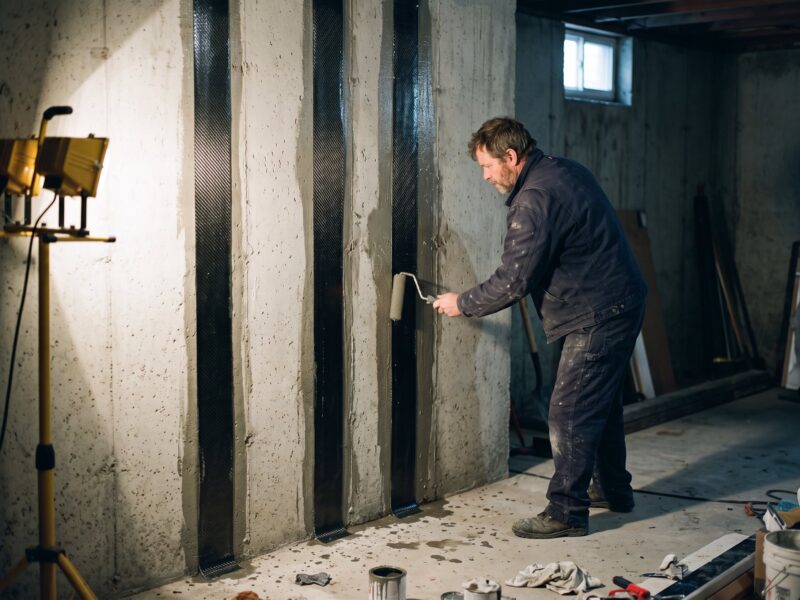 Carbon fiber straps
For pre-war block caught while the bow is still small.
Learn more
Carbon fiber straps
For pre-war block caught while the bow is still small.
Learn more
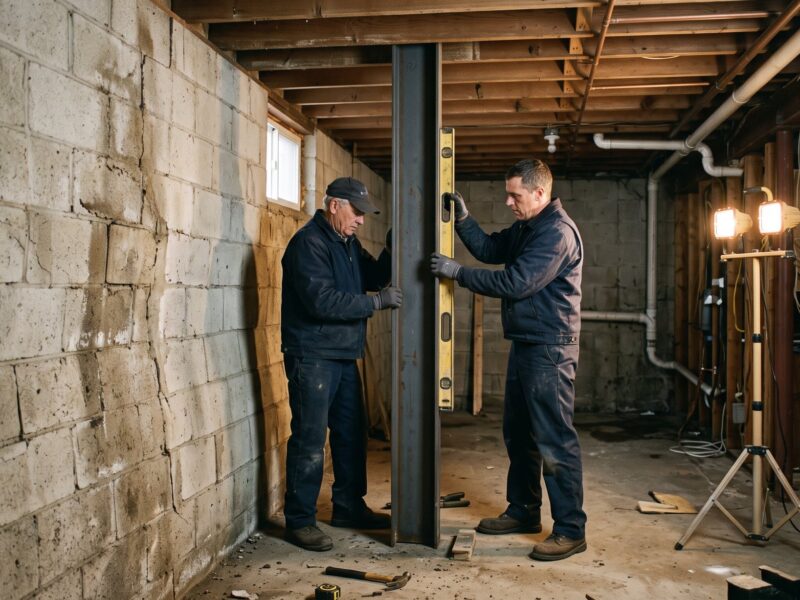 Steel I-beams & wall anchors
For older walls that waited past the carbon fiber stage.
Learn more
Steel I-beams & wall anchors
For older walls that waited past the carbon fiber stage.
Learn more
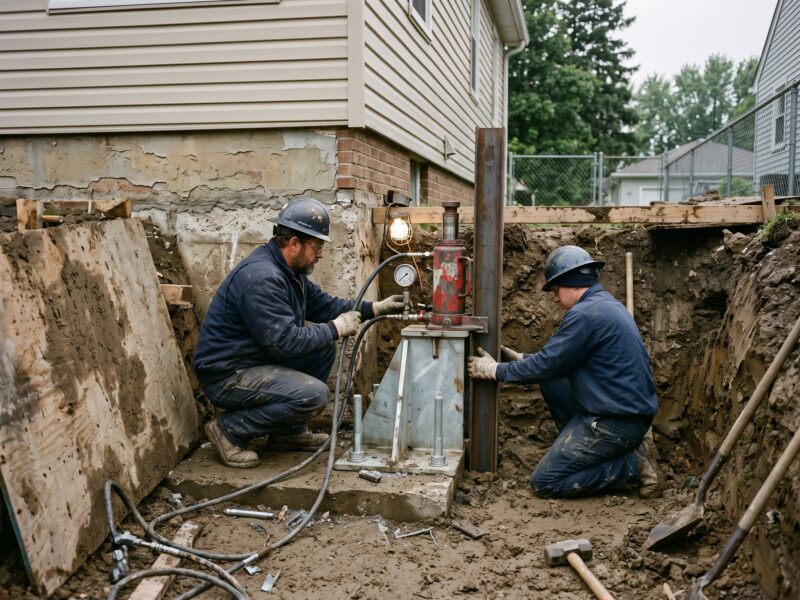 Push & helical piers
For settlement under additions, stoops and rebuilt lots with disturbed backfill.
Learn more
Push & helical piers
For settlement under additions, stoops and rebuilt lots with disturbed backfill.
Learn more
 House leveling
Beams, columns and footings under the older stock's tired floor framing.
Learn more
House leveling
Beams, columns and footings under the older stock's tired floor framing.
Learn more
 Not sure what you have?
A plain-language guide to reading what an Elmhurst wall is trying to report.
Learn more
Not sure what you have?
A plain-language guide to reading what an Elmhurst wall is trying to report.
Learn more
Why do Elmhurst foundations crack and settle?
Elmhurst foundations fail on two tracks running side by side: pre-war walls aging under decades of clay pressure, and young deep walls carrying more soil load than anything the old town ever built. The right repair for one is the wrong repair for the other.

Pre-war blocks around Wilder Park and downtown
Block and early poured walls from the 1920s through the post-war years have absorbed generations of wet-dry clay cycling. They show it as horizontal cracks at mid-height, stair-steps at corners and mortar joints slowly giving ground.

The deep rebuild basements
A rebuild with nine feet of wall below grade holds back a taller column of clay than its 1925 neighbor ever did. Shrinkage cracks and cold joints are normal; a crack that widens, offsets or leaks is a report worth measuring.

The Salt Creek side of town
The same storms that made Elmhurst's flood history leave the clay near the creek saturated for long stretches, and saturated clay pushes hardest. Walls on that side of town earn their measurements sooner.
What makes Elmhurst ground move?
Elmhurst houses sit on DuPage County clay that swells when wet and shrinks when dry, and this city's ground spends more of the year wet than most: a documented flood history and a creek along the edge mean long saturated stretches that keep lateral pressure on every wall below grade. Wet springs push walls inward; drought summers pull moisture out and let footings ease downward. The motion is slow, seasonal and cumulative.
The teardown market adds a second variable the old town never had. Every rebuild means excavation, new backfill and a lot whose soil has been rehandled, and disturbed ground settles on its own schedule for years. That is why stoops, garage slabs and additions on rebuilt lots show up in our Elmhurst notes more than the houses themselves, and why elevation numbers beat guesswork every time.
 Elevations in numbers: how movement gets proven instead of argued.
Signs you need foundation repair in Elmhurst
Six symptoms drive Elmhurst structural calls, and the house's era usually narrows the list before we arrive. None of them repairs itself, and most get more expensive to fix each season they wait.

A horizontal crack at mid-height
The pre-war block warning: clay pressure actively bowing the wall inward. Caught early it is strap money; ignored, it becomes steel and anchor money.

Stair-step cracking in block or brick
Mortar joints tracing differential settlement, one section of foundation moving against the rest. Width, direction and change over time tell the story.

Doors sticking, floors out of level
When upstairs doors stop latching, something below moved. Often it is a beam or column in the older stock, which costs far less than a foundation repair.
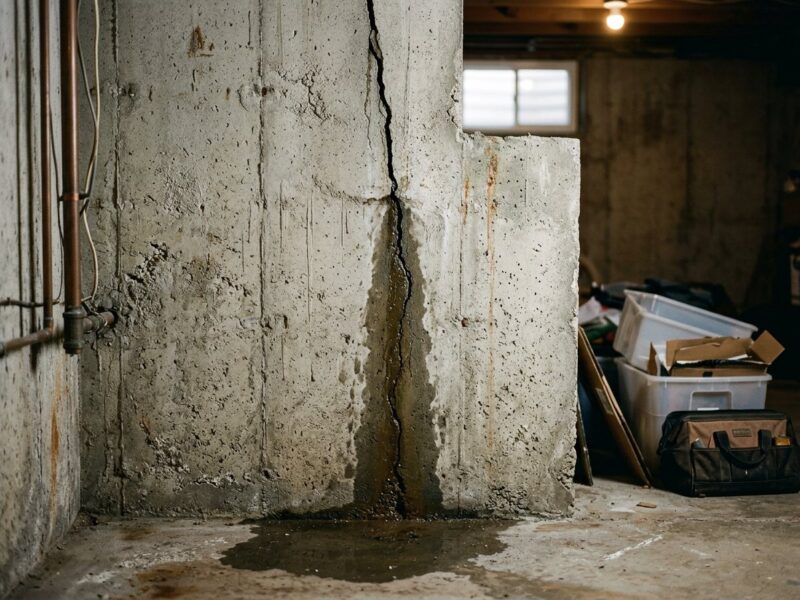
A poured-wall crack that widens or leaks
The rebuilds crack as they cure; that is concrete being concrete. A crack that grows, offsets or admits water has graduated to a measurement.

A stoop, garage or addition pulling away
On rebuilt lots, disturbed backfill settles under the attached pieces first. A gap that opens at the joint is pier territory if the movement is active.

A bouncy or sagging main floor
Long open spans over old basements telegraph tired framing. Sistered joists, beams and proper columns fix it from below, no foundation work required.
Hairline in the new poured wall getting longer? Measured now, it is a number in a file. Ignored, it is a spring surprise.
How does foundation repair work in Elmhurst?
An Elmhurst foundation repair runs four steps: read the era, measure the movement, match the method, prove the result. Most repairs finish inside three days.
Read the era, measure the movement
Pre-war block and a 2015 pour fail differently, so the inspection starts with what built your wall, then records crack widths, deflection and elevations in numbers. Free, within 48 hours.
Day 0Match the method, document the cause
Straps or steel for aging block, injection or piers for the rebuilds, and on newer houses a written cause finding you can hand to a builder while the warranty clock still runs.
Day 0, same visitInstall and verify
The crew installs to spec and re-measures against the day-zero numbers before packing up. Pier work logs drive pressure at every placement.
Days 1 to 3Warranty to the address
The 25-year transferable warranty registers to the house and transfers at sale, which matters in a market where Elmhurst buyers scrutinize basements hard.
On completionReinforce or rebuild: what do Elmhurst walls actually need?
Almost every failing Elmhurst wall can be reinforced in place, and the local math is lopsided: rebuilding a wall under a deep, fully finished lower level means losing the finish along with the wall, while reinforcement preserves both for a fraction of the cost.
| Reinforce in place | Excavate and rebuild | |
|---|---|---|
| Best for | Bowing, cracked or settling walls still structurally sound, which is the large majority | Walls sheared, collapsed or beyond recovery |
| In a finished rebuild basement | Works from inside with the finish largely preserved | The finished level comes apart along the wall being replaced |
| On pre-war block | Straps and steel arrest the bow at published prices | Excavation beside an aged wall risks the wall mid-repair |
| Yard impact | Small pits for piers at most | Machine access, deep spoil piles and landscaping loss |
| Cost | $450 injections to $3,000 piers, per published ranges | Tens of thousands per wall before restoration |
| Warranty | 25-year transferable, registered to the house | Varies by scope; insist on it in writing |
An estimator who reaches for rebuild pricing without deflection numbers is skipping the diagnosis. Ours comes with the measurements, free.
When do Elmhurst foundations move?
Elmhurst clay works on a seasonal cycle, and each quarter of the year has its own cheapest moment to act on a wall.
Spring: push season
Saturated ground shoves inward and the old block does most of its talking: horizontal cracks widen and bows advance. A measurement taken now catches movement while it is easiest to see.
March to MaySummer: shrink season
Dry spells pull water from the clay and footings settle after it. Cracks open over windows and doors, and rebuilt lots with young backfill do a disproportionate share of their moving.
June to AugustFall: booking season
Stable ground and dry weather make fall the easy time to strap a wall, set piers or fix framing before frost. Work booked now closes out before winter.
September to NovemberWinter: inside season
Frost owns the top of the soil, but injection, carbon fiber, bracing and beam-and-column work all happen indoors at full speed. Deep finished basements make winter structural work especially practical here.
December to FebruaryHow much does foundation repair cost in Elmhurst?
Foundation repair in Elmhurst costs $450 to $900 per injected crack, $600 to $1,800 per strap, beam or anchor for a bowing wall, and $1,600 to $3,000 per pier for settlement, the identical published ranges we hold in every town we serve. The era of the house changes which line items apply, never the numbers on them.
| Work | Range | What moves the number |
|---|---|---|
| Urethane crack injectionper crack | $450–$900 | Crack length and width, access to the full height |
| Carbon fiber strapsper strap | $600–$1,000 | Wall height, spacing the deflection requires |
| Steel I-beam wall bracingper beam | $900–$1,500 | Ceiling height, footing condition at the base |
| Push or helical piersper pier | $1,600–$3,000 | Depth to load-bearing strata, access for equipment |
The full structural table lives on the pricing page; your written Elmhurst quote lands inside it.
Where we repair foundations in Elmhurst
The whole city shares ZIP 60126, but the structural calls split cleanly by era. Wilder Park, downtown, the Metra district and the older York Street blocks send aging block: horizontal cracks, stair-steps and floors that have relaxed over long spans. North York and the Spring Road district, where the rebuilds cluster, send poured-wall cracks, builder-warranty questions and settling stoops on rehandled lots. The Elmhurst College area sends a genuine mix, sometimes both eras in one phone call.
From our base in the Joliet and New Lenox corridor, Elmhurst is a fifty-minute to hour-and-ten run at the northern edge of our regular map, so we work the city in scheduled blocks. Walls on a watch list get their re-measurements folded into the next Elmhurst day, and the 48 hours inspection promise holds regardless.
 New square footage over deep walls: the Elmhurst rebuild pattern from the street.
Elmhurst foundation repair questions, answered straight
Is a horizontal crack in my older Elmhurst block wall serious?
Yes. Horizontal cracking at mid-height means clay pressure is winning against a wall with decades of service behind it. Addressed early it is carbon fiber at $600 to $1,000 per strap; left to advance, it becomes steel beams, anchors or worse. The measurement is free and settles the urgency question with numbers.
My new-build has hairline cracks in the poured walls. Is that normal?
Usually, yes. Poured concrete shrinks as it cures, and fine vertical hairlines are part of the process. What moves a crack out of the normal column is growth, horizontal offset, a diagonal run from a corner or width past a credit card. We measure, record a baseline and tell you plainly which kind you have.
How much does foundation repair cost in Elmhurst?
The same published ranges we hold everywhere: $450 to $900 per injected crack, $600 to $1,000 per carbon strap, $900 to $1,500 per steel beam, $1,600 to $3,000 per pier. The written Elmhurst quote itemizes against those ranges so you can check every line yourself.
The lot next door is being torn down and excavated. Should I worry about my foundation?
Worry is the wrong word; a baseline is the right one. Before or early in the neighboring dig, have your crack widths and elevations recorded and photographed. If nothing changes, the file cost you an inspection. If something does, you hold dated evidence instead of a memory, and that difference decides those conversations.
Does homeowners insurance cover foundation repair in Elmhurst?
In most cases, no. Typical Illinois policies carve out earth movement and hydrostatic pressure, which between them cause nearly every foundation problem we see. Budget as if the repair is yours to fund, and let the published ranges keep the number predictable rather than hoping a claim lands.
Will foundation repair hurt my Elmhurst home's resale value?
A documented repair generally reads better than an unexplained crack, and Elmhurst buyers paying rebuild-market prices read inspection reports closely. Our repairs come with the before-and-after measurements, photos and a 25-year transferable warranty registered to the address, a packet your agent hands over instead of an apology.
Do I need a permit for foundation repair in Elmhurst?
It varies by municipality and by the scope of the work; injections rarely trigger one, while structural bracing and piers sometimes do. Where a permit is required for your job, we pull it and build the timeline around it, so the paperwork is our problem rather than yours.
Can you just monitor my wall instead of repairing it right away?
Yes, and we recommend it whenever the numbers do not justify steel yet. We set a measured baseline and fold the re-checks into our scheduled Elmhurst days, so monitoring stays practical despite the drive. A wall that holds its numbers gets left alone; one that moves gets caught at the cheap stage.
Is the moving wall also wet?
In Elmhurst the two trades meet in the same clay: the saturated ground that made this city's flood history is the ground pressing on your wall, and a crack that leaks is answering both questions at once. One inspection covers structure and water together, and the fixes get sequenced so neither undoes the other.
Basement Waterproofing in Elmhurst
Foundation repair near Elmhurst

Get the Elmhurst wall measured, whichever era built it
A free structural inspection within 48 hours, a method matched to pre-war block or a deep new pour, and a 25-year transferable warranty that transfers with the house.
Or talk to a human right now
(630) 335-1128
Request your free estimate
Tell us what you're seeing. We'll call back fast and be out within 48 hours.