Foundation Repair in Chicago, Illinois
Brick foundations under eighty thousand bungalows, stone under the oldest cottages, early concrete under the rest, all of it parked on lakebed clay on lots too tight to excavate. We repair Chicago foundations from the inside, measured first and covered by a 25-year transferable warranty.
- Structural warranty: 25-year transferable
- Published pricing: injection from $450, piers from $1,600
- Free structural inspection within 48 hours
 25-year transferable warranty
Who does foundation repair in Chicago?
ProSeal Basement Waterproofing repairs Chicago foundations, brick, stone and early concrete alike, from a base in the Joliet and New Lenox corridor. Crack injection runs $450 to $900, carbon fiber straps $600 to $1,000 each, steel beams $900 to $1,500, and settlement piers $1,600 to $3,000, every number published before an estimator sees your wall and every repair backed by a 25-year transferable warranty.
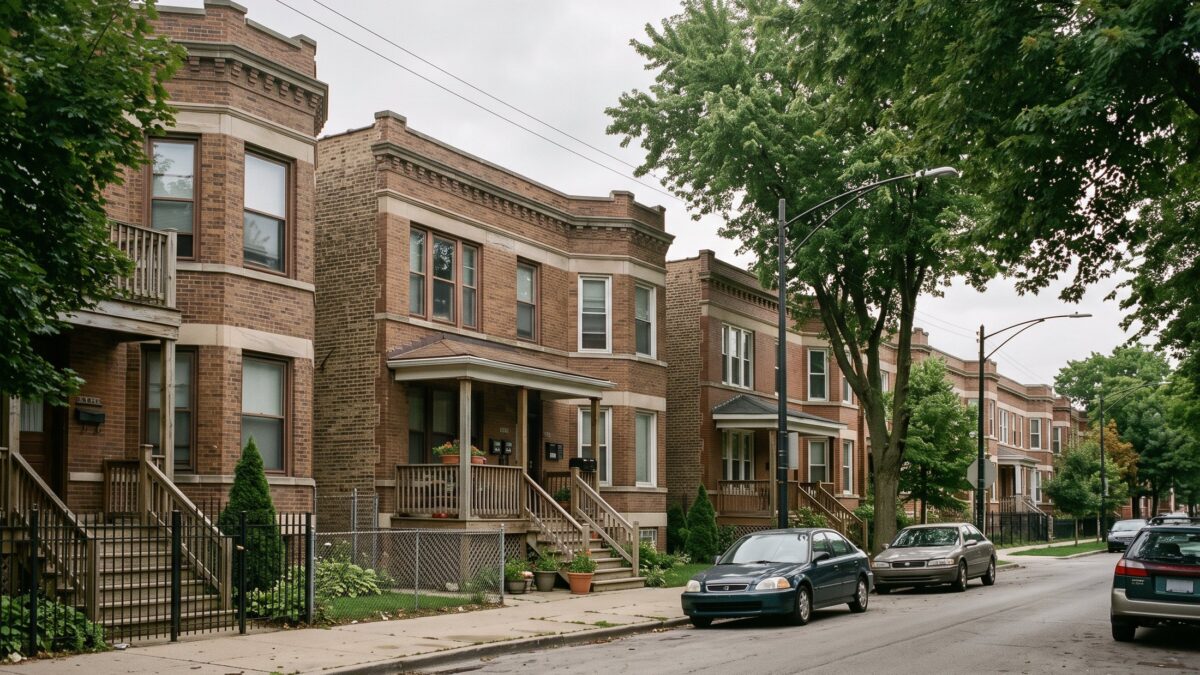
The Chicago difference is that the standard suburban playbook barely applies here. A bungalow's foundation is brick laid a century ago, the lot allows no excavator, and the neighbor's wall stands eight feet from yours. Repairing in the city means methods that work from inside or from small pits: reinforcement, injection and piers, chosen by measurement rather than by whatever a franchise happens to sell.
Every structural repair method and its published price, in one place
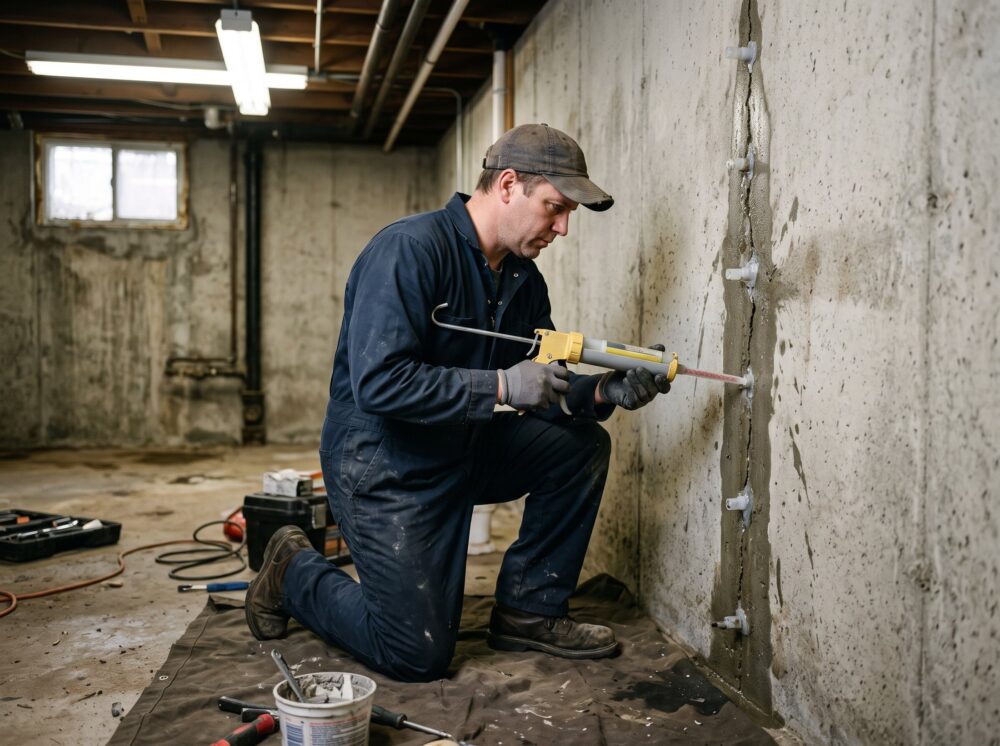 Structural work the Chicago way: from inside, without touching the gangway.
What does foundation repair in Chicago include?
Six structural tools cover what Chicago masonry and clay actually do to foundations, and the rule is the cheapest adequate fix first. The written plan shows the measurements behind every recommendation.
 Urethane crack injection
Leaking cracks in the city's early poured walls, sealed full depth from $450.
Learn more
Urethane crack injection
Leaking cracks in the city's early poured walls, sealed full depth from $450.
Learn more
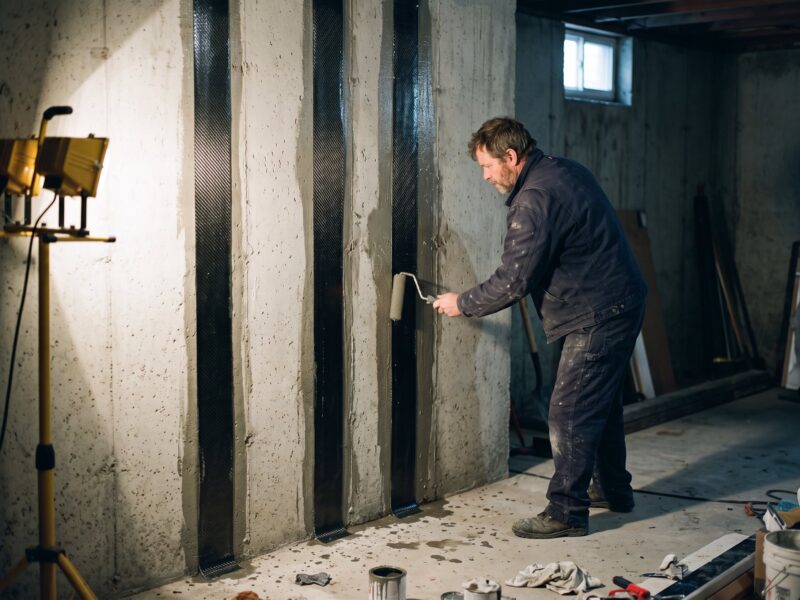 Carbon fiber straps
For walls caught while the bow is still under two inches.
Learn more
Carbon fiber straps
For walls caught while the bow is still under two inches.
Learn more
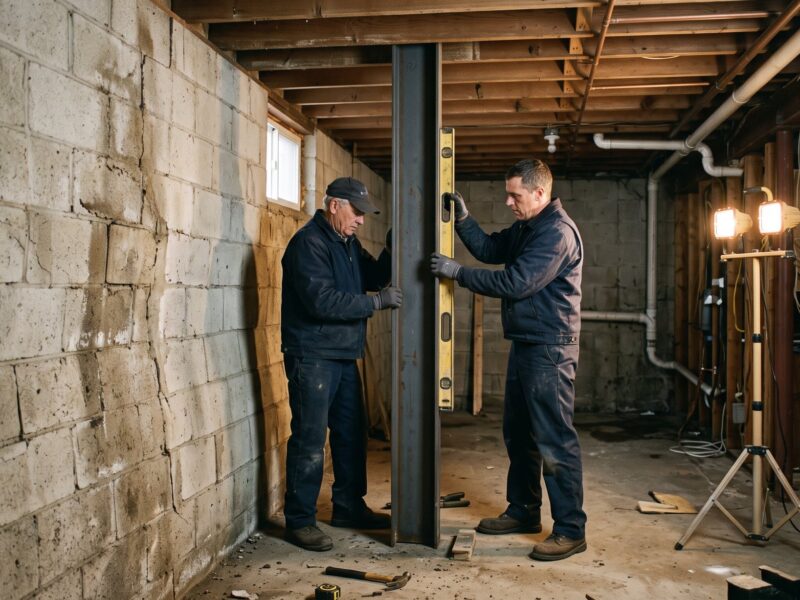 Steel I-beams & wall anchors
For masonry past the strap stage, installed from inside the basement.
Learn more
Steel I-beams & wall anchors
For masonry past the strap stage, installed from inside the basement.
Learn more
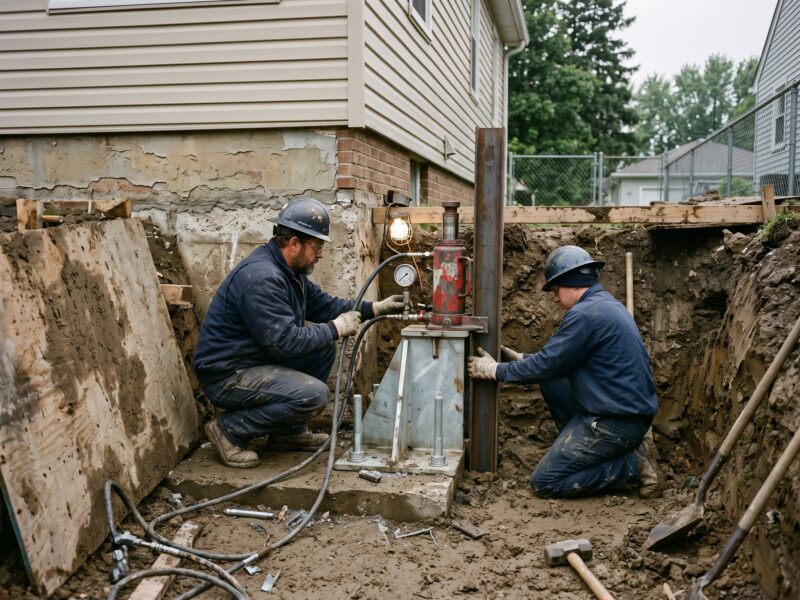 Push & helical piers
Driven from pits small enough to dig on a twenty-five-foot lot.
Learn more
Push & helical piers
Driven from pits small enough to dig on a twenty-five-foot lot.
Learn more
 House leveling
Columns, beams and posts under sagging bungalow and two-flat floors.
Learn more
House leveling
Columns, beams and posts under sagging bungalow and two-flat floors.
Learn more
 Not sure what you have?
Decode what a bungalow wall is telling you before anyone quotes it.
Learn more
Not sure what you have?
Decode what a bungalow wall is telling you before anyone quotes it.
Learn more
Why do Chicago foundations crack and settle?
Chicago foundations fail along era lines: brick that sheds mortar after a century of wet clay, stone under the oldest cottages, and early concrete poured before reinforcing steel was standard. Each era gets its own repair, and mixing them up is how walls get wrecked.

Brick under the bungalow belt
A bungalow's foundation is usually brick, strong in compression and vulnerable at the joints. A century of lakebed clay swelling against it takes the mortar first: dusting joints, stair-step lines, a face pushed slowly out of plumb. It wants repointing and reinforcement, not demolition.

Stone under the oldest stock
Workers' cottages in Bridgeport and Brighton Park can sit on rubble stone that predates the bungalows around them. These walls hold themselves up by weight, fail through mortar loss and bulging faces, and demand gentle handling with drainage relief, never aggressive intervention.
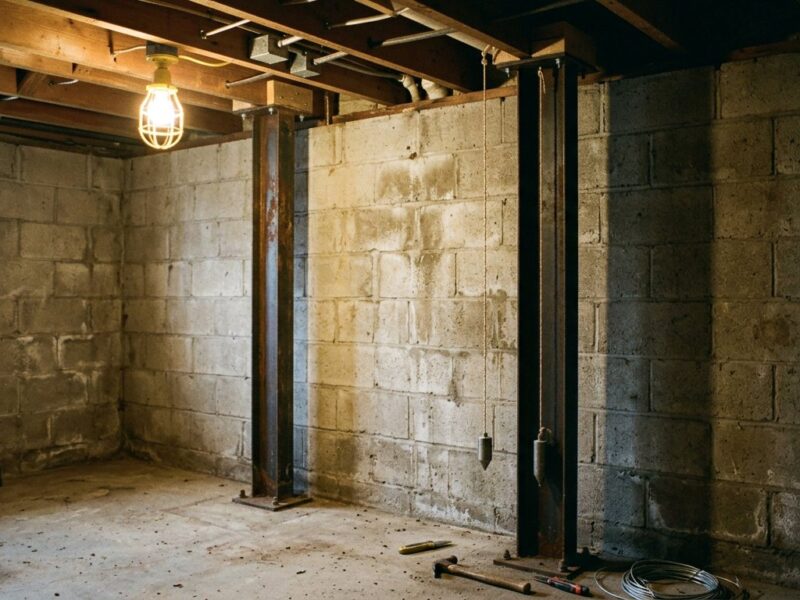
Early concrete of the twenties
The first poured walls in the city went in with lean mixes and little or no steel. They crack vertically as they age, leak through those cracks, and occasionally settle at a corner, all of it repairable from inside at published prices.
What makes Chicago foundations move?
Chicago sits on old lakebed clay, and that clay is the engine of nearly all structural movement in the city. Wet years it swells and pushes on basement walls; drought summers it shrinks and lets footings drop a fraction at a time. A century of those cycles is what a bungalow's brick foundation has absorbed, and the mortar keeps the score. Near the lake and the river corridors a shallow water table keeps the clay loaded long after each storm passes.
The lot decides the repair as much as the soil does. With twenty-five feet of frontage and a gangway no excavator fits through, the excavate-and-rebuild route that suburban contractors default to is off the table for most city addresses. That is not a limitation of ours; it is why our Chicago toolkit is built around interior reinforcement, injection from inside and pier systems that need only a compact pit. Full repairs, no machine in the gangway.
 The laser does not flatter: measuring what a century of clay has moved.
Signs you need foundation repair in Chicago
Six symptoms drive most Chicago structural calls, and age alone makes none of them an emergency. Measurement does, which is why the inspection produces numbers, not adjectives.

A horizontal crack or visible bow
Clay pressure actively pushing the wall inward. In brick or block it is the symptom that moves fastest, and the gap between strap money and steel money is measured in seasons, not years.

Stair-step cracks in the mortar
The joints map how one part of the foundation moved against the rest. Width, direction and whether the crack is fresh decide everything, so we gauge it rather than guess.

Mortar dusting or washing out
A century-old brick joint that sheds sand when you rub it has been losing its binder to moisture. Repointing early is cheap; waiting until bricks shift is not.
Sticking doors and sloping floors
When the second-floor doors of a two-flat quit latching, something below moved. Often it is a beam or column in the basement, which costs far less than foundation work.

A sagging main beam or springy floor
Low bungalow basements hide undersized beams and rotted post bases. Columns, proper footings and sistered framing bring the floor back without touching the foundation at all.
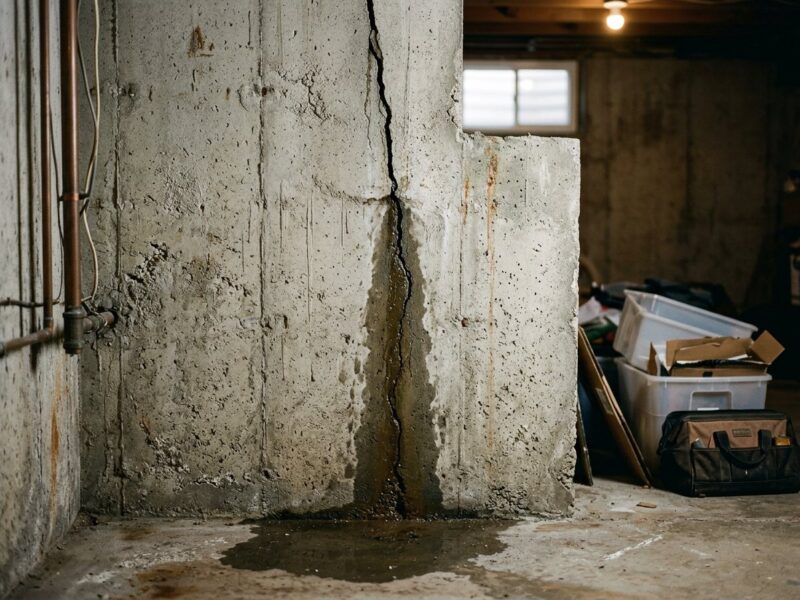
A crack that leaks when it rains
On early poured walls, a leaking vertical crack is usually a $450 to $900 injection. The measurement confirms it is stable before anyone proposes more than that.
Stair-step crack climbing the foundation brick? Get numbers on it before another wet spring moves it again. The structural inspection is free.
How does foundation repair work in Chicago?
A Chicago foundation repair runs four steps: identify the era, measure the movement, match the method to both wall and lot, verify the result. Most repairs finish in one to three days, all from inside or from compact pits.
Identify the wall, measure the movement
Brick, stone or early concrete changes the whole playbook, so the inspection establishes the era first, then records crack widths and deflection in numbers. Free, within 48 hours.
Day 0Plan around the lot
The written plan accounts for the gangway, the neighbor's wall and the low ceiling before it names a method. What we propose is what can physically be built at your address.
Day 0, same visitInstall and verify
Straps, steel, injection or piers go in from inside or from compact pits, and the crew re-measures against the day-zero numbers before packing up. Pier work logs drive pressure at every bracket.
Days 1 to 3Warranty to the address
The 25-year transferable warranty registers to the building and transfers at sale, paperwork that earns its keep when a bungalow or two-flat goes to market with a repair in its history.
On completionReinforce or rebuild: what can a Chicago lot actually take?
Reinforcing a Chicago foundation in place is usually the only buildable option as well as the cheaper one, because rebuilding a wall requires excavation that a twenty-five-foot lot with a gangway cannot host.
| Reinforce in place | Excavate and rebuild | |
|---|---|---|
| Best for | Bowing, cracking or settling walls still intact, which is most of them | Walls truly failed, where access exists, which in Chicago is rare twice over |
| On brick foundations | Repointing plus straps or steel respects hundred-year-old masonry | Excavating beside century-old brick risks the very wall being saved |
| Lot access | Everything installs from the basement or a compact pit | Needs machine access that a gangway does not provide |
| The neighbor's wall | Never touched; the work stays on your side of the line | Digging eight feet down next to another building is its own hazard |
| Cost | $450 injections to $3,000 piers, per published ranges | Tens of thousands per wall where it is even possible |
| Warranty | 25-year transferable, registered to the building | Varies by scope; demand it in writing before signing |
An estimator who proposes excavation on a standard city lot without discussing access has not walked your gangway. Ours will, with a tape measure.
When do Chicago foundations move?
Lakebed clay writes the structural calendar in Chicago, and every season has a cheapest moment to act on what it does.
Spring: push season
Saturated clay swells against foundation walls across the bungalow belt, widening horizontal cracks and advancing bows. Movement is at its most visible now, which makes spring the season a measurement is worth the most.
March to MaySummer: shrink season
Drought pulls the clay back from footings and corners drop by fractions. Doors stick upstairs, settlement cracks open over windows and doorways, and the calls shift from bowing walls to sinking corners.
June to AugustFall: booking season
Calm clay and dry pits make fall the easiest season to strap a wall or drive piers, and work booked now finishes before frost locks the ground.
September to NovemberWinter: inside season
Injection, carbon fiber, steel bracing and beam-and-column work all happen indoors at full speed through winter, which suits a Chicago repair list that is mostly interior anyway.
December to FebruaryHow much does foundation repair cost in Chicago?
Foundation repair in Chicago costs $450 to $900 per injected crack, $600 to $1,000 per carbon fiber strap, $900 to $1,500 per steel beam and $1,600 to $3,000 per pier, the same published ranges we quote in every town we serve. Brick repointing hours get scoped at the free inspection, because no two century-old walls have aged alike.
| Work | Range | What moves the number |
|---|---|---|
| Urethane crack injectionper crack | $450–$900 | Crack length and width, access to the full height |
| Carbon fiber strapsper strap | $600–$1,000 | Wall height, spacing the deflection requires |
| Steel I-beam wall bracingper beam | $900–$1,500 | Ceiling height, footing condition at the base |
| Push or helical piersper pier | $1,600–$3,000 | Depth to load-bearing strata, access for equipment |
The complete structural table lives on the pricing page, and a Chicago address changes none of it.
Where we repair foundations in Chicago
Structural calls track the housing map. The southwest bungalow belt of Garfield Ridge, Clearing and Ashburn, with its northwest mirror in Portage Park and Jefferson Park, sends brick foundations with dusting mortar and stair-step cracks. Beverly, Morgan Park and Mount Greenwood add the far south side's brick with occasional stone. Bridgeport and Brighton Park hold the oldest cottage and two-flat foundations in our Chicago book. ZIPs 60629, 60638, 60634, 60643, 60655 and 60618 see most of our city work.
Honesty about the map: our crews come up from the Joliet and New Lenox corridor, forty minutes to an hour depending on the Stevenson, and it is a drive we make constantly. When a wall deserves monitoring rather than immediate steel, we schedule the re-measurements alongside our other city work, and the numbers travel with your file.
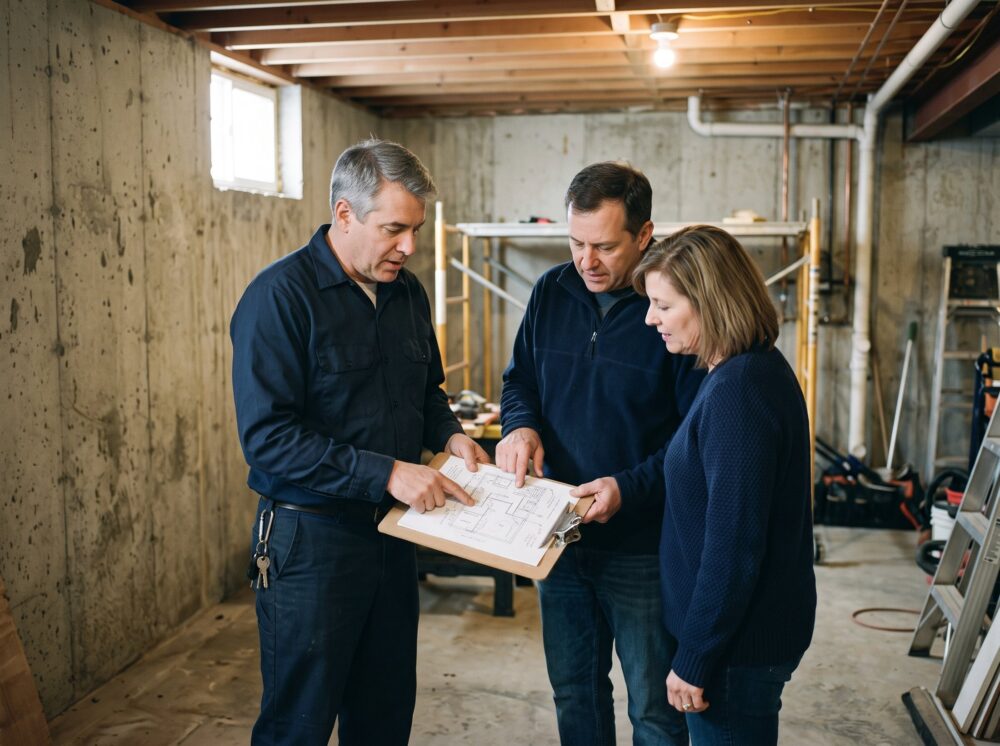 The diagnosis in writing: era, measurements, method, price.
Chicago foundation repair questions, answered straight
My gangway is four feet wide. Can you excavate the foundation?
Usually no, and we would rather say it plainly than pretend otherwise. A standard city lot offers no machine access, and hand-digging eight feet down against a neighbor's wall is neither safe nor sensible. The good news is that reinforcement, injection and piers all work from inside or from compact pits, so the lot never decides whether your wall gets fixed, only how.
Who repairs brick foundations in Chicago?
We do, and the bungalow belt keeps us at it. A brick foundation fails at its mortar before its bricks, so the repair is repointing plus reinforcement matched to how far the wall has moved: straps if the bow is small, steel if it is not. A contractor who quotes century-old brick the same fix as a subdivision poured wall has not measured enough of it.
Is a horizontal crack in my foundation serious?
Yes. Horizontal at mid-height means the clay is actively winning, and old masonry has little reserve to give back. Caught early it is carbon fiber at $600 to $1,000 per strap; left through a few more wet springs it graduates to steel beams, anchors or worse. The measurement is free and it settles the question with numbers.
How much does foundation repair cost in Chicago?
The published ranges hold in the city: $450 to $900 per injected crack, $600 to $1,000 per carbon strap, $900 to $1,500 per steel beam, $1,000 to $1,800 per wall anchor and $1,600 to $3,000 per pier. Repointing on brick and stone is scoped at the inspection because the masonry hours vary wall to wall.
Can piers really be installed on a twenty-five-foot lot?
Yes. Pier brackets need a compact pit at the footing, not a trench, and the pits can be dug by hand where a machine cannot reach. The piers drive until they refuse at load-bearing strata, the drive logs record the pressure at every bracket, and the yard you barely have stays a yard.
Can I sell a Chicago bungalow that has had foundation repair?
A documented repair usually reads better to a buyer than a crack nobody explains. Our jobs close with measurements, photos, the scope and a 25-year transferable warranty registered to the address, a packet your listing agent hands the buyer's inspector instead of improvising an answer at the showing.
Doors upstairs stick every summer. Is my two-flat settling?
Maybe, and summer is the clue: drought shrinks the lakebed clay and lets footings drop slightly, so seasonal sticking points to movement below. But in two-flats the culprit is often a basement beam or column rather than the foundation itself, a far cheaper repair. Elevations and a look at the framing sort it out in one visit.
You are based near Joliet. Can you still monitor a Chicago wall over time?
Yes, because we are in the city constantly anyway. Monitoring visits get scheduled alongside our other Chicago work, each one re-measures the same reference points, and the record shows whether the wall is moving or merely old. If it is moving, you get a plan at published prices; if it is stable, we tell you that too.
Is the cracked wall also wet?
A Chicago wall rarely fails dry. The clay pressing your foundation inward is holding water against it at the same time, and wet mortar erodes faster than dry. If the wall with the stair-step crack also seeps every spring, one inspection covers both trades, sorts backup from seepage, and sequences the fixes properly.
Basement Waterproofing in Chicago
Foundation repair near Chicago

Get the Chicago wall measured before the next season moves it
A free structural inspection within 48 hours, methods that fit a city lot, and a 25-year transferable warranty registered to the building.
Or talk to a human right now
(630) 335-1128
Request your free estimate
Tell us what you're seeing. We'll call back fast and be out within 48 hours.