
Basement Waterproofing in Dixon, Illinois
The Rock River sets the water table under the low blocks, the bluff houses shed water past stone walls a century old, and out in Lee Township there is no storm sewer to carry any of it away. We dry Dixon basements at published prices with a lifetime, fully transferable warranty, and we are straight with you about the drive.
- Interior systems warrantied: lifetime, fully transferable
- Lee County visits grouped into scheduled work blocks
- Published pricing quoted before the long drive, not after it
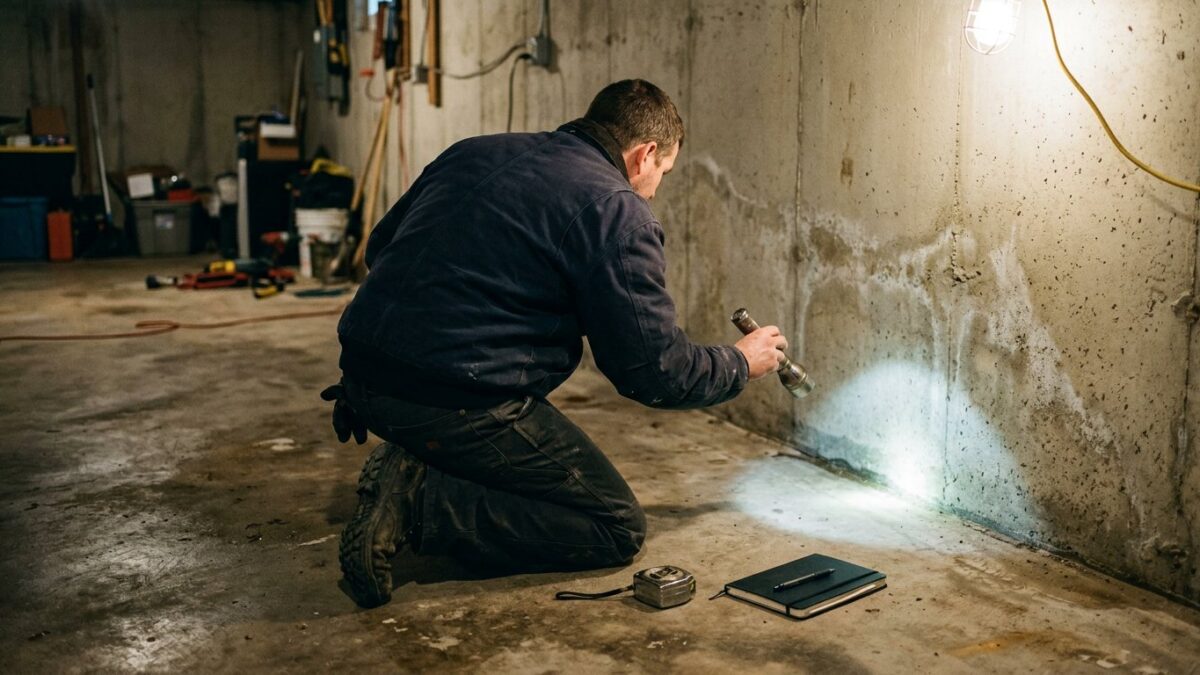 Western edge: Lee County scheduled in blocks
Who does basement waterproofing in Dixon?
ProSeal Basement Waterproofing installs interior drain tile, sump systems and drainage in Dixon at the same published prices we hold everywhere: $95 to $160 per linear foot for drain tile, $8,000 to $16,000 for a full perimeter system with a sump and battery backup. Dixon is the western edge of our map, so Lee County work is grouped into scheduled blocks, and you get a real date when we book.
A river town this old needs a waterproofing company that has met walls built before waterproofing existed. Much of Dixon stands on stone, brick and early poured foundations that were given no membrane and no footing drain, and the ground here is river valley, not the flat Chicago clay most contractors calibrate on. The diagnosis has to start with the wall and the elevation, not a standard package.
See the full basement waterproofing system, wall to discharge
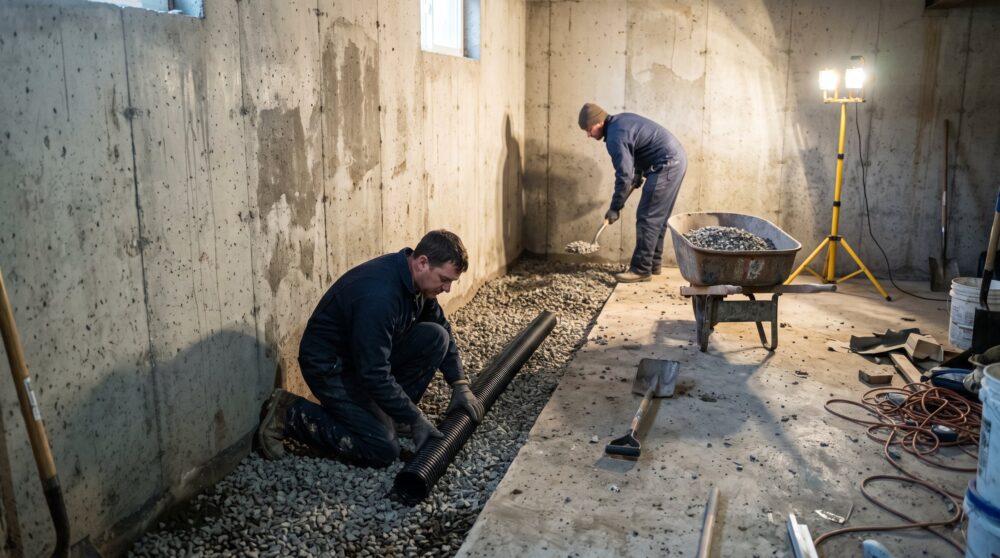 Interior drain tile: the retrofit that gives a 1910 wall the drainage it was never built with.
What does basement waterproofing in Dixon include?
A Dixon waterproofing job draws from six systems, and the inspection prices only what your basement needs. On a house a hundred miles of round trip away, we would rather quote small and right than large and padded.
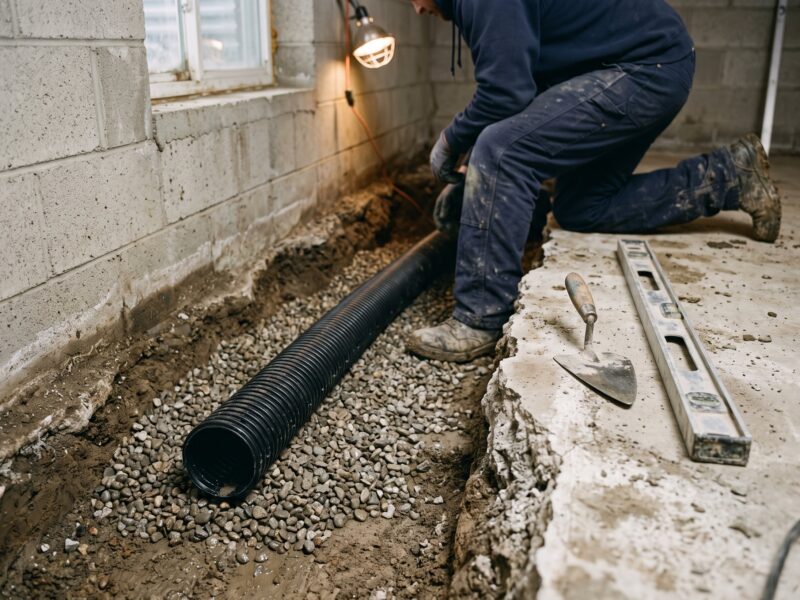 Interior drain tile
Footing-level drainage for stone, brick and poured walls that never had any.
Learn more
Interior drain tile
Footing-level drainage for stone, brick and poured walls that never had any.
Learn more
 Sump pumps & battery backup
Sized for the river-valley water table under the low blocks near downtown.
Learn more
Sump pumps & battery backup
Sized for the river-valley water table under the low blocks near downtown.
Learn more
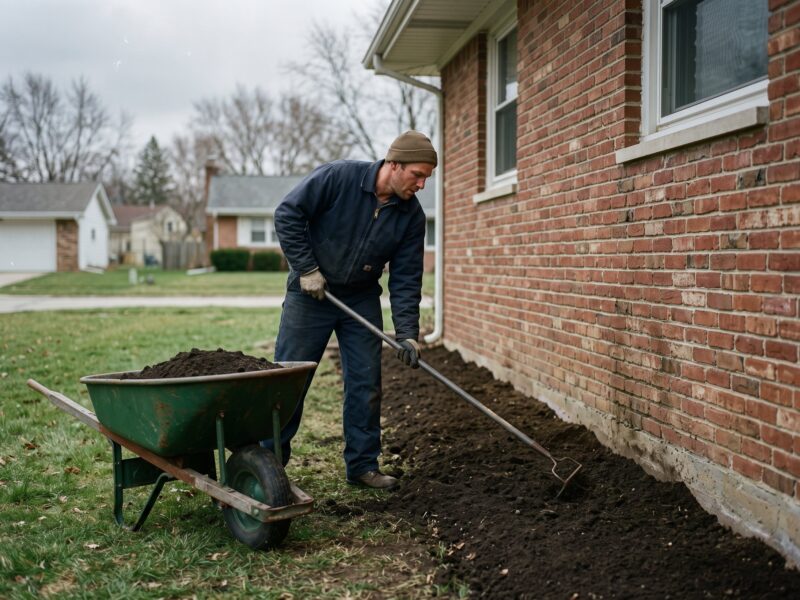 Yard drainage & regrading
Surface water control that matters double on lots with no storm sewer.
Learn more
Yard drainage & regrading
Surface water control that matters double on lots with no storm sewer.
Learn more
 French drains
For bluff lots shedding runoff toward the house below them.
Learn more
French drains
For bluff lots shedding runoff toward the house below them.
Learn more
 Crawl space encapsulation
For the additions and cottages a river town accumulates over a century.
Learn more
Crawl space encapsulation
For the additions and cottages a river town accumulates over a century.
Learn more
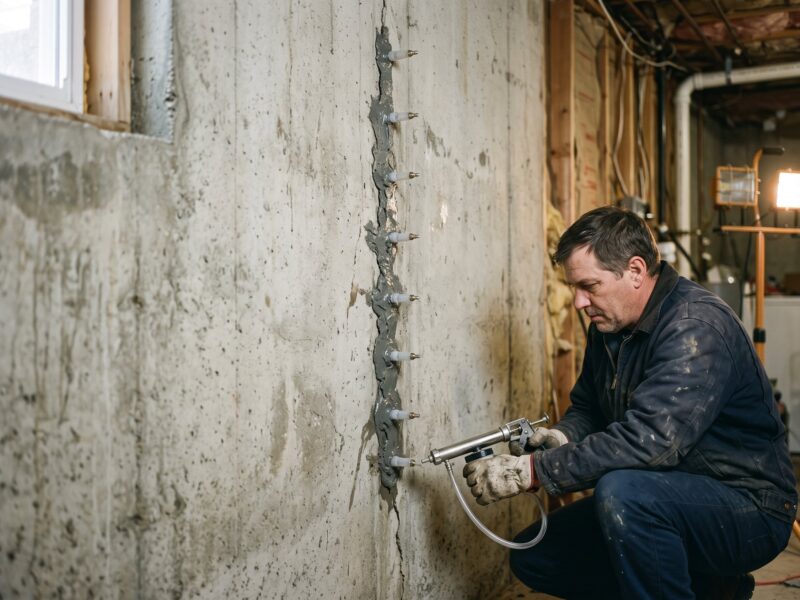 Leaking crack injection
Poured-wall cracks on the newer edges sealed full depth from $450.
Learn more
Leaking crack injection
Poured-wall cracks on the newer edges sealed full depth from $450.
Learn more
Why do Dixon basements leak?
Dixon basements leak for three reasons that sort by geography: river-valley water tables under the low ground, century-old walls with no waterproofing anywhere in them, and rural lots where no storm sewer exists to take the water. Each one gets a different fix at a different price.

Downtown and north of the river
The pre-1930 stock stands on stone, brick and early poured walls built with soft mortar, no membrane and no footing drain, then given a century of freeze-thaw. These walls weep through their joints, and the fix pairs drainage with respect for old masonry.

The Galena Avenue and Route 2 corridors
The post-war and later housing at the edges has the modern problems: settled grading, short downspouts, tired sump pumps and the occasional cracked poured wall. Out here the honest fix is often hundreds of dollars of yard work, not thousands of system.

Lee Township and the rural lots
Outside town there is no municipal storm system in the equation at all. Well and septic properties have to manage every drop on their own ground, so grading, swales and where the sump discharge daylights decide whether the basement stays dry.
What makes Dixon groundwater different?
Dixon groundwater behaves differently from the Chicago suburbs because the Rock River runs through the middle of town and its valley sets the rules. Houses on the bluffs drain fast and shed water downhill; houses on the lower ground near the river sit close to a water table the river itself controls. The soils have more relief and run sandier in places than dense glacial clay, which means better natural drainage on much of the map and persistent groundwater on the lowest of it.
Elevation is the first question at every Dixon inspection, because the same wet floor means different things at different heights above the river. On the low blocks it is usually the water table, which wants drain tile and pumping capacity. On the bluffs it is usually surface water moving downhill, which wants interception and grading. And on rural ground with no storm sewer, the discharge design is half the job: pumped water has to daylight somewhere it cannot circle back.
 Discharge run to daylight: on a lot with no storm sewer, this line is half the system.
Signs your Dixon basement needs waterproofing
Six symptoms bring Dixon homeowners to the phone, and because the drive is real, we sort them honestly over that phone call first. Some of these are worth the trip; some we will tell you to solve locally and cheaply.

Water at the floor-wall joint
On the low blocks near the river this is hydrostatic pressure from the water table. It is the classic interior drain tile call, and no amount of caulk or paint will hold it back.

White bloom on stone or brick
Efflorescence is the mineral trail of water moving through the wall itself. On Dixon's old masonry it means the wall is drinking through joints that were never protected by any membrane.

A sump that runs with the river
When the pit keeps pace with the Rock River's spring rise, the water table is talking. That calls for capacity and a battery backup, not a louder pump run to death.

Musty air in an old house
Pre-1930 basements were built as cellars, not living space, and a damp one sends its air upstairs. If the smell peaks each spring, the source is seasonal groundwater.
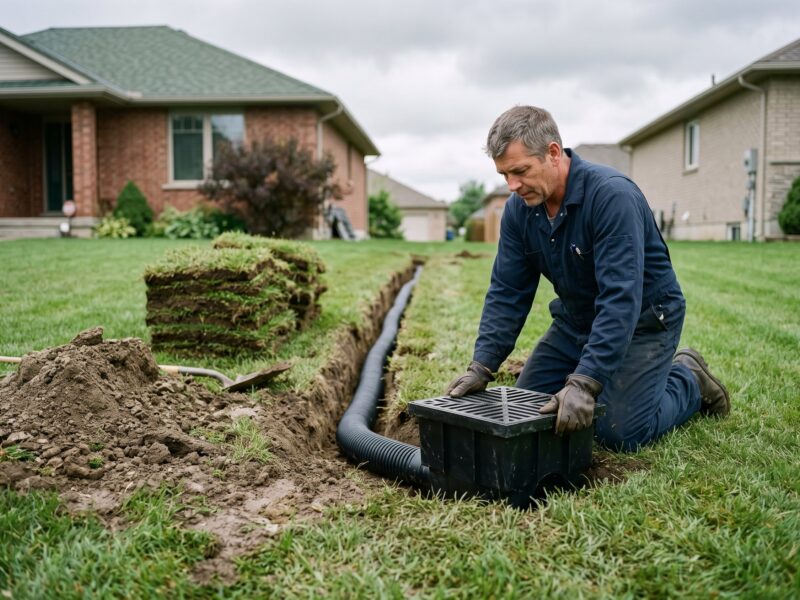
Yard water with nowhere to go
On township lots without a storm sewer, storm water ponds where the grading lets it. Catch basins, swales and regrading move it away before it ever reaches the foundation.
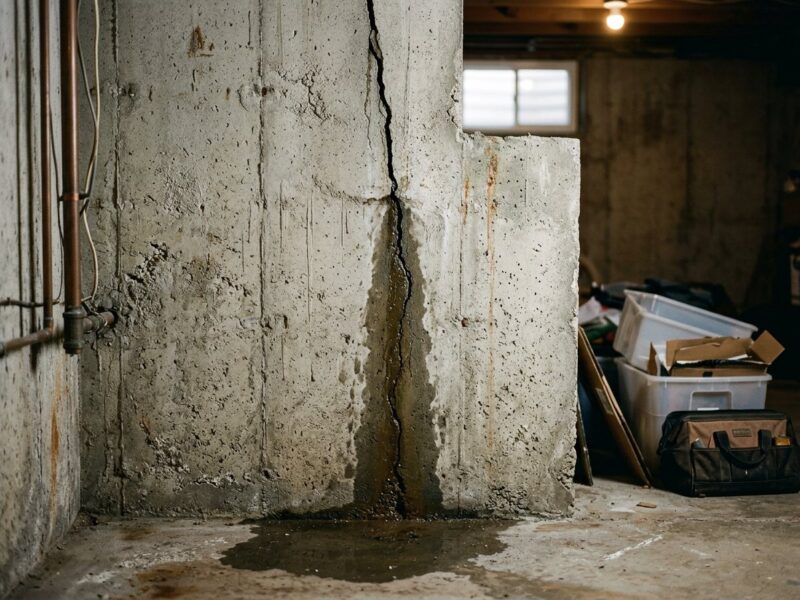
A poured-wall crack that runs
On the newer edges of town, a curing or settlement crack that turns into a spout during rain is usually a $450 to $900 injection, finished in a single visit.
Wet floor after every hard rain? Call and describe it. We will tell you on the phone whether it is worth our drive or a quick local fix.
How does basement waterproofing work in Dixon?
A Dixon waterproofing job runs four steps, and the first one is scheduling honesty: we group Lee County work into blocks, give you a real date, and keep it.
Book into the Lee County block
Dixon sits at the western edge of our map, so we schedule the area in blocks rather than single trips. That may mean a few days of wait, but the date you get is one we keep.
At bookingInspect by wall and elevation
We identify the foundation era, trace the water, and read your height above the river, because bluff water and valley water want different fixes. The written plan prices only what the house needs.
Block day 1Install and flood test
Trench, tile, gravel, sump and battery backup, then fresh concrete and a flood test you watch. The crew stays until the system is finished; nobody leaves a half-done job a hundred miles from base.
One to four daysRegister the warranty
The lifetime, fully transferable warranty registers to the address and transfers to the next owner, which matters most on houses that have already outlived several of them.
On completionInterior or exterior waterproofing: which works in Dixon?
Interior drain tile is the right answer for most Dixon basements, and the town's own housing decides it: you do not excavate against a century-old stone wall casually, and on the low blocks the river-fed water table is a floor problem no exterior coating touches.
| Interior drain tile | Exterior excavation | |
|---|---|---|
| Best for | Water-table seepage and cove-joint leaks, which is most of the old town | Walls physically deteriorating from the outside face |
| On stone and brick walls | Works with an off-footing trench and a repointing conversation | Risky: digging beside a gravity wall demands real caution |
| On the low blocks by the river | Handles the water table at the floor, where the problem lives | A membrane cannot stop water rising under the slab |
| Lot access | Installs entirely from inside; tight downtown lots qualify | Feasible on rural acreage with machine room to work |
| Cost | $95 to $160 per linear foot | Several times interior cost; priced per wall after inspection |
| Season | Installs year-round regardless of frozen ground | Weather-dependent, which matters more with a scheduled block |
When a wall genuinely needs exterior work we say so and price it, and on an open rural lot it is sometimes the right call. The method follows the wall, never the sales script.
When do Dixon basements flood?
Dixon basement water follows the Rock River's calendar, and knowing where your month falls on it is the difference between a planned fix and an emergency.
Spring: the river's season
Snowmelt and rain lift the river, and the water table under the low blocks rises with it. Sumps run around the clock, old walls weep at the joints, and this is when Dixon calls us most.
March to MaySummer: the storm test
Violent storms drop inches in an hour and can take rural power with them, and on a well-and-septic lot a dead sump has no backup grid. This season makes the case for the battery backup in every system.
June to AugustFall: the cheap-fix window
Dry ground makes fall the season for grading, downspout burials and swale work, the $600 to $2,500 fixes that matter double on lots where no storm sewer will ever help.
September to NovemberWinter: the install season
Interior drain tile happens entirely indoors, so frozen ground changes nothing, and winter blocks are the easiest to book. The system is in and tested before the spring river tests it.
December to FebruaryHow much does basement waterproofing cost in Dixon?
Basement waterproofing in Dixon costs $95 to $160 per linear foot for interior drain tile, and a full perimeter system with a sump and battery backup lands between $8,000 and $16,000 on most homes. The drive does not change the price: Dixon pays the same published ranges as every town we serve, and block scheduling is how we keep it that way.
| Work | Range | What moves the number |
|---|---|---|
| Interior drain tileper linear foot | $95–$160 | Length of the run, slab thickness, what has to be moved off the walls |
| Sump pump with battery backupinstalled | $2,800–$4,500 | Pit condition, backup capacity, discharge routing |
| Exterior French drainper linear foot | $45–$90 | Trench depth, where the water can legally go |
| Downspout extensions and regradingtypical job | $600–$2,500 | Feet of grade to rebuild, soil hauling |
Every range lives on the pricing page, and your written Dixon quote lands inside it.
Where we waterproof in Dixon
All of Dixon shares one ZIP, 61021, but the calls sort themselves by ground. The downtown on the Rock River and the historic neighborhoods north of it send weeping stone and brick, cellar water tables and sump questions. The Galena Avenue and Route 2 corridors send settled grading, short downspouts and cracked poured walls. The bluff streets near Lowell Park send runoff racing downhill, and Lee Township sends well-and-septic lots that have to manage every drop of storm water themselves.
Dixon is the western edge of our service area and the drive is real: figure roughly an hour and three quarters each way from our Will County base. We schedule Lee County in blocks rather than single trips, so the visit may be a few days out, but the date is real and it holds. We would rather tell you that than pretend we are around the corner.
 Loaded early: Lee County block days start before sunrise and end with finished work.
Dixon basement waterproofing questions, answered straight
How does scheduling work for basement waterproofing in Dixon?
We group Lee County work into blocks instead of driving out for single visits, so it may be a few days before our crew is in the area. In exchange you get a real date at booking and we keep it. What we will not do is promise tomorrow and then reschedule you twice.
Is the ground in Dixon the same as Chicago clay?
No, and the diagnosis changes with it. The Rock River valley has more relief and sandier soils in places than the dense glacial clay east of here, which generally means better natural drainage. But the river sets the water table under the low ground, and where clay does show up it behaves exactly like clay anywhere.
Does interior drain tile work on a stone foundation near downtown Dixon?
Yes, and it is usually the right call, with one adjustment: on stone and soft-mortar walls the trench stays carefully off the footing, because a gravity wall cannot be undercut. Expect repointing in the conversation too. These walls were built with no membrane and no footing drain, and drain tile is the retrofit that finally gives them one.
Where does sump discharge go on a rural lot with no storm sewer?
To daylight, and the routing is half the design. On Lee Township well-and-septic properties we run discharge to grade where the slope carries it away from the house, the well and the septic field, often through a buried line to a pop-up emitter. Done wrong, a sump just recycles its own water all storm.
My house sits close to the Rock River. Can the basement actually stay dry?
Usually yes, if the water is groundwater. A perimeter drain tile system with a properly sized sump and battery backup manages a river-fed water table on the low blocks every day. What we stay honest about is river flooding itself: if water is coming over the ground rather than through it, that is a flood problem no basement system solves.
What happens if my Dixon basement is flooding right now?
Call, and we answer 24/7. We will talk you through killing power to the area, checking the pump and slowing the source while you are on the phone. We will also be honest that Dixon is a real drive, so for standing water this minute, a local plumber may reach you first and we will say so.
Does homeowners insurance cover basement seepage in Dixon?
Standard Illinois policies almost never cover groundwater seepage or hydrostatic pressure, and sump failure is usually only covered by a specific rider. That is worth checking before spring. It is also the financial argument for fixing the drainage once, under a lifetime, fully transferable warranty, instead of paying for cleanups.
Does a waterproofing warranty help when I sell an old Dixon house?
It answers the exact question every buyer of a century-old house asks: what about the basement? Our interior systems carry a lifetime, fully transferable warranty registered to the address, and it transfers to the next owner without fees, which turns an inspection-day worry into a selling point.
Is the wet wall also cracked or bulging?
In a town of stone and brick foundations, water and structure are rarely separate problems: mortar that weeps is mortar washing out, and a wall that has been wet for decades is often a wall that has started to move. If your damp basement comes with a bulge, a lean or a widening crack, one visit covers both trades.
Foundation Repair in Dixon
Basement waterproofing near Dixon

A dry basement is worth a real date on the calendar
Published pricing, a system matched to a river town's walls, a lifetime, fully transferable warranty registered to the address, and a scheduled Lee County block date we actually keep.
Or talk to a human right now
(630) 335-1128
Request your free estimate
Tell us what you're seeing. We'll call back fast and be out within 48 hours.