Basement Waterproofing in DeKalb, Illinois
Flat farmed prairie that drains through century-old field tile, and a rental-heavy core where the gutters have not been touched in years: DeKalb basement water usually starts at the surface. We fix the yard before we sell you a system, and the systems we do install carry a lifetime, fully transferable warranty.
- Yard-first diagnosis: the cheapest adequate fix gets quoted first
- Interior systems carry a lifetime, fully transferable warranty
- Free written inspection within 48 hours, real dates only
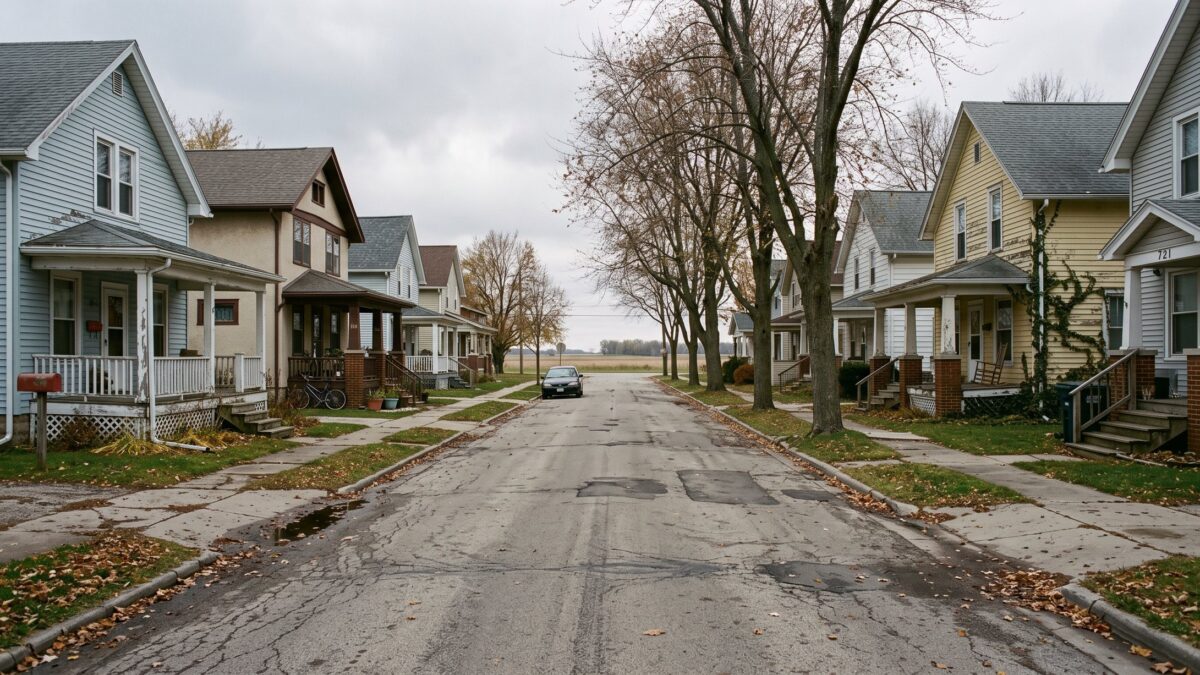 DeKalb County runs, scheduled in blocks with Sycamore
Who does basement waterproofing in DeKalb?
ProSeal Basement Waterproofing handles basement waterproofing in DeKalb with yard regrading, French drains, sump pump systems and interior drain tile, working out of the Joliet and New Lenox corridor. Downspout extensions and regrading run $600 to $2,500, exterior French drains $45 to $90 per linear foot, interior drain tile $95 to $160 per linear foot, and the whole price list is published before we ever make the drive west.
DeKalb rewards a company that starts outside. So much of the older housing near downtown and Northern Illinois University has spent decades as rentals that deferred gutter and grading maintenance is the single most common root cause we find in the city. An outfit that leads with a five-figure interior system here is skipping the few hundred dollars of surface work that solves a real share of DeKalb basements outright.
See how grading and downspout work stops water before the wall
 Discharge carried away from the house: half the battle on a flat DeKalb lot.
What does basement waterproofing in DeKalb include?
On flat prairie ground the honest toolkit starts in the yard, not the basement, so the DeKalb list is ordered the way we actually quote it. The free inspection prices only what your lot and your wall need.
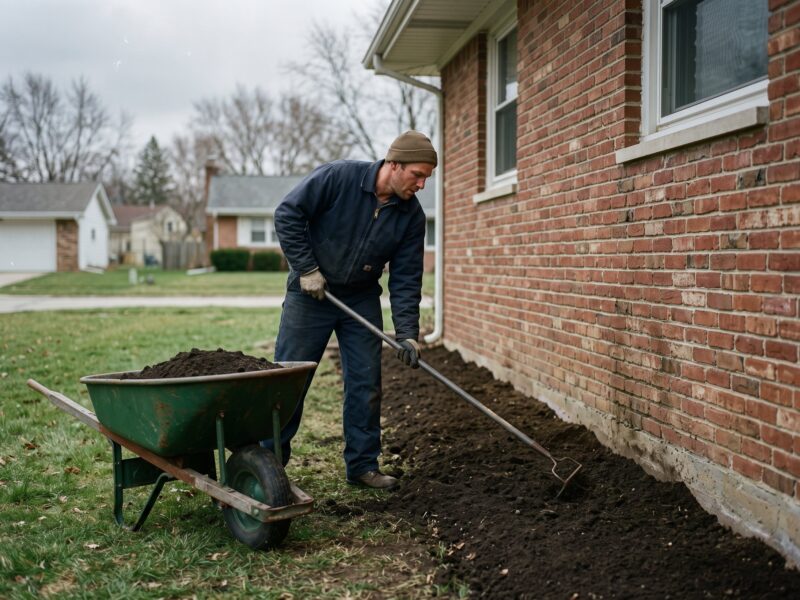 Regrading & downspouts
The first quote on most DeKalb calls: restore the fall the ground never had.
Learn more
Regrading & downspouts
The first quote on most DeKalb calls: restore the fall the ground never had.
Learn more
 French drains
Collector trenches for lots where water sits because nothing slopes.
Learn more
French drains
Collector trenches for lots where water sits because nothing slopes.
Learn more
 Sump pumps & battery backup
Sized for the long, slow drawdown flat farmland delivers.
Learn more
Sump pumps & battery backup
Sized for the long, slow drawdown flat farmland delivers.
Learn more
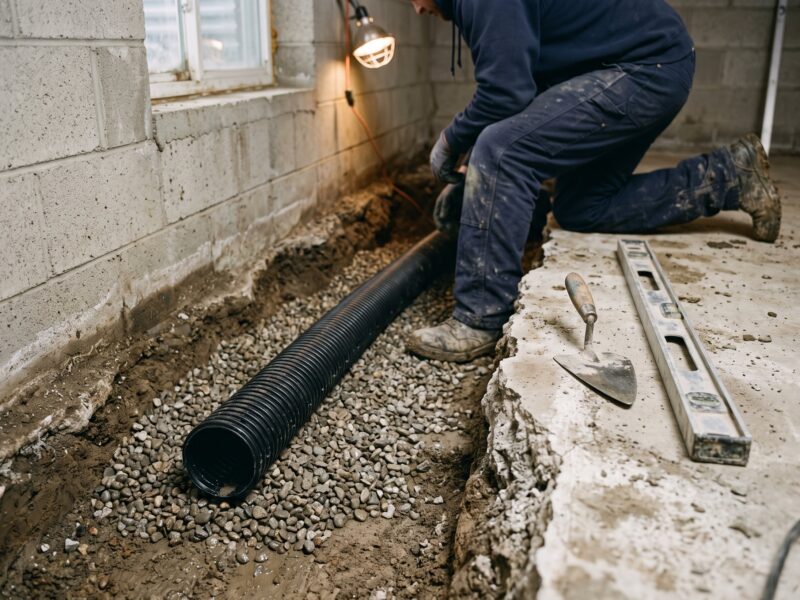 Interior drain tile
For the basements where the water really is coming up, not just running in.
Learn more
Interior drain tile
For the basements where the water really is coming up, not just running in.
Learn more
 Crawl space encapsulation
Additions and older cottages in the pre-war core included.
Learn more
Crawl space encapsulation
Additions and older cottages in the pre-war core included.
Learn more
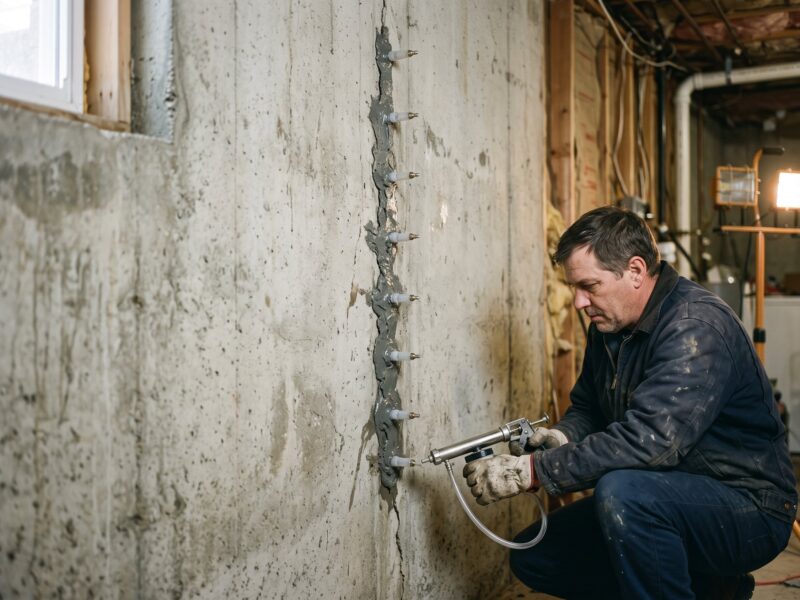 Leaking crack injection
Poured-wall cracks in the newer subdivisions, sealed full depth.
Learn more
Leaking crack injection
Poured-wall cracks in the newer subdivisions, sealed full depth.
Learn more
Why do DeKalb basements get wet?
DeKalb basements get wet for three distinct reasons: neglected gutters and grading in the rental-converted core, flat farmed ground that sheds water slowly everywhere, and old agricultural field tile that quietly manages the water table under the edges of town.

The rental core near downtown and NIU
Pre-war houses on block, brick and some stone, many converted to rentals decades ago. When nobody cleans the gutters, the whole roof plane dumps at one spot beside a wall that was never built to take it. The wall drinks; the basement shows it.

The newer edges of town
Poured walls on farm clay, like everywhere west of the Fox. These basements mostly stay dry until builder grading settles or a downspout dumps at the corner, and then the sump starts doing work the surface should have done for free.
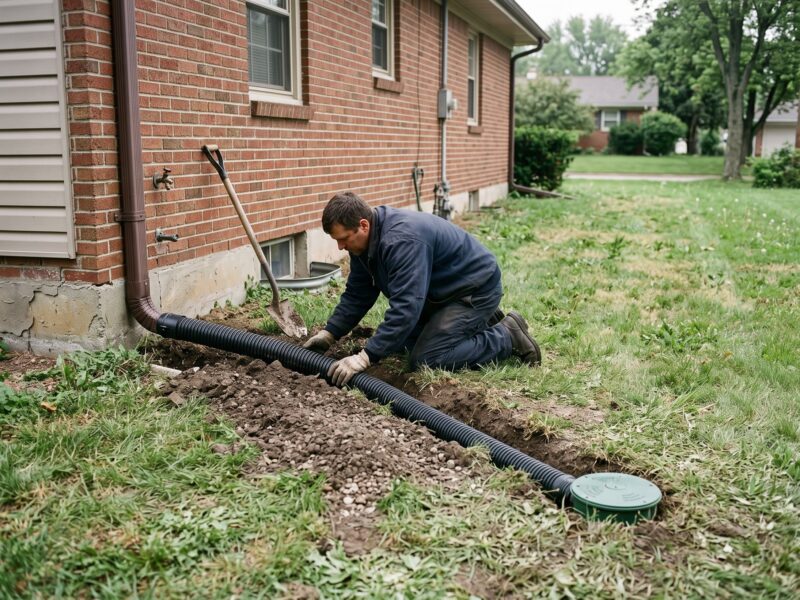
Edge-of-town lots on old field tile
Some properties at the margins sit on or near agricultural tile runs nobody has a map of. While the tile flows, the lot behaves; when a run clogs or gets crushed, the water table under one yard changes and the basement finds out first.
Why does DeKalb water sit in the yard instead of draining away?
DeKalb sits on flat, intensively farmed prairie, some of the most productive and most thoroughly tile-drained soil in Illinois, and flat is the operative word: surface water has almost no natural fall to follow. The Kishwaukee River runs south of the city, but between your downspout and that river the grade is measured in inches. Rain that a hillside town sheds in an hour can stand in a DeKalb yard for days.
Underneath, the regional water table is managed by agricultural field tile that predates most of the housing. That plumbing works remarkably well until it does not, and because the old runs are unmapped, a lot that stayed dry for forty years can turn wet without anything changing at the house. The inspection sorts surface water from ground water before a dollar gets spent, because the fixes and the prices are completely different.
See how a French drain gives flat ground somewhere to send water
 Prairie-flat ground after rain: the water is not draining, it is waiting.
Signs your DeKalb basement needs waterproofing
Six symptoms fill the DeKalb call log, and on flat ground the cause is outside more often than in. Each symptom points at a different fix, and several of the fixes cost hundreds, not thousands.
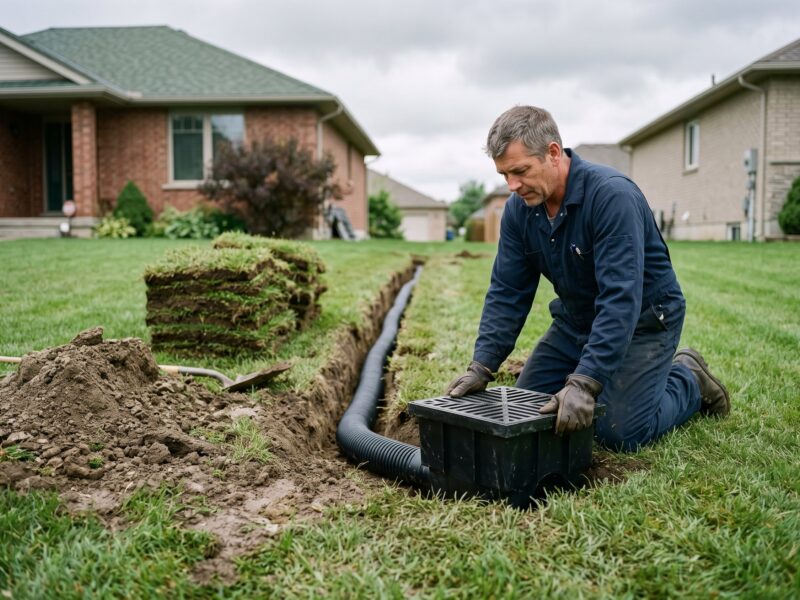
Water standing in the yard for days
The signature of prairie-flat ground with nowhere to send rain. Standing water beside the house is a foundation problem in the making; a swale, basin or French drain moves it along.

A sump that runs with every rain
On the newer edges this is usually the pit recycling roof water from short downspouts and settled grading. Fix the surface and the pump goes quiet.

Water at the floor-wall joint
When water rises at the cove rather than running down the wall, it is genuine groundwater under the slab. That is the drain tile call, the real one.

White mineral bloom on block
The wall is passing water through itself and leaving the minerals behind. On the pre-war rental stock this almost always tracks back to roof water landing at the wall.

A unit that smells musty at turnover
Landlords notice it between tenants: damp air rising from below. The smell is a moisture meter; find and fix the source before the next lease starts.
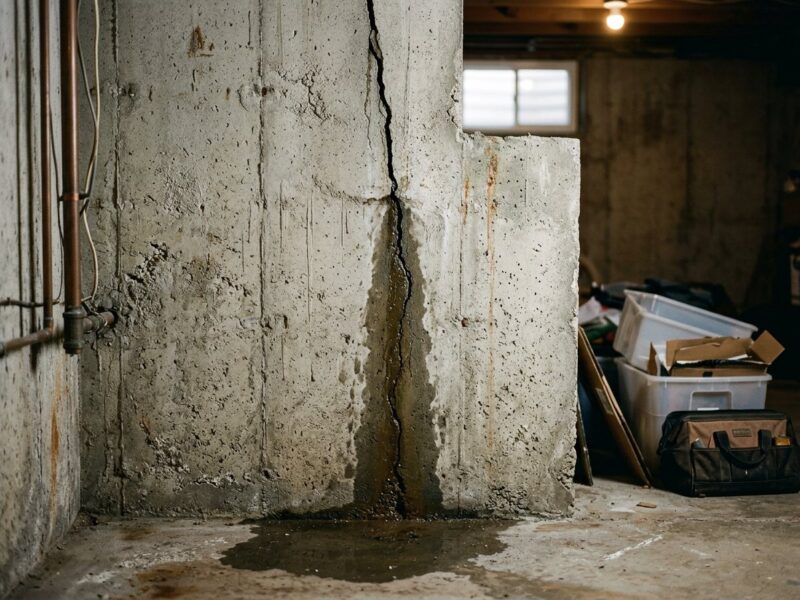
A crack that runs during storms
Poured walls at the edges of town crack as they cure and settle. When one starts leaking, an injection seals it full depth in a morning for $450 to $900.
Yard still soggy two days after the rain quit? That is a drainage problem with a published price. Tell us the street and we will bring the plan.
How does basement waterproofing work in DeKalb?
A DeKalb waterproofing job runs four steps, and the first one happens in the yard. We schedule DeKalb County in blocks with Sycamore, so the date you get is a real one.
Walk the lot, then the basement
The inspection starts at the gutters and grade, because that is where most DeKalb water starts, then traces the symptom inside. Free, written, within 48 hours.
Day 0Price the cheapest fix that works
If $900 of downspout and grading work solves it, that is the quote you get. Interior systems get proposed only when the water is genuinely coming from below.
Day 0, same visitInstall on the county run
Crews come out on the DeKalb and Sycamore block: drainage work in a day or two, full interior systems in two to four, finished with a flood test you watch.
Days 1 to 4Register the warranty
Interior systems carry the lifetime, fully transferable warranty and drainage work its 5-year coverage, registered to the address, transferable at closing.
On completionInterior or exterior waterproofing: which works in DeKalb?
Surface drainage resolves the largest share of DeKalb basements before either system enters the conversation, and when a perimeter system is truly needed, interior drain tile wins on most lots here for cost, season and disruption.
| Interior drain tile | Exterior excavation | |
|---|---|---|
| Best for | Groundwater rising at the cove joint and under the slab | Wall faces physically failing from the outside |
| On the rental stock | Installs from inside; tenants keep their yard and their parking | Excavation around an occupied rental is weeks of disruption |
| On flat, slow-draining clay | Unaffected; the trench and sump do the moving | Open digs hold water in ground this flat; timing gets ugly |
| With old field tile nearby | No digging, so no risk of finding an unmapped run the hard way | Deep excavation at the edges of town can cut tile nobody knew about |
| Cost | $95 to $160 per linear foot | Several times interior cost, priced per wall after inspection |
| Season | Installs all winter; frozen ground never matters | Weather-dependent, which matters more when the crew drives an hour to reach you |
Where a wall genuinely needs exterior work we say so and price it. Matching the fix to the water source is the whole job.
When do DeKalb basements flood?
DeKalb water keeps a farm-country calendar: the flat ground loads slowly, drains slowly and punishes whichever house has the worst gutters on the block.
Spring: the saturation months
Snowmelt on frozen, flat ground has nowhere to go but sideways, and yards hold water for days. Cove joints weep, sumps cycle, and the rental core pays for every autumn the gutters were skipped.
March to MaySummer: the cloudburst test
Prairie thunderstorms drop inches in an hour. On ground this flat the first hour of a storm belongs to your gutters and grade, and a power cut mid-storm is the argument for the battery backup.
June to AugustFall: the landlord window
Dry ground and turnover season line up. Gutters, downspout extensions and regrading, the $600 to $2,500 tier, done between leases costs a fraction of the spring emergency it prevents.
September to NovemberWinter: the inside season
Interior drain tile work happens entirely indoors, so frozen prairie makes no difference. Winter slots on the DeKalb and Sycamore run book fastest and finish before the melt arrives to test them.
December to FebruaryHow much does basement waterproofing cost in DeKalb?
Basement waterproofing in DeKalb costs $600 to $2,500 for downspout extensions and regrading, $45 to $90 per linear foot for exterior French drains, $95 to $160 per linear foot for interior drain tile, and $8,000 to $16,000 for a full perimeter system with sump and battery backup. Those are the same published ranges we hold everywhere, and the drive to DeKalb adds nothing to them.
| Work | Range | What moves the number |
|---|---|---|
| Downspout extensions and regradingtypical job | $600–$2,500 | Feet of grade to rebuild, soil hauling |
| Exterior French drainper linear foot | $45–$90 | Trench depth, where the water can legally go |
| Interior drain tileper linear foot | $95–$160 | Length of the run, slab thickness, what has to be moved off the walls |
| Sump pump with battery backupinstalled | $2,800–$4,500 | Pit condition, backup capacity, discharge routing |
Every range lives on the pricing page, and your written DeKalb quote lands inside it.
Where we waterproof in DeKalb
All of DeKalb sits in ZIP 60115, and the calls sort by street age. The downtown core, the blocks around Northern Illinois University and the Annie Glidden Road corridor send rental-house water: overflowing gutters, flat grade, damp block. Hopkins Park and the older Lincoln Highway corridor streets send the same story in owner-occupied form. The Sycamore Road corridor and the newer edges send sump questions and settled builder grading, and the Kishwaukee River corridor and the outermost lots add the field-tile wildcard.
We will be straight about the map: DeKalb is an hour and a quarter to an hour and a half from our base in the Joliet and New Lenox corridor. We make that drive on purpose, scheduling DeKalb County work in blocks with Sycamore so it is regular rather than exceptional, and the date we give you is the real one, not the optimistic one. No travel charge, and the inspection is still free and still written.
 Loaded for the western run: DeKalb and Sycamore get scheduled together.
DeKalb basement waterproofing questions, answered straight
My gutters have not been cleaned in years. Could that really be the whole problem?
In DeKalb's older neighborhoods it is the leading cause we find, full stop. A blocked gutter takes an entire roof plane and pours it down one spot of backfill next to the foundation, thousands of gallons per storm delivered exactly where you least want them. Cleaning the gutters and extending the downspouts costs almost nothing and ends a real share of wet basements on its own.
I own a rental near campus. What is the cheapest fix that actually works?
Gutters first, then downspout extensions to at least six feet out, then grade restored so the ground falls away from the wall. In that order. It is a few hundred dollars and it resolves more basements than anything else we do. If that is your situation, the inspection will say so instead of quoting you a system.
Do you really come out to DeKalb?
Yes, on a schedule built for it. DeKalb County work runs in blocks with Sycamore, so the trip is a planned route rather than a favor. No travel charge, a free inspection, and a quoted date we actually hit. Standard requests are booked within 48 hours.
Is my DeKalb house at risk from the Kishwaukee River?
The river runs south of the city, and most DeKalb basements never see river water; their problem is flat-ground surface water. If your address sits in the river corridor, check it against the FEMA flood map first, because mapped floodplain changes the honest advice toward flood coverage before drainage hardware.
Could old farm field tile be affecting my basement?
At the edges of town, genuinely yes. The land under DeKalb drained through agricultural tile before the houses arrived, and unmapped runs still move water below some lots. A basement that turned wet after decades of staying dry, with no change at the house, fits that pattern, and the fix is intercepting the water on your property rather than guessing at the tile.
Can you work on an occupied rental without wrecking the tenancy?
Yes, and we do it routinely. Exterior grading and downspout work barely touches the tenants at all, and interior drain tile runs from the basement in two to four days with notice, protection and a defined work line. Landlords get the written scope and warranty paperwork for their file either way.
How do I pick a basement waterproofing company in DeKalb?
Ask what they checked before proposing anything. In this city the credible answer starts with gutters, grading and the lot, because that is where DeKalb water usually starts. Then ask for published pricing and a transferable warranty in writing. A company that quotes a full interior system without walking the yard has diagnosed nothing.
When is the best time of year to fix DeKalb drainage?
Fall, by a wide margin. The ground is dry enough to grade properly, the $600 to $2,500 surface tier installs quickly, and the work is finished before snowmelt loads the flat ground in March. Interior systems, by contrast, install all winter, so a wet-basement plan can run in any season.
Is the damp wall also cracked or moving?
Years of roof water dumped beside a DeKalb block wall do more than dampen it; the saturated clay swells against the wall and eventually pushes it. If your wet basement comes with a horizontal crack, a stair-step line in the mortar or a floor that has developed a slope, one visit inspects both problems and sequences both fixes.
Foundation Repair in DeKalb
Basement waterproofing near DeKalb

Start with the yard, end with the warranty
A free written inspection within 48 hours, the cheapest fix that actually works quoted first, and a lifetime, fully transferable warranty on every interior system we install in DeKalb.
Or talk to a human right now
(630) 335-1128
Request your free estimate
Tell us what you're seeing. We'll call back fast and be out within 48 hours.