
Basement Waterproofing in Palos Heights, Illinois
Palos Heights sits on the moraine, so water here does not pool; it runs, and it runs at whatever is downslope. We intercept it before it reaches your foundation with drainage built for ravine lots, walkouts and houses set into the grade, backed by a lifetime, fully transferable warranty on interior systems.
- Free written inspection within 48 hours
- Warranties in writing: 5-year on drainage, lifetime, fully transferable on interior systems
- $2M insured, 1,500+ homes served across the region
 In Palos Heights weekly: 25 to 35 minutes from our crews
Who does basement waterproofing in Palos Heights?
ProSeal Basement Waterproofing serves Palos Heights with the drainage-first work its hillside lots actually call for: exterior French drains at $45 to $90 per linear foot, downspout burial and regrading at $600 to $2,500, interior drain tile at $95 to $160 per linear foot when the water is truly at the footing. Every price is published before anyone stands in your yard.
This town rewards a contractor who thinks about slope before systems. Water on a Palos Heights lot arrives moving, usually at the uphill wall, and the cheapest permanent fix is often intercepting it upslope rather than pumping it out from below. A company that quotes every house a full interior perimeter has not walked enough ravine lots. Ours reads the grade first and prices only what the lot needs.
See how yard drainage stops water before it reaches the wall
 A curtain drain trench with fabric and stone: the hillside interceptor.
What does basement waterproofing in Palos Heights include?
On sloped ground the toolbox starts outside. A Palos Heights inspection walks the grade before it walks the basement, and the written plan draws from six systems in the order the lot dictates.
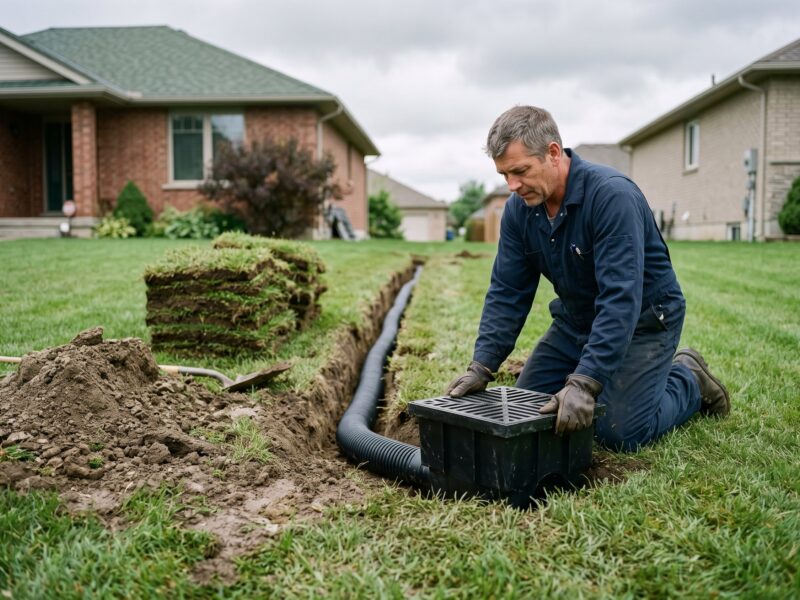 Yard drainage & regrading
Swales, catch basins and grading that give ravine-lot runoff a path that is not your house.
Learn more
Yard drainage & regrading
Swales, catch basins and grading that give ravine-lot runoff a path that is not your house.
Learn more
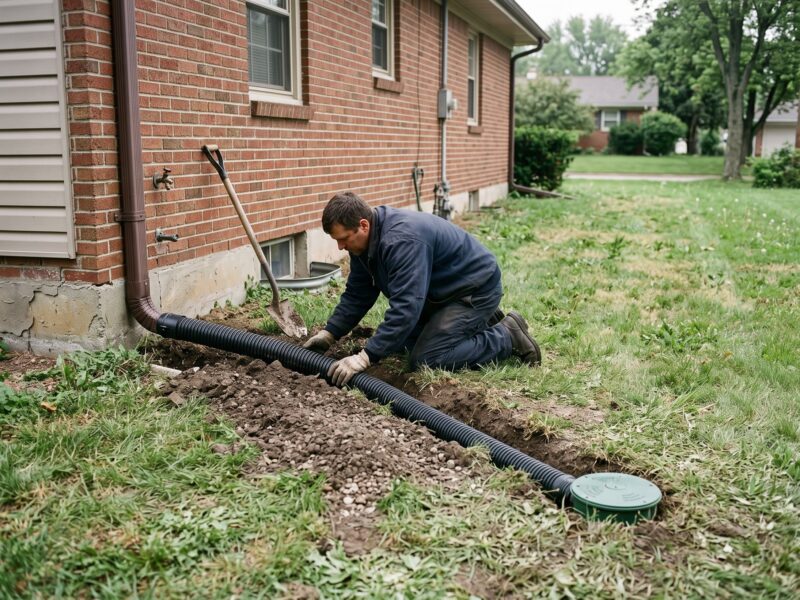 French & curtain drains
Installed upslope to intercept moving water before it loads the uphill wall.
Learn more
French & curtain drains
Installed upslope to intercept moving water before it loads the uphill wall.
Learn more
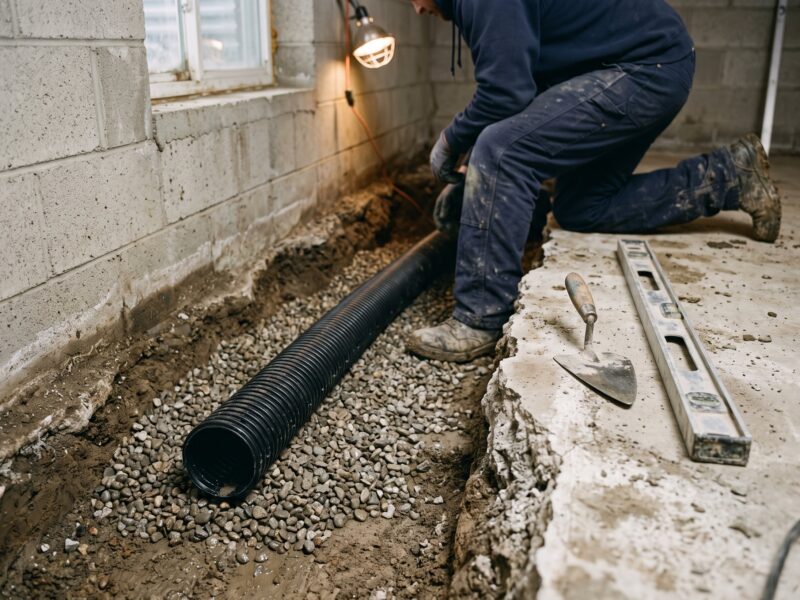 Interior drain tile
The footing-level answer where clay holds water against a wall set into the grade.
Learn more
Interior drain tile
The footing-level answer where clay holds water against a wall set into the grade.
Learn more
 Sump pumps & battery backup
Sized for storm bursts, with discharge routed to work with the slope, not against it.
Learn more
Sump pumps & battery backup
Sized for storm bursts, with discharge routed to work with the slope, not against it.
Learn more
 Crawl space encapsulation
For the split-level halves and additions that sit over dirt on the hillside stock.
Learn more
Crawl space encapsulation
For the split-level halves and additions that sit over dirt on the hillside stock.
Learn more
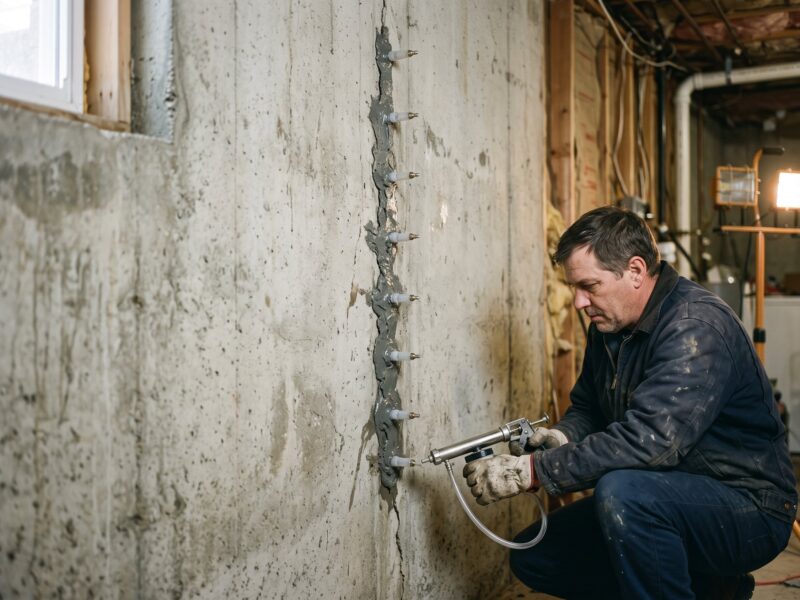 Leaking crack injection
Poured-wall cracks sealed full depth from $450, done in a morning.
Learn more
Leaking crack injection
Poured-wall cracks sealed full depth from $450, done in a morning.
Learn more
Why do Palos Heights basements get water?
Palos Heights basements get water because the village is genuinely hilly, one of the few places in the region that is, and hills change the physics: instead of a water table rising evenly, surface water concentrates into paths and arrives at foundations with velocity behind it.
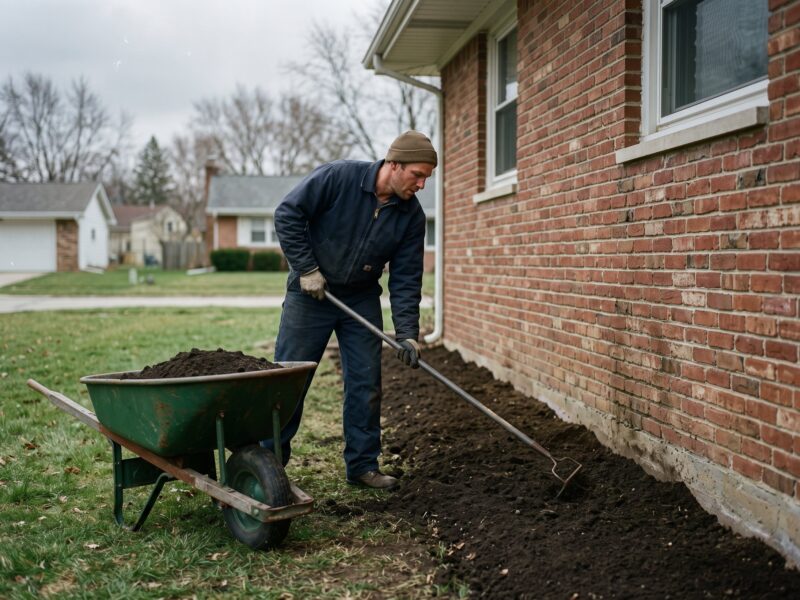
Houses set into the grade
A big share of the 1950s through 1980s stock is cut into a slope, and the uphill wall does the suffering. Everything above the house drains toward that wall as a moving sheet in the backfill, a different animal from flat-lot seepage.

Ranches and splits on heavy clay
The mid-century ranches and split-levels sit on clay that grabs whatever the slope delivers and holds it against the wall. Cove-joint seepage shows up on the downhill decades, as original drain tile silts shut.

Ravine and preserve-edge lots
Lots backing the preserves and ravines inherit drainage paths older than the subdivision. A house built across one has a permanent drainage job, and the fix is managing the path, not fighting it.
What makes Palos Heights drainage different?
Palos Heights drains like moraine country because it is moraine country: ravines, kettle holes and real slope, with the Cal-Sag Channel along the north edge and the Palos preserve system, the largest concentration of forest preserve in Cook County, wrapped around the village. On that terrain, storm water does not spread out; it gathers into defined paths that were established long before the streets were platted, and it follows them whether or not a house now sits in the way.
That is why diagnosis here starts at the lot line, not the sump pit. Water streaking down an uphill wall during a storm is intercepted upslope with a curtain drain or regraded away for hundreds, not thousands. Water rising at the floor-wall joint after the clay saturates is a footing-level problem, and that one gets drain tile and a properly discharged sump. The free inspection tells you which house you own before anyone quotes a system.
 Where the slope flattens, the water it carried has to go somewhere.
Signs your Palos Heights basement needs waterproofing
Six symptoms fill the phone lines from Palos Heights, and on sloped lots each one points at a different spot on the hill. Reading the symptom against the grade is the whole diagnostic game here.

A wet uphill wall during storms
Damp streaks or trickles on the wall facing the high side of the lot mean moving water in the backfill. The classic Palos Heights call, and usually a curtain-drain fix, not an interior system.

White mineral bloom on block
Efflorescence means water is passing through the wall itself and leaving its minerals behind. On a graded lot it maps which wall the slope is feeding; drainage upslope relieves it.

A sump that races every rain
On a hillside, a hard-running sump is often relocating the neighborhood's runoff one gallon at a time. Interception upslope beats a bigger pump fighting the whole slope.

Musty air in a walkout lower level
Walkout levels live half in the ground, and the buried side sweats when clay stays wet. Persistent mustiness after storms is a moisture symptom, not a housekeeping one.
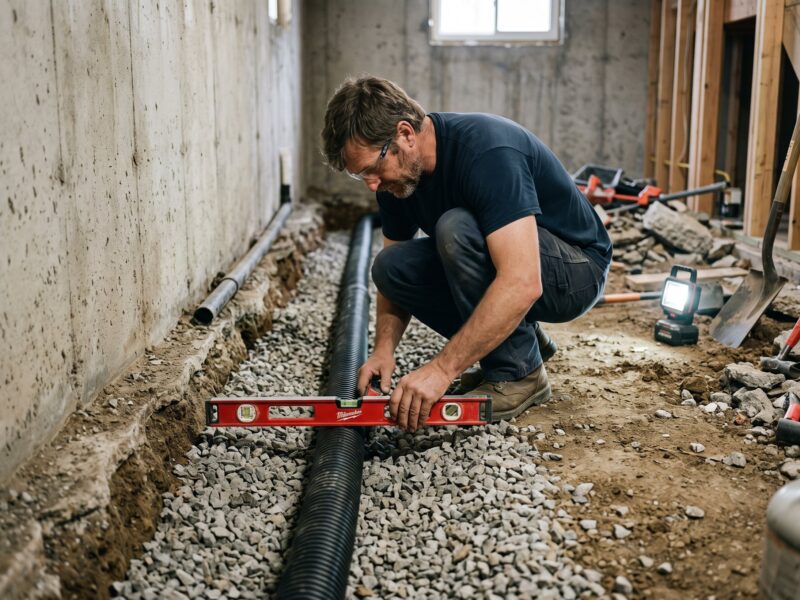
Water at the floor-wall joint
When the clay around a footing finally saturates, water shows up where floor meets wall. This is the symptom that genuinely calls for interior drain tile, and we confirm it before quoting it.
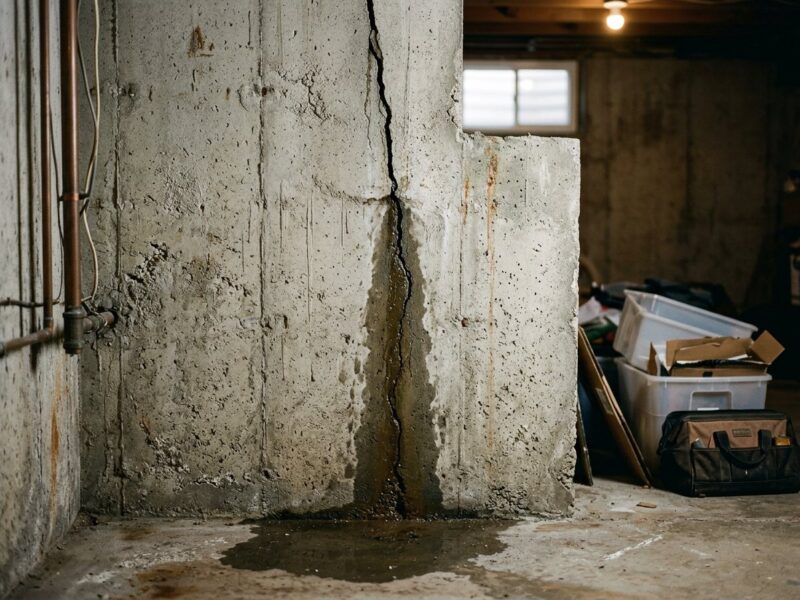
A crack that runs when it rains
A poured-wall crack that turns into a spout under storm pressure usually seals full depth with a urethane injection, a morning of work at a fraction of system cost.
Watching water sheet past the house every storm? Tell us which way your lot slopes; in Palos Heights that is half the diagnosis.
How does basement waterproofing work in Palos Heights?
A Palos Heights waterproofing job runs four steps, and on this terrain the first one happens outdoors. Most drainage work finishes in one to two days; full interior systems take two to four.
Walk the slope, then the basement
We read the lot first: where the grade sends water, which wall takes it, whether a ravine path crosses the property. Then we match the indoor symptoms to what the hill is doing. Free, within 48 hours.
Day 0Design from the top of the lot down
The written plan sequences fixes by leverage: interception and grading upslope first, footing drainage only where the clay genuinely loads the wall. Every line comes from the published ranges.
Day 0, same visitInstall and prove it
Curtain drains and regrading get water tested against the slope; interior systems get trench, tile, sump, battery backup and a flood test you watch before the concrete cures.
Days 1 to 4Register the warranty
Exterior drainage carries a 5-year warranty and interior systems carry the lifetime, fully transferable warranty, registered to the address so it transfers when you sell.
On completionExterior or interior waterproofing: which works in Palos Heights?
Palos Heights is the rare town where exterior drainage is often the first answer, because slope gives an interceptor drain real power: catch the water above the house and gravity does the rest. Interior drain tile still wins where clay loads the footing itself, and the honest plan often pairs a little of both.
| Exterior drains & grading | Interior drain tile | |
|---|---|---|
| Best for | Moving surface water hitting the uphill wall, the signature Palos Heights problem | Water rising at the floor-wall joint once the clay saturates |
| On sloped lots | Strongest here: gravity carries intercepted water away with no pump | Works on any lot; discharge must be routed to respect the slope |
| On ravine and preserve-edge lots | Manages the established drainage path instead of fighting it | Handles what the clay still delivers to the footing |
| Cost | $45 to $90 per linear foot; regrading $600 to $2,500 | $95 to $160 per linear foot; full systems $8,000 to $16,000 |
| Season | Best from thaw to freeze while the ground works | Installs year-round; the whole job happens inside |
| Warranty | 5-year on drainage work | lifetime, fully transferable on interior systems |
When a lot needs both, we sequence them so you can stop after the cheap half if it solves the problem. Plenty of Palos Heights jobs end there.
When do Palos Heights basements take on water?
On moraine terrain the water calendar is really a slope calendar: every season changes how fast the hill sheds and how much the clay can drink.
Spring: the melt runs downhill
Snowmelt over still-frozen clay cannot soak in, so it runs, and every downslope wall in town finds out what is above it. Uphill-wall calls peak now, and the 48 hours inspection promise earns its keep.
March to MaySummer: cloudburst season
Short violent storms drop an inch in half an hour, and slope turns rainfall into sheet flow within minutes. This is the season that overwhelms undersized sumps and takes the power out; battery backups earn their price here.
June to AugustFall: the preserve sheds its leaves
A village wrapped in forest preserve gets a serious leaf load, and buried gutters, swales and catch basins clog exactly when the fall rains arrive. Fall is cleanout and regrading season, the cheapest work on the menu.
September to NovemberWinter: the interior season
Frozen ground pauses excavation, but interior drain tile does not care; the whole install happens inside. Winter scheduling is quickest, and the system is finished before the melt tests it.
December to FebruaryHow much does basement waterproofing cost in Palos Heights?
Basement waterproofing in Palos Heights costs $45 to $90 per linear foot for an exterior French drain, $600 to $2,500 for downspout work and regrading, and $95 to $160 per linear foot for interior drain tile, with a full perimeter system including a sump and battery backup landing between $8,000 and $16,000. Slope often puts the exterior numbers first here, which is good news for the budget.
| Work | Range | What moves the number |
|---|---|---|
| Exterior French drainper linear foot | $45–$90 | Trench depth, where the water can legally go |
| Downspout extensions and regradingtypical job | $600–$2,500 | Feet of grade to rebuild, soil hauling |
| Interior drain tileper linear foot | $95–$160 | Length of the run, slab thickness, what has to be moved off the walls |
| Sump pump with battery backupinstalled | $2,800–$4,500 | Pit condition, backup capacity, discharge routing |
Every range lives on the pricing page, and your written Palos Heights quote lands inside it.
Where we manage water in Palos Heights
All of 60463 is in our working area, and the calls follow the terrain. The Cal-Sag corridor along the north edge sends sump and discharge questions from the lower ground. Streets around Lake Katherine and the lots backing the preserve system send ravine-path and uphill-wall calls. The Harlem Avenue and 127th Street corridors and the blocks off Ridgeland Avenue send the mid-century mix: cove-joint seepage, silted drain tile and walkout lower levels that sweat every spring. The college area sends its share of graded-lot runoff calls too.
Palos Heights is a real drive from our Joliet and New Lenox base, twenty-five to thirty-five minutes, and one we make constantly; the moraine keeps us busy here. Standard inspections happen within 48 hours, standing water gets the 24/7 response, and there is no trip charge.
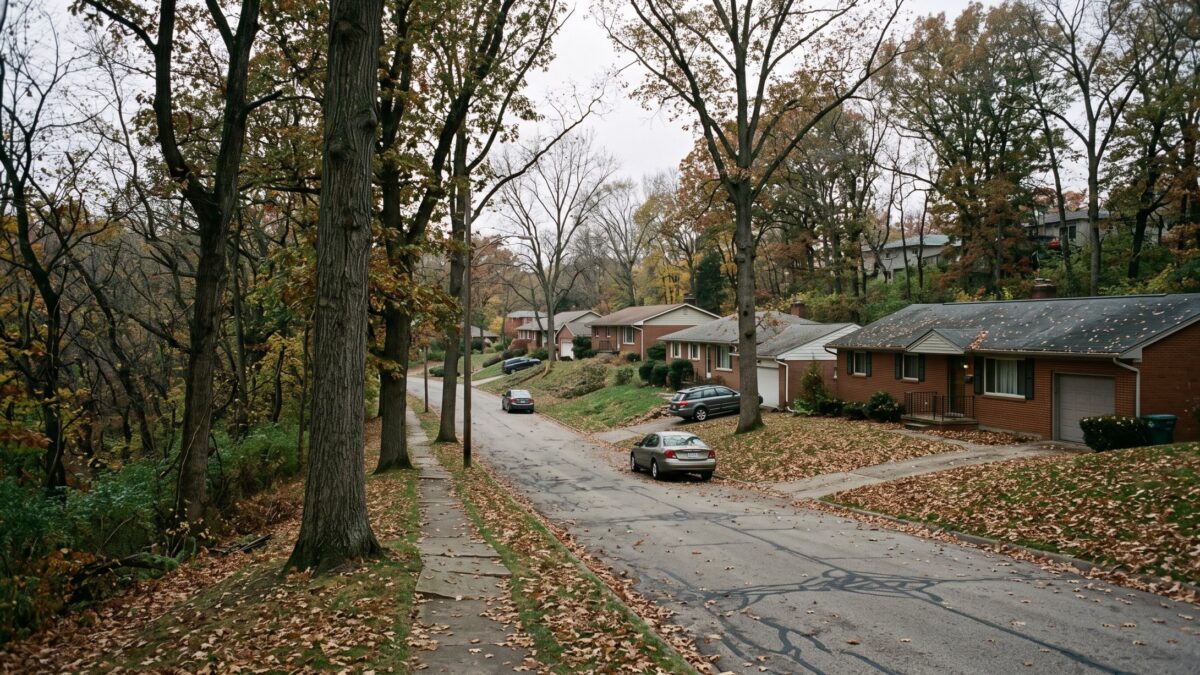
 Hillside stock: the grade decides which wall gets the water.
Palos Heights basement waterproofing questions, answered straight
My Palos Heights house is on a slope. Why is the uphill wall the wet one?
Because everything above you drains at it. On sloped ground, water reaches the uphill wall as a moving sheet in the backfill rather than as a slowly rising water table, and it arrives fast. The usual fix is an intercepting drain upslope of the house rather than a full interior perimeter, which is both cheaper and better matched to the problem.
What is a curtain drain and does my lot need one?
A curtain drain is a French drain set upslope of the house to catch water before it ever reaches the foundation, and on a Palos Heights hillside lot it is frequently the single most effective thing you can install. It is exterior work at $45 to $90 per linear foot, it costs less than an interior system, and it carries a 5-year warranty.
Storm water pours across my property from uphill. Is that mine to fix?
Partly. Illinois follows a reasonable-use standard for surface water between neighbors, and disputes turn on specifics we are not qualified to rule on. What we can do is manage the water once it is on your land, honestly and permanently. For the rest of it, talk to the village before you talk to a lawyer.
Why does my walkout lower level smell musty every spring?
A walkout is half basement, half above grade, and the buried side sits against clay that stays wet long after the melt. Moisture migrates through that wall and the walkout ventilation cannot keep up. The fix addresses the wet clay, usually drainage on the buried side, sometimes encapsulation where the space is partly crawl.
I think my house was built across a drainage path. What can actually be done?
More than you would guess. Ravine and kettle terrain concentrated water into defined routes long before the subdivisions came, and a house astride one needs that route managed: interceptor drains, a swale or regrading to move the path around the structure, and solid discharge below it. It becomes a maintained system instead of an annual surprise.
Where should my sump discharge go on a sloped lot?
Downhill, far enough that the water cannot circle back, and never at a neighbor. Slope is an asset here: a properly routed discharge line lets gravity finish the job, and a pop-up emitter well downslope keeps the outlet from freezing shut or eroding the yard. Bad discharge routing is one of the most common things we fix in Palos Heights.
Do I need a permit for drainage work in Palos Heights?
It varies by municipality and by scope; grading and drainage that change how water leaves a lot draw more review than interior work. Where a permit is required, we pull it as part of the job. The written plan spells out anything that needs village paperwork before work starts.
Can you install waterproofing in a Palos Heights winter?
Interior work, yes, at full speed: drain tile, sump systems and crack injection all happen inside where frozen ground is irrelevant. Exterior drains and regrading wait for workable soil, so we often sequence hillside jobs with the interior half in winter and the interception half at thaw, which also spreads the cost.
Is the wet wall also cracked or bowing?
The uphill wall on a graded Palos Heights lot takes the water and the pressure at the same time, and heavy clay pushing on a mid-century wall for sixty years leaves marks: horizontal cracks, a slow bow, stair-steps at the corners. If your wet wall shows any of them, one inspection covers both trades.
Foundation Repair in Palos Heights
Basement waterproofing near Palos Heights

Put the slope to work for the house, not against it
A free inspection within 48 hours, a plan that starts at the top of your lot, and warranties that transfer with the house: 5-year on drainage, lifetime, fully transferable on interior systems.
Or talk to a human right now
(630) 335-1128
Request your free estimate
Tell us what you're seeing. We'll call back fast and be out within 48 hours.