Basement Waterproofing in Evergreen Park, Illinois
Brick bungalows an arm's width apart, seventy-year-old block below and a combined sewer under the street: Evergreen Park water has two ways into a basement, and the honest first question is which one yours took. We answer it in writing, then fix the part that is ours, warrantied for life.
- Interior systems built for lots with no side access
- lifetime, fully transferable warranty on interior waterproofing
- Free written diagnosis within 48 hours
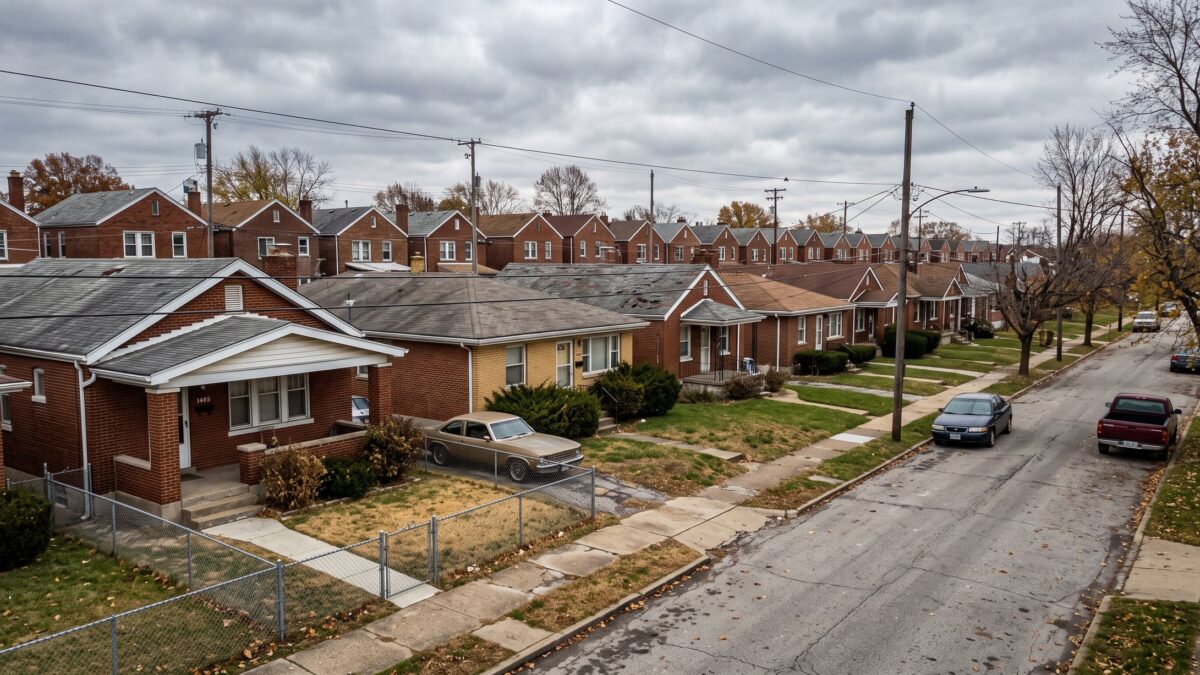 Serving Evergreen Park from the Joliet and New Lenox corridor
Who does basement waterproofing in Evergreen Park?
ProSeal Basement Waterproofing installs interior drain tile, sump systems and drainage fixes across Evergreen Park at published prices: $95 to $160 per linear foot for interior drain tile, with most full perimeter systems, sump and battery backup included, landing between $8,000 and $16,000. Every number is in print before an estimator sees your bungalow, and the inspection that sorts sewer water from seepage is free.
The village demands a specific kind of expertise because the standard suburban playbook does not fit here. These blocks went up almost all at once in the 1950s, on lots so narrow that a neighbor's foundation sits a few steps from yours, over a combined sewer built for a different rainfall era. A company that quotes Evergreen Park without understanding those three facts is guessing.
See the full basement waterproofing system, wall to discharge
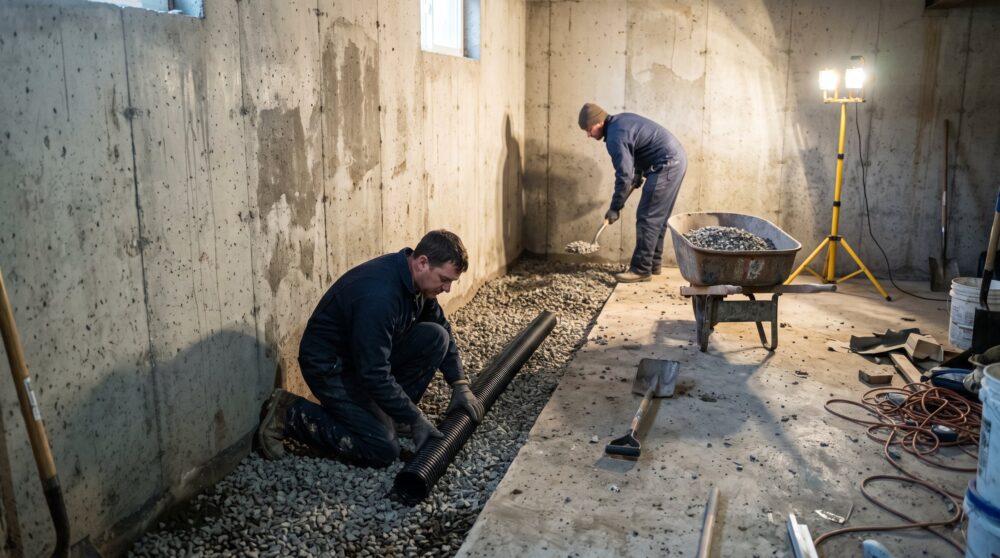 Interior drain tile: the system that needs no yard, which is the point here.
What does basement waterproofing in Evergreen Park include?
Six systems cover what Evergreen Park water actually does, and the free inspection prices only what your house needs. Because these lots rule out heavy excavation, the interior tools carry most of the weight here.
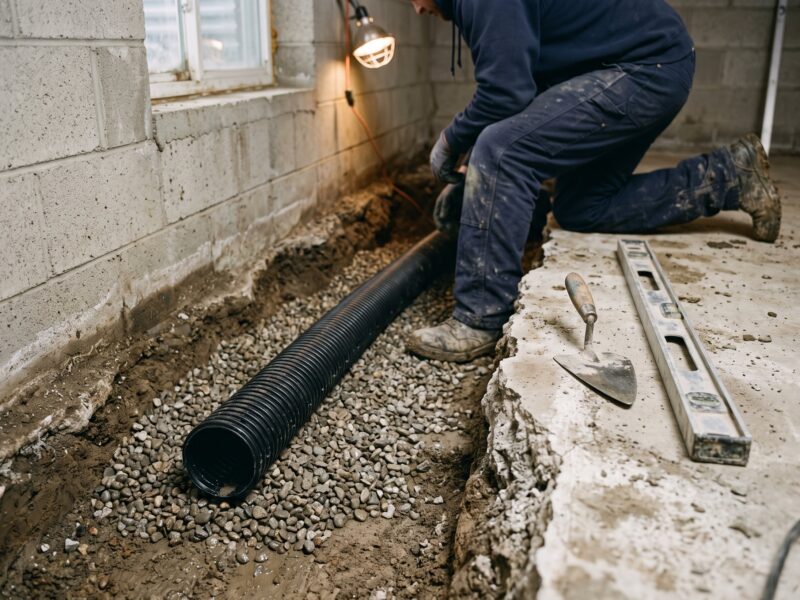 Interior drain tile
The workhorse for narrow lots: installed entirely from inside, no gangway required.
Learn more
Interior drain tile
The workhorse for narrow lots: installed entirely from inside, no gangway required.
Learn more
 Sump pumps & battery backup
Sized for lakebed clay that keeps feeding the pit long after a storm.
Learn more
Sump pumps & battery backup
Sized for lakebed clay that keeps feeding the pit long after a storm.
Learn more
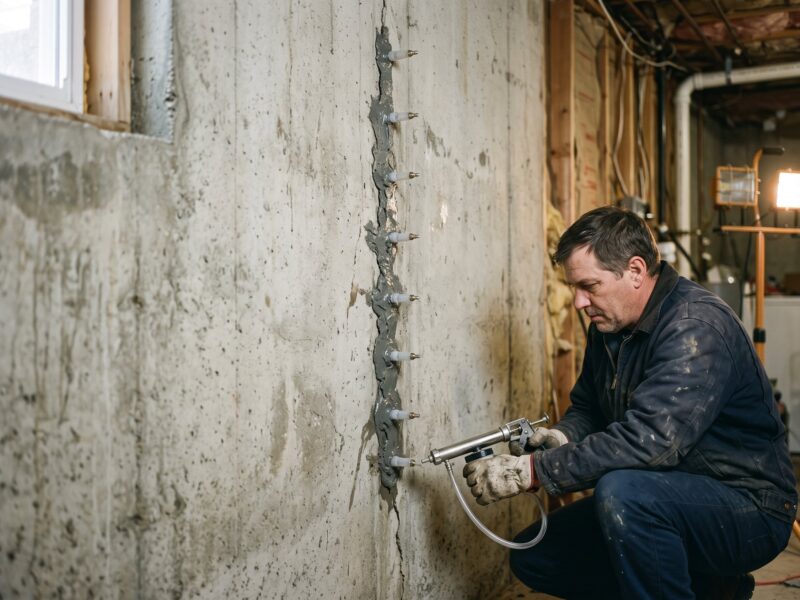 Leaking crack injection
Sealed full depth from $450, done in a morning.
Learn more
Leaking crack injection
Sealed full depth from $450, done in a morning.
Learn more
 Crawl space encapsulation
For rear additions and dormered bungalow extensions.
Learn more
Crawl space encapsulation
For rear additions and dormered bungalow extensions.
Learn more
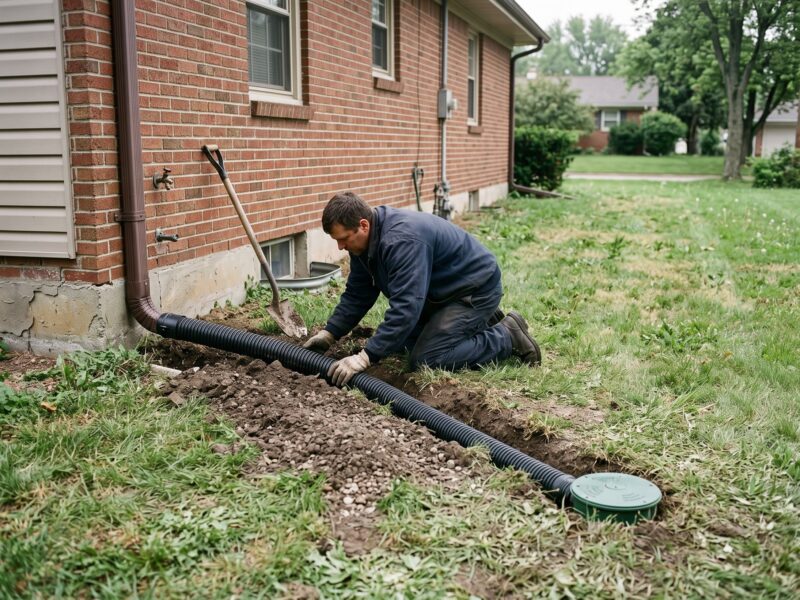 Yard drainage
Downspout burials and discharge routing that respect a thirty-foot lot.
Learn more
Yard drainage
Downspout burials and discharge routing that respect a thirty-foot lot.
Learn more
 French drains
For the rare parcel with room to intercept surface water.
Learn more
French drains
For the rare parcel with room to intercept surface water.
Learn more
Why do Evergreen Park basements flood?
Evergreen Park basements take water from two separate directions: the combined sewer surcharging up from below during big storms, and groundwater seeping in through seventy-year-old block. The fixes have nothing in common, so naming the right source is the whole diagnosis.

The 1950s bungalow blocks
Brick bungalows off the 95th Street and Kedzie corridors sit on block foundations laid seventy years ago, before anyone waterproofed anything. Mortar joints have aged, original drain tile has silted, and spring seepage at the cove joint is the standard call.

Ranches and Georgians on narrow lots
The same era built ranches and Georgians shoulder to shoulder near Yukon Woods and the 99th Street area. Roof water from two houses lands in one strip of soil between them, and that soil drains it straight down the block walls.

Anywhere the sewer surcharges
Combined sewers under the village carry storm water and sanitary flow in one pipe. When a summer cloudburst outruns the pipe, water stands in it and rises through floor drains. That is backup, not seepage, and we say which one you had.
Sewer backup or seepage: which is flooding your Evergreen Park basement?
The first question on any Evergreen Park call is whether the water came up or came in, because the village sits on post-war combined sewer infrastructure serving a housing density it was sized for under a different rainfall pattern. Storm backup in this corner of Cook County is a documented, recurring problem rather than a freak event. Water that starts at the floor drain during a downpour is the sewer surcharging, and no waterproofing system on earth would have stopped it.
Water that starts at the walls is a different story, and that one is ours. The village is flat and sits on lakebed clay, so rain has nowhere to run and soaks down instead, loading the soil against block walls that have been resisting it since the Eisenhower administration. Cove-joint seepage, weeping mortar joints and a leaking crack are groundwater symptoms, and interior drain tile with proper sump capacity ends them.
See how interior drain tile intercepts groundwater at the footing
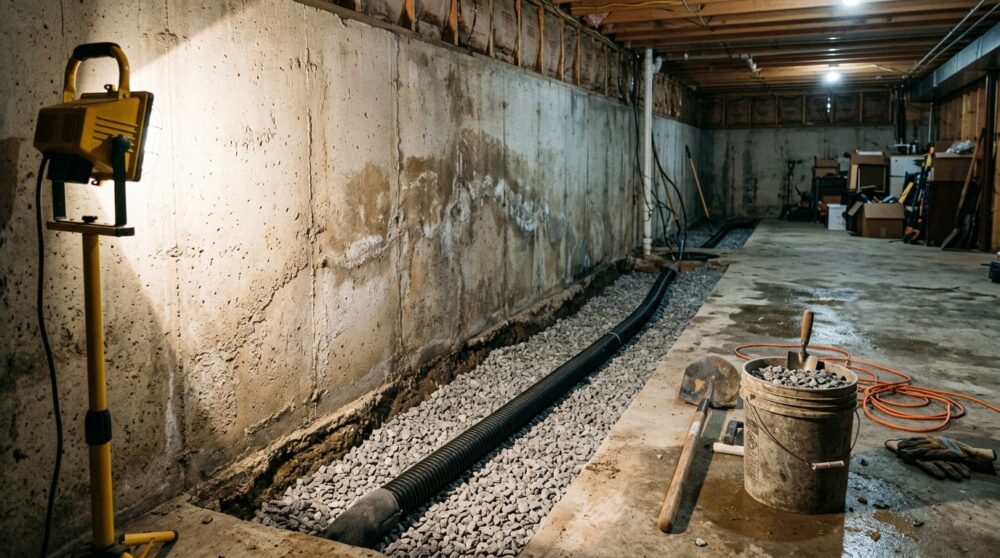 Tile, gravel, sump and discharge: groundwater handled before it reaches the slab.
Signs your Evergreen Park basement needs waterproofing
Six symptoms fill the Evergreen Park call log, and each one points at a different cause with a different price. Reading them correctly is what the free inspection is for.

Water where floor meets wall
Hydrostatic pressure in the lakebed clay pushing groundwater under the footing. The classic drain tile call, and the most common seepage pattern in the bungalow blocks.

White bloom on the block
Minerals left behind as water travels through seventy-year-old block. The wall is absorbing groundwater, and drainage at the footing is what relieves it.
Water rising at the floor drain
During a storm, this is the combined sewer surcharging, a plumbing-side problem. We identify it honestly instead of selling a system that could not have prevented it.

Musty air through the whole house
A damp basement in a compact bungalow shares its air with every room above. A smell that returns each spring is seasonal groundwater talking.
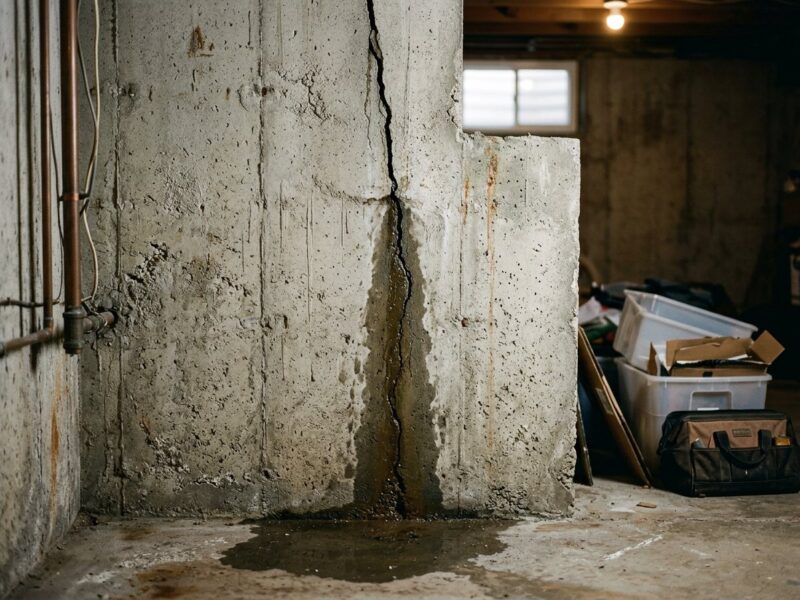
A crack that runs in the rain
A single wet crack in block or concrete often takes a $450 to $900 injection rather than a full system. The inspection confirms the wall around it is sound.

Puddles that outlast the storm
Flat clay lots shed nothing. Water standing along the foundation a day after rain is feeding the basement below it, and grading or downspout work often fixes it cheaply.
Wet floor after every hard rain in Evergreen Park? Tell us where the water started. Drain or wall changes everything, and the diagnosis is free.
How does basement waterproofing work in Evergreen Park?
An Evergreen Park waterproofing job runs four steps from the first call to a registered warranty, and most full systems are finished in two to four days of interior work.
Sort backup from seepage
We trace where the water started: floor drain means the combined sewer, walls and cove joint mean groundwater. You get the answer in writing either way, free, within 48 hours.
Day 0Design for the lot you have
With no room between houses, the plan stays interior: drain tile at the footing, a properly placed sump, and discharge routed so a narrow parcel does not just recycle its own water.
Day 0, same visitInstall from the inside
Trench along the perimeter, tile, washed gravel, sump with battery backup, fresh concrete, then a flood test you watch. Your gangway, garden and neighbor's wall are never touched.
Days 1 to 4Register the warranty
Interior systems carry the lifetime, fully transferable warranty, registered to the address and fully transferable, which matters on blocks where bungalows change hands between generations.
On completionInterior or exterior waterproofing: which fits an Evergreen Park lot?
On most Evergreen Park lots the interior-versus-exterior debate is settled by a tape measure: there is simply no room to bring an excavator between the houses, and digging eight feet down a few steps from a neighbor's footing raises real undermining questions. Interior drain tile is the practical answer here, not the upsold one.
| Interior drain tile | Exterior excavation | |
|---|---|---|
| Best for | Cove seepage and loaded lakebed clay, which is most of the village | Walls deteriorating from the outside face |
| Between-houses access | Needs none; the entire system installs from the basement | Needs machine access that these lots do not have |
| The neighbor's foundation | Never disturbed | An open trench near a footing a few steps away is a real risk |
| On seventy-year block | Relieves the pressure that aging mortar joints feel most | Exposes an old wall to stresses it has never carried |
| Cost | $95 to $160 per linear foot | Several times more, where it is even physically possible |
| Season | Installs year-round; frozen ground is irrelevant | Weather-dependent and slow in saturated clay |
Where a wall genuinely needs outside work and the access exists, we price it honestly. On most of these blocks, it does not exist, and we will not pretend otherwise.
When do Evergreen Park basements flood?
Water in Evergreen Park keeps a calendar, and the sewer and the clay peak in different seasons. Knowing which month threatens your basement tells you which fix to book first.
Spring: the clay gives back
Snowmelt and steady rain load the flat lakebed clay with nowhere to drain. Cove joints weep, sumps cycle for weeks, and seepage calls from the bungalow blocks fill the schedule. Book early; this is the rush.
March to MaySummer: the sewer's season
Cloudbursts dump an inch an hour on a combined sewer sized for gentler decades, and floor drains answer. The same storms cut power mid-cycle, which is the whole argument for a battery backup on every sump we set.
June to AugustFall: the cheap-fix window
Dry soil and mild weather make fall the time for gutter work, downspout burials and small grading corrections, the $600 to $2,500 jobs that keep two roofs' worth of water off one shared side yard.
September to NovemberWinter: the install season
Interior drain tile happens entirely indoors, so frozen ground changes nothing. Winter scheduling is the fastest of the year, and the system is tested and done before the March thaw arrives to try it.
December to FebruaryHow much does basement waterproofing cost in Evergreen Park?
Basement waterproofing in Evergreen Park runs $95 to $160 per linear foot for interior drain tile, and a complete perimeter system with a sump and battery backup comes in between $8,000 and $16,000 on most homes. The village pays the same published ranges as every town on our map, and a compact bungalow footprint often lands the linear-foot math at the lower end.
| Work | Range | What moves the number |
|---|---|---|
| Interior drain tileper linear foot | $95–$160 | Length of the run, slab thickness, what has to be moved off the walls |
| Sump pump with battery backupinstalled | $2,800–$4,500 | Pit condition, backup capacity, discharge routing |
| Exterior French drainper linear foot | $45–$90 | Trench depth, where the water can legally go |
| Downspout extensions and regradingtypical job | $600–$2,500 | Feet of grade to rebuild, soil hauling |
Every range lives on the pricing page, and your written Evergreen Park quote lands inside it.
Where we waterproof in Evergreen Park
All of Evergreen Park sits in ZIP 60805, and the calls repeat because the housing does. The blocks off the 95th Street and Western Avenue corridors send cove-joint seepage and silted original drain tile in seventy-year-old bungalows. Yukon Woods and the 99th Street area send sump questions and the wet shared side yards that two close-set roofs create. The streets around Village Square and the Kedzie corridor send the sewer-or-seepage question after every major storm, and we answer it before quoting anything.
We are straight about the map: our crews are based in the Joliet and New Lenox corridor, and Evergreen Park is a real drive of thirty-five to forty-five minutes. We make it constantly, we batch village jobs together so inspections stay inside 48 hours, and standing water gets the 24/7 response regardless of the odometer.
 Loaded and northbound: the village is a drive we make week in, week out.
Evergreen Park basement waterproofing questions, answered straight
How do I tell if my Evergreen Park basement flooded from the sewer or from seepage?
Look at where the water began and what it smelled like. Backup starts at the floor drain and the lowest fixtures and often carries an odor, because the combined sewer surcharged. Seepage starts at the walls, the cove joint or a crack. If yours began at the drain, no waterproofing system would have stopped it, and we will tell you so instead of selling you one.
There is no room between my house and my neighbor's. What are my waterproofing options?
An interior system, and in Evergreen Park that is not a consolation prize. Interior drain tile at the footing collects groundwater before it reaches the slab and routes it to a sump, and it performs exactly in the conditions where excavation is impossible. It is also the only approach that cannot undermine a foundation sitting a few steps from yours.
How much does basement waterproofing cost in Evergreen Park?
The same published ranges we hold everywhere: $95 to $160 per linear foot for interior drain tile, $8,000 to $16,000 for a full perimeter system with sump and battery backup, $2,800 to $4,500 for a sump with backup on its own, and $600 to $2,500 for downspout and grading work. Bungalow footprints are compact, which helps the total.
Can a waterproofing system stop sewer backup in Evergreen Park?
No, and anyone who says otherwise is selling. Drain tile intercepts groundwater outside the plumbing; water surcharging up a floor drain is inside it, and the answer lives in plumbing-side flood control, which is a different trade. What we do is diagnose which problem you actually had, in writing, so the money goes to the right fix the first time.
How do I choose a basement waterproofing company for an Evergreen Park bungalow?
Ask three questions: will they tell you when the water was sewer backup they cannot fix, is their pricing published before anyone is in your basement, and does the warranty transfer to the next owner without fees. A contractor who quotes an exterior dig on a lot with no side access has not looked at the lot.
Do you waterproof finished rec rooms in Evergreen Park basements?
All the time, and without demolishing them. These bungalows are full of paneled and drywalled rec rooms; the bottom course along the work line comes off and goes back, the rest stays protected and untouched, and the flood test runs before any trim is reinstalled.
Will an interior system help when I sell my Evergreen Park house?
It usually reads as an asset. Buyers on these blocks know the water history of the area, and a documented system with a lifetime, fully transferable warranty that transfers at closing answers the inspection question before it is asked. You keep the written scope, photos and warranty registration as a packet for the listing.
How fast can you get to an Evergreen Park job?
The honest answer: we are based in the Joliet and New Lenox corridor, so the village is a thirty-five to forty-five minute drive we make constantly. Standard inspections happen within 48 hours, we cluster Evergreen Park visits to keep scheduling tight, and active flooding is answered 24/7.
Is the wet wall also cracked or bowing?
Seventy-year-old block rarely has just one problem. The same saturated clay pushing water through an Evergreen Park wall is pushing on the wall itself, and a horizontal crack behind the seepage means the structure needs attention too. One inspection covers both trades, and the fixes get sequenced so neither undoes the other.
Foundation Repair in Evergreen Park
Basement waterproofing near Evergreen Park

Get a straight answer before you spend a dollar
A free inspection within 48 hours that names sewer backup or seepage in writing, an interior system built for a narrow lot, and a lifetime, fully transferable warranty registered to the address.
Or talk to a human right now
(630) 335-1128
Request your free estimate
Tell us what you're seeing. We'll call back fast and be out within 48 hours.